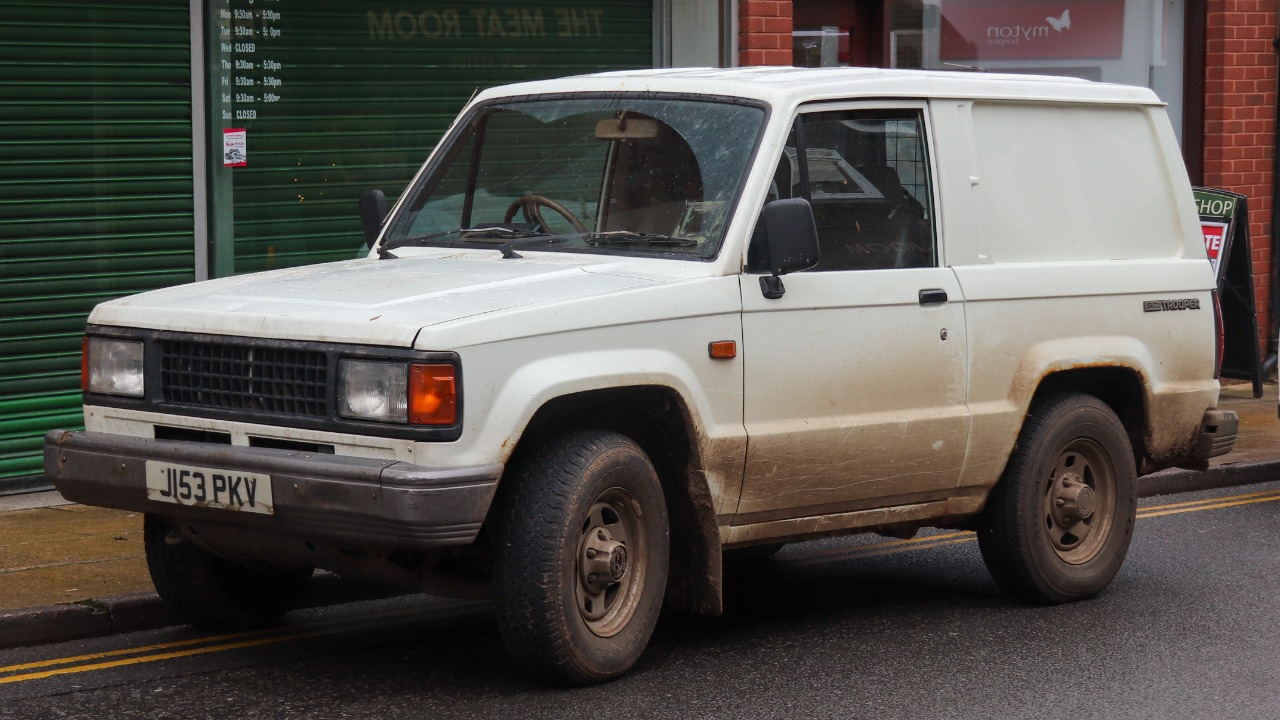
The 1991 Isuzu Trooper arrived at a moment when boxy SUVs were still tools first and lifestyle accessories second, and it quietly set about proving itself in the only arena that really matters: daily life. Its reputation was forged not in marketing copy but in muddy trailheads, long highway slogs, and the slow accumulation of miles that either exposes flaws or confirms that a truck can be trusted. When I look back at that era, I see a vehicle that earned real-world confidence by doing exactly what owners asked of it, year after year.
The boxy workhorse that did everything
At a glance, the 1991 Isuzu Trooper looked like a rolling shipping container, all flat glass and upright pillars, but that shape was the secret to its usefulness. The tall roof and near-vertical sides created a cabin that felt more like a small room than a car interior, with space for people, dogs, camping gear, or whatever a weekend demanded. Owners quickly discovered that this “do-it-all box on wheels” could shuttle kids to school during the week and then head straight for a rutted fire road without needing any special preparation, which is exactly how a practical SUV earns trust.
That squared-off body also made the truck easy to place on narrow trails and in tight parking garages, a trait that mattered long before cameras and sensors took over. When enthusiasts on one project forum described a 1991 Isuzu Trooper as a “do-it-all box on wheels,” they were capturing what owners had been quietly experiencing for years: a simple, upright truck that could be loaded to the roof, pointed almost anywhere, and counted on to come back in one piece.
How controversy tested its reputation
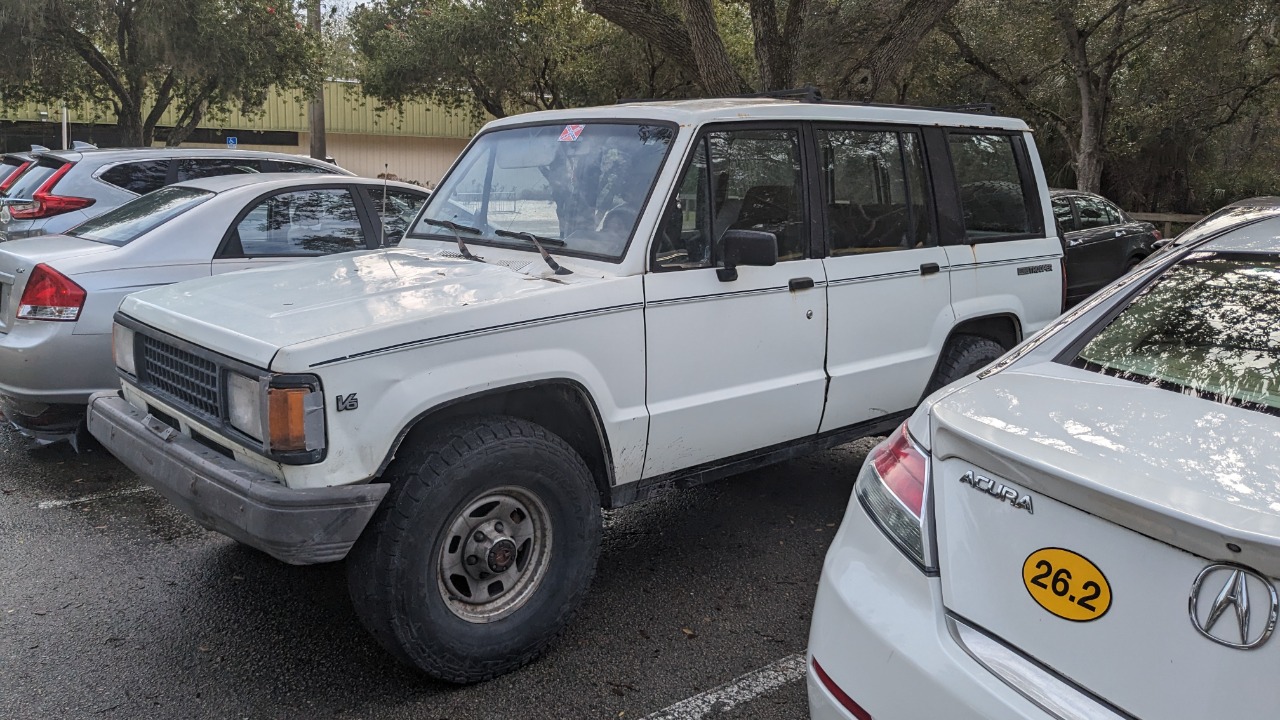
The Trooper’s story is not complete without the safety controversy that later surrounded the model and its corporate parent. When rollover allegations surfaced, they did more than question a single SUV, they challenged the idea that a no-nonsense workhorse could also be safe. The dispute eventually landed in court, where Isuzu lawyers argued that they believed evidence of false statements about the vehicle met the legal standard for malice, a serious charge that underscored how high the stakes were for the brand and for owners who had built their lives around these trucks.
That courtroom battle ended when a jury cleared the testing organization in a closely watched case, a verdict that meant the claims against the publication did not meet the threshold that Isuzu had asserted. The outcome, reported in detail when a jury cleared Consumer Reports, did not erase the questions that had been raised, but it did show how thoroughly the Trooper had been scrutinized. For owners who kept driving their trucks long after the headlines faded, the real verdict came from daily use: if a vehicle keeps starting, keeps tracking straight on the highway, and keeps its occupants out of trouble in bad weather, that lived experience often carries more weight than any courtroom transcript.
Owners who kept the faith
For me, the most convincing evidence of the Trooper’s real-world credibility comes from the people who refused to let theirs go. By the late 1990s, plenty of these trucks had racked up serious mileage, yet owner feedback painted a picture of a vehicle that was more partner than appliance. In consumer reviews of later model years, the pattern is remarkably consistent: drivers praise the SUV for reliability, durability, and a willingness to tackle rough roads without complaint, often noting that it handles poor weather and long trips with the kind of calm that makes you forget how old the odometer says it is.
Those sentiments show up clearly in a detailed Review Summary The for the 1997 version, where Owners describe the Trooper as widely praised for its reliability, durability, and off-road capabilities, and they highlight how it copes with poor weather conditions. Even though that feedback focuses on a slightly newer model, it reflects a throughline that began with the early 1990s trucks: a stout chassis, honest four-wheel-drive hardware, and a cabin that could take abuse without falling apart. When people keep a vehicle for decades and still recommend it to others, that is trust earned the hard way.
Why a 1991 Trooper still tempts used buyers
Decades later, the 1991 Isuzu Trooper has become the kind of used SUV that catches the eye of enthusiasts and practical shoppers alike. When writer Tim Healey spotlighted a 1991 example as a used-car pick, he was not chasing nostalgia for its own sake, he was responding to a truck with a long list of features that still make sense today. In that piece, Tim Healey framed the Trooper as a vehicle that could still serve as a daily driver or adventure rig, and the fact that Today such an old-school SUV can earn that kind of attention says a lot about how well the original design has aged.
The appeal is not just emotional, it is financial. On mainstream shopping sites, The Isuzu Trooper is still listed with pricing that depends on trim level, optional features, mileage, vehicle history, and location, with some examples starting at relatively modest figures that make them accessible to budget-conscious buyers. One listing notes that The Isuzu Trooper price depends on those factors, with pricing starting at $2,995, which is a strikingly low entry point for a body-on-frame SUV with genuine off-road credentials. When I see a 1991 truck that can still be bought, maintained, and used for real work at that price, it reinforces the idea that this model did not just earn trust in its own era, it continues to justify that trust for a new generation of owners.
Enthusiast coverage of specific trucks adds another layer to that story. In the used-car feature that singled out a 1991 Used Car Of The Day, Tim Healey highlighted how a well-kept Isuzu Trooper can still offer meaningful utility, from its tall greenhouse to its straightforward mechanicals. When a vehicle that old can be recommended without irony as a viable purchase, it suggests that the underlying engineering and real-world track record have held up better than the styling trends that have come and gone around it.
The Trooper’s quiet legacy
Looking back now, I see the 1991 Isuzu Trooper as a kind of hinge point between the rugged, truck-based SUVs of the past and the softer crossovers that would follow. It was still unapologetically boxy and utilitarian, yet it offered enough comfort and civility to handle daily commuting without feeling like a farm implement. That balance helped it build a loyal following among drivers who needed one vehicle to do everything, from hauling lumber to hauling kids, and who judged it not by brochure promises but by how it behaved on a cold morning when they were already running late.
The controversies, the courtroom fights, and the changing tastes of the market could have buried the Trooper’s reputation, but instead they seem to have distilled it. What remains in the collective memory is a straightforward SUV that took its knocks, literally and figuratively, and kept going. When I see a 1991 Trooper still in service, paint faded and bodywork scarred, I do not just see an old truck, I see the accumulated proof that it earned people’s confidence the only way that really counts: one mile, one trip, and one owner at a time.
More from Fast Lane Only:
- Unboxing the WWII Jeep in a Crate
- 15 rare Chevys collectors are quietly buying
- 10 underrated V8s still worth hunting down
- Police notice this before you even roll window down