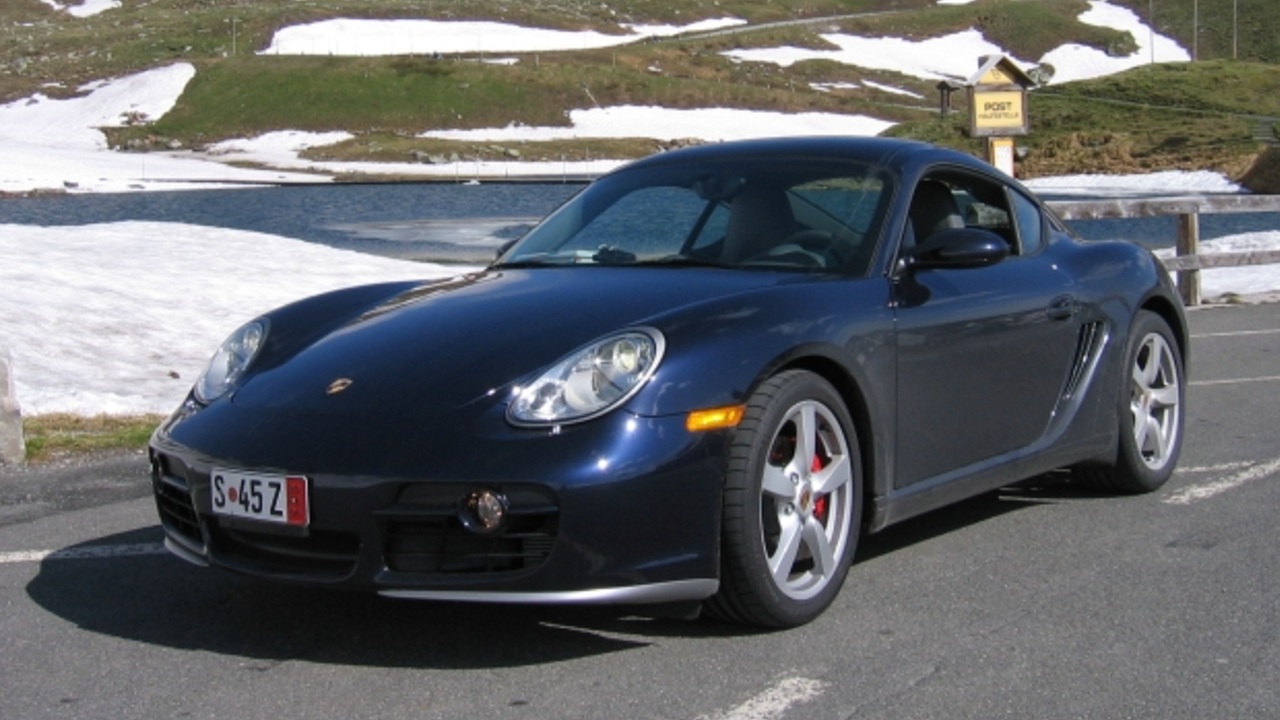
The 2006 Porsche Cayman arrived as a compact, mid‑engine coupe that instantly complicated life inside Stuttgart. Positioned between the Boxster roadster and the flagship 911, it was supposed to fill a neat gap in the range. Instead, it proved so capable that Porsche had to hold it back to avoid embarrassing its own icon, setting up a quiet rivalry that still shapes how enthusiasts talk about the brand’s sports cars.
That tension, between what the Cayman could do and what it was allowed to do, turned a single model year into a strategic turning point. The first Cayman S showed how a perfectly balanced chassis and focused packaging could threaten a car with a 40-plus-year legacy, even with less power and deliberate hardware omissions.
The mid‑engine upstart that handled “too well”
From the start, the Cayman S was engineered around balance rather than brute force. With its engine mounted just behind the seats, the car concentrated mass near the center, which gave it a neutral, predictable feel in corners that many drivers found more approachable than the rear‑engined 911. Contemporary comparisons of mid‑engine and rear‑engine layouts describe how a car like the Cayman can feel more agile and confidence inspiring on tight and technical roads, while a 911 excels in high‑speed stability and rear‑end traction for experienced drivers who can exploit its unique weight distribution.
That inherent poise created a problem. The Cayman S was so good that Porsche intentionally kept it from having 911-matching power or a factory limited‑slip differential, a clear sign that the company was managing internal competition rather than chasing the car’s full potential. Later track tests of more extreme Cayman variants have repeatedly noted that the basic Cayman platform was capable of far more than it was initially allowed to show, reinforcing the idea that the 2006 car was built with one hand tied behind its back to protect the 911’s status.
How Porsche positioned the Cayman against its own legend
Officially, the Cayman was marketed as a hard‑top evolution of the Boxster, not a direct shot at the 911. The coupe body, stiffer structure, and hatchback practicality were framed as a logical step up for Boxster owners who wanted more focus without jumping into the brand’s rear‑engined flagship. Yet the way Porsche equipped the 2006 Cayman S reveals a careful hierarchy: strong performance, but not so strong that it could eclipse the car that had defined the company for a 40-plus-year span. Descriptions of the 911 as Stuttgart’s defining sports car, fighting physics all the while, underline how much institutional weight Porsche had invested in keeping that model at the top of the pyramid.
Inside, the Cayman S mixed everyday usability with subtle nods to track intent. Period builds with custom RS‑type door panels, for example, traded the large standard storage pockets for lighter, simpler trim, a choice that sacrificed convenience in favor of a purer driving environment. Reviewers noted that even with such changes the cabin remained “really nicely done,” which helped Porsche argue that the Cayman was a distinct, more minimalist experience rather than a cheaper 911 clone. The message was clear: this was a driver’s car that sat below the 911 in power and prestige, but not in seriousness.
On the road, the “junior” car refused to behave like one
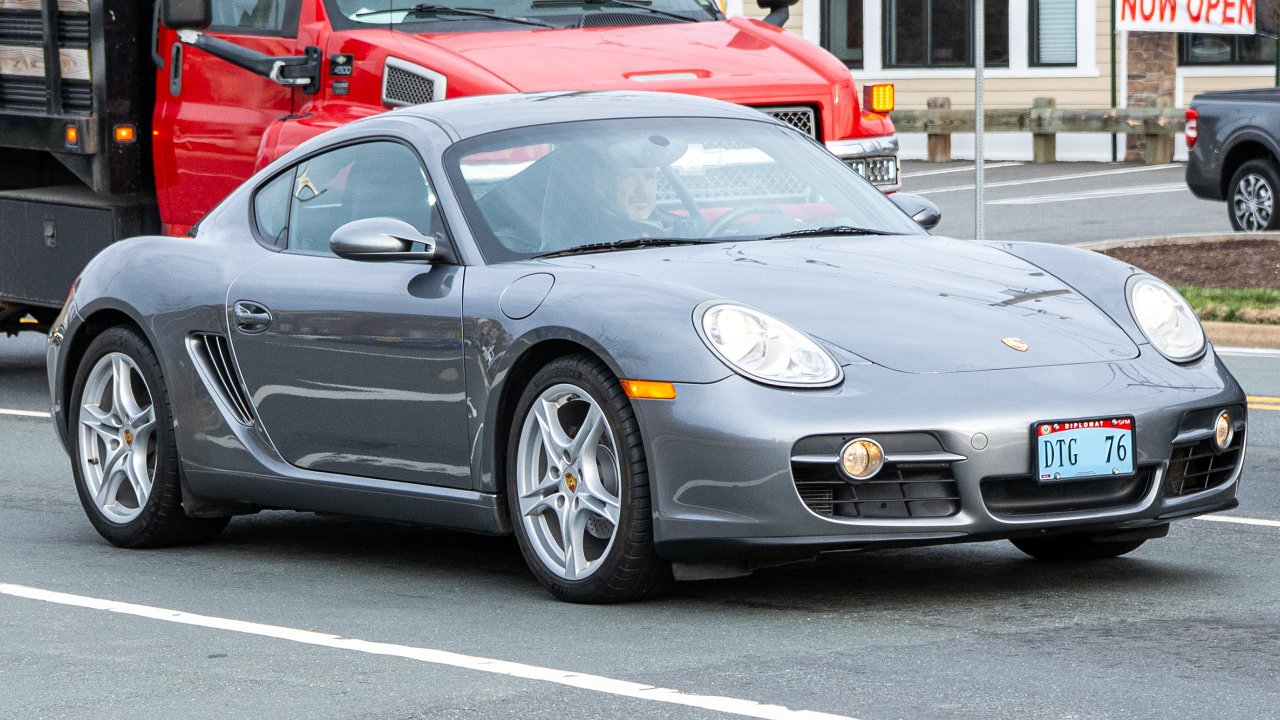
Out on real roads, the 2006 Cayman S quickly showed why it made Porsche’s product planners nervous. In back‑to‑back tests against rivals like the BMW Z4 M Coupe, both cars were praised for being wonderfully docile on city streets, with suspensions that were firm but not punishing and cabins that kept the cars under the radar. That civility, however, masked a sharper edge. When the pace rose, the Cayman’s mid‑engine balance and precise steering made it at least as much fun as the competition, and often more rewarding for drivers who valued feedback over raw straight‑line numbers.
Those same tests highlighted how the Cayman’s character diverged from the 911’s traditional strengths. Where the rear‑engined car leaned on traction and stability, the Cayman invited drivers to lean on its front‑end grip and neutral rotation, especially on tight and technical roads where agility mattered more than outright power. Analyses of mid‑engine versus rear‑engine behavior emphasize that distinction, noting that a 911 rewards experienced drivers who can manage its unique weight transfer, while a Cayman flatters a broader range of skill levels. In practice, that meant some enthusiasts walked away from test drives wondering why they should pay more for a 911 when the “junior” car felt more intuitive and playful.
Enthusiast culture and the “poor man’s 911” myth
The internal rivalry did not stay confined to spec sheets and engineering meetings. It spilled into enthusiast culture, where the Cayman and its open‑top sibling, the Boxster, were often dismissed as budget alternatives to the 911. That perception has long irritated owners who see the mid‑engine cars as distinct machines rather than hand‑me‑downs. In one widely shared video, a Boxster driver bristles at the phrase “poor mans 911,” insisting that the car is no such thing and emphasizing that he owns a Boxs precisely because of its different style of driving, which he much prefers.
That sentiment applies neatly to the Cayman as well. Fans of the mid‑engine platform argue that its balance, visibility, and compact footprint deliver a type of engagement that the larger, more powerful 911 cannot easily replicate. Modern comparisons of the two layouts back up that view, pointing out that a Cayman’s mid‑engine configuration naturally favors quick direction changes and stability under braking, while the 911’s rear‑engine layout trades some of that neutrality for traction and high‑speed composure. The rivalry, in other words, is not just about price or status, but about two different philosophies of how a sports car should feel from behind the wheel.
From 2006 experiment to the end of the 718 era
The 2006 Cayman S did more than create a headache for Porsche’s marketing department. It laid the groundwork for an entire mid‑engine lineage that would eventually include track‑focused models like the Cayman GT4 and the broader 718 family. Over time, Porsche gradually relaxed some of the early constraints, allowing later Caymans to edge closer to the 911 in power and hardware while still stopping short of full parity. The fact that early cars were deliberately denied 911-matching power and a limited‑slip differential became part of the lore, a reminder that the chassis had been capable of more from day one.
That story is now entering a new chapter as Porsche prepares to wind down the 718 generation. The company is pivoting heavily toward electrification, with the Taycan and an all‑electric Macan already signaling where future performance efforts will go. As the 718 Cayman and Boxster near the end of their run, enthusiasts are reflecting on how a model introduced as a cautious experiment grew into a core part of the brand’s identity. The internal rivalry that began in 2006 forced Porsche to define, in precise engineering terms, what made a 911 a 911 and what made a Cayman a Cayman, and that clarity is likely to shape whatever mid‑engine or electric sports cars come next.
More from Fast Lane Only: