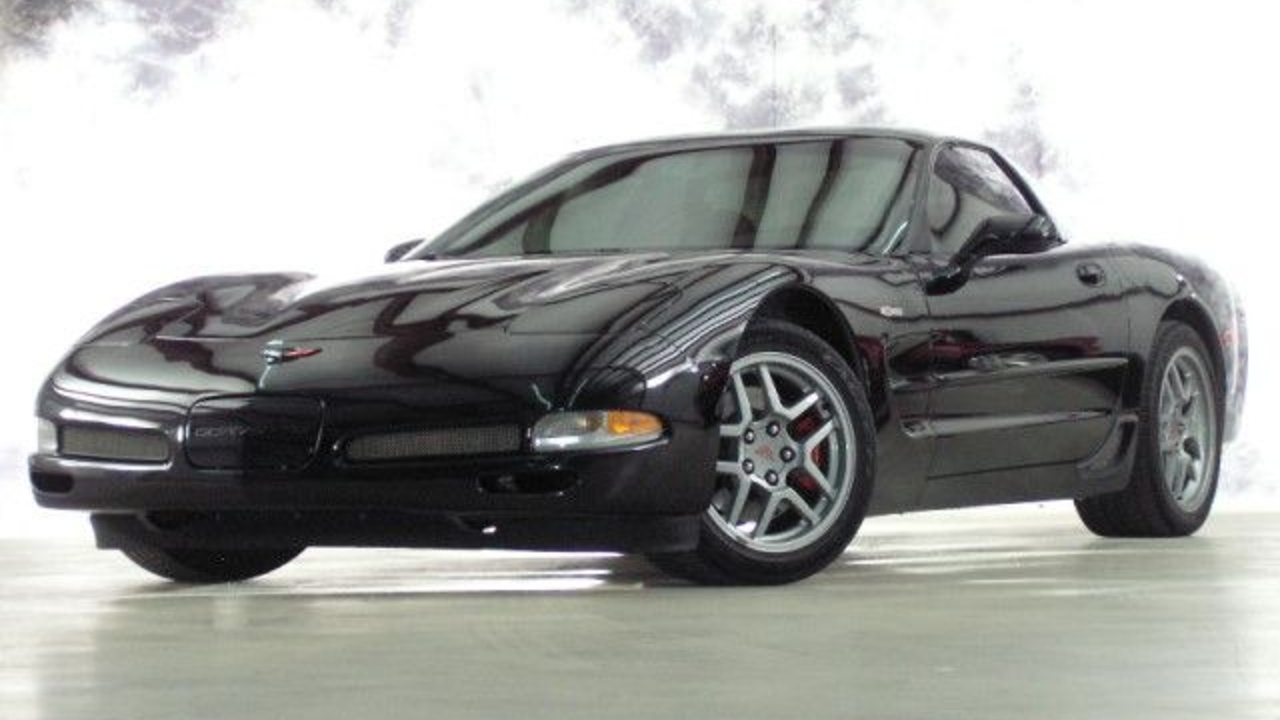
The 2001 Chevrolet Corvette Z06 arrived as a shock to the performance-car establishment, a factory-built track weapon that suddenly made European exotics look overpriced and complacent. By stripping weight, sharpening the chassis, and dropping in a hotter small-block V8, Chevrolet turned the fifth-generation Corvette into a focused driver’s car that reset expectations for what an American sports car could do.
Instead of chasing luxury or headline-grabbing top speeds, the Z06 concentrated on usable speed, structural rigidity, and repeatable track performance. That philosophy, backed by careful engineering rather than gimmicks, is what allowed this Corvette to redefine American performance for a new era.
The moment the Z06 badge returned
When Chevrolet revived the Z06 name for the 2001 model year, it was not just dusting off an old badge, it was signaling that the Corvette was ready to move from boulevard cruiser to serious track tool. The designation traced back to a competition-focused package on the C2 Corvette of the 1960s, and bringing it back on the C5 generation was a clear nod to that racing heritage. Reporting on the C5 platform notes that the 2001 Z06 was positioned as the successor to the earlier ZR‑1 halo car, but with a different mission: less about exotic hardware, more about extracting everything possible from a leaner, more rigid chassis.
The Z06 was built on the fixed-roof hardtop body style, which was inherently stiffer than the hatchback coupe and convertible. According to factory specifications, this configuration helped make the 2001 Z06 the lightest, most rigid, and most agile production Corvette to that point, a combination that mattered more on a road course than a spec sheet. Contemporary model guides describe how, by the end of its first season, the new Z06 had “unquestioningly met the expectations” set for the C5 program, improving the car “in every dimension” and validating Chevrolet’s decision to resurrect a competition-bred nameplate for a street-legal car.
Engineering a lighter, sharper Corvette
The core of the 2001 Z06’s impact was not a single headline feature but a series of deliberate engineering choices that collectively transformed the C5 platform. Chevrolet started with the already advanced C5 structure, then focused on mass reduction and chassis tuning instead of piling on luxury equipment. Factory documentation emphasizes that the Z06 was the lightest production Corvette built up to that point, and that weight advantage was central to its character. Engineers deleted the spare tire, used thinner glass, and specified a lighter battery, while also fitting unique lightweight wheels and titanium mufflers to trim every possible kilogram.
Those savings were not theoretical. Reports on the 2001 Z06 detail how the car’s curb weight undercut other C5 variants, which in turn sharpened responses and improved braking and cornering. The fixed-roof body, already more rigid than the coupe, gave the suspension a more stable platform to work from, and Chevrolet paired it with stiffer springs, revised shocks, and specific stabilizer bars. Period analyses describe the Z06 as the most agile Corvette yet, with the combination of reduced mass and increased structural rigidity allowing the chassis to communicate more clearly and tolerate higher cornering loads without feeling nervous or brittle.
The LS6 and the numbers that changed the conversation
Under the hood, the 2001 Z06 introduced the LS6, a development of the C5’s LS1 V8 that pushed the Corvette into a new performance bracket. The LS6 retained the 5.7‑liter displacement but gained a revised intake, higher compression, and more aggressive camshaft timing, among other changes. As a result, Chevrolet rated the engine at 385 horsepower and 385 lb‑ft of torque, figures that put the Z06 squarely in the territory of big‑block legends like the 1970 Chevelle SS454 while delivering modern drivability and efficiency. Coverage of the model highlights that this output was achieved without resorting to forced induction or exotic materials in the engine itself, underscoring how far small‑block development had come.
Those numbers translated directly into performance that embarrassed far more expensive machinery. Factory performance data credits the 2001 Z06 with 0 to 60 mph times in the low four‑second range and quarter‑mile runs in just over 12 seconds, all on street tires and with full emissions equipment. Enthusiast retrospectives point out that, in most measurable metrics, the C5 Z06 could run with or even surpass the earlier ZR‑1 despite using a simpler, naturally aspirated V8. That combination of accessible power, broad torque, and relatively low weight is what allowed the Z06 to feel explosive on a back road yet composed and repeatable on a track day.
Track focus without exotic-car pricing
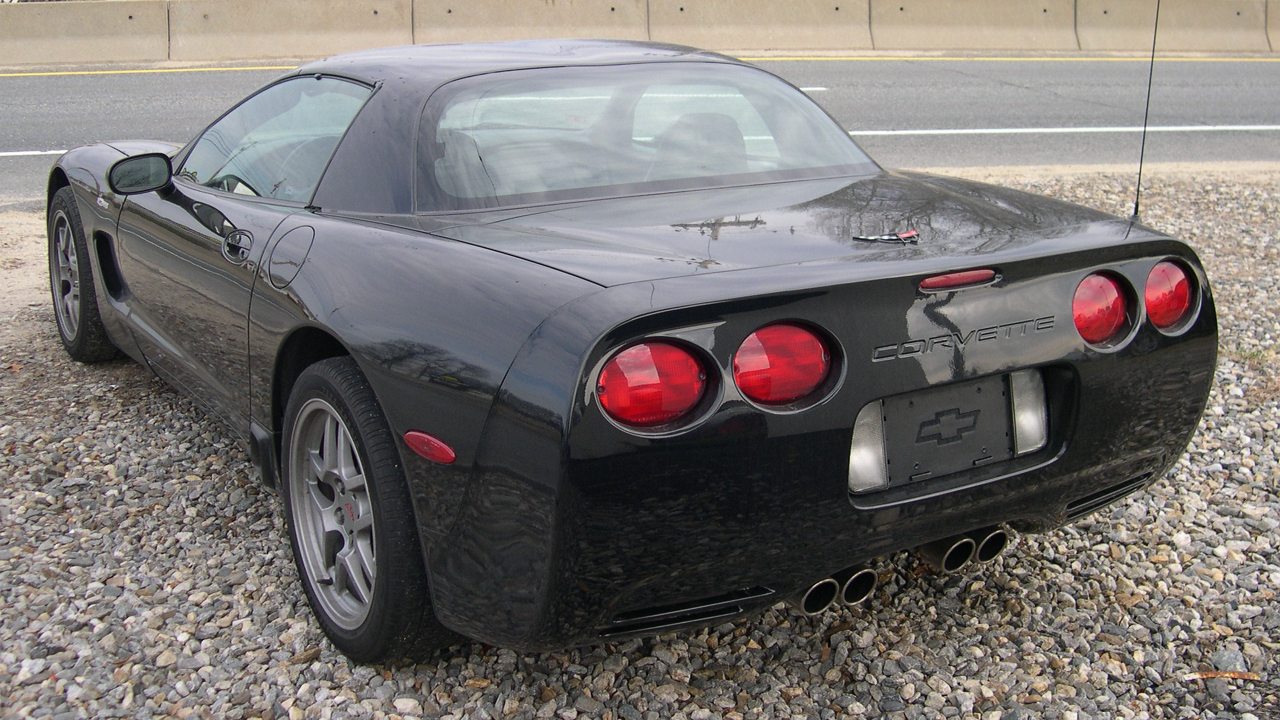
What truly redefined expectations was how Chevrolet packaged this performance. The 2001 Z06 was intentionally aimed at “diehard performance enthusiasts at the upper end of the high performance market,” not at buyers chasing leather and gadgets. Reports on the car stress that it was a “no‑nonsense Corvette,” with equipment choices that favored lap times over comfort. The fixed roof eliminated the heavier, more complex hatch mechanism, the absence of a spare tire freed up space and weight, and the suspension tuning accepted a firmer ride in exchange for sharper responses. Wider, staggered‑diameter wheels and specific high‑grip tires completed the package, giving the Z06 the grip to match its power.
Yet the Z06 was not priced like a limited‑run exotic. Contemporary analyses emphasize that Chevrolet delivered supercar‑level acceleration and track capability at a fraction of the cost of European rivals. One detailed look at the C5 generation notes that the Z06, despite using an engine “only” slightly more powerful than the base LS1 on paper, could rival the earlier ZR‑1 in most performance metrics while remaining far more attainable. That value equation, combined with factory durability and a full warranty, meant that owners could drive to a track, run hard sessions all day, and drive home again without the maintenance anxiety that often accompanied higher‑strung imports.
Legacy inside the Corvette story
Within the broader history of the C5, the 2001 Z06 marked a turning point in how the Corvette was perceived by both enthusiasts and engineers. Earlier coverage of the C5 platform describes how the generation, introduced in the late 1990s, was already a major step beyond the C4, with a new chassis and transaxle layout that improved balance and refinement. The arrival of the Z06 at the end of 2000, as the new model year was announced, was described as a “delicious surprise” for Corvette fans, because it showed that Chevrolet was willing to exploit the full potential of that architecture. By the end of the 2001 season, model guides report that the Z06 had validated the C5’s promise, proving that the platform could support a car that was not just fast in a straight line but genuinely capable on a circuit.
The influence of that decision has echoed through every subsequent high‑performance Corvette. Later generations would introduce even more powerful Z06 variants, but they all trace their lineage back to the formula established in 2001: a stiffer structure, meaningful weight savings, a stronger small‑block V8, and a focus on track performance that did not abandon street usability. Historical overviews of the C5 era note that resurrecting the Z06 designation “re‑entered the chat” for Corvette’s racing‑inspired side, reconnecting the modern car with the Sting Ray competition packages of the 1960s. In that sense, the 2001 Z06 did more than post impressive numbers, it reset the Corvette’s identity and, in the process, redefined what American performance could look like at the dawn of the twenty‑first century.
More from Fast Lane Only: