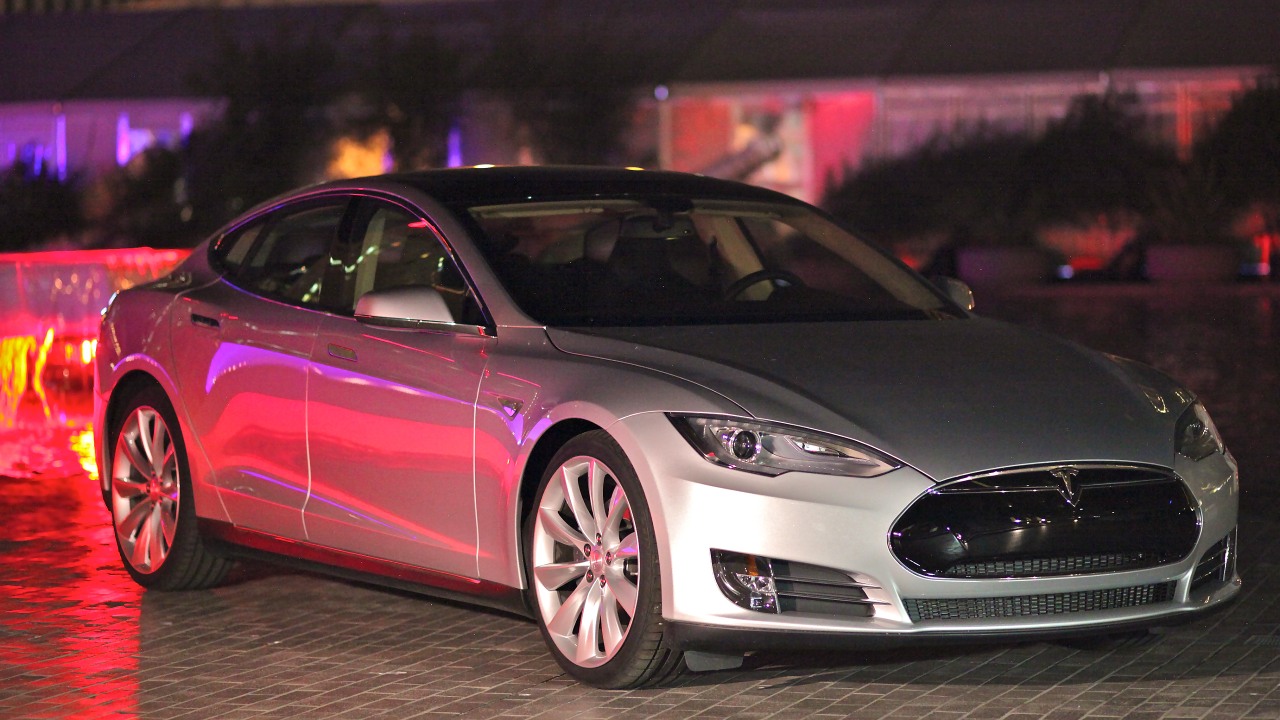
The 2012 Tesla Model S did not just join the luxury sedan market, it rewrote the expectations for what an electric car could be. By pairing long range, high performance, and a tech-heavy cabin with a clean-sheet electric platform, it forced legacy automakers to treat battery power as a core strategy rather than a compliance sideline. A little more than a decade later, the rest of the industry is still reacting to the template that first car laid down.
From niche experiment to benchmark luxury sedan
Before the first Tesla Model S reached customers, battery vehicles were largely framed as short-range city runabouts or quirky eco statements. The Model S arrived as a full-size, four-door car positioned directly against established premium sedans, yet it was built from the ground up as a battery-electric vehicle by an American company that had only sold a low-volume roadster. The Tesla Model S used a dedicated skateboard-style battery pack and electric drivetrain, which allowed a low center of gravity and generous cabin space that traditional platforms struggled to match, according to technical overviews of the Tesla Model and its evolution.
Crucially, the car delivered usable range and performance that matched or exceeded many gasoline rivals. Period specifications list multiple battery options, with the longest-range 2012 configuration rated at an estimated 265 miles on a charge, a figure that dwarfed the double-digit ranges of earlier mass-market EVs and is still competitive with newer models, as detailed in contemporary coverage of the 2012 Tesla Model S. That combination of space, speed, and distance reframed electric propulsion from a compromise to a legitimate upgrade, which is why later analysis describes the Model S Launch as a “game-changer” that reset expectations for what an electric vehicle could be in the luxury segment.
Design, performance, and the moment EVs became aspirational
The styling and driving experience of the Tesla Model S were just as important as its battery specs in forcing the industry to pay attention. Reviewers at the time emphasized that the car looked and felt like a modern luxury sedan first, with its sleek fastback profile, minimalist interior, and strong acceleration, and only secondarily like an electric vehicle. One early road test described how Tesla “rethinks the automobile,” highlighting a powerful and efficient electric drivetrain that delivered sports-sedan levels of thrust without the noise and vibration of a combustion engine, a contrast that helped the Model S garner “universal admiration from both the press and public” not simply because it was efficient, but because it was desirable to drive.
That desirability mattered because it made electric cars aspirational rather than dutiful. Later retrospectives note that while other electric cars of the era “barely cracked 100 miles” of range and often felt compromised, the Model S arrived with long legs and high performance that made it a compelling upgrade for buyers who might otherwise have chosen a German V8. Analysts who have examined how Tesla reshaped the automotive industry argue that this pivot, from eco appliance to status object, is one of the reasons the brand could pressure incumbents in the premium market and why the success of the Model S disrupted the luxury segment enough to force rivals to accelerate their own high-end EV programs.
Software-first car: OTA updates and the giant touchscreen
Under the skin, the 2012 Tesla Model S treated software as a defining feature rather than an afterthought, a shift that has since spread across the industry. The car introduced the idea of routine over-the-air software updates for a mainstream production vehicle, allowing Tesla to add features, tweak performance, and fix bugs without a dealer visit. Later analysis credits The Model with bringing the OTA concept into the automotive mainstream, noting that many newer cars now receive updates that can change how they drive or what features they offer, a pattern that traces directly back to the Model S approach of shipping a car that could meaningfully evolve in the owner’s driveway.
The interior hardware was equally radical. Instead of a conventional stack of buttons and small screens, the Tesla Model S Comes With High Tech Features centered on a large portrait touchscreen that controlled navigation, climate, media, and vehicle settings, paired with a digital instrument cluster. Contemporary feature rundowns highlighted extras like a rearview camera and LED lighting, but it was the dominance of that central display and the deep integration of software that set the tone. Later commentators have argued that this interface helped normalize the idea that a car could be configured and updated like a smartphone, and that it pushed other manufacturers to rethink their own infotainment strategies, even if they did not immediately match Tesla’s screen size or level of integration.
Awards, cultural cachet, and the moment incumbents took notice
Recognition from influential tastemakers helped cement the Model S as more than a curiosity and signaled to traditional automakers that something fundamental had shifted. The car quickly collected major industry awards, including a high-profile “Car of the Year” honor that some observers described as a “Major Car Award” for a company that had never before produced a mass-market vehicle. Coverage of that decision emphasized how unusual it was for a relatively new manufacturer to beat out established brands, and quoted judges who praised the Model for its blend of performance, efficiency, and innovation, a combination that made it difficult for competitors to dismiss the car as a niche product.
The cultural impact has only grown with hindsight. Over a decade later, TIME Names 2012 Tesla Model S Among Top Inventions of the Past Years, placing it alongside other transformative technologies and noting that instead of being a small, compromised city car, the Model S arrived as a sleek, long-range sedan that “made electric cars cool.” That retrospective framing matters because it reflects how the car has come to be seen not just as a successful product, but as a turning point in consumer perception. When a mainstream audience starts to view an electric sedan as a status symbol and a technological milestone, it becomes much harder for legacy automakers and policymakers to treat electrification as optional or purely regulatory.
How one car rewired the business model and the broader market
The 2012 Model S did not only innovate in hardware and software, it also challenged how cars are marketed, sold, and supported. Analysts who have examined Tesla’s broader strategy argue that the success of the Model S was central to a “synergy” that disrupted the luxury market, from direct-to-consumer sales to vertically integrated charging and service. The Model helped prove that a manufacturer could bypass traditional dealer networks, sell largely online, and still build intense demand, a shift that later reporting notes even changed how some buyers think about ordering a vehicle, with customers placing deposits and waiting for factory builds instead of haggling over inventory on a lot.
That success put pressure on established automakers in several ways. First, it demonstrated that there was real appetite for premium electric sedans, which pushed rivals to accelerate their own EV roadmaps and invest heavily in dedicated platforms rather than adapting existing gasoline architectures. Second, it raised expectations for software support, with owners coming to expect OTA updates, app-based controls, and rapid feature rollouts as part of the ownership experience. Third, it showed that a relatively young American company could compete head-on with European and Japanese luxury brands, which in turn encouraged new entrants and startups to pursue EVs as a viable path into the market. Later commentary on how Tesla changed the automotive industry forever points to these shifts in consumer expectations and competitive dynamics as lasting legacies of the Model S era.
More than a decade after the first cars were delivered, the template set by that 2012 sedan is visible across the industry. Dedicated EV platforms with flat battery packs, minimalist cabins dominated by large touchscreens, and software-defined features that can be unlocked or improved over time are now common talking points in product launches from long-established manufacturers. When I look at that landscape, it is clear that the Model S did not just force the industry to pay attention in 2012, it quietly rewrote the rulebook that everyone else is now trying to follow.
More from Fast Lane Only: