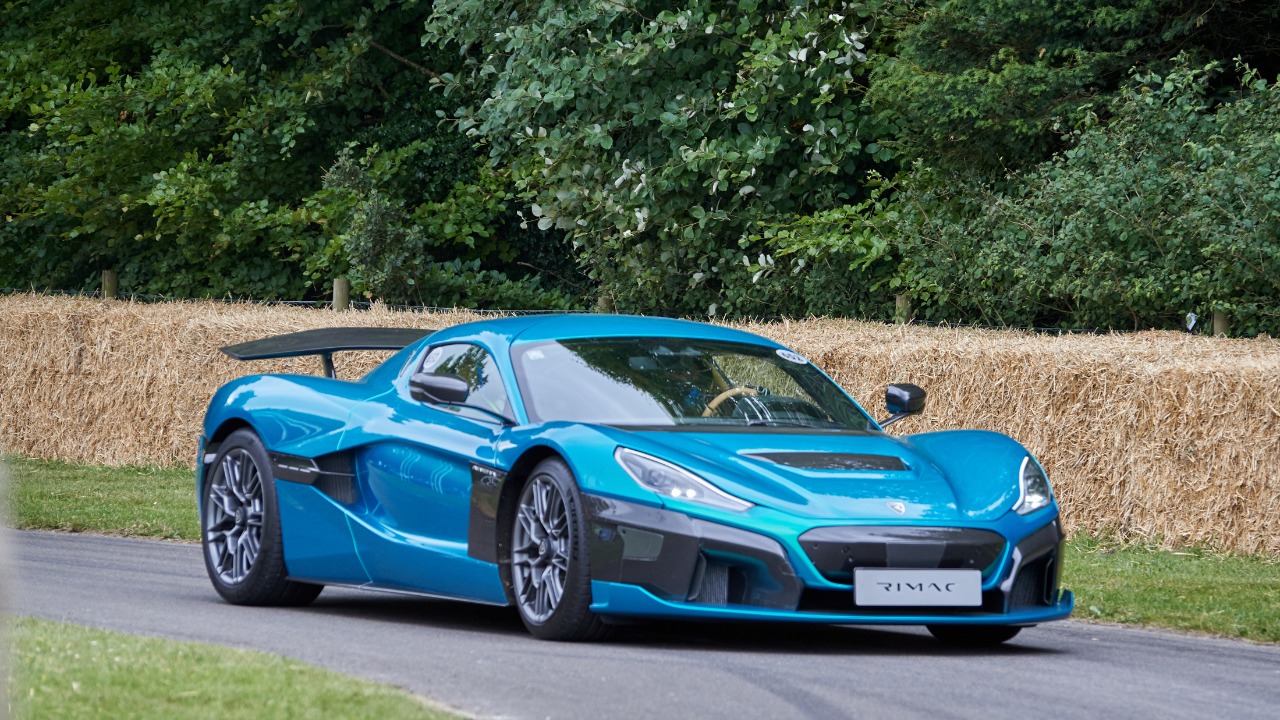
The 2022 Rimac Nevera did not just nudge supercar benchmarks, it detonated them and forced everyone to rethink what road‑legal acceleration can look like. By pairing brutal electric torque with obsessive software control, it turned numbers that once belonged to drag strips and wind tunnels into repeatable, production‑car data. In the process, it quietly rewrote the math that has defined how we talk about speed for decades.
When I look at the Nevera story, I see less a single headline‑grabbing sprint and more a methodical dismantling of old assumptions about traction, braking and even what “forward” means. The 2022 car laid the groundwork, and the subsequent Nevera R only sharpened the point, showing that the real revolution is in how precisely you can deploy physics, not just how much power you can summon.
From “Zero to 60” to a new performance language
For years, the shorthand for a fast car has been a simple 0–60 figure, with anything around 3.2 seconds considered wild and 3.3 seconds once enough to crown the Ferrari Enzo the king of the road. The Nevera arrived and treated that yardstick as a warm‑up exercise, with early claims of a 0–60 blast in a stratospheric 1.85 seconds showing how far electric torque could stretch the scale that started with “Zero to 60 in 3.2 seconds” and “Just two decades ago, a time of 3.3 seconds made the Ferrari Enzo the quickest car.” By the time independent testing caught up, the car had pushed the figure down to a verified 1.74 seconds, a number that would have sounded like a timing glitch in the era when combustion ruled the spec sheet.
That 1.74 second run did not stand alone, it was part of a carefully orchestrated assault in which the Rimac Nevera set 23 performance records in a single day, including a 0–400–0 km/h sprint that saw the car rocket to 400 km/h, roughly 249 mph, and then come back to a standstill in one continuous, measured event. Company data shows the same car also reset benchmarks for the quarter mile, half mile, standing mile and more, with the 0–60 mph record of 1.74 seconds sitting alongside a stack of other acceleration and braking milestones that made the old single‑number brag sound quaint. As company founder Mate Rimac later pointed out, the total time for that 0–400–0 run was less than it once took the McLaren F1 to reach its top speed, a reminder that the Nevera was not just trimming tenths, it was compressing entire eras of performance into a few heartbeats.
How four motors and smart software bend traction to their will
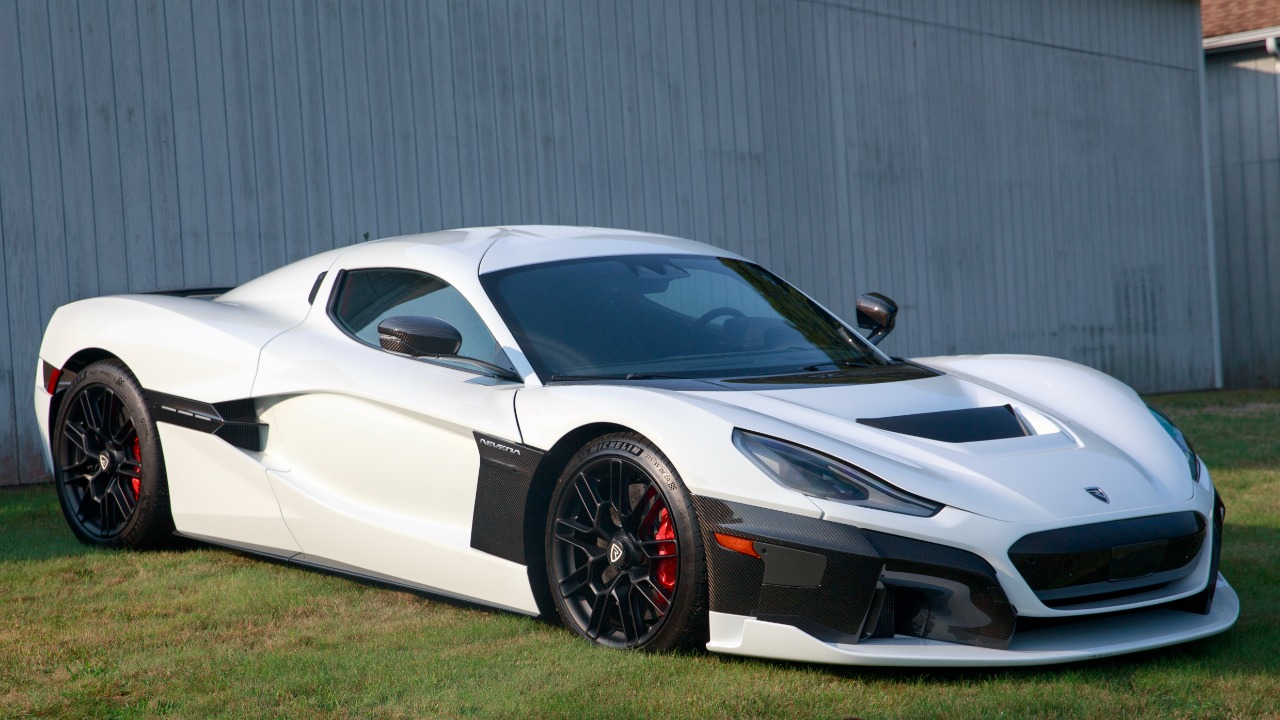
The secret to those numbers is not just raw power, although the Nevera’s electric motors generate 1.4 m megawatts of power, or 1,914 horsepower and 1,740 Nm of torque, which would be outrageous on their own. What really changes the game is how that output is sliced and served to each wheel by the Rimac All Wheel Torque Vectoring 2 system, often shortened to Rimac All Wheel Torque Vectoring, or R AWTV 2. Instead of relying on clutches and differentials, the car uses four independent motors and a central brain to decide, in real time, exactly how much twist each tire can handle, replacing ordinary stability and traction control systems with something closer to a conductor guiding an orchestra.
To appreciate how radical that is, it helps to remember how a traditional mechanical AWD layout works. A mechanical AWD system has to physically send power from the engine through a complex series of driveshafts and differentials to the wheels, and there is always a slight delay baked into that process. In the Nevera, there is no such lag, and no gearbox at all in the conventional sense, which is why the car can surge from a standstill with absolutely phenomenal speed and still feel composed. That same architecture lets the Nevera behave like a laboratory tool for traction, with the software constantly probing the grip limits and adjusting torque before the driver ever feels slip, a level of control that makes the old idea of “all‑wheel drive” feel almost analog.
Acceleration that outpaces braking, and the physics behind it
One of the strangest sentences I have ever typed about a road car is that the Nevera can accelerate faster than it can slow down, yet that is exactly what its creator has explained. Mate Rimac has compared the car’s stopping hardware to “Hydraulic brakes with ABS, you know, when you push the pedal on a car and you feel ABS acting, that’s how quickly the Nevera accelerates,” a line that sounds like hyperbole until you look at the data. When a car can go from a standstill to highway speeds in less time than it takes a typical performance machine’s ABS system to cycle through a hard stop, the usual mental model of acceleration and braking symmetry starts to fall apart.
The 0–400–0 km/h run is the clearest illustration of that imbalance. In its original form, the Rimac Nevera completed the sequence in a time that already stunned the industry, but the Nevera R later cut more than four seconds from that earlier benchmark, stopping the clock at 25.79 seconds for the full 0–400–0 km/h sprint compared with 27.83 seconds for the Koenigsegg that previously held the crown. Independent measurement partners described the Nevera R effort as a new benchmark, noting that the car broke 24 performance records in one campaign and that, among the most notable, was its dramatic improvement in the 0–400–0 discipline. When you combine that with the original car’s 22 acceleration and braking records, you get a picture of a platform that treats the laws of motion less as a limit and more as a design brief.
Why the Nevera’s records feel repeatable, not like one‑off stunts
What makes the Nevera’s acceleration revolution feel durable is that it is rooted in systems engineering rather than party tricks. With the Nevera, unparalleled performance meets real time intelligence for a driving experience you will never forget, and that is not just marketing language. The car’s four electric motors, its battery management and its torque vectoring are all tuned to deliver the same violence of thrust again and again, whether you are chasing a Nürburgring lap or a drag strip time slip. That is why the same basic package could set a new electric car lap record at the Nürburgring while carrying its full 1,914 horsepower and 1,740 Nm output to a top speed of 258 mph, or 412 km/h, without feeling like a fragile science project.
From behind the wheel, that consistency shows up as a kind of eerie calm. Test drivers have described how the Nevera employs R AWTV 2 to shuffle torque so quickly that the car feels almost preternaturally stable, even as the scenery blurs. The contrast with a traditional supercar is stark, where a driver is always managing weight transfer and traction by feel, while the Nevera’s software is already three steps ahead. That same control logic is what lets the car pull off oddities like a world record for reversing at 276 km/h, with reports noting that the Nevera owes its new accolade to a gearless drivetrain that does not really care which way the car is going. When a platform can be that composed going backwards, its forward acceleration numbers start to look less like flukes and more like the natural outcome of a very modern toolkit.
From 2022 Nevera to Nevera R, the curve keeps steepening
The 2022 Rimac Nevera was the proof of concept that a road‑legal EV could obliterate almost every acceleration record that mattered, but the Nevera R showed that the story was still in its early chapters. The Nevera R builds on the original Nevera’s groundbreaking platform with next gen hardware that delivers a major leap in performance, and it did so while keeping the same basic silhouette and four motor layout. Over the summer, the updated car broke 24 records and reclaimed the 0–400–0 title, using Michelin Cup 2 tires and revised power electronics to turn what was already a physics bending machine into something even more extreme.
That escalation has been documented from multiple angles. One detailed breakdown noted that the Nevera R set a new benchmark by breaking 24 performance records, and that among the most notable was its new top speed record for electric vehicles, while another analysis pointed out that the car’s 0–60 sprint had dropped to a 1.66 second figure when measured with a one foot rollout, a number that would have sounded like science fiction when the original Nevera was unveiled. Mate Rimac himself has said he is happy now he has just broken every acceleration record there is to break with the Rimac Nevera R, a statement that lands with extra weight when you remember that the same company already holds a world record for going more than 170 mph in reverse, that Rimac was able to achieve this feat partly because the Nevera foregoes a transmission entirely, and that engineers inside the company are already talking about how, in theory, 0–60 mph in under 1 second is possible if you can find tires and a surface that will cooperate.
For me, that is the real legacy of the 2022 Rimac Nevera: it did not just post a wild 0–60 time, it reset the expectations for what a production car can do when you treat software, power electronics and traction as parts of the same equation. The math of acceleration used to be about shaving tenths from a familiar curve; the Nevera turned that curve vertical, and the Nevera R shows that the climb is not over yet.
More from Fast Lane Only: