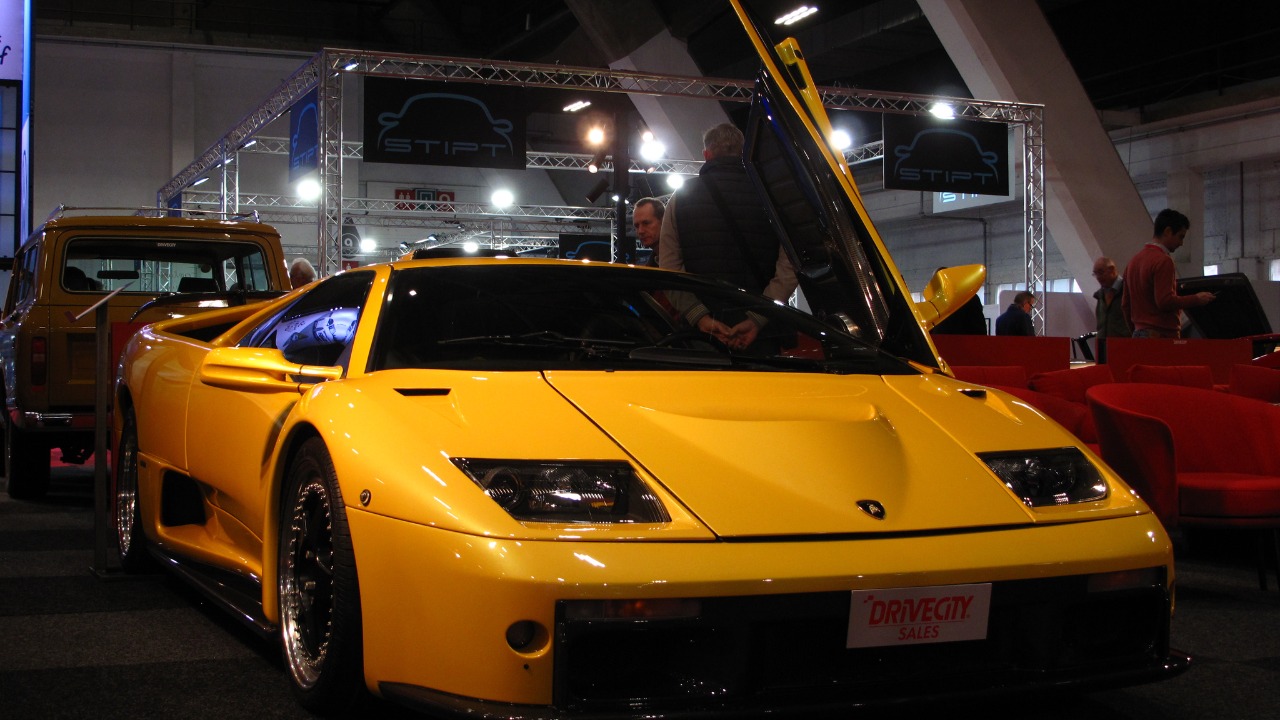
The 1999 Lamborghini Diablo GT arrived at the moment when supercars were starting to trade rawness for polish, and it simply refused to play along. Instead, it pushed the familiar Diablo shape into something harder, lighter and far more focused, turning a wild Nineties poster car into a machine that felt one step away from a race grid. I see it as the point where Lamborghini took the Diablo to its logical extreme, then quietly hinted at the future.
To understand why that matters, you have to look at how deliberately the company stripped away comfort, added aggression and limited production. The Diablo GT was not just another variant, it was a short, sharp statement that the brand could still build a brutal V12 road car in an era already drifting toward refinement and electronic safety nets.
From flagship to outlier: how the Diablo GT broke from the family
By the late Nineties, the Lamborghini Diablo had already spawned a long list of versions, from The Diablo in its original rear wheel drive form to the more sophisticated Diablo VT 6.0. When I trace that family tree, the GT stands out as the moment the engineers stopped chasing broader appeal and instead doubled down on the most obsessive drivers. Even within a lineup that already included the Diablo and other high performance variants, the GT reads like a side project for people who thought the regular car was too polite, a view supported by period discussions of What the Lamborghini Diablo range could already do.
That shift did not happen in a vacuum. With the Canto, which had been conceived to replace the Diablo, put on hold owing to VAG’s dissatisfaction with certain aspects of the design, the company suddenly had time and motivation to refine what it already had. I read the Diablo GT as the product of that pause, a car that took the existing Diablo platform and pushed it further instead of waiting for a clean sheet successor, a process that is laid out in detail when you look at how With the Canto stalled, engineers reworked the outgoing model.
Design turned up to eleven: carbon, ducts and that GT stance
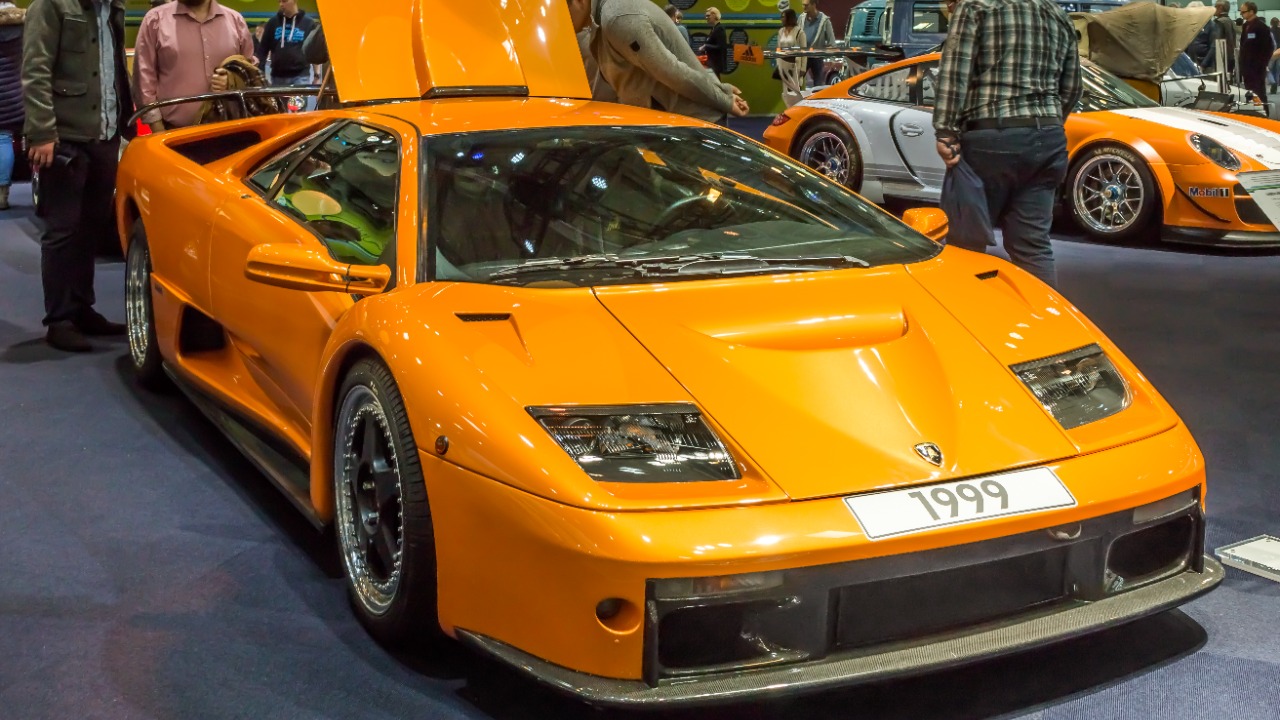
What really marks the Diablo GT out for me is how its bodywork turns familiar curves into something almost weaponised. The basic silhouette is still recognisably Diablo, but the surfaces are busier, the stance lower and the details more functional, as if every vent and scoop has a job to do. The bodywork of the Diablo GT is where the car truly distinguishes itself from other Diablos, and that is not just a stylistic flourish, it is a structural and aerodynamic rethink that makes the car look like a homologation special parked next to a standard Diablo.
Carbon fiber was used extensively through that body, from the reshaped front section to the wider rear that swallows the massive wheels and feeds the V12 with fresh air. That material choice was not about fashion, it was about cutting weight and adding stiffness, and it is one of the reasons the GT carries an aura of extreme rarity and historical significance among collectors who study how much Carbon and bespoke bodywork went into separating it from other Diablos.
Under the skin: when Lamborghini engineering went hardcore
Underneath that aggressive shell, the Diablo GT sharpened the familiar V12 recipe rather than reinventing it. The engine capacity grew and the tuning became more focused, turning the car into a track leaning evolution of the existing Diablo rather than a gentle refresh. In period, the GT was described as Lamborghini’s most extreme road car of its era, a track focused evolution that replaced luxury with lightness, and that is exactly how it feels when you look at the stripped cabin and the way the drivetrain is set up for response instead of comfort.
That intent shows up in the numbers and the hardware. Built in just 80 examples, the Diablo GT was Lamborghini’s most extreme road car of its era, a track-focused evolution that replaced luxury with lightness, and that limited run alone tells you how little compromise the company expected from its buyers. When I see that figure of 80, I read it as a quiet admission that this car was never meant to be a mainstream flagship, it was a statement piece for a tiny group of owners who wanted the most focused version of the Diablo that Lamborghini could legally sell for the road.
From Geneva spotlight to chassis stories and digital fame
The public first saw just how far Lamborghini was willing to go with the Diablo when the GT was revealed at the Geneva Motor Show. In 1999, Lamborghini fans got a pleasant surprise when the Diablo GT was revealed at the Geneva Motor Show, combining heavily modified bodywork with a more aggressive take on the familiar V12. I like that debut moment because it captures the tension between the brand’s wild past and the more corporate future that VAG ownership would bring, and the GT sits right on that fault line as a kind of farewell to unfiltered excess, a role that becomes clear when you revisit how Lamborghini presented the Diablo GT at Geneva.
Behind that show car, individual chassis tell their own stories. Chassis XLA12359 is a 1999 Lamborghini Diablo GT, completed on November 24, 1999, and delivered new to Germany, and details like that remind me how carefully these cars were allocated and documented. Each one carried the same core specification, including the 5-speed manual gearbox that kept the driving experience analog, and that combination of rarity and mechanical purity is exactly what makes a car like Chassis XLA12359 such a touchstone for enthusiasts who track where these machines ended up.
The GT’s afterlife: racing echoes, video tributes and cultural memory
Even after production stopped, the Diablo GT kept echoing through Lamborghini’s projects and through car culture more broadly. The limited edition Diablo GT not exclusive or extreme enough for you, the company effectively asked, before creating the even more focused Diablo GTR for circuit use. That car stripped away the last road going concessions, and its existence underlines how the GT sat just on the civilised side of a line that the GTR then crossed, a progression that is easy to see when you look at how the 1999 Diablo GTR is described as the answer for anyone who thought the Diablo GT was not exclusive or extreme enough.
That legacy has also been kept alive in the way enthusiasts talk about and film the car. In one detailed video review, recorded in Aug, the presenter notes that the engine was bigger, the all-wheel drive made more power and all that good stuff, before pivoting to focus on the GT itself and what makes it special. I find that kind of coverage revealing, because it shows how even in a crowded field of modern supercars, a well shot feature on the Lamborghini Diablo GT in Aug can still feel fresh, reminding viewers that this late Nineties experiment in extremity still has something to say about what a supercar should be.
More from Fast Lane Only: