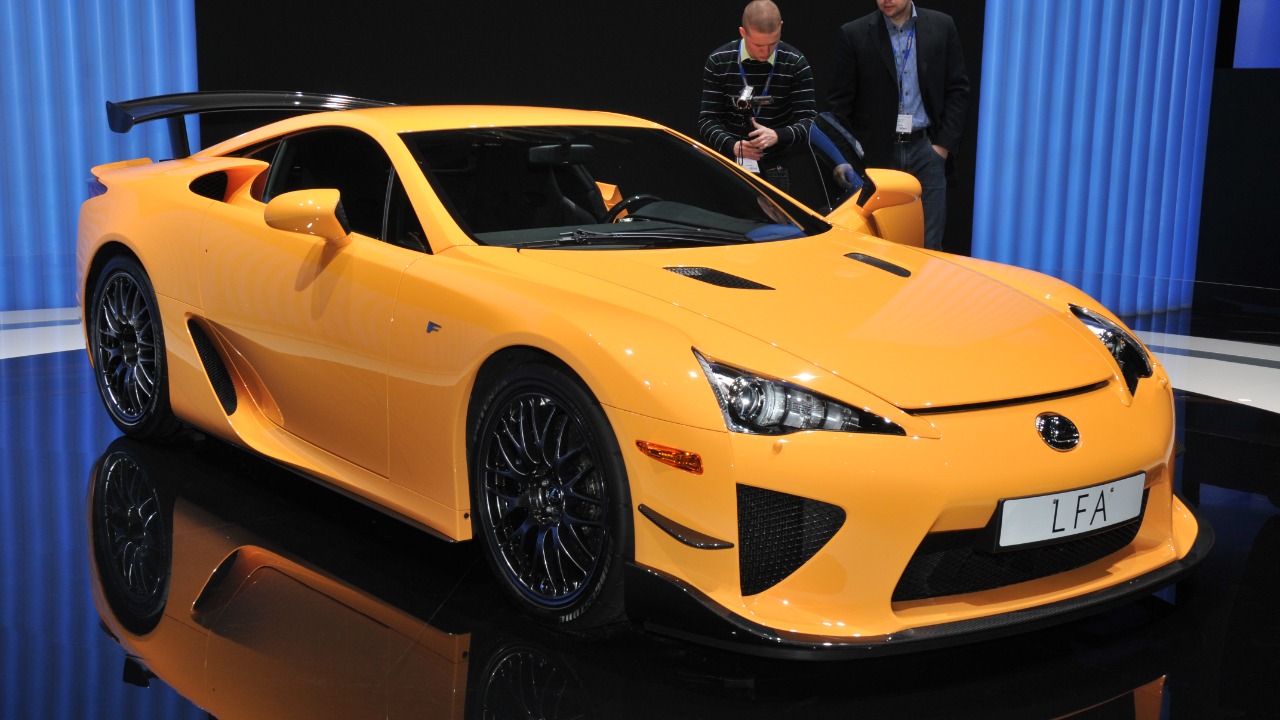
The 2011 Lexus LFA arrived as a limited-run supercar, but its real legacy lives in people’s ears rather than on spec sheets. More than a decade later, enthusiasts still argue that its V10 created the greatest automotive sound ever recorded, a mechanical aria that turned every tunnel into a concert hall. I want to unpack why that noise feels so special, and how a team of engineers and instrument makers treated an engine like a Stradivarius to make it sing.
The supercar that became a soundtrack
When I listen to the LFA at full throttle, what strikes me first is how clean the note is, almost like a racing bike and a grand piano playing in unison. That clarity is why short clips of the car still circulate widely, with one reel inviting viewers to “Sound ON!” and racking up 10.2K views and exactly 113 visible interactions as it calls The Lexus LFA “the greatest sounding car of all time.” Even in a crowded feed of modern exotics, that shriek cuts through, and I can hear why people stop scrolling just to replay those 17 seconds.
Part of the mystique is that the car’s character is baked into its hardware, not faked through speakers or software. The Lexus LFA was built around a naturally aspirated V10 that revs with almost absurd urgency, and promotional clips still urge viewers to simply “Enjoy 17 seconds” of that sound because the engine does all the talking. In another caption, The Lexus LFA’s V10 is described as “more than an engine,” a piece of engineering and sound design that was developed to produce 552 horsepower and a “sweet symphony,” and that framing captures how the car has shifted in people’s minds from a rare Lexus to a rolling instrument.
How Yamaha turned a V10 into an instrument
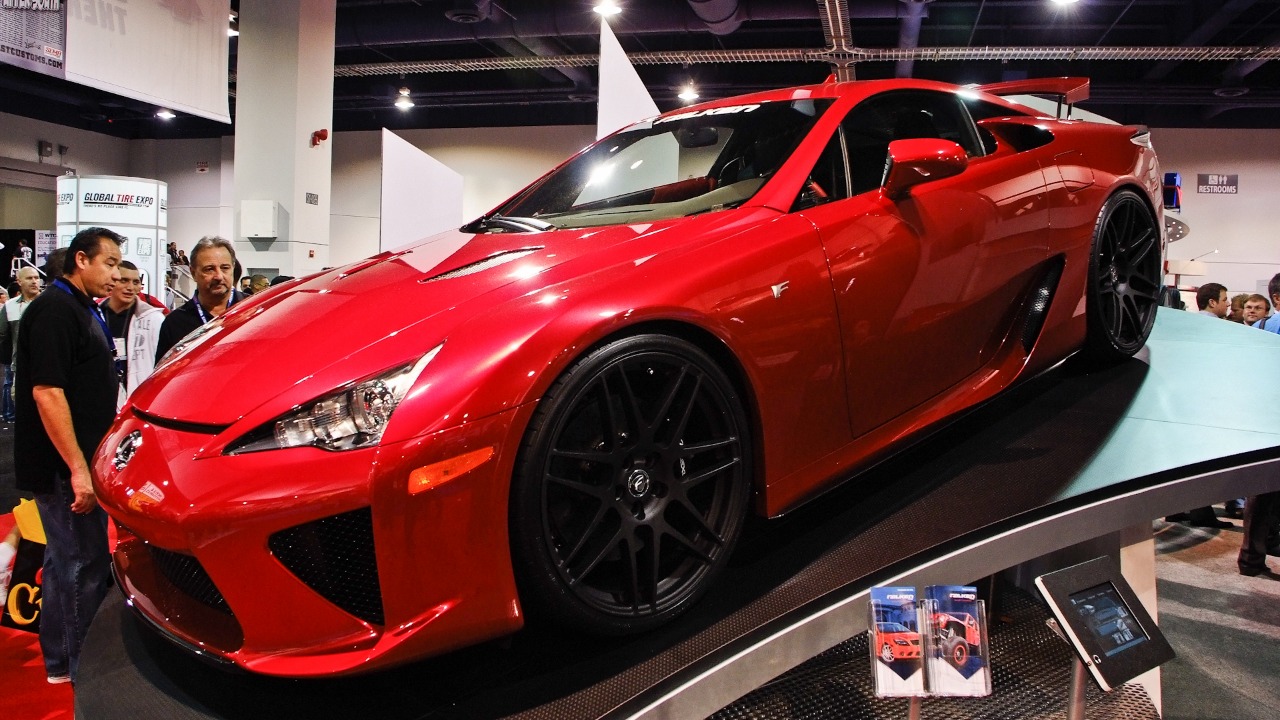
The secret behind that voice lies in a collaboration that treated the powertrain like a musical project as much as a mechanical one. Yamaha, better known to most people for pianos and guitars, played a crucial role in shaping the LFA’s sound, using its expertise in acoustic design to tune the intake and exhaust like the body of a violin. One detailed explanation notes that Yamaha worked specifically on the Lexus LFA’s distinctive engine note, leveraging its background in musical instruments to create that unmistakable scream that enthusiasts still chase in aftermarket exhausts.
Inside the engine bay, the partnership went even deeper than a few resonators. Official technical material explains that The Lexus LFA is powered by a 10‑cylinder engine co‑developed by Yamaha Motor and Lexus, with an even firing interval that helps produce a clear, dynamic and smooth sound across the rev range. Another description of the acoustic concept spells out how engineers performed a dedicated acoustic design so the intake roar, mechanical whir and exhaust note would blend into a single, clear and dynamic voice rather than a jumble of unrelated noises, which is exactly what I hear when the tach needle sweeps past the midpoint.
The “roar of an angel” and the 4.8-liter crescendo
On paper, the LFA’s 1LR‑GUE engine looks like a conventional high performance unit, but its character is anything but ordinary. Commentators have nicknamed the 1LR‑GUE “the roar of an angel,” a phrase that captures how the sound balances aggression with an almost choral purity, and they emphasize that Lexus and Yamaha joined forces to create a bespoke V10 that marketing departments barely needed to advertise because the exhaust note sold the car on its own. That description matches the way the engine climbs in pitch, starting with a metallic growl and rising into a high tenor wail that sounds more like a race car than a road‑legal coupe.
Underneath that voice sits a very specific set of numbers that owners and fans love to recite. The LFA’s 4.8‑liter displacement is often highlighted in technical breakdowns, with one clip bluntly noting that Its 4.8-liter V10 was co‑developed with Yamaha’s music division and tuned like a musical instrument to create that scream. Another period write‑up points out that Lexus was “making some noise” about the sound of its $600K supercar, inviting listeners to hear audio of the 4.8 litre V10 in the LFA and underlining that the car’s roughly $600 price tag in thousands was justified as much by its soundtrack as its speed. When I line up those figures with the way the engine revs, it feels like every cubic centimetre was drafted into the orchestra.
Digital dials, shattered glass and a tuned “soundtrack”
The LFA’s voice was so rapid and high pitched that even its instruments had to adapt. One detailed driving video points out that the car uses an all digital gauge cluster because, as the presenter explains, They found no analog gauge could move as quickly as the engine could rev, which tells me just how violently the V10 can sweep from idle to redline. That same urgency is what makes the sound so addictive, because the note does not just rise, it snaps upward in a way that feels more like a superbike than a grand tourer.
Engineers did not leave the rest of the car untouched either, and they treated the cabin as part of the instrument. Official material on the car’s acoustic work explains that Lexus worked with a team of specialists to enhance the acoustics of the LFA’s 4.8L engine, meticulously tuning its multiple sound channels so that intake resonance, exhaust pulse and mechanical vibration would combine into a single, carefully shaped note, a process Lexus described in the context of vibration strong enough to break glass. Another technical summary lists KEY POINTS that the Lexus LFA sounds as good as it drives thanks to Formula 1 inspired acoustic engineering and a unique “soundtrack” created by tuned intake pulses and exhaust chambers, with that KEY POINTS section even mentioning how additional chambers create an unobtrusive note at cruising speeds so the car can calm down when the driver does.
The result of all that work is not just theory, it is something you can see and hear in dramatic demonstrations. One widely shared clip recalls how The Lexus LFA’s exhaust note became a masterclass in sound engineering, strong enough in one stunt to shatter champagne glasses and framed as proof that the brand’s pursuit of perfection was not just a slogan, a moment that The Lexus LFA still trades on in modern social posts. When I watch that glass explode at the exact pitch of the V10, it feels like the ultimate validation that this engine really was tuned like a concert instrument rather than a simple power unit.
Why the LFA still sounds like it escaped a concert hall
What keeps the LFA’s legend alive for me is how consistently people still rank it at the top of the automotive sound hierarchy. A recent video simply introduces the car as the V10 powered Lexus LFA supercar, “known as one of the best sounding cars on the planet,” and then lets the audio of full throttle runs do the convincing, with the Lexus LFA howling through gears in a way that makes newer turbocharged machines feel muted. Another reel leans into the same idea, calling the LFA the “BEST SOUNDING CAR” while the camera lingers on the tach and the driver works through the gears, and I find myself nodding along because the sound alone makes the case.
There is also a broader recognition now that this car’s voice was not an accident but the product of a deliberate philosophy. One deep dive into the project describes the Lexus x Yamaha partnership as the genesis of a sonic icon and stresses that What sets the LFA apart is that its sound was never left to chance, with Lexus and Yamaha treating the car as if it had escaped a concert hall. Even early coverage captured that intent, noting that Lexus was making noise about the LFA’s soundtrack and inviting You to listen to the V10 in action, a reminder that from the start the company saw the car’s voice as central to its identity rather than a byproduct of performance. When I put all of that together, the 2011 Lexus LFA feels less like a forgotten halo car and more like a benchmark in how to make a machine sing.
More from Fast Lane Only: