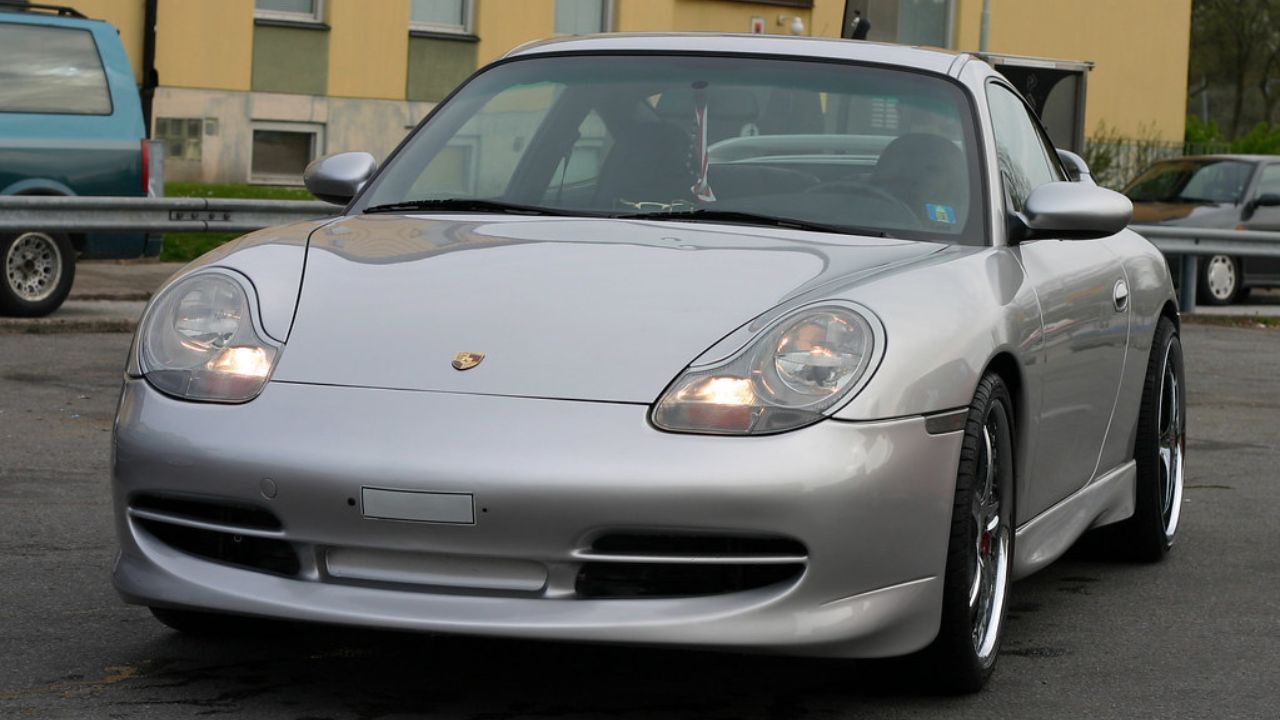
Few sports cars have remained as faithful to their original engineering concept as the Porsche 911. Since its introduction in 1964, the 911 has retained its signature rear-engine layout while continuously improving performance, safety, and everyday usability. Many manufacturers would have replaced such an unconventional design long ago, yet Porsche chose to refine it instead. The result is one of the longest-running success stories in automotive history.
The Rear-Engine Layout Defined Its Identity
When the Porsche 911 debuted, it inherited the basic rear-engine concept of the earlier Porsche 356. Mounting the flat-six engine behind the rear axle gave the car exceptional traction during acceleration and created a distinctive driving character unlike that of front-engine sports cars.
The layout also presented challenges. Early 911s could become difficult to control at the limit because much of the vehicle’s weight was concentrated over the rear wheels. Drivers needed skill and smooth inputs to fully exploit the car’s capabilities.
Rather than abandoning the design, Porsche committed to understanding its strengths and reducing its weaknesses through careful engineering.
The rear-engine layout became the foundation of the 911’s unique personality.
Constant Refinement Solved Old Problems
Over the decades, Porsche steadily improved nearly every aspect of the 911 while preserving its basic architecture. Suspension geometry evolved, tires became wider and more capable, and chassis rigidity increased with each new generation.
Engineers also introduced electronic driver aids, improved weight distribution, and more sophisticated braking systems that made the car faster and more forgiving than its predecessors. Advances in aerodynamics further enhanced high-speed stability without compromising the classic silhouette.
Each generation addressed the limitations of the one before it, allowing the 911 to remain competitive against newer sports car designs that followed more conventional engineering philosophies.
Progress came through refinement rather than reinvention.
Technology Allowed the Layout to Reach Its Potential
Modern technology played a major role in preserving the 911’s distinctive configuration. Electronic stability control, adaptive suspension systems, active aerodynamics, and advanced engine management all helped maximize the benefits of the rear-engine design while minimizing its drawbacks.
Power output increased dramatically over the years, yet improvements in cooling, transmission technology, and chassis development ensured the car remained balanced and confidence-inspiring. Available all-wheel drive further expanded the 911’s capability, particularly in challenging weather conditions.
Instead of fighting against its unconventional layout, Porsche used technology to unlock its full potential.
The result was a sports car that continued improving without losing its identity.
A Legacy Built on Evolution
Today, the Porsche 911 stands as one of the most respected sports cars in the world. While each generation introduces new materials, safety systems, and performance innovations, every model can still trace its lineage back to the original design introduced more than six decades ago.
Collectors appreciate early air-cooled models for their mechanical simplicity, while modern versions demonstrate how advanced engineering can preserve tradition without sacrificing performance. Few automobiles have managed to evolve so successfully while remaining instantly recognizable.
Looking back, the Porsche 911 kept evolving without abandoning its original layout because Porsche chose continuous refinement over radical redesign. By improving every component while respecting the car’s defining rear-engine architecture, the company created a sports car that has remained relevant across generations, proving that innovation and tradition can thrive together.
More from Fast Lane Only
- Unboxing the WWII Jeep in a Crate
- 15 rare Chevys collectors are quietly buying
- 10 underrated V8s still worth hunting down
- Police notice this before you even roll window down
*Research for this article included AI assistance, with all final content reviewed by human editors