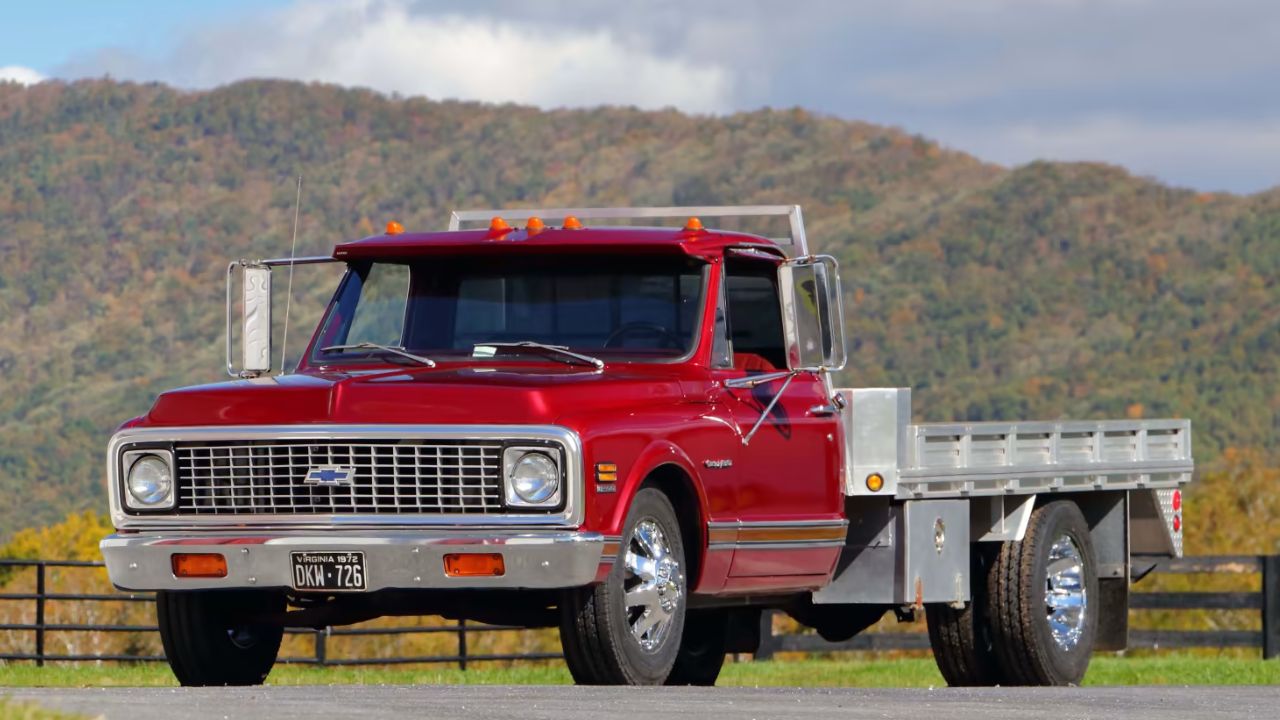
The 1972 Chevrolet C30 was much more than a heavy-duty pickup. Thanks to its rugged chassis, impressive payload capacity, and adaptable design, it became the starting point for countless specialized work vehicles across North America. From utility trucks to ambulances and tow rigs, the C30 quietly proved that one dependable platform could serve an extraordinary variety of industries.
A Heavy-Duty Platform Built for More Than Cargo
Chevrolet designed the C30 to handle demanding commercial workloads that exceeded the capabilities of lighter pickups. Its reinforced frame, heavy-duty suspension, and high gross vehicle weight rating made it an excellent foundation for vehicles carrying specialized equipment rather than ordinary cargo.
Businesses quickly realized the truck could support custom bodies without sacrificing durability. Whether equipped with a flatbed, service body, utility compartments, or a box body, the C30 maintained the strength required for daily commercial use.
The truck was also available with multiple wheelbase options and dual rear wheels, giving builders greater flexibility when designing vehicles for specific industries. This adaptability made it attractive to companies that needed dependable equipment tailored to unique job requirements.
Instead of serving a single purpose, the C30 became a versatile commercial platform capable of supporting countless specialized applications.
Coachbuilders and Equipment Companies Expanded Its Capabilities
One of the C30’s greatest strengths was how easily it could be transformed by aftermarket manufacturers. Ambulance builders, utility equipment companies, and commercial body manufacturers frequently selected the chassis because it provided a reliable base for extensive customization.
Service trucks equipped with tool cabinets, air compressors, and welding equipment became common among construction and maintenance companies. Utility providers installed aerial lifts and cable-handling equipment, while municipalities converted C30 chassis into dump trucks, snowplows, and road maintenance vehicles.
Ambulance manufacturers also appreciated the truck’s ability to carry heavy medical equipment while providing a stable ride for patients and emergency personnel. The robust suspension and dependable powertrains made it well suited for the demanding conditions of emergency service.
These conversions demonstrated just how flexible the C30 platform could become when paired with specialized equipment.
Dependability Made It a Favorite for Commercial Fleets
Fleet operators valued the Chevrolet C30 because reliability directly affected profitability. Every day a work truck remained in service meant more completed jobs and fewer costly interruptions. The C30 earned a reputation for dependable performance under heavy loads and difficult working conditions.
Its straightforward mechanical design allowed technicians to perform repairs efficiently using widely available replacement parts. Businesses operating multiple trucks especially appreciated the ease of maintenance, which helped reduce downtime and control operating expenses.
Powerful inline-six and V8 engine options gave operators the flexibility to choose configurations that matched their specific workloads. Whether hauling construction materials, towing equipment, or powering hydraulic systems, the truck consistently delivered dependable performance.
For many companies, the C30 became a long-term investment that continued working reliably for years beyond its expected service life.
A Legacy That Extended Far Beyond the Pickup Bed
Although many people remember the 1972 Chevrolet C30 as a heavy-duty pickup, its greatest contribution may have been the countless specialized vehicles built upon its chassis. Fire departments, utility companies, hospitals, construction firms, telecommunications providers, and municipal governments all found practical uses for the adaptable platform.
Many surviving examples continue serving on farms, ranches, and private businesses decades after production, a testament to the truck’s rugged engineering. Restored commercial conversions are also gaining appreciation among collectors because they represent an often-overlooked chapter of automotive history.
The C30 demonstrated that a well-designed commercial chassis could evolve far beyond its original purpose. Its ability to support so many different industries helped establish Chevrolet as a leader in the heavy-duty truck market.
Looking back, the 1972 Chevrolet C30 became a foundation for specialized work vehicles not because of flashy styling or groundbreaking technology, but because it offered the durability, flexibility, and reliability professionals depended on every day. Its quiet success continues to be reflected in the countless commercial vehicles it helped bring to life.
More from Fast Lane Only
- Unboxing the WWII Jeep in a Crate
- 15 rare Chevys collectors are quietly buying
- 10 underrated V8s still worth hunting down
- Police notice this before you even roll window down
*Research for this article included AI assistance, with all final content reviewed by human editors