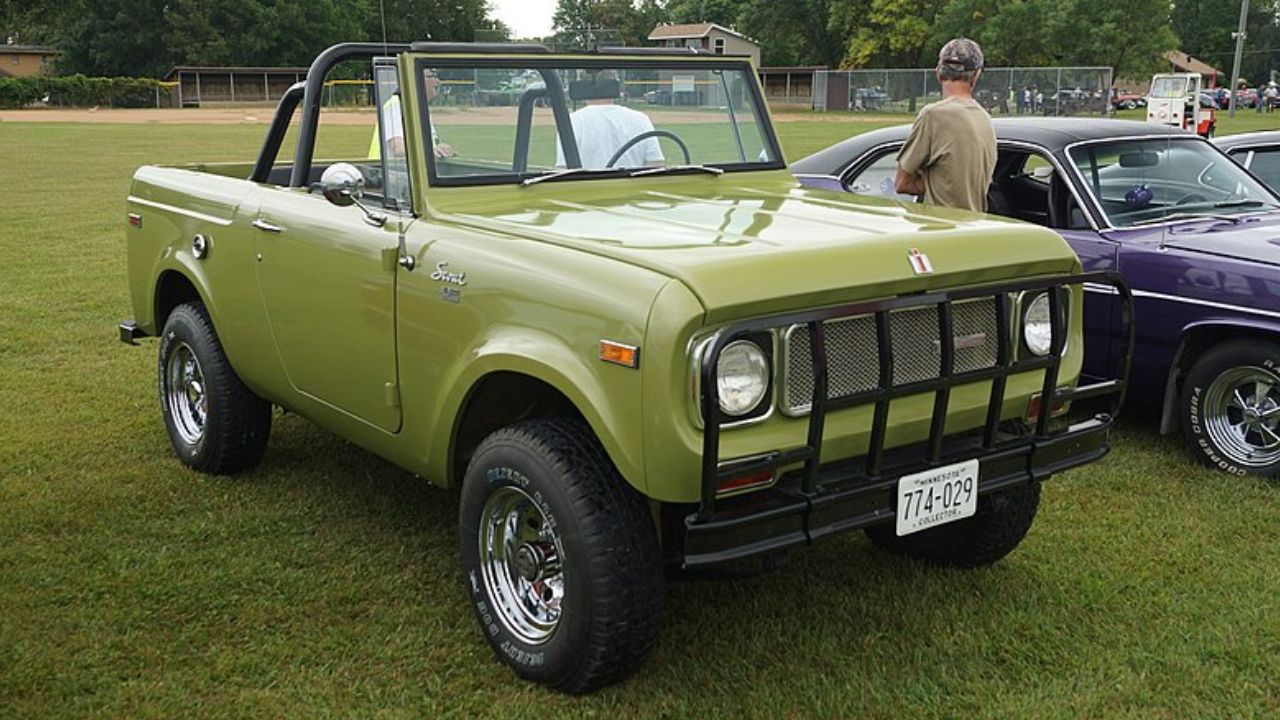
The 1970 International Harvester Scout is often remembered as one of the pioneers of the modern sport utility vehicle, but its story extends well beyond weekend adventures. Thanks to its rugged construction, dependable four-wheel-drive system, and practical design, the Scout became a trusted work vehicle for farmers, utility crews, government agencies, and countless professionals who needed capability more than comfort.
Built to Handle Work Before It Became a Lifestyle Vehicle
Although the Scout appealed to outdoor enthusiasts, International Harvester designed it with work in mind. The company had decades of experience building agricultural and commercial equipment, and that philosophy carried over into the Scout’s engineering. Rather than focusing on luxury or sporty styling, the vehicle emphasized durability and function.
Its body-on-frame construction and strong suspension allowed it to carry tools, supplies, and equipment while traveling over rough roads. The compact wheelbase made it easier to maneuver in forests, construction sites, and narrow rural trails where larger trucks struggled.
Owners appreciated that the Scout could transition easily between job sites and everyday transportation. During the week, it hauled equipment and workers, while on weekends it was equally capable of taking families camping or exploring backroads.
That versatility helped distinguish the Scout from many vehicles of its era.
Utility Companies Found It Perfect for Remote Locations
Electric, telephone, and pipeline companies often needed vehicles capable of reaching isolated infrastructure in every season. The Scout’s available four-wheel-drive system made it well suited for traveling through muddy access roads, snowy service routes, and uneven terrain where ordinary passenger cars could not operate.
Field technicians valued the vehicle’s dependable mechanical components and straightforward design. Repairs could often be completed quickly, reducing downtime and keeping service crews productive in remote areas.
The cargo area easily accommodated tools, replacement parts, and testing equipment, while optional towing capability allowed small trailers carrying generators or additional supplies to accompany crews into the field.
Because of these strengths, the Scout became a familiar sight alongside utility poles, rural substations, and pipeline maintenance projects throughout North America.
Government Agencies Put the Scout to Work
The Scout also found a home in government service. Forestry departments, park services, wildlife agencies, and municipal organizations needed reliable transportation that could travel beyond paved roads without requiring the size or expense of a full-size truck.
Park rangers used Scouts to patrol trails, campgrounds, and recreation areas where maneuverability was essential. Forestry workers relied on them to inspect remote roads, monitor timberlands, and transport equipment through rugged landscapes.
Some local governments equipped Scouts for emergency response, snow patrol, and maintenance duties. Their compact dimensions allowed them to reach locations that larger utility trucks could not easily access while still carrying essential gear.
The vehicle’s adaptability made it valuable across a wide range of public-service roles that demanded dependable off-road performance.
Its Practical Design Left a Lasting Legacy
As the SUV market evolved during the 1970s and 1980s, many manufacturers shifted toward greater comfort and family-oriented features. The International Harvester Scout, however, remained closely associated with honest utility and mechanical simplicity. It earned respect not through luxury or advanced technology but by consistently performing difficult jobs in challenging environments.
Many surviving Scouts today still serve on farms, ranches, and private properties, demonstrating the durability that originally made them popular with commercial users. Collectors also appreciate restored examples because they represent a time when sport utility vehicles were designed first as practical work machines.
The Scout’s influence extends well beyond its production years. It helped establish the idea that a compact four-wheel-drive vehicle could successfully balance work responsibilities with personal recreation, a formula that would shape the future SUV market.
Looking back, the 1970 International Harvester Scout succeeded because it was more than an adventurous weekend vehicle. Its rugged engineering, versatility, and dependable performance allowed it to become a hardworking partner for professionals across countless industries, leaving a legacy that reaches far beyond recreation.
More from Fast Lane Only
- Unboxing the WWII Jeep in a Crate
- 15 rare Chevys collectors are quietly buying
- 10 underrated V8s still worth hunting down
- Police notice this before you even roll window down
*Research for this article included AI assistance, with all final content reviewed by human editors