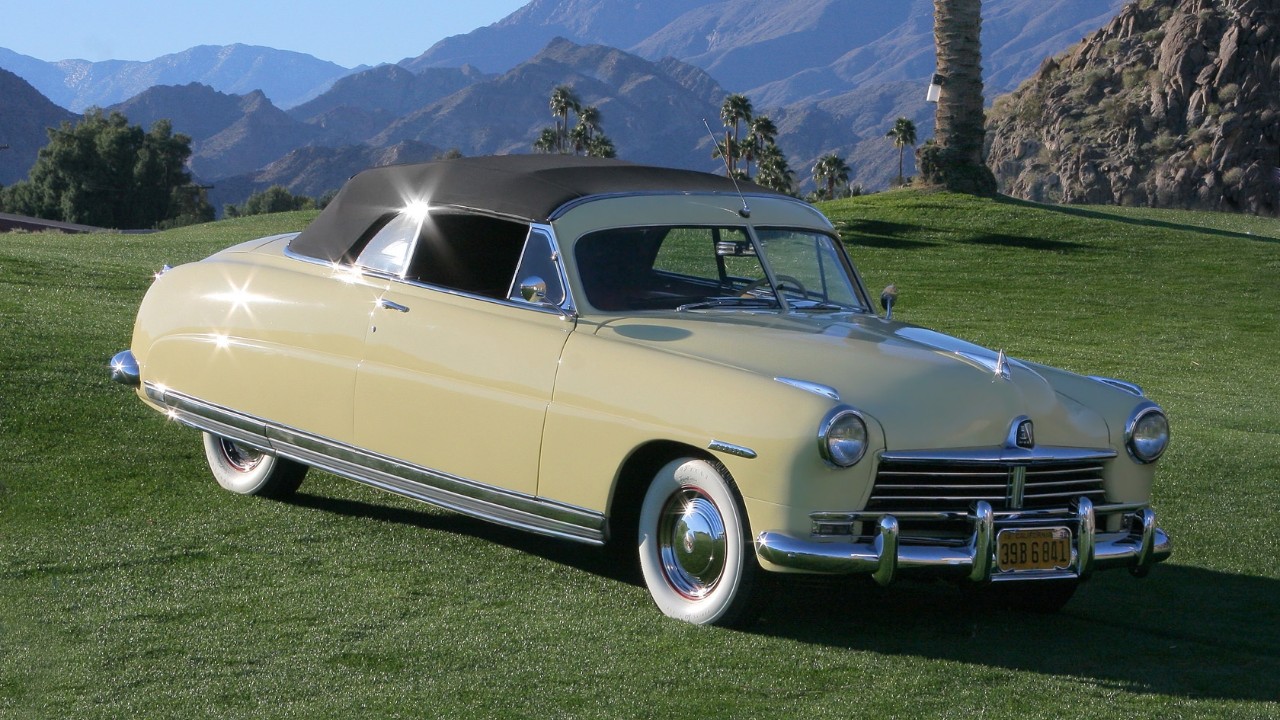
The 1948 Hudson Commodore convertible rode on a new body that stood just over 60 inches tall, 4 to 7 inches lower than rivals from Buick, Chrysler and Packard. Hudson got there by hanging the floor from the bottom of the frame. Riders stepped down into the car, and the name “step-down” stuck.
Hudson was never one of Detroit’s giants. Yet from its Super Six of 1916 to its last cars in 1957, the company kept building cars that, in our view, rode, handled and performed above their station. Its best models were often the plushest cars it made, with big engines, rich trim and clever engineering.
These are our picks, seven luxury Hudsons we think showed what the company could achieve. That judgment is our opinion. The engines, dates and production numbers behind each pick come from Hudson’s own records, marque histories and auction data.
1. 1948 Hudson Commodore convertible
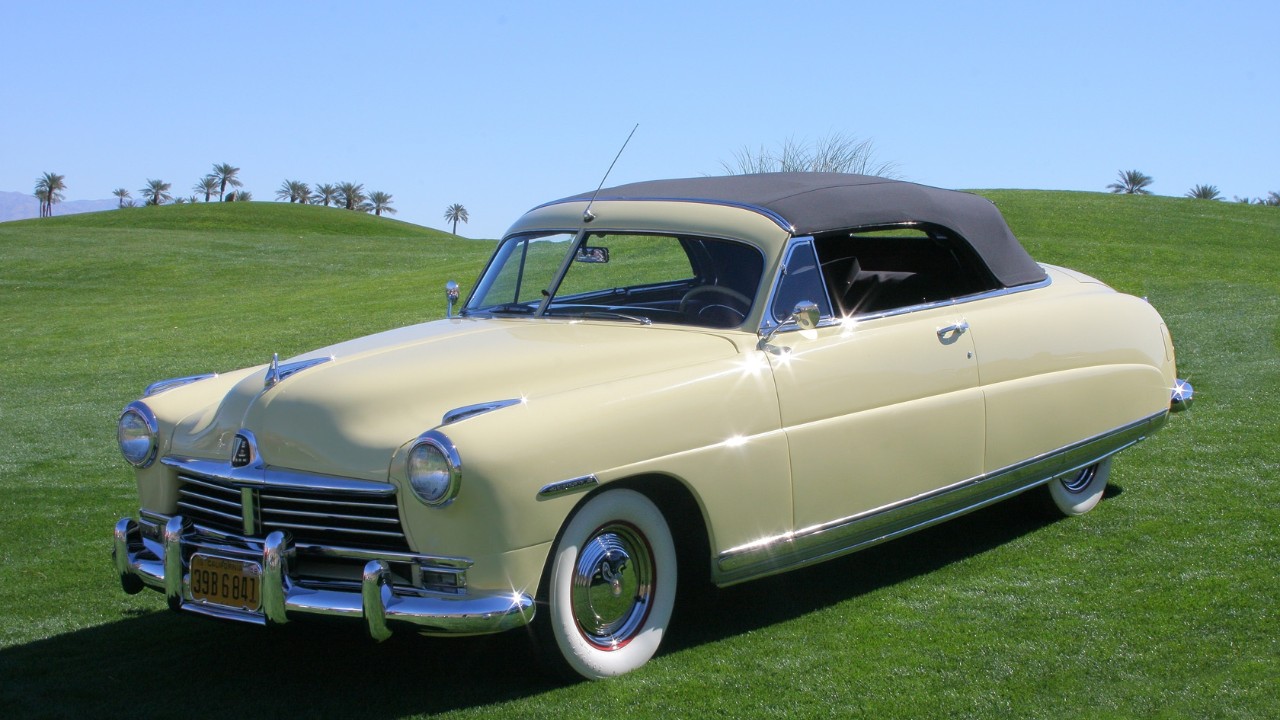
Hudson launched the Commodore in 1941 as its largest and most luxurious car. For 1948, it gave the line a radical new body. Frank Spring led the design, with help from Betty Thatcher. Hudson called the structure “Monobuilt,” and enthusiasts call it the step-down.
According to Mac’s Motor City Garage, the floor pan sat at the bottom of the structure rather than on top of the frame rails. As a result, passengers stepped down into the cabin. The frame rails also ran outside the rear wheels, which created a stiff, tank-like shell. Power for 1948 included a 262-cubic-inch six rated at 121 horsepower.
Our take: the step-down Commodore convertible brought low, sleek proportions to a big luxury car. In our view, it is the best-looking Hudson ever built. The lower center of gravity also helped grip and handling. If you find one, check the structure carefully, since it is the heart of the design. Hudson built the Commodore through 1952, offering six- and eight-cylinder engines across the step-down years, so the Hudson Commodore convertible had a long run.
2. 1938 Hudson Country Club sedan
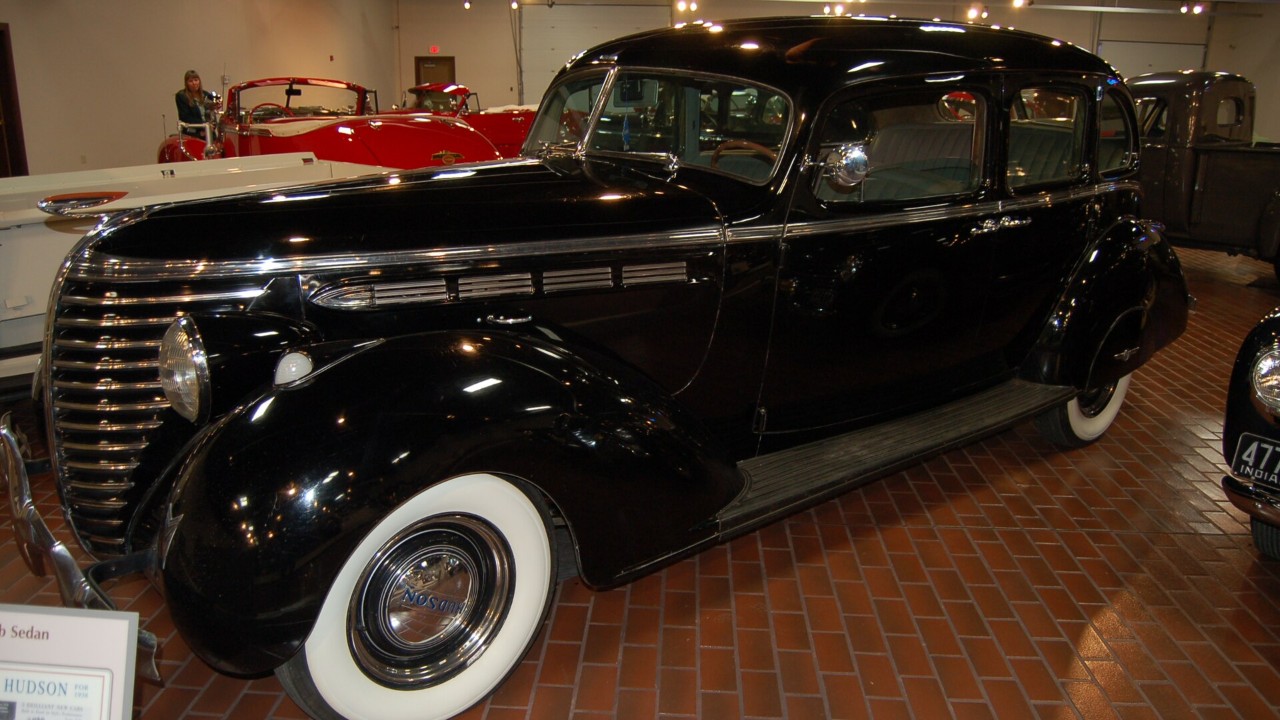
Hudson’s Country Club Eight carried the company’s straight-eight into the late 1930s. Hudson had introduced that flathead eight for 1930, with 218.8 cubic inches and 80 horsepower. By 1938, the eight had grown much stronger.
Hagerty’s sales records list a 1938 Country Club Eight Series 87 touring sedan with a 122-horsepower straight-eight. That is a gain of more than 50 percent over the first Hudson eight in just eight years. That same year, Hudson renamed its Terraplane line the Hudson 112. Meanwhile, the eight-cylinder cars carried the company’s luxury image. The Terraplane had been Hudson’s lower-priced line since 1932, so the change pulled more of the range under the Hudson name.
Our take: the Country Club sedan shows how Hudson could compete with bigger luxury brands on comfort and power. We think it is one of the most overlooked American eights of the decade. A straight-eight touring sedan from this era also reminds us that Hudson once competed on smoothness, not just price. Hagerty records the sale of that Series 87 touring sedan for $30,800.
3. 1949 Hudson Commodore coupe
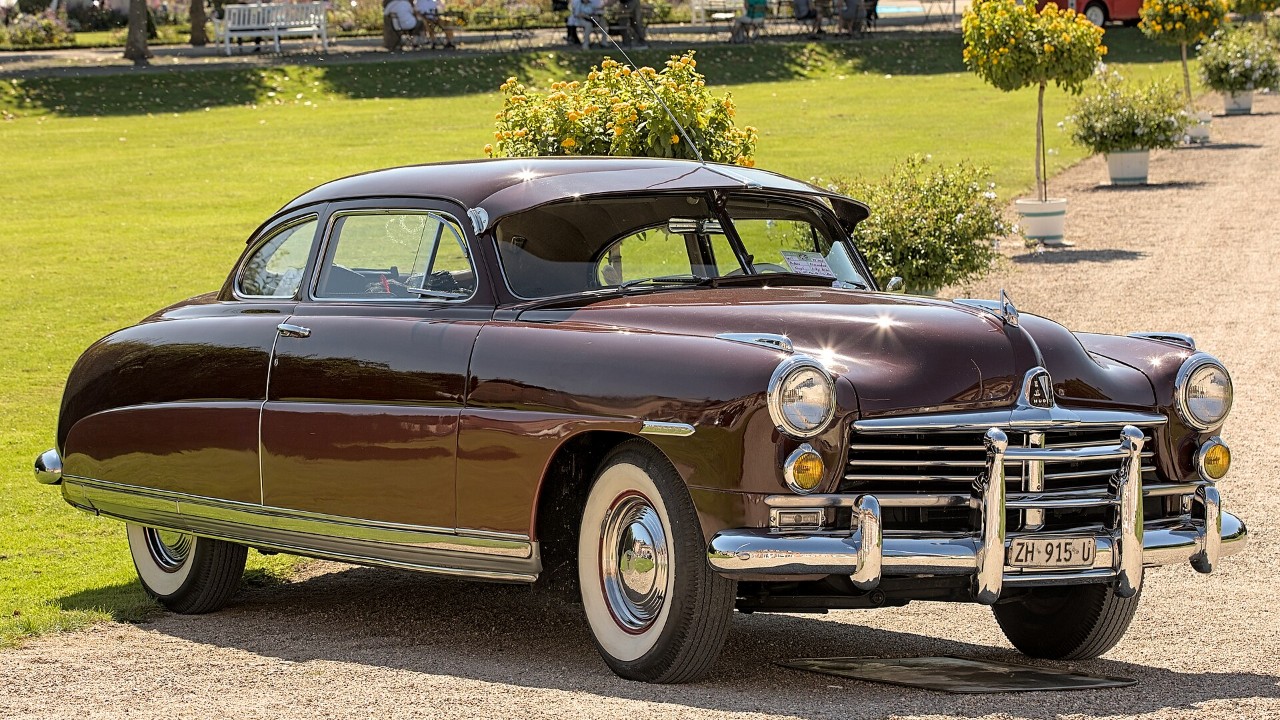
The 1949 Commodore kept the same body styles as the 1948 car. However, Hudson added a new Custom trim line to the range. The step-down design was still the big story, and buyers wanted it. Underneath, the coupe rode on the same Monobuilt structure as the 1948 car, and the Commodore kept its place as Hudson’s biggest, most luxurious line.
Mac’s Motor City Garage reports that step-down sales peaked at 151,000 units in 1949. By 1952, however, that number had fallen to 80,000. So the 1949 cars represent the design at its most popular.
Our take: 1949 was Hudson’s high point, and the Commodore coupe was among its most handsome forms. We think the coupe shows off the low roofline better than the sedan does. Its low, wide stance also makes it look longer than it is. If you want one, the new Custom trim is the 1949-only detail worth knowing about. For more of the brand’s overlooked cars, see our list of forgotten Hudsons that outran everything in their class.
4. Hudson Greater Eight
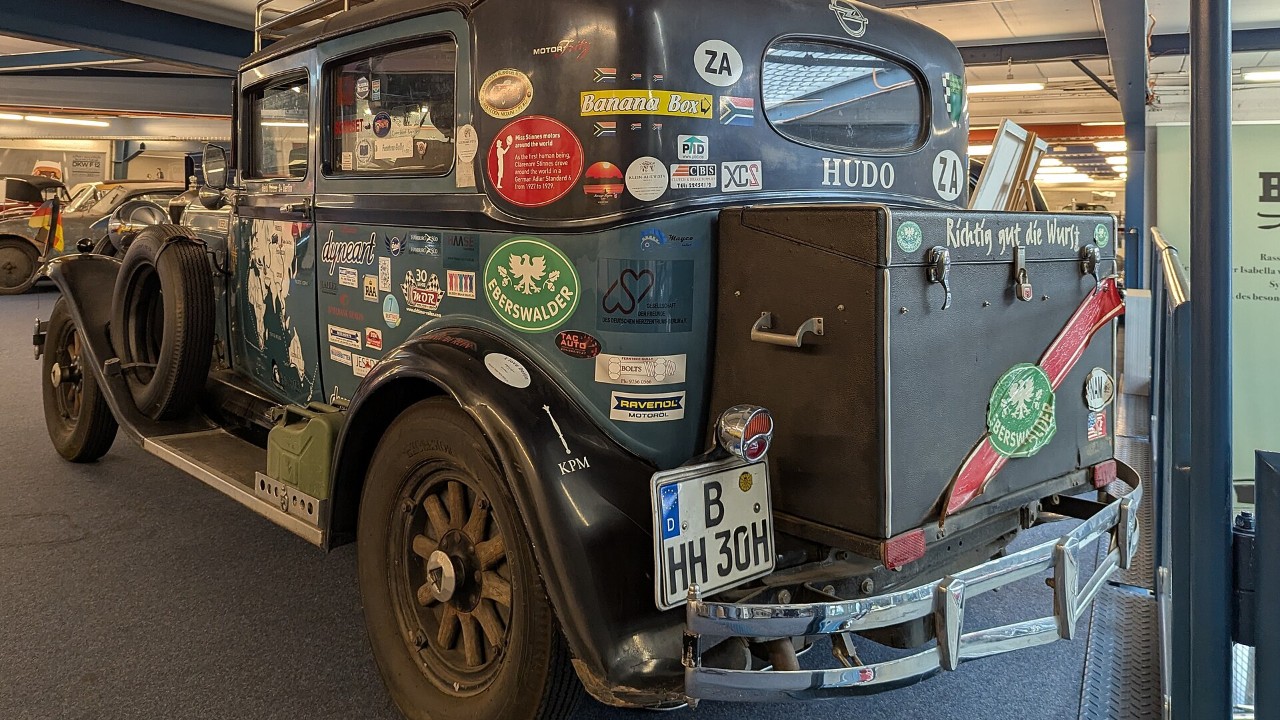
The Greater Eight was Hudson’s eight-cylinder line for 1931 and 1932. In 1931, its straight-eight displaced 233.7 cubic inches and made 87 brake horsepower. For 1932, Hudson enlarged it to 254 cubic inches and 101 horsepower. That was a gain of 14 horsepower in a single year.
Buyers could choose between several wheelbases, from 119 to 132 inches. So the longest chassis ran a full 13 inches longer than the shortest. Then, for 1933, Hudson renamed the line the Pacemaker Standard Eight. The Greater Eight name disappeared, but the idea lived on. When the Commodore arrived in 1941, it took up the role of Hudson’s biggest, plushest car.
Our take: the Greater Eight arrived in the worst years of the Great Depression and still offered real luxury and power. In our view, that took nerve. A company of Hudson’s size could easily have retreated to cheaper sixes, yet it kept a big eight in the catalog. If you find one, the long-wheelbase versions are the most imposing.
5. 1953 Hudson Super Wasp Hollywood
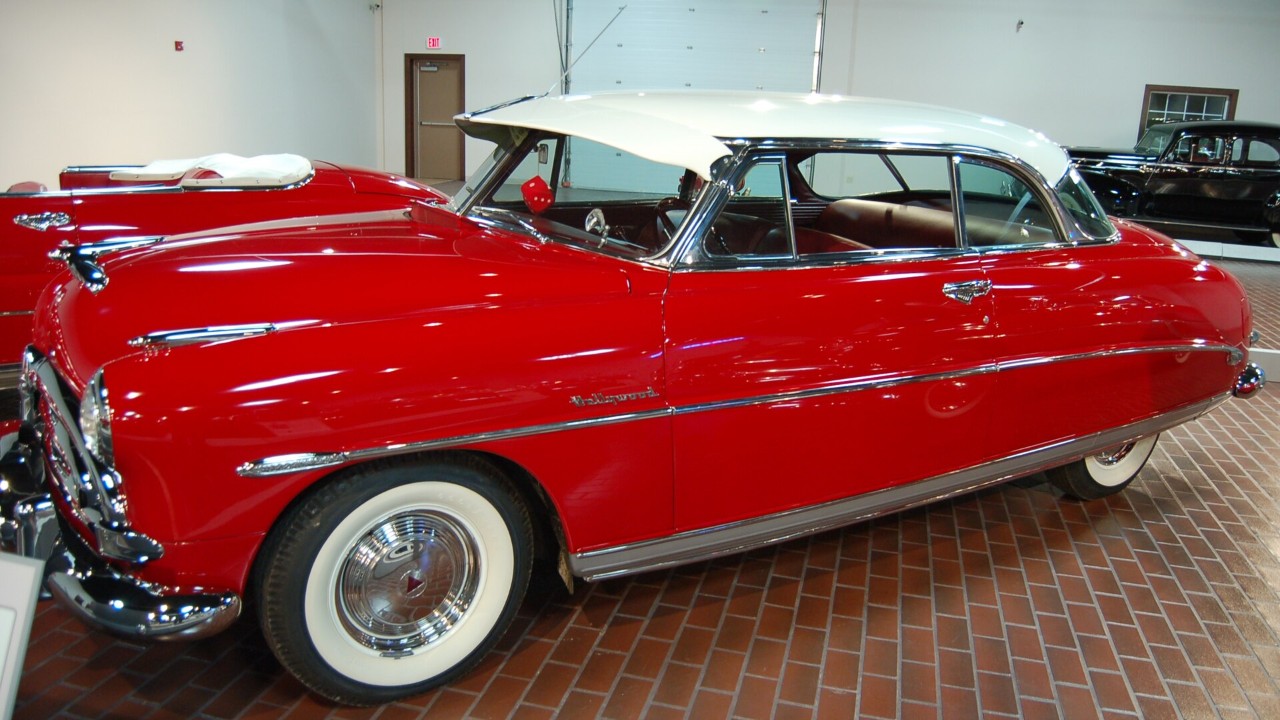
Hudson introduced the Super Wasp for 1953 as the upper level of its smaller Wasp line. It replaced the six-cylinder Commodore models. The Hollywood was the two-door pillarless hardtop, the stylish body of the range. Hudson also built a Brougham convertible Super Wasp, but it made only 50.
Under the hood sat a 262-cubic-inch L-head six rated at 127 horsepower. Buyers could also add Twin-H, an aluminum manifold with two carburetors. With that setup, the Super Wasp matched the performance of the bigger 308-cubic-inch Hornet with a two-barrel carburetor, partly because the Hornet was heavier. Hudson built 21,876 Wasps for 1953.
Our take: the Super Wasp Hollywood gave buyers Hornet-like speed in a lighter package. Underneath, it kept the low step-down layout that made Hudson famous. In other words, buyers did not need the biggest Hudson to get strong performance. We think that makes it one of the smartest buys in Hudson’s lineup. For a famous example of a 1953 Hudson, see Jay Leno’s 1953 Hudson Hornet. A Twin-H car is the one to find.
6. 1957 Hudson Hornet V8 Hollywood hardtop
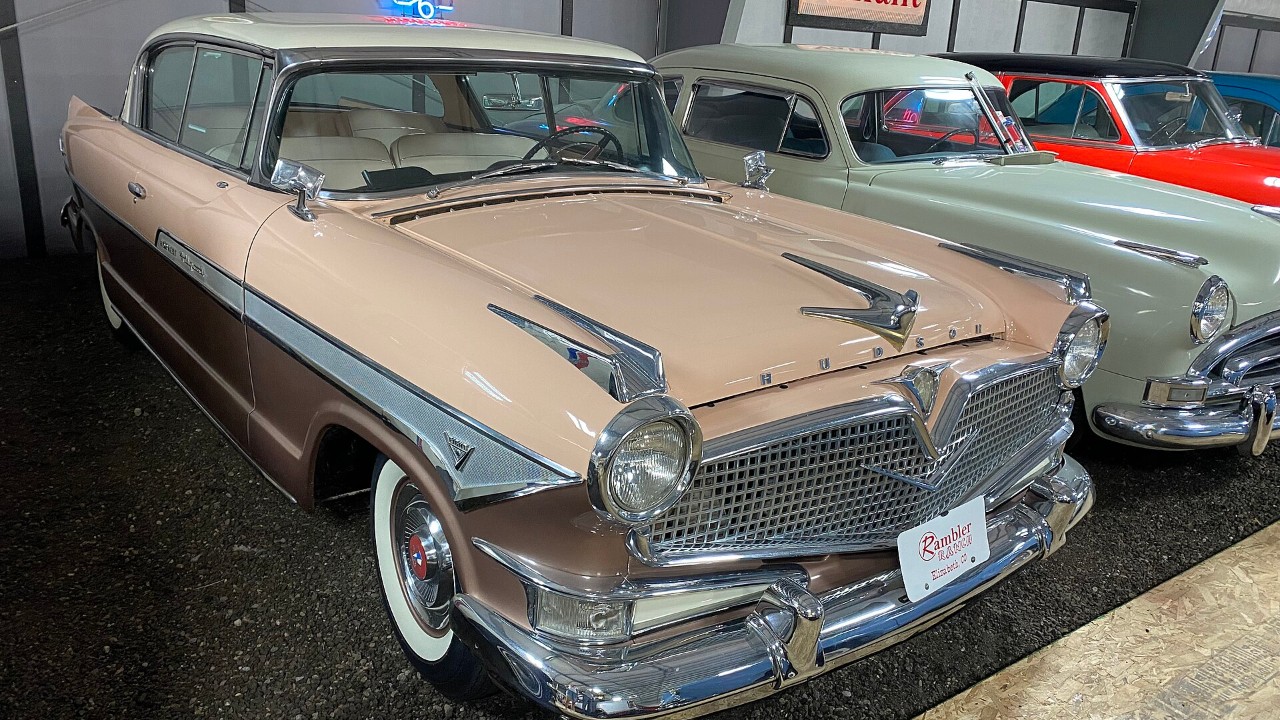
By 1957, Hudson was part of American Motors. The last Hornets kept the V-Line styling introduced for 1956, with a big egg-crate grille. More importantly, they used AMC’s 327-cubic-inch V8, rated at 255 horsepower with a four-barrel carburetor.
That was a huge jump from the six-cylinder Hornets of the early 1950s. Those 308-cubic-inch sixes had won 27 of 34 NASCAR Grand National races in 1952. Still, sales were tiny. Hudson built just 4,108 cars for 1957, including 3,359 sedans and only 749 Hollywood hardtops. Production ended on June 25, 1957, and the Hudson brand ended with it. Fittingly, the last Hornet still used the Hollywood name for its two-door hardtop, a link to the earlier Hudsons on this list.
Our take: the final Hornet had far more power than the six-cylinder Hornets, and in our view its loud styling has aged into charm. With 749 built, the Hollywood hardtop is the rarest form of the last Hudson. If you find one, make sure the AMC V8 is still under the hood.
7. Hudson Super Six phaeton
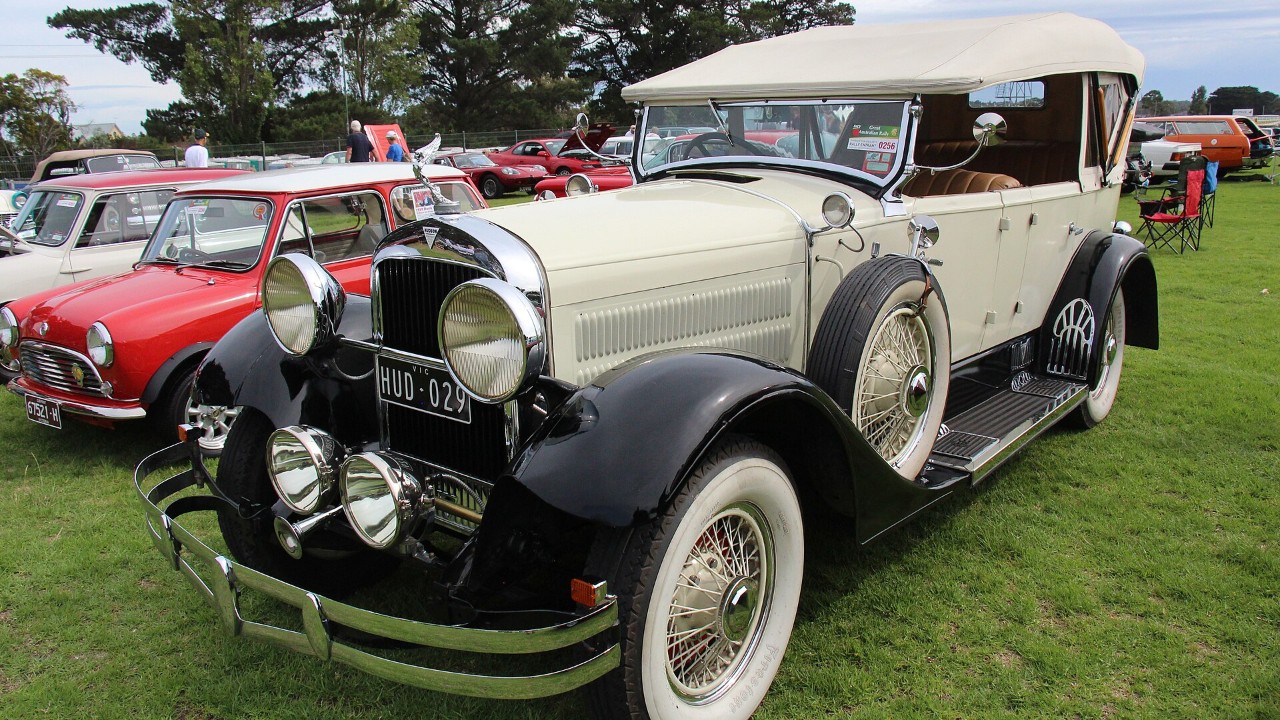
The Super Six debuted in January 1916 and stayed in production until 1928. Its secret was a counterbalanced crankshaft, credited to Hudson engineer Howard E. Coffin. Later, Hudson’s Essex sister brand borrowed the Super Six label too. That design cut vibration and let the engine rev to about 3,400 rpm.
The result was striking. The 288.5-cubic-inch six made 76 horsepower, compared with 40 horsepower from the same-size engine in Hudson’s earlier Six-40. Hudson then proved the point with records. A Super Six averaged 74.9 mph for 24 hours at Sheepshead Bay, and another ran a stock-car measured mile at 102.5 mph at Daytona Beach.
Our take: the Super Six made Hudson’s name, and an open phaeton is the most dramatic way to enjoy it. We think it is the car that set the standard for everything on this list. In our view, its racing success gave Hudson a sporting reputation that the Hornet revived decades later. Hudson also sent Super Sixes on a San Francisco-to-New York run and up Pikes Peak on a stock chassis.
More from Fast Lane Only