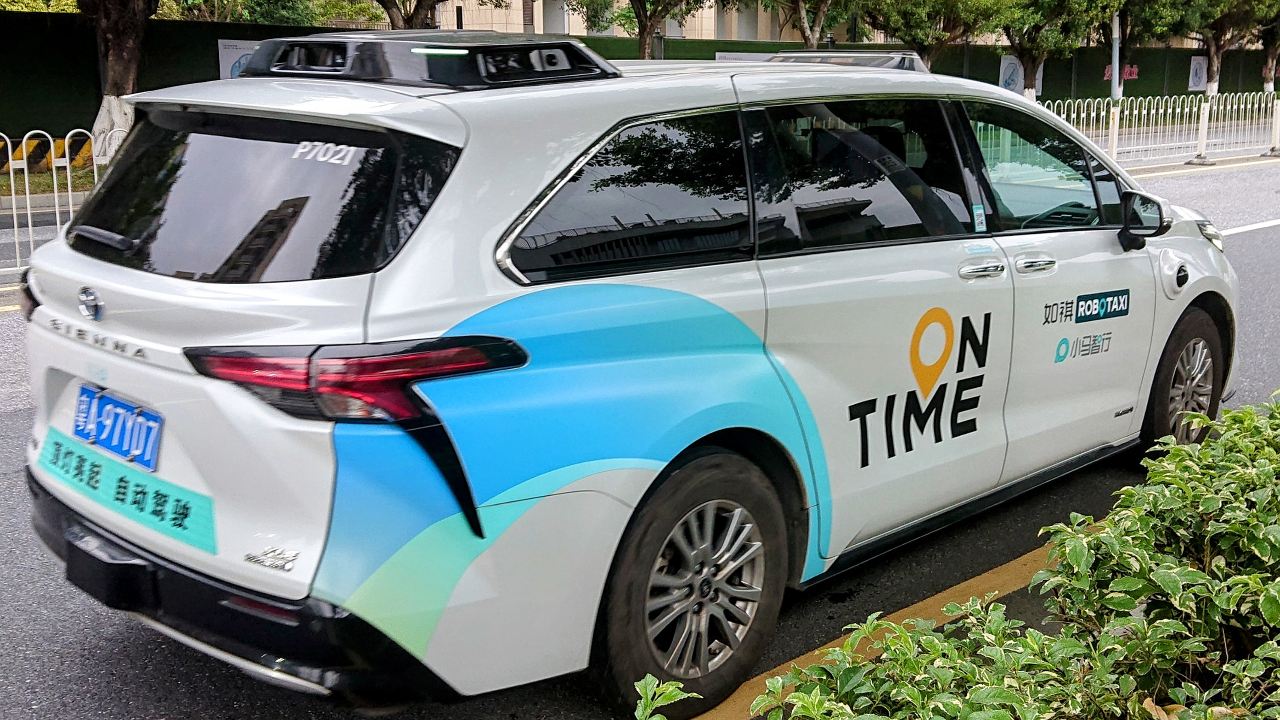
Self-driving cars were supposed to erase human drivers from the equation. Instead, a new kind of gig has emerged in cities where robotaxis operate: people getting paid roughly $22 a trip to walk up and firmly shut a stubborn door so the vehicle can move again. The job is simple, almost absurdly so, but it exposes how even the most advanced autonomous systems still depend on human backup in the messy reality of city streets.
What looks like easy money for a few workers is also a revealing stress test for the business model behind driverless ride hailing. Each time a company pays someone to close a door or rescue a stranded vehicle, it is quietly acknowledging that the technology is not yet as seamless or self-sufficient as the marketing suggests.
How a robotaxi ends up needing a $22 door closer
The basic failure mode is almost comically mundane. Some robotaxis will not start driving if a door is even slightly ajar, and their sensors can be conservative about what counts as “closed.” Riders who are in a hurry, distracted, or unfamiliar with the system sometimes hop out and leave a door not fully latched. The car detects the problem, refuses to move, and sits there blocking a curb lane or intersection until a human comes to its rescue.
To keep traffic flowing, companies like Waymo have quietly built workflows that dispatch nearby contractors to fix these hiccups. One worker described earning about $24 for each call where the only task was to walk up to a stationary robotaxi and push the door shut so the car would finally budge, a pattern also described in separate reporting that put the typical payout closer to $22 per incident. In practice, the app-based system treats the stuck vehicle like a micro emergency, pinging a small pool of on-call helpers who can respond within minutes and restore the car to service.
The secret human safety net behind “driverless” cars
Door problems are only one slice of a broader, mostly invisible human safety net that surrounds driverless fleets. When a robotaxi gets confused by construction cones, a power outage, or an unfamiliar traffic pattern, it can freeze in place and wait for instructions. Remote support staff then step in, viewing camera feeds and maps on their screens and guiding the vehicle out of trouble. In more stubborn cases, companies rely on local partners who can physically reach the car, whether that means closing a door, moving debris, or arranging a tow.
One towing company owner, Evangelica Cuevas, has described how her crews have been called to help Waymo vehicles that were stuck after a power outage in San Francisco, underscoring that even a highly automated fleet still leans on traditional roadside assistance when things go wrong. Another worker, Marenco, told reporters he handles up to three such cases per week and that a video of him closing a robotaxi door went viral, surpassing 400,000 views. The viral attention turned what had been a quiet side hustle into a symbol of how much human labor still props up the promise of fully autonomous mobility.
A new micro-gig: closing doors for cash
For the people doing it, closing robotaxi doors is a strange hybrid of tech work and old-fashioned odd job. Some workers sign up through small local outfits that contract with Waymo, then receive alerts on their phones whenever a nearby vehicle needs help. The pay, around $22 to $24 per call, can add up if several incidents cluster in the same neighborhood, but the volume is unpredictable and the tasks are sporadic. One worker said the job is often inefficient, with long stretches of waiting punctuated by a quick walk to a stranded car and a few seconds of actual labor.
Despite the quirks, the gig has clear appeal for people who are already out on the road, such as tow truck operators or delivery drivers who can layer it on top of their main work. The tasks range from the trivial, like shutting a door, to more involved situations where a robotaxi is blocking a driveway or stuck in a lane and needs to be carefully repositioned. Reporting on how some Americans are earning by helping Google’s Waymo robotaxis describes this as a new type of gig work, one that exists only because the vehicles are driverless but not yet fully independent of human intervention.
What the $22 door gig reveals about autonomy’s limits
From a distance, paying someone $22 to close a door looks like a rounding error in the budget of a multibillion-dollar autonomous driving program. Up close, it highlights a deeper tension in the economics of robotaxis. The entire pitch of companies like Waymo is that removing the human driver will eventually make rides cheaper and more scalable. Yet each time a contractor is dispatched to fix a stuck vehicle, the system is effectively reintroducing human labor, just in a more fragmented and less visible form.
Industry veterans have acknowledged that this kind of backup is part of the design, not a temporary glitch. Keith Chen, who previously worked on ride-hailing economics, has framed the rider’s responsibility in simple terms, saying that making sure the doors are closed is part of being the “captain of the ship.” That line captures the current reality: the robot handles the driving, but humans, both inside and outside the car, are still expected to handle edge cases, from firmly shutting doors to calling for help when the software gets stuck. Nine years after early promises that self-driving cars would eliminate driving jobs, Waymo vehicles are indeed on the roads, but they have spawned a different category of work instead of erasing human involvement altogether.
Can robotaxis ever truly stand on their own?
Technically, the companies know exactly why these failures happen. Reports on how a robotaxi ends up needing a $22 door closer describe a chain of events that starts with a rider’s imperfect behavior and ends with the vehicle’s conservative safety logic. The sensors detect a door that is not fully latched, the system refuses to move, and the remote support team cannot always fix it from afar. In theory, better hardware, smarter door mechanisms, or improved rider education could reduce these incidents, but the fact that they occur at all shows how hard it is to anticipate every real-world interaction.
Waymo’s expansion into dense urban markets like Los Angeles has only amplified these challenges, since more riders and more complex streets mean more opportunities for something to go slightly wrong. As the fleet grows, the company has scaled up its network of remote staff and local helpers to keep the service reliable, even if that means quietly paying people to perform tasks as simple as closing a door. For now, the $22 door gig is a reminder that autonomy is not a binary switch that flips from human to machine. It is a spectrum, and at this stage, the robots still need people in the loop, sometimes for the most basic jobs imaginable.
More from Fast Lane Only: