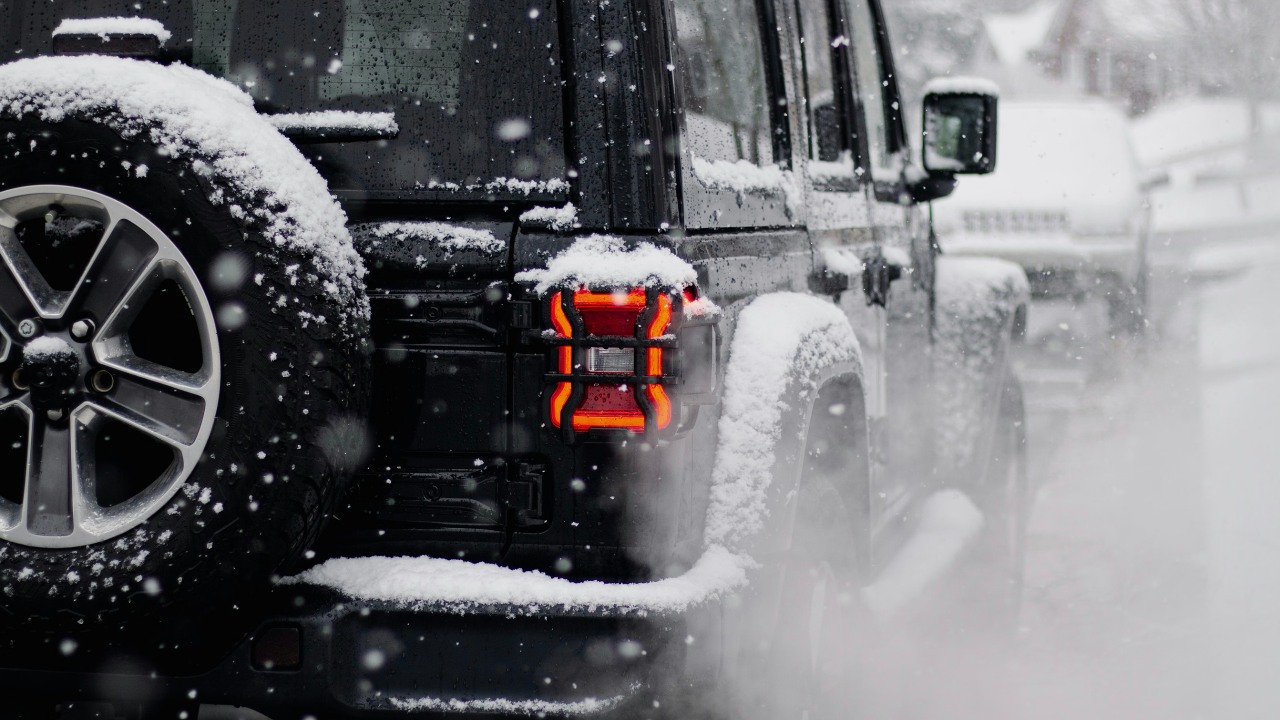
In much of North America and parts of Europe, brushing a peephole in the windshield and driving off with a white mound on the roof is more than a bad winter habit. Depending on where you live, it can be treated as a traffic offense that carries hefty fines and, in some cases, criminal liability if someone gets hurt. The law is increasingly clear on one point: if snow or ice on your vehicle endangers other people, you are the one who will be held responsible.
What looks like a harmless layer of powder can quickly turn into what safety advocates call an “ice missile,” a slab that peels off at highway speed and slams into the car behind. Several jurisdictions have written that risk directly into statute, while others rely on broader rules about clear visibility and unsecured loads. I find that the practical effect is similar: if you do not clean your vehicle properly, you are giving police a reason to stop you and, in some places, to write a very expensive ticket.
Why lawmakers care about snow on cars
The legal focus on snowy cars starts with physics, not bureaucracy. A few centimeters of compacted snow on the roof of a crossover or pickup can weigh tens of kilograms, and once that mass breaks free at 100 km/h it behaves less like fluff and more like a sheet of flying debris. Reporting on winter enforcement in the United States notes that ice and snow can block a driver’s own windshield or back window, and can also fly backward and blind or damage vehicles behind, which is why several states now treat it as a specific safety hazard rather than a cosmetic issue.
Officials and police forces often describe these chunks as “ice missiles” or “snow torpedoes,” language that has made its way into state-level campaigns that warn drivers about the risk of serious injury and property damage. Coverage of winter rules in multiple states explains that if ice or snow from your vehicle causes a crash, you can face penalties on top of any fine for the original violation, including higher insurance costs and potential civil liability for injuries. I see the growing patchwork of laws as a direct response to those documented crashes, where victims had little warning before a sheet of ice shattered their windshield.
Where it is explicitly illegal in the United States
Some U.S. states have moved beyond general “unsafe driving” language and now spell out that you must clear accumulated snow and ice before you drive. Recent reporting identifies 11 states with specific rules that target this behavior: Alaska, Connecticut, Georgia, Massachusetts, Michigan, New Hampshire, New Jersey, Pennsylvania, Rhode Island, Tennessee and Wisconsin. In these jurisdictions, the offense is not limited to blocked glass, it can apply to snow on the roof, hood or trunk that has the potential to slide or blow off while you are moving.
Several of these laws are named after people killed by flying ice, which underscores how personal the issue has become. In New Hampshire, the Negligent Driving Law, cited as RSA 265:79-b and widely known as Jessica’s Law, requires drivers to clear snow and ice from their vehicles, with fines that can reach between $500 and $1,000 for repeat offenses. Coverage of Pennsylvania’s rules points to Christine’s Law, which similarly targets drivers who fail to remove snow and ice that could dislodge and cause harm. New Jersey officials have used winter storms to remind residents that clearing only the windshield is not enough under state law, and that drivers can be fined if they leave snow or ice anywhere on the vehicle that might become a hazard.
States that rely on broader “unsafe” or visibility rules
Outside those 11 states, drivers are not necessarily in the clear if they head out with a snow-capped SUV. Many jurisdictions use more general statutes that require motorists to maintain a clear view of the road or to secure any load that could fall off. Coverage of winter enforcement in Ohio, Kentucky and Indiana, for example, explains that while there may be no statute that mentions snow by name, drivers can still be cited if officers decide their view is obstructed or if snow and ice fly off and cause damage.
Police and safety advocates in these states often frame the issue as a matter of common sense backed by existing law. One Ohio report describes a driver being reminded that scraping only a small patch in front of the steering wheel is not enough to satisfy requirements for an unobstructed windshield and mirrors. Another piece on winter driving in the Midwest notes that officers can use general careless or reckless driving provisions if a driver’s failure to clear their car leads to a crash or forces other motorists to take evasive action. In practice, that means you can still face legal trouble even if your state has never passed a snow-specific statute.
Canada, the UK and Europe are tightening expectations
The trend is not limited to the United States. In Canada, provincial traffic laws and enforcement campaigns increasingly treat uncleared snow and ice as a ticketable offense. Legal analysis of the Highway Traffic Acts for several provinces explains that motorists can be charged for driving without a clear view, a provision that covers snow on windshields and side windows and can carry fines and demerit points. Insurance guidance on winter driving adds that leaving large amounts of snow on your vehicle can result in penalties if it blows off and causes damage, and that drivers are expected to clear the roof, hood and trunk before they hit the road.
Public reminders have reinforced that message. A widely shared Winter Driving PSA in Canada stresses that it is the law to clear snow and ice off the entire vehicle, including the roof and lights, not just the glass. Social media posts from drivers in Nova Scotia and other provinces point out that it is illegal to drive with a thick layer of snow on top of the car and that you are required to remove it from mechanical parts as well. I read those as signs that Canadian authorities are using both formal statutes and informal campaigns to push drivers toward full vehicle clearing as a basic winter duty.
What UK and European drivers need to know
In the United Kingdom, there is no single road law that uses the exact phrase “illegal to drive with snow on your car,” but that does not mean drivers are free to ignore it. Guidance for UK motorists explains that while snow on the roof is not explicitly banned, you can be charged if it falls off and leads to a collision or if it is judged to obstruct your view. One detailed overview of winter driving rules notes that it is an offence if snow or ice on your vehicle compromises your control of the car or your ability to see, and that penalties can escalate if the behavior is linked to a crash.
Police commentary reported by Cambridgeshire Live reinforces that position, with officers warning that during the colder months drivers face a wide range of potential charges if they fail to clear their vehicles properly. Another advisory aimed at UK drivers highlights that fines can reach up to £5,000 for certain winter-related offences, including driving with obscured windows or number plates, and stresses that the legal minimum tread depth of 1.6 mm is only a starting point for safe winter grip. In continental Europe, similar expectations apply: a discussion among drivers in Switzerland notes that driving with snow on the roof can lead to a fine, and that partially deiced windows can result in a monetary penalty or even affect applications for naturalization, which shows how seriously some countries treat winter driving habits.
How big the fines can get, and how to avoid them
The financial consequences of ignoring snow on your car can be significant. Coverage of winter enforcement in the United States describes drivers facing instant fines that can reach $1,500 under certain state laws when they are caught with uncleared snow or ice. One report on multi-state rules notes that 11 states have specific statutes that allow officers to ticket drivers whose vehicles are not properly cleared, and that penalties can increase if flying debris causes damage or injury. Another analysis of snow and ice rules points out that even in states without named laws, drivers can still be fined under general safety provisions if officers decide their vehicle is a hazard.
Insurance and legal experts in Canada echo that warning, explaining that fines for leaving large amounts of snow on your vehicle can be compounded by higher premiums if you are found at fault for a collision. A Canadian legal commentary on the Highway Traffic Acts for several provinces notes that the charge for driving without a clear view is not trivial and can be applied whenever snow or frost blocks a driver’s line of sight. In New Hampshire, the Negligent Driving Law, RSA 265:79-b, sets out fines of $250 for a first offence and between $500 and $1,000 for subsequent offences, and officials there have used social media to remind drivers that they must clear snow and ice before they move. I see a consistent pattern across these jurisdictions: the cost of a decent snow brush and a few minutes in the driveway is trivial compared with the potential fines, legal exposure and human harm that can follow from treating snow on your car as someone else’s problem.