Hyundai’s latest factory helper does not eat, sleep, or call in sick when the weather turns ugly. It is a 100% waterproof robot built to keep working in conditions that would send human crews hunting for ponchos and coffee. As I look at how Hyundai is rolling these machines into real workplaces, it is hard to miss the bigger story: the same logic that keeps robots on the line through lunch is quietly reshaping expectations for the rest of us.
The company is not just automating a few dirty jobs, it is building an entire robotics ecosystem that treats nonstop availability as a feature, not a bug. From humanoid machines on assembly lines to compact couriers in office towers, Hyundai is sketching a future where “breaks” are something humans take while their robotic colleagues keep the metrics climbing.
Hyundai’s waterproof workhorse and the end of the pause button
The phrase that keeps echoing around Hyundai’s new robot is blunt: no lunch breaks, no rain checks, no raises. In reporting on Why Hyundai, the robot’s 100% waterproof design is framed as a symbol of a new kind of worker, one that never has to step away from the task. I read that as more than a technical brag. It is a statement about what counts as “normal” productivity when your benchmark is a machine that can stand in the rain all day without a complaint.
Once a company can point to a device that shrugs off storms and fatigue, the pressure on human schedules subtly shifts. If the robot can keep welding or hauling through a downpour, why should a human crew pause for anything short of a safety shutdown. That is the quiet power of this 100% waterproof branding: it turns resilience into a baseline expectation, not a perk, and it does so in a way that makes traditional lunch breaks look like an inefficiency rather than a right, especially when the narrative is amplified by outlets like AUTOPOST.
From Atlas to DAL-e, a full-stack robot workforce
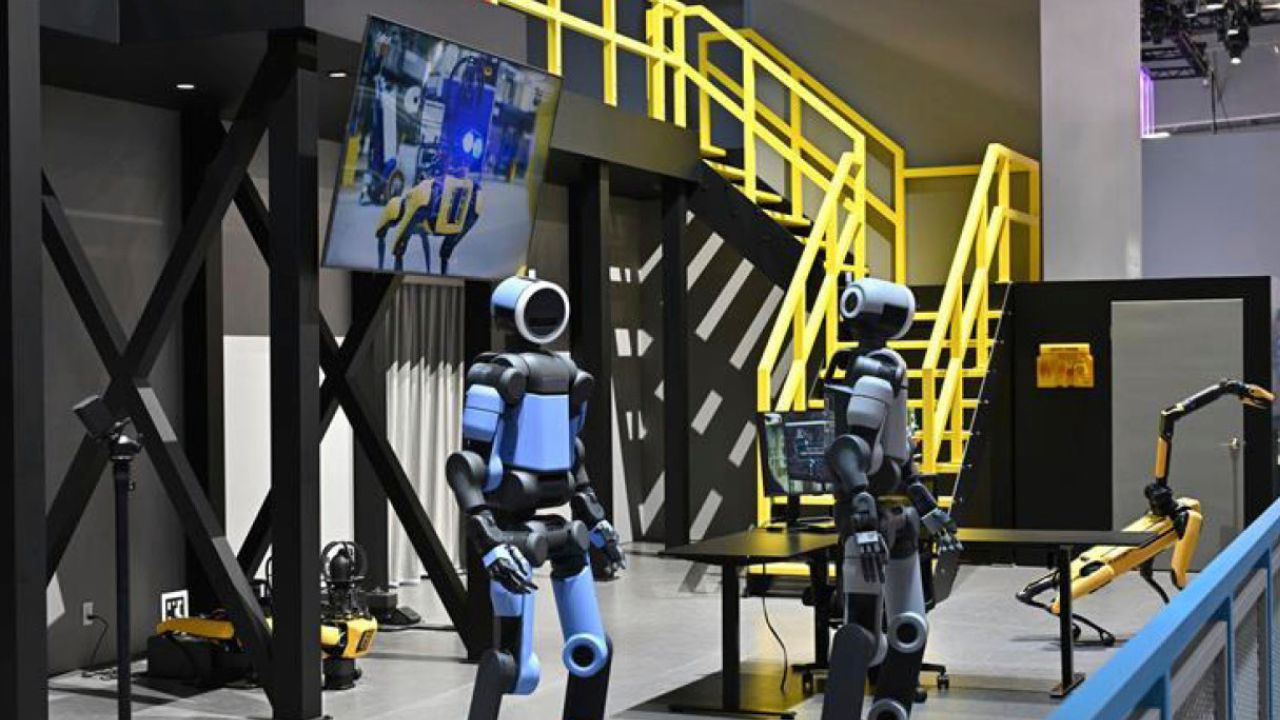
Hyundai is not betting on a single showpiece robot, it is assembling a layered workforce that stretches from heavy industry to last meter delivery. At the top of that stack sits Atlas, the humanoid machine developed with Boston Dynamics. In a recent demonstration, Atlas is shown standing up and moving in ways that are explicitly meant to mirror human motion, and Hyundai’s own materials describe how Its mechanical design enables dynamic movement so The Atlas can operate in spaces traditionally suited to humans, a point underscored in the company’s Its technical brief.
Lower down the stack, Hyundai Motor Company and Kia Corporation are rolling out DAL-e Delivery, a compact courier built for offices and shopping malls. The companies describe how Hyundai Motor Company, Hyundai Motor, Kia Corporation and Kia are positioning DAL and Delivery as indoor logistics tools that can glide through corridors and elevators. Another release from Hyundai Motor and Kia highlights that the standout feature of DAL and Delivery is its ability to integrate with building systems, a detail spelled out in the Share announcement.
Robotics as corporate strategy, not side project
What ties these machines together is a deliberate corporate strategy rather than a collection of flashy prototypes. Hyundai Motor Group has laid out an AI Robotics Strategy under the theme Partnering Human Progress at CES, describing how The Group will use robotics to support, and in some cases replace, human labor in logistics and manufacturing, as detailed in its Hyundai Motor Group preview. A companion release spells out how Hyundai Motor Group Announces AI Robotics Strategy to Lead Human-Centered Robotics Era at CES, with Hyundai Motor Group positioning its RMAC system as the anchor of that AI layer, a point reinforced in the Hyundai Motor Group briefing.
On the shop floor, that strategy is already turning into deployment plans. Reporting on Hyundai Bets Big and Humanoid Robots for Logistics and Industrial Work notes that Robotics Isn New to Hyundai and that the company is putting Not just capital but core operations behind humanoid systems, a shift captured in the Hyundai Bets Big analysis. When a company of this size tells investors that humanoid robots are central to logistics and industrial work, it is effectively rewriting the job description for future warehouse and factory roles, and it is doing so with a straight face about “partnering” with humans even as it showcases robots that never clock out.
DAL-e and the quiet automation of service work
While Atlas grabs the headlines, I find the DAL-e Delivery robots just as revealing about where lunch breaks are headed. Hyundai Motor and Kia describe DAL and Delivery as indoor couriers that can move through offices and shopping malls, opening doors and calling elevators on their own, a capability detailed in the New and Improved Delivery Robot overview. Another description from HMG and Kia Showcase Enhanced DAL and Delivery Robot invites readers to Picture a small, sleek machine gliding through a lobby with the calm of some heavy duty metal, a scene sketched in the HMG blog.
Performance details make the intent even clearer. One analysis of Reliable delivery notes that DAL and Delivery achieves a top speed of 1.2 m per second and can navigate narrow passages while loading and unloading items efficiently, a metric spelled out in the Reliable breakdown. Another piece on Its most recent announcement explains that Its DAL robots are designed to pick up packages for consumers and deliver them across the city, with a vision of fleets that businesses can buy or rent as they please, a model described in the Its DAL roadmap. When a robot can run deliveries at 1.2 m per second without pausing for a sandwich, it quietly resets what “fast service” means for the humans still working alongside it.
Workers watching the robots, and the robots watching the clock
For the people whose jobs sit in the path of these machines, the stakes are not abstract. Reporting under the banner As Hyundai Motor Group shows how Atlas humanoid robots are being adopted on assembly lines describes how workers fear for their future as the company pushes ahead with humanoid robots designed to work around the clock, especially in the most hands on roles on the assembly line, a concern captured in the Hyundai Motor Group report. When management can point to Atlas and DAL-e as tireless alternatives, it is easy for “flexible scheduling” to morph into “permanent availability” for the humans who remain.
The food and beverage sector offers a preview of how this plays out. In the restaurant world, In the food and beverage industry there has been a labor shortage for many years, and One solution that has emerged is the introduction of meal-serving robots that cut bussing time by 40%, a shift described in the In the case study. When bussing time drops by 40% because a robot glides between tables without ever needing a break, managers start to see human downtime as the next inefficiency to trim. That is the cultural echo of Hyundai’s 100% waterproof factory robot: a creeping assumption that the ideal worker, whether metal or flesh, is the one who never really steps away.
More from Fast Lane Only