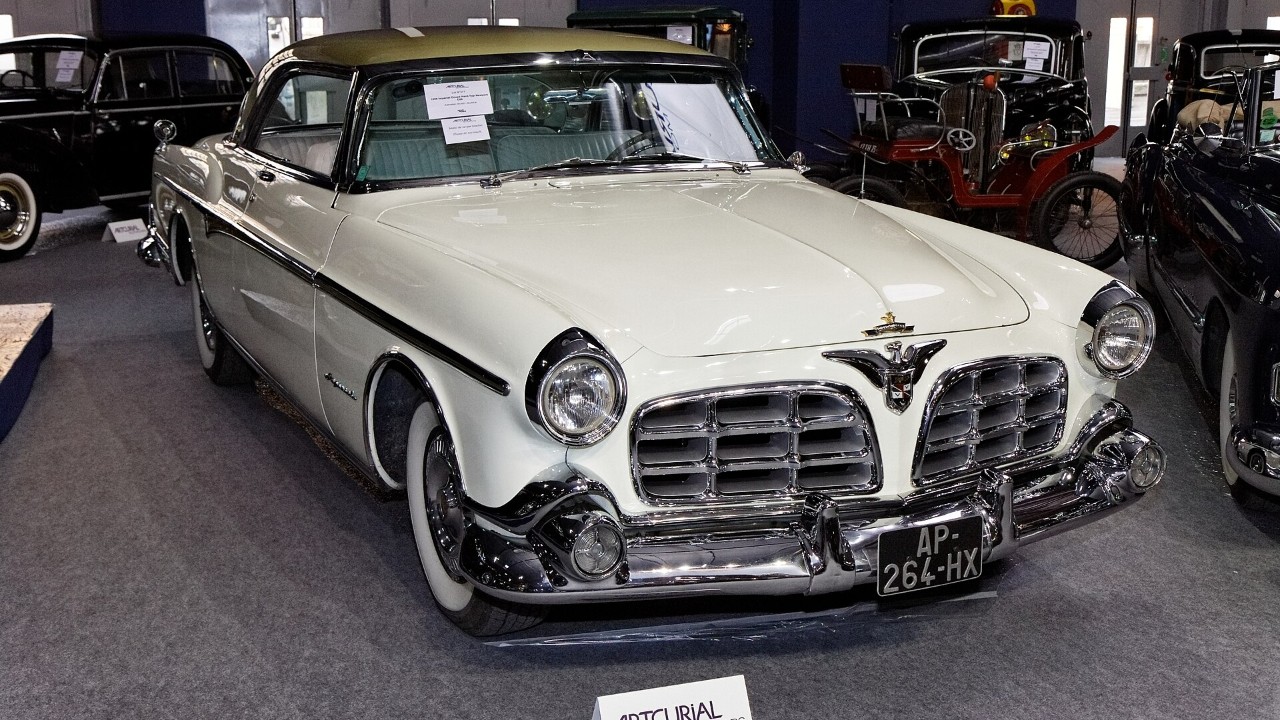
For the 1955 model year, Chrysler turned Imperial into a make of its own, with an Imperial Crown limousine at the top of the range. The goal was simple: beat Cadillac and Lincoln at the luxury game. For two decades, Imperial chased that goal with big engines, long wheelbases and some of the wildest styling Detroit ever approved.
Imperial never outsold Cadillac, though. Even in its best year, it built a fraction of what its rival sold. That’s partly why these cars feel so special now. You rarely see one, and when you do, people stop to look.
These are our picks for seven Imperials that still define fun, from a 1950s limousine to the sedan that revived the name in 1990. “Fun” here means the joy of wafting along in something huge, comfortable and unapologetic. The verdict on each car is our opinion, while the years, engines and production numbers come from marque records.
1. 1955 Imperial Limousine
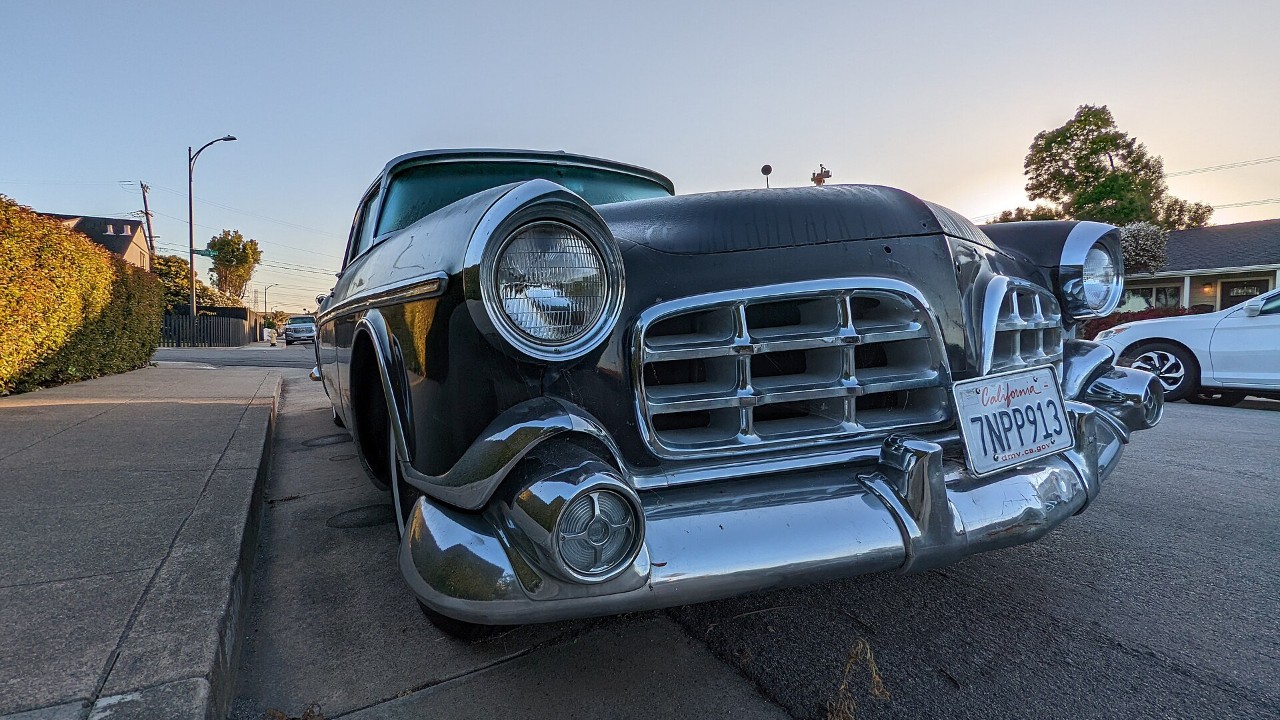
Chrysler held its 1955 model introductions on November 17, 1954. That season, Imperial became a separate make, giving the corporation five divisions. At the top sat the Crown Imperial, offered as an eight-passenger sedan and a limousine. The Imperial Club’s 1955 specifications page lists a 149.5-inch wheelbase for the Crown, compared with 130 inches for the regular Imperial.
Power came from a 331.1-cubic-inch V8 rated at 250 bhp at 4,600 rpm. In addition, a PowerFlite automatic, power steering and power brakes were standard. Crown Imperial limousines also offered genuine leather in the front seat, where the chauffeur sat. Imperial built only 172 Crown limousines for 1955. Overall, Imperial production that year came to 11,430 cars, counting the Newport hardtop, the sedan and the limousine.
So why is a limousine fun? Because owning one flips the usual roles. You can drive it yourself, or hand the keys to a friend and enjoy the back seat. In our view, few 1950s cars make a bigger entrance. If you want one, check the interior carefully, because limousine-specific trim and partitions are hard to replace.
2. 1957 Imperial Crown Southampton four-door hardtop
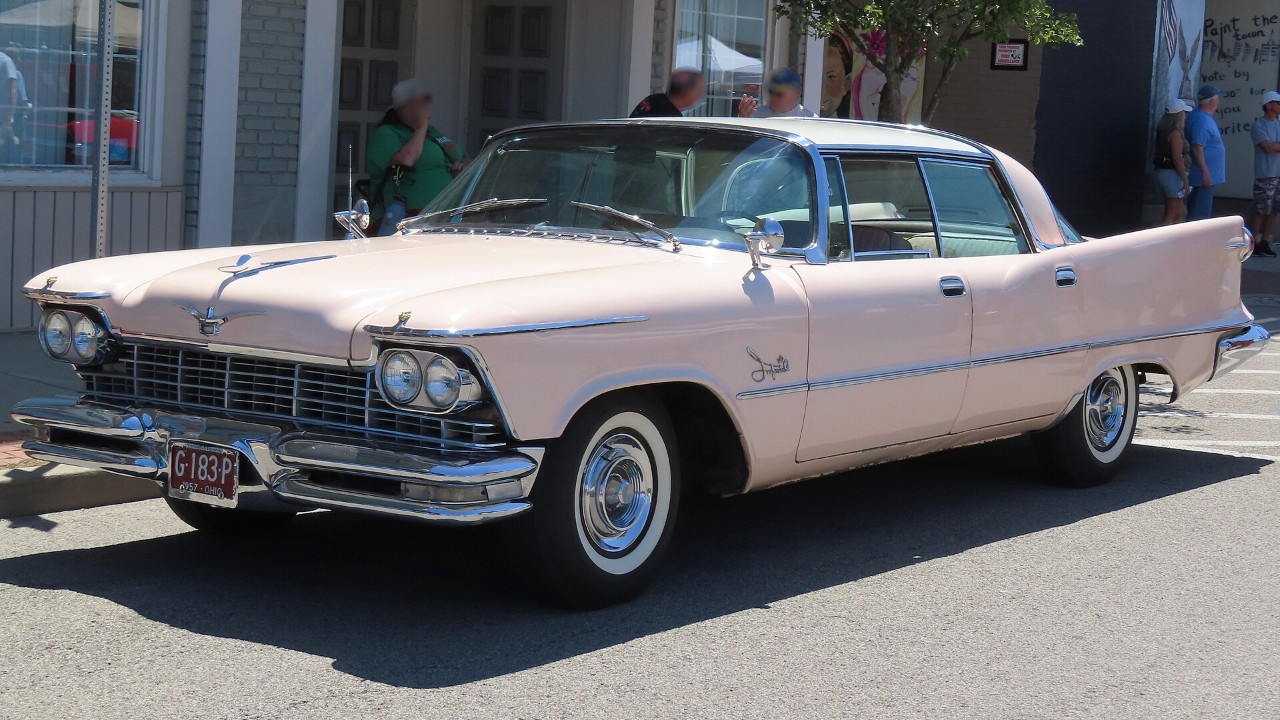
For 1957, Imperial got its own platform and a full dose of Chrysler’s Forward Look styling. Buyers loved it. In fact, 1957 became Imperial’s best-selling model year, with 37,593 cars produced. Cadillac still sold more than 120,000 that same year, which shows the size of the mountain Imperial was climbing.
Imperial gave the Southampton name to its pillarless hardtops, in both two-door and four-door form. With all the side windows down, the four-door Crown Southampton opens up completely from front to rear. Virgil Exner’s Forward Look styling set the tone for the whole car. Under the hood, a 392-cubic-inch Hemi V8 was standard for 1957 and 1958.
That combination is why we put the 1957 Imperial Crown Southampton high on our list. It’s a big, glamorous four-door that drives like an open car on a summer evening. It also has the Hemi, which gives it real punch. In our view, that pairing is perfect for slow summer cruising. Our buyer tip: rust can hide under all that chrome and trim, so get the car on a lift before you make an offer.
3. 1959 Imperial Crown sedan
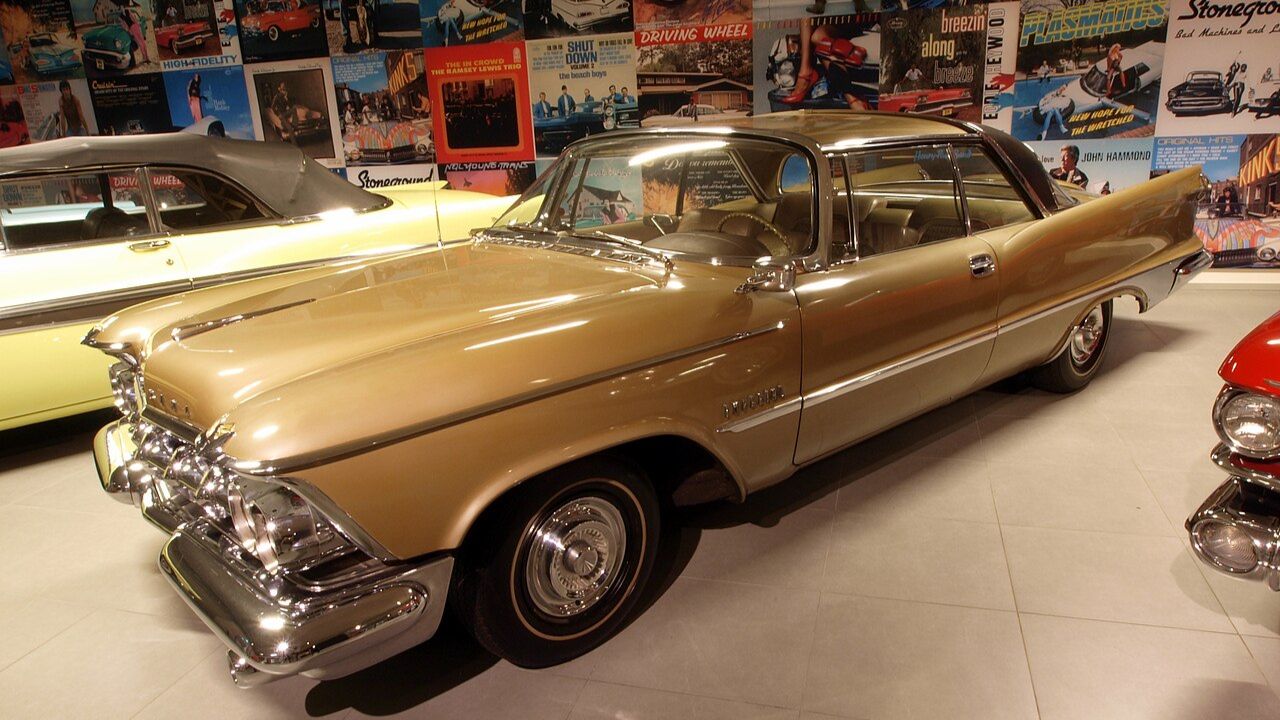
By 1959, the Forward Look had grown even more dramatic. Imperial’s chrome and fins were at their most flamboyant. However, the biggest change sat under the hood. The Hemi was gone, and Imperial switched to a 413-cubic-inch wedge-head V8 that stayed in the lineup through 1965.
Sales slipped that year. Imperial produced 17,710 cars for 1959, less than half its 1957 peak. For comparison, Imperial had built 37,593 cars just two years earlier. As a result, a 1959 Imperial Crown sedan is a much rarer sight today than its Cadillac counterpart.
We think the 1959 Crown sedan is one of the most underrated ways into Imperial ownership. Hardtops and convertibles usually draw the attention and the money. Meanwhile, a sedan delivers the same styling, the same big V8 and the same ride. The 413 wedge also brought more displacement than the Hemi it replaced, so the car never feels short of torque. Our advice: buy the most complete car you can find, since 1959-only trim pieces are scarce and expensive. Then take it somewhere with long, empty roads, because that’s where it shines.
4. 1966 Imperial Crown coupe
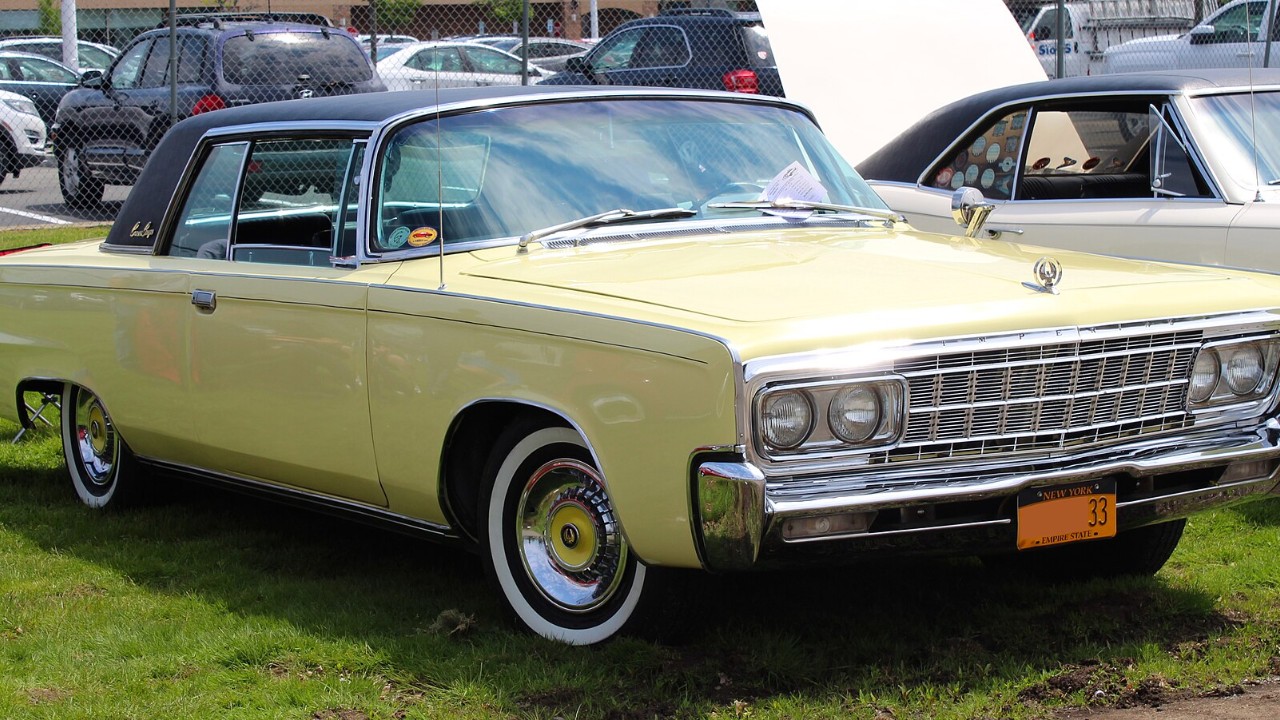
Elwood Engel redesigned Imperial for 1964, and the cleaner look was an instant hit. That year, Imperial sold 23,295 cars, its second-best total ever. The 1966 Imperial Crown coupe is the last year of that crisp, slab-sided design.
It also brought more power. For 1966, Imperial moved to a 440-cubic-inch V8 rated at 350 hp. That engine would power every Imperial through 1975. Still, total 1966 production fell to 13,752 cars, so the Crown coupe was never a common sight even when new. For comparison, Imperial had built 18,409 cars for 1965.
For our money, this is the best-looking Imperial of the 1960s. It’s also the version we’d pick for a long weekend drive. The flat sides and long hood suit a two-door body perfectly. The 440 also gives the coupe enough torque to make highway merging genuinely enjoyable. If you’re shopping, look for a car with working power accessories, because chasing electrical faults in a 1960s luxury car can take months. Also, an original interior in good condition is worth paying extra for, in our opinion.
5. 1969 Imperial Crown
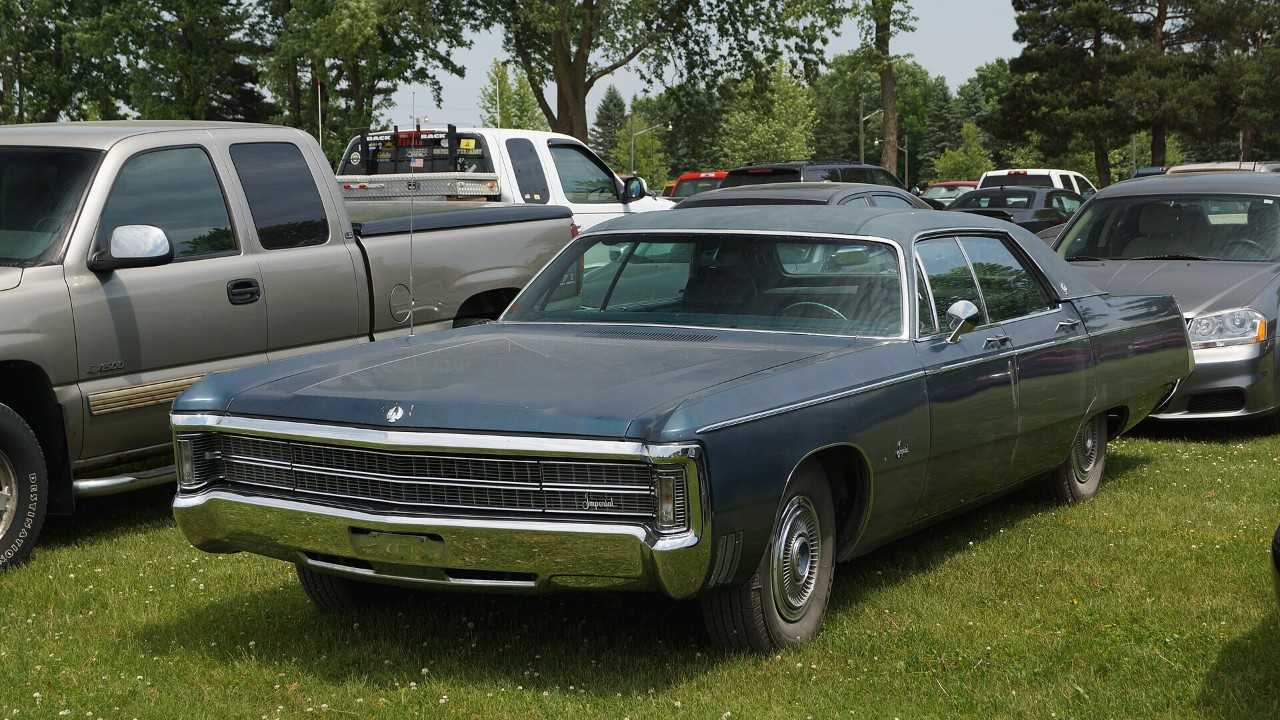
The 1969 Imperial adopted Chrysler’s “Fuselage Look,” with sides that bulged out at the beltline. To save money, Imperial now shared some of its bodywork with the Chrysler New Yorker. Even so, the car sold well. Imperial built 22,083 cars for 1969, its third-best year.
That season also marked a turning point. It was the last year for pillared Imperial sedans. At the same time, it was the first year for the LeBaron coupe. The 440 V8 carried over, so the Crown still had plenty of muscle. Compared with the 13,752 cars of 1966, the 1969 total was a strong rebound.
In our view, the 1969 Imperial Crown is the most futuristic-looking car on this list. It looks like it rolled out of a 1960s science-fiction film, yet it rides like a living room on wheels. In our view, few cars make a better arrival at a car show. Our tip: those smooth, wide body panels show every dent, so budget for good bodywork before you budget for anything else. After that, enjoy the looks you’ll get at every gas stop.
6. 1974 Imperial LeBaron two-door hardtop
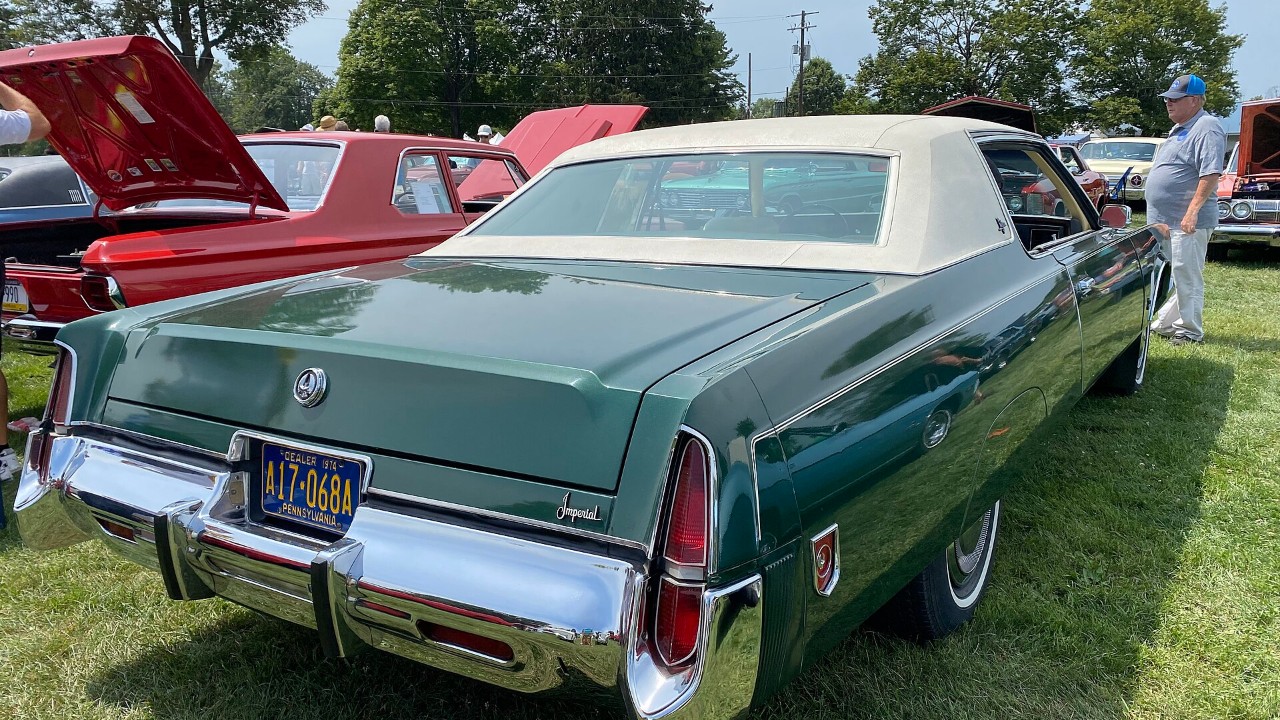
The 1974 Imperial LeBaron belongs to the final chapter of Imperial as an independent make. Imperial produced 14,483 cars that year. A 1974 Imperial sedan listed at $7,230. There was also a 50th Anniversary LeBaron Crown Coupe, and only 57 of them left the factory. The 440 V8 still powered this final generation, just as it had since 1966.
The end came quickly afterward. Imperial sold 8,830 cars for 1975, and the last one rolled off the line on June 12, 1975. That final-year total was only about 61% of the 1974 figure. After that, the name disappeared until a short-lived revival in the early 1980s.
That history is exactly why we’d want a 1974 LeBaron hardtop. It’s huge, it’s comfortable, and it marks the end of an era for American luxury cars. In fact, if you ever spot one of the 57 anniversary coupes, buy it on the spot. Our buyer advice: start with a solid body, since big panels are costly to fix. Then check the vinyl roof for rust underneath, and make sure the air conditioning works before you buy.
7. 1990 Chrysler Imperial
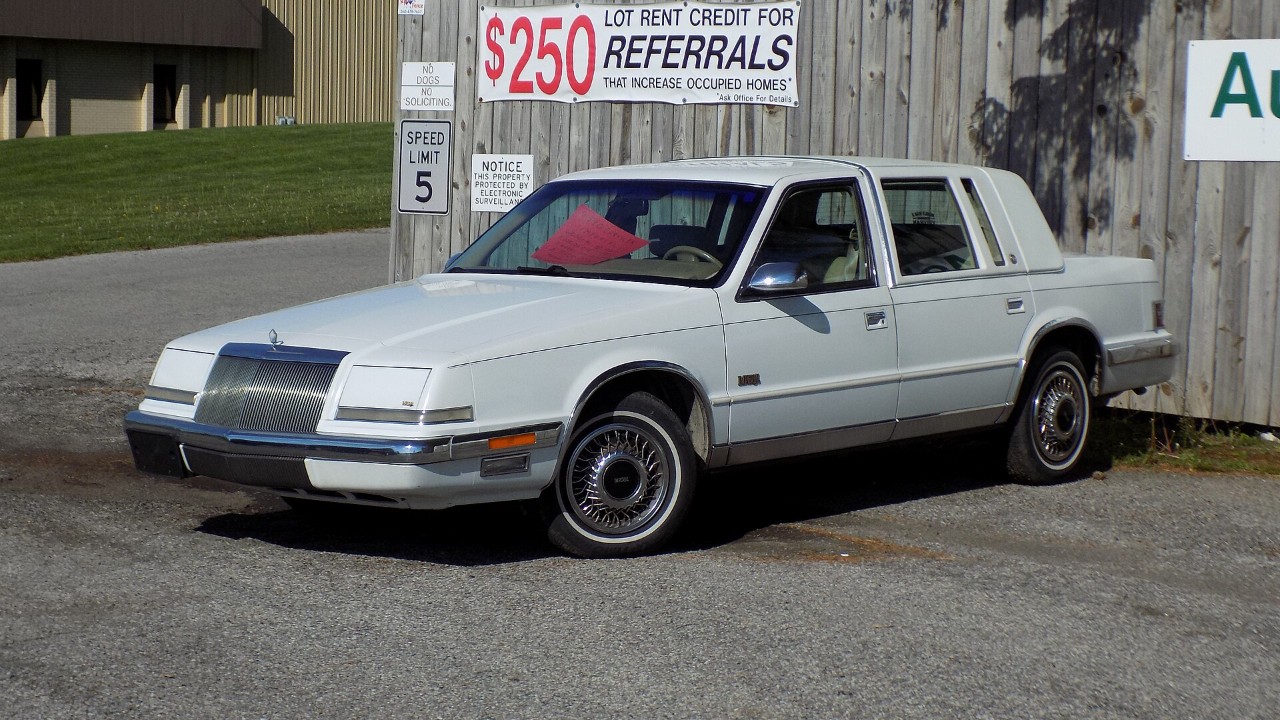
Chrysler revived the Imperial name for 1990 on its Y platform, above the New Yorker Fifth Avenue. The first year used a 3.3-liter V6 rated at 147 hp. From 1991 to 1993, a 3.8-liter V6 took over at 150 hp, and both came with a four-speed automatic.
The equipment list was long. Anti-lock brakes, a driver’s airbag, automatic climate control and a landau vinyl roof were all standard. In addition, buyers could order an electronically controlled air suspension. According to The Truth About Cars’ look at the 1990 Imperial, Mark Cross leather was optional, and every car was a six-passenger sedan. Chrysler built 14,968 Imperials for 1990. After that, yearly totals fell fast: 11,601 for 1991, 7,643 for 1992 and 7,064 for 1993.
We think the 1990 Chrysler Imperial is the easiest Imperial to enjoy every day. It’s plush and quiet, yet it still has that unmistakable formal look. Our tip: look for a car with the air suspension already converted or fully working, because The Truth About Cars notes its parts became hard to find. Chrysler built 41,276 of these Imperials before dropping the car after the 1993 model year. For 1994, the Chrysler LHS took over as the flagship.
More from Fast Lane Only