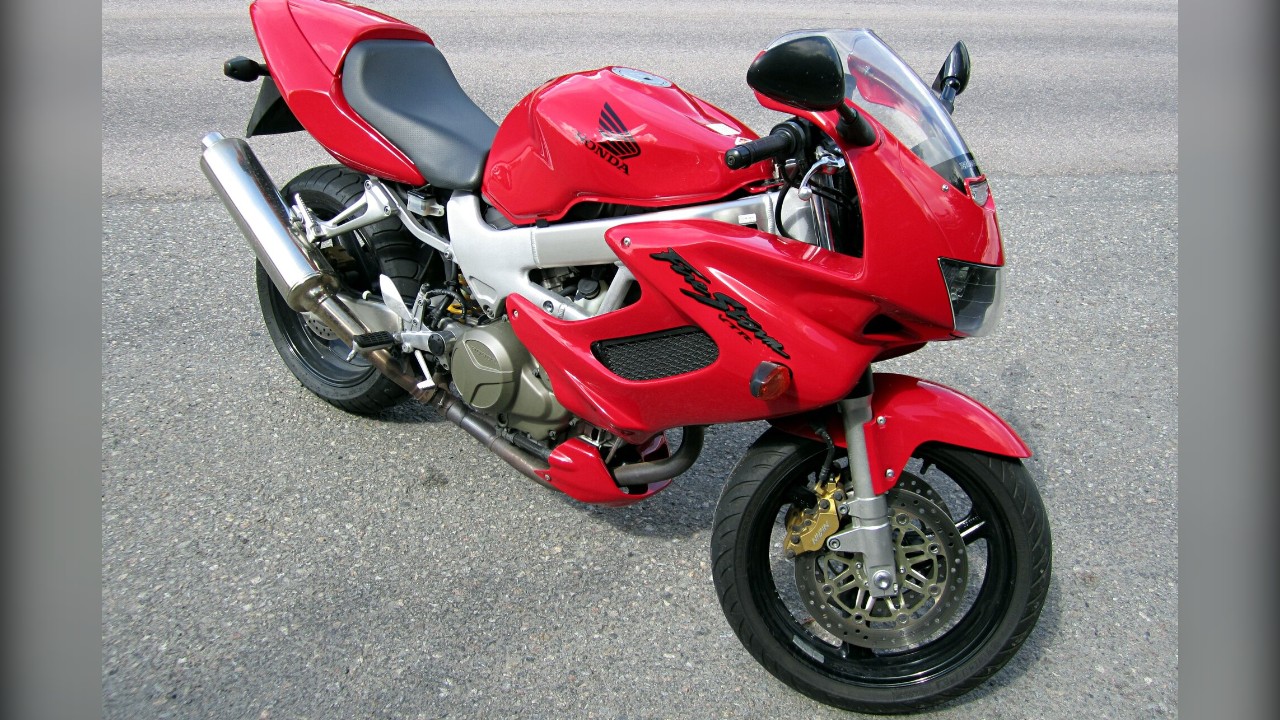
Harley-Davidson built its Sportster line from 1957 onward, and for most Americans that is what a V-twin looks and sounds like. Yet some of the best twins came from Japan and Italy, including the Yamaha TR1, a big Yamaha twin that most U.S. riders never even saw in a showroom.
Two cylinders in a V make a motorcycle narrow, torquey and full of character. They also come in every flavor, from long-legged adventure bikes to low cruisers and lean café racers. That variety is why the used market is such a fun place to shop.
These are our picks, twelve V-twin motorcycles we would happily recommend to a rider today. Some are modern and easy to own, while others are classics that reward a bit of patience. The specs come from our sources, and the recommendations are our opinion.
1. 1981 Yamaha TR1
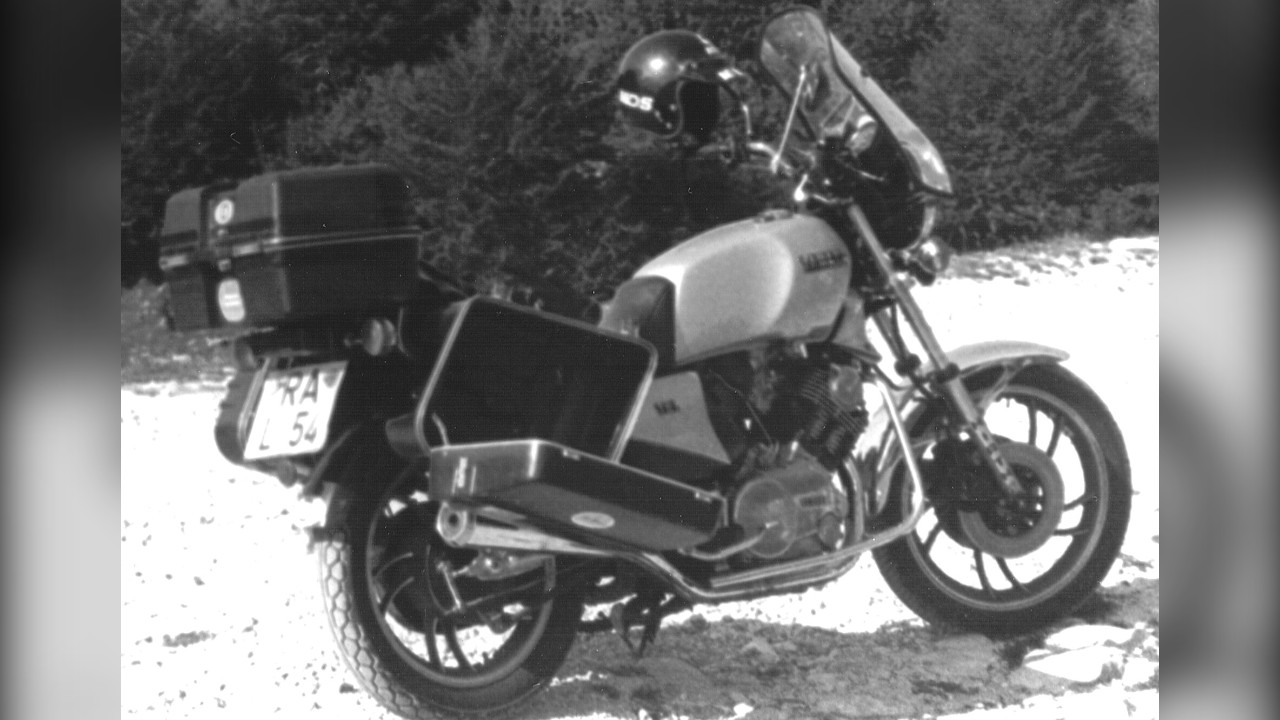
Yamaha launched the TR1 in 1981 as a one-liter V-twin for riders in Europe and America who preferred twins to inline fours. It was a fresh design, not two singles bolted together. The air-cooled 981 cc engine had a 75-degree angle and a single overhead cam on each cylinder.
The Yamaha TR1’s engineering was clever. According to Motorcycle Specs’ TR1 profile, the engine made 69 horsepower at 6,500 rpm. The final drive used a chain sealed inside a grease-filled enclosure, which kept it clean and long-lived. In addition, Yamaha used a pressed-steel spine frame with the engine as a stressed member, so the bike had no conventional lower frame rails.
We recommend the Yamaha TR1 because it is a rare kind of classic: comfortable, torquey and simple. Yamaha did not sell it in the U.S., where the related XV920 filled that role instead. That makes it an import project for American riders, which is part of the fun. If you want a European-market classic with real road manners, the Yamaha TR1 is a smart buy. Better yet, the Yamaha TR1 weighs about 485 pounds dry, so it feels planted on the highway.
2. Moto Guzzi 850 Le Mans III
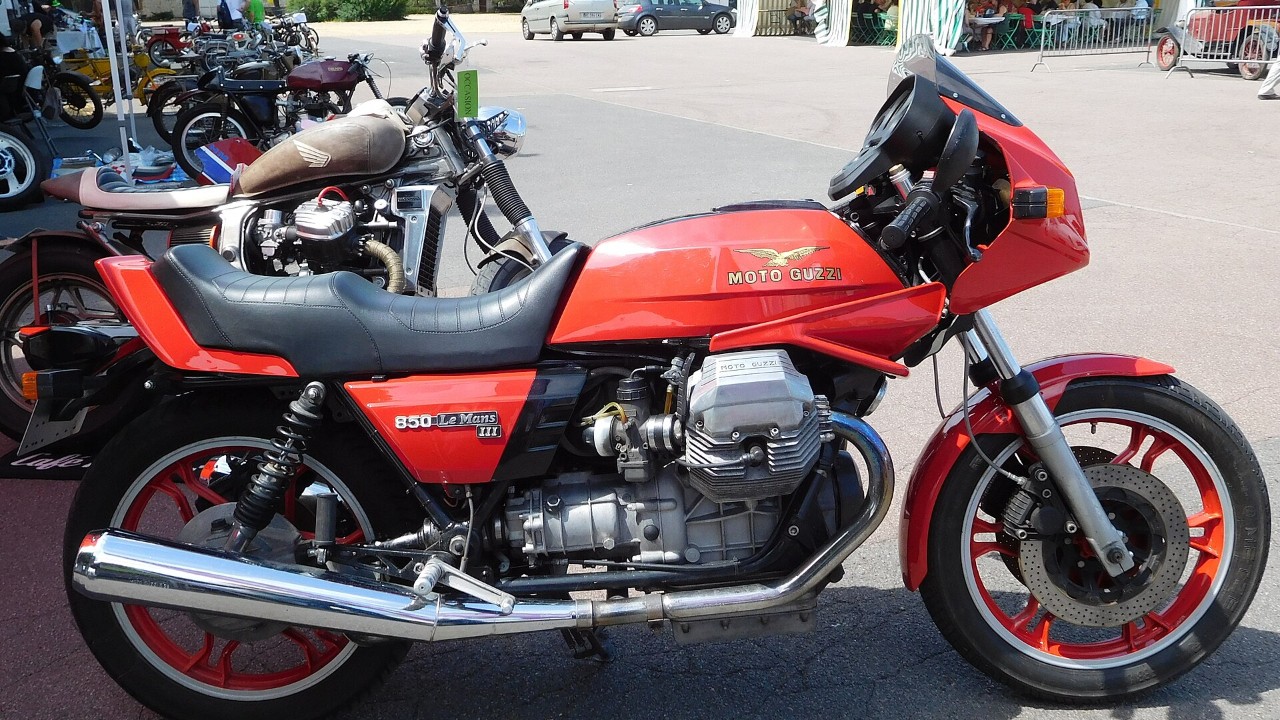
Moto Guzzi built the Le Mans III from 1981 to 1985, and it made 9,866 of them. It used the company’s air-cooled, 90-degree pushrod V-twin, with an 844 cc displacement listed for the series. You can spot a III by its squared-off cylinder fins, which replaced the rounder fins of earlier bikes.
The Le Mans III also kept Guzzi’s linked brakes. The handlebar lever worked the right front caliper, while the foot pedal worked the left front and the rear. For the III, Moto Guzzi added a true proportioning valve, which made that system work better. The tank, seat and fairing also took styling cues from the smaller V50 Monza and V35 Imola.
We recommend this Guzzi because it is a sports bike you can actually live with. The engine is slow-revving and strong in the middle, which suits real roads more than a racetrack. The cylinders stick out into the breeze, and that helps keep the air-cooled engine happy. If you shop for one, check that the linked brakes work properly. Then budget for a careful service by someone who knows these engines well.
3. 1993 Ducati Monster 900
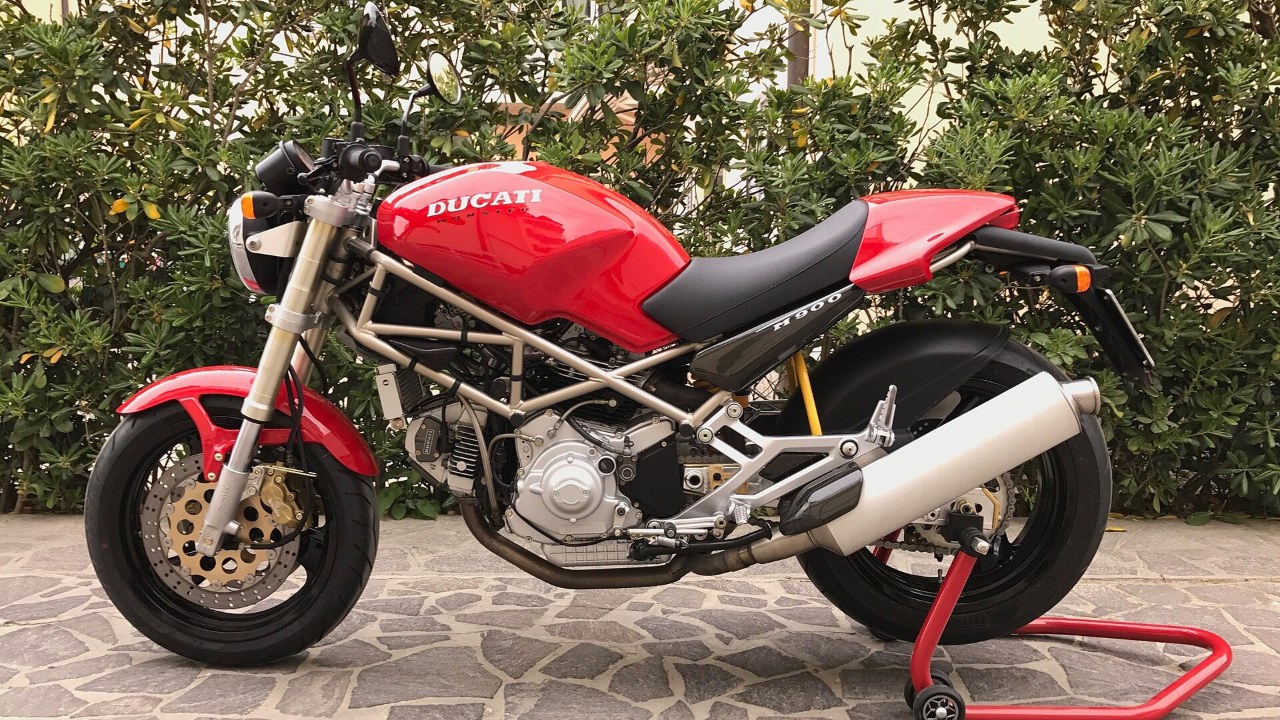
The Monster began as a styling exercise in 1992. Ducati’s technical director Massimo Bordi assigned the design to Miguel Angel Galluzzi, who built it from parts already in the Ducati bin. The engine came from the 900 Supersport, and the trellis frame descended from the 851 superbike.
That simple recipe turned into one of the biggest hits in Ducati’s history. By December 2016, the Monster line had passed roughly 300,000 bikes. In 2005, Monsters made up more than half of Ducati’s sales. Few design sketches have ever paid off that well for a motorcycle maker. The original M900 started it all with a 90-degree L-twin, a round headlight and almost no bodywork.
We recommend an early Monster 900 because it shows how good a motorcycle can be when it does less. It is light, narrow and full of character, and it sounds like a Ducati should. On the other hand, any older Ducati rewards careful maintenance, so ask for records before you buy. Find a well-kept example, and you get a modern classic that is easy to ride every day.
4. 1993 Honda XRV750 Africa Twin
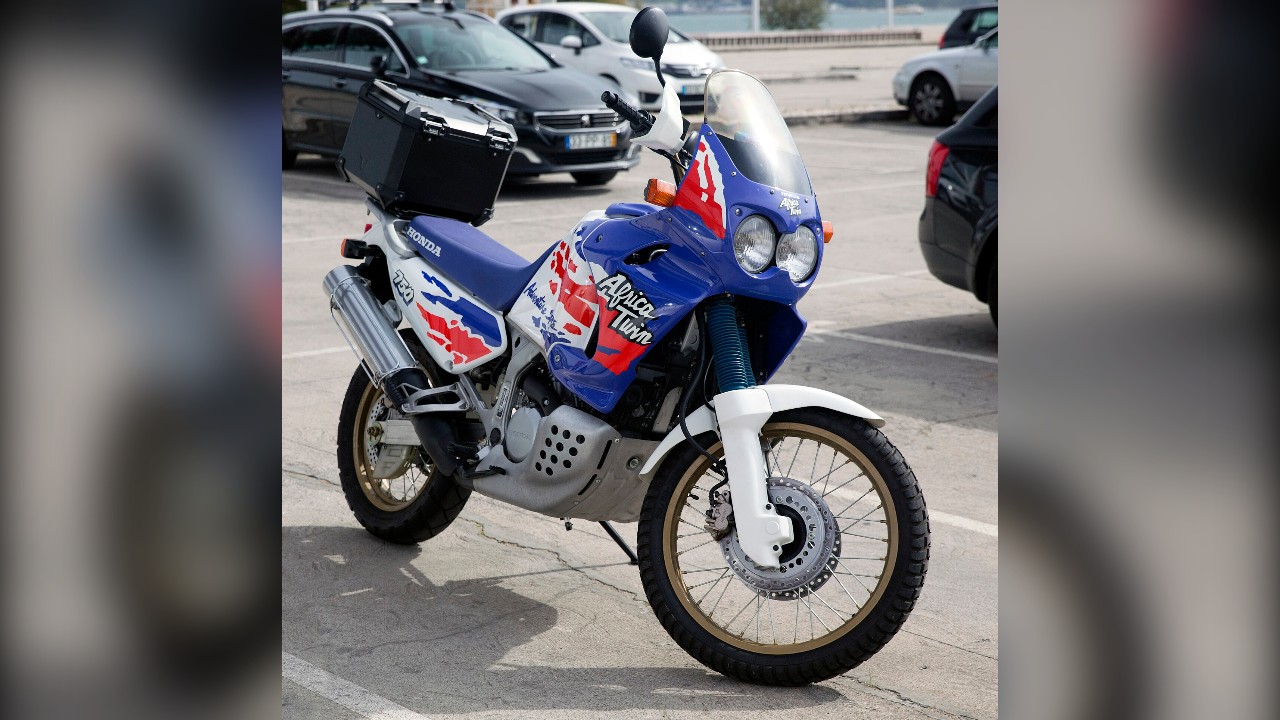
Honda built the XRV750 Africa Twin from 1990 to 2000. It carried a 742 cc V-twin and a big rally-style fairing. More importantly, it drew directly on Honda’s NXR750 rally bike, which won the Paris-Dakar rally four times in the late 1980s.
That racing link gave the Africa Twin real credibility off the pavement. Few road bikes of its day could claim a family tie to a Dakar winner. Meanwhile, the big fairing made it a comfortable machine for long highway days. The 742 cc twin added enough torque to haul camping luggage without fuss.
We recommend the XRV750 because it is the original big Honda adventure bike, and it has aged gracefully. It is heavier than a modern dirt bike, yet it feels sure-footed on gravel and comfortable on long days. If you shop for one, look for a bike with service history and a healthy clutch. A good Africa Twin will happily carry you across a continent and back, with the rally-bred looks to match the trip. For many riders, that is the whole point of owning one.
5. Honda XL600V Transalp
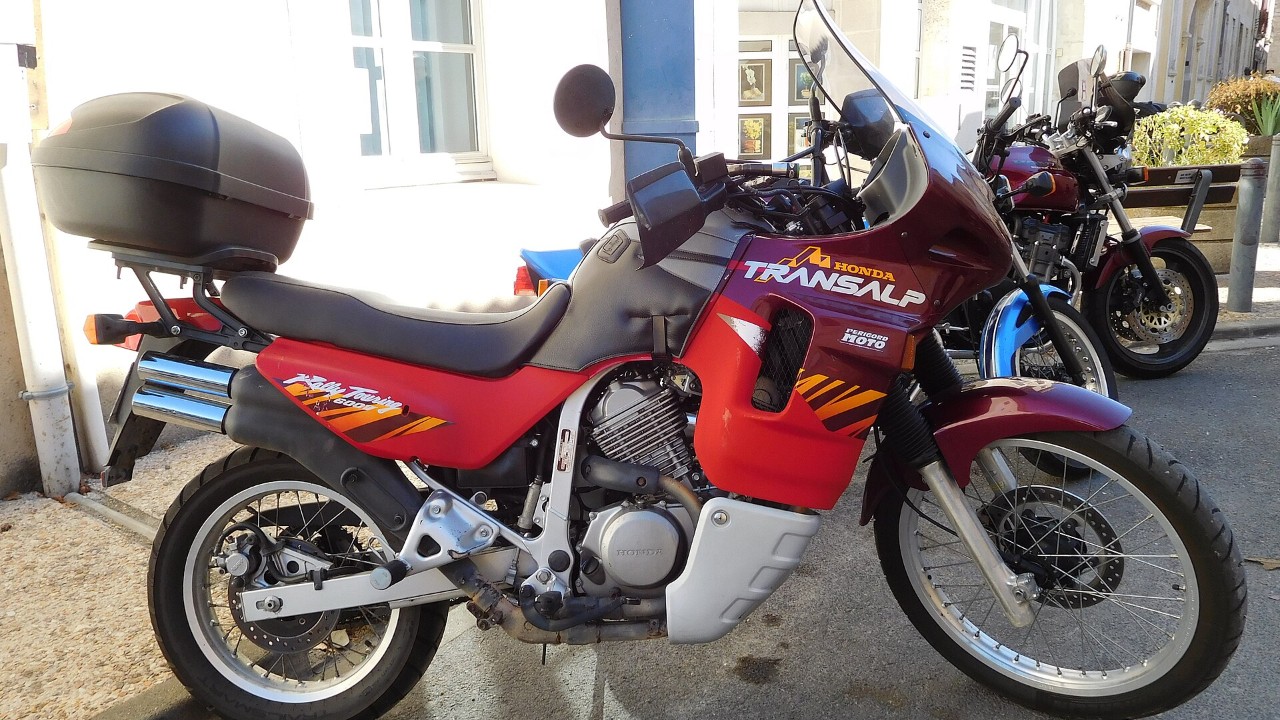
The Transalp arrived in 1987 with a liquid-cooled, 583 cc, 52-degree V-twin. Each cylinder had three valves, and the first version made 50 horsepower at 8,000 rpm. For 1989 and 1990, Honda raised that to 55 horsepower. Then later bikes returned to 50.
Honda sold the XL600V in the U.S. in 1989, but it lived much longer in Europe. It reached a top speed of about 110 mph. Over time, the series also put on weight, from 386 pounds on early bikes to 481 pounds on the latest versions. The XL650V finally replaced it in 2000.
We recommend the Transalp because it is the definition of a do-it-all bike. It is comfortable on a commute, steady on the highway and happy on a dirt road. The engine is not fast, but it is smooth and easy to live with. If you buy one, check the cooling system and the condition of the fork seals. Those are sensible checks on any motorcycle of this age. Otherwise, a Transalp is one of the friendliest V-twins you can own.
6. 1998 Honda VTR1000F Firestorm
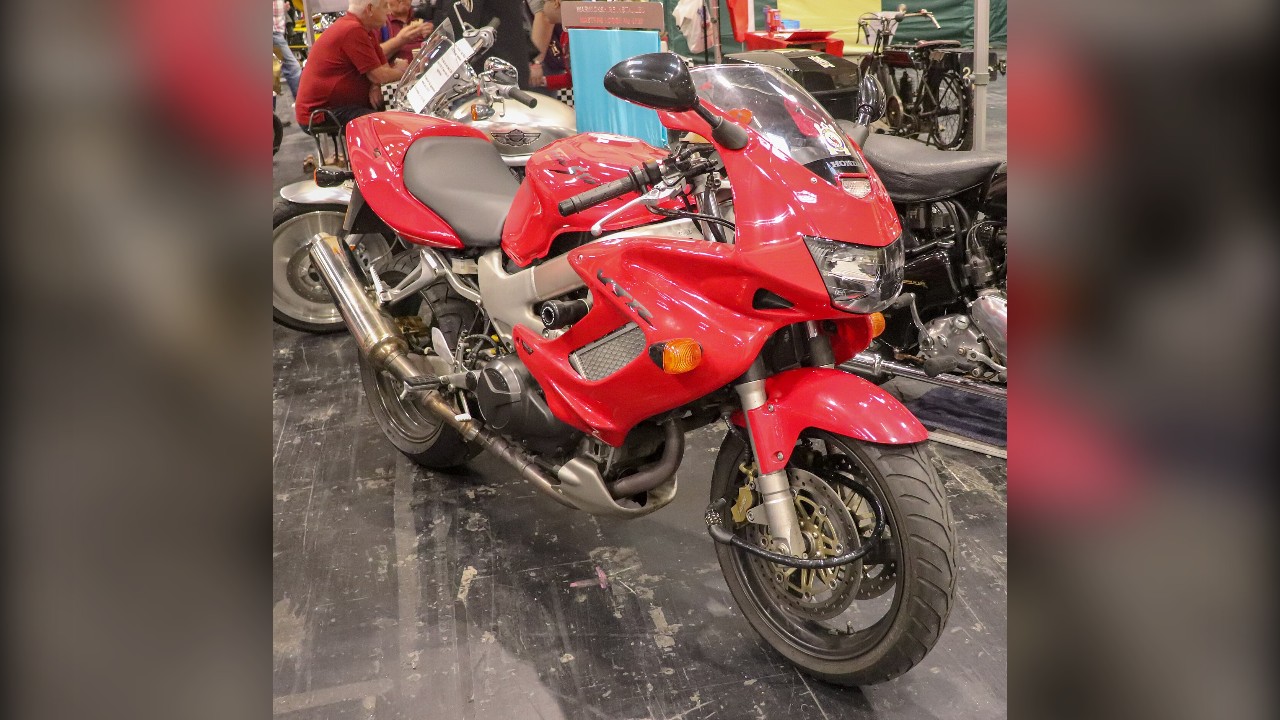
Honda built the VTR1000F from 1997 to 2005, and it sold the bike as the SuperHawk in the U.S. It used a 996 cc, liquid-cooled 90-degree V-twin. Honda mounted the radiators on the sides of the bike, and the semi-pivotless frame used the engine as a stressed member.
The numbers were strong. The VTR made 116 horsepower at the rear wheel, and Cycle World ran the quarter-mile in 11.03 seconds at 124.26 mph. It also had 48 mm carburetors, the largest ever fitted to a production motorcycle at the time. The original fuel tank held 16 liters. However, Honda enlarged it to 19 liters from 2001, except on the U.S. SuperHawk.
We recommend the Firestorm because it gives you big-twin torque with Honda reliability. It is quick and easy to ride, and it offers a sportier feel than most bikes its age. On the downside, the small tank limits range, especially on early bikes. If you can, choose a 2001 or later model with the bigger tank. Either way, you get a lot of performance for the money, plus a V-twin soundtrack that inline fours cannot copy.
7. 2004 Suzuki DL650 V-Strom
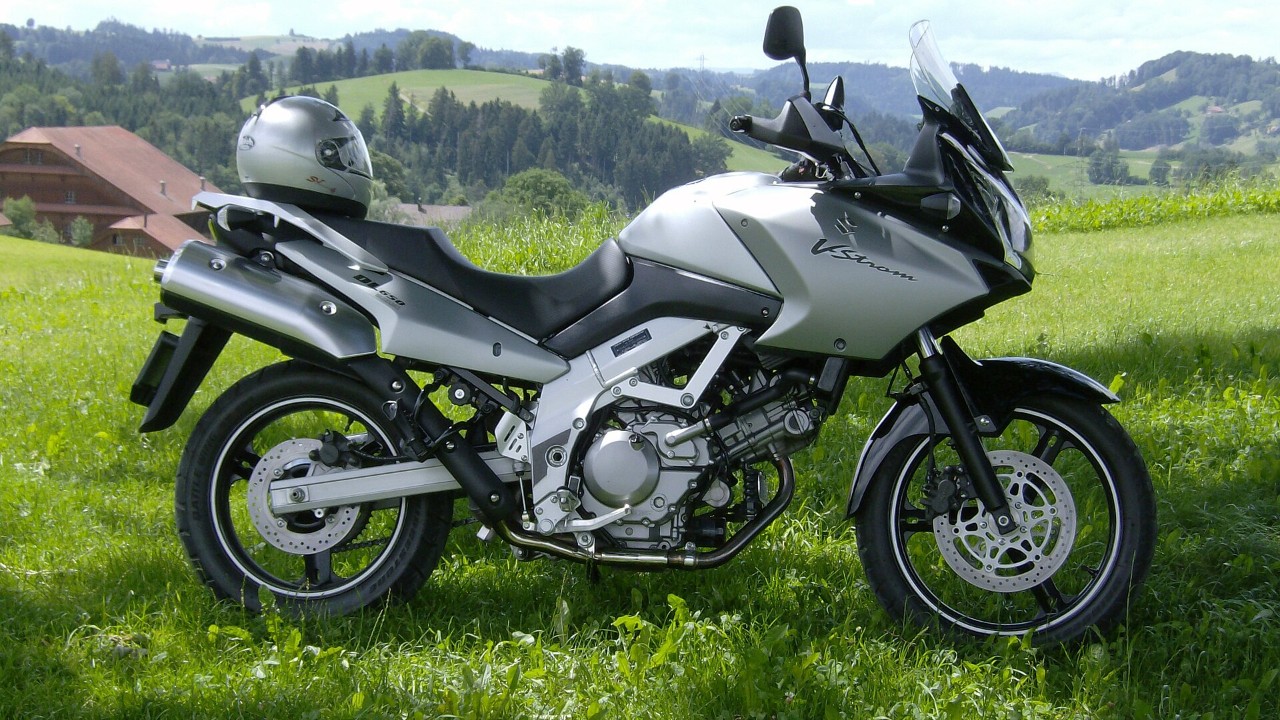
Suzuki launched the DL650 V-Strom for the 2004 model year. It used a retuned version of the SV650’s 645 cc, 90-degree V-twin, with fuel injection and four valves per cylinder. The engine made 66 horsepower at 8,800 rpm, and the tank held 22 liters, or about 5.8 gallons.
The press loved it. Cycle World heaped praise on how competent it was in September 2006. In addition, Motorcyclist listed it among its ten best bikes under $10,000 in October 2007. Germany’s Motorrad magazine also crowned it “Alpenkoenig” after its 2005 and 2006 Alpine tests.
We recommend the V-Strom 650 because it does almost everything well, and it costs very little to buy used. It is comfortable, efficient and reliable, which makes it a great first big bike or a sensible touring machine. The styling is plain, but you will forget that on a long ride. If you buy one, check the chain, the tires and the service records. Those simple checks usually tell you whether a V-Strom has had an easy life. After that, it is mostly a matter of adding fuel and riding.
8. Buell XB12S Lightning
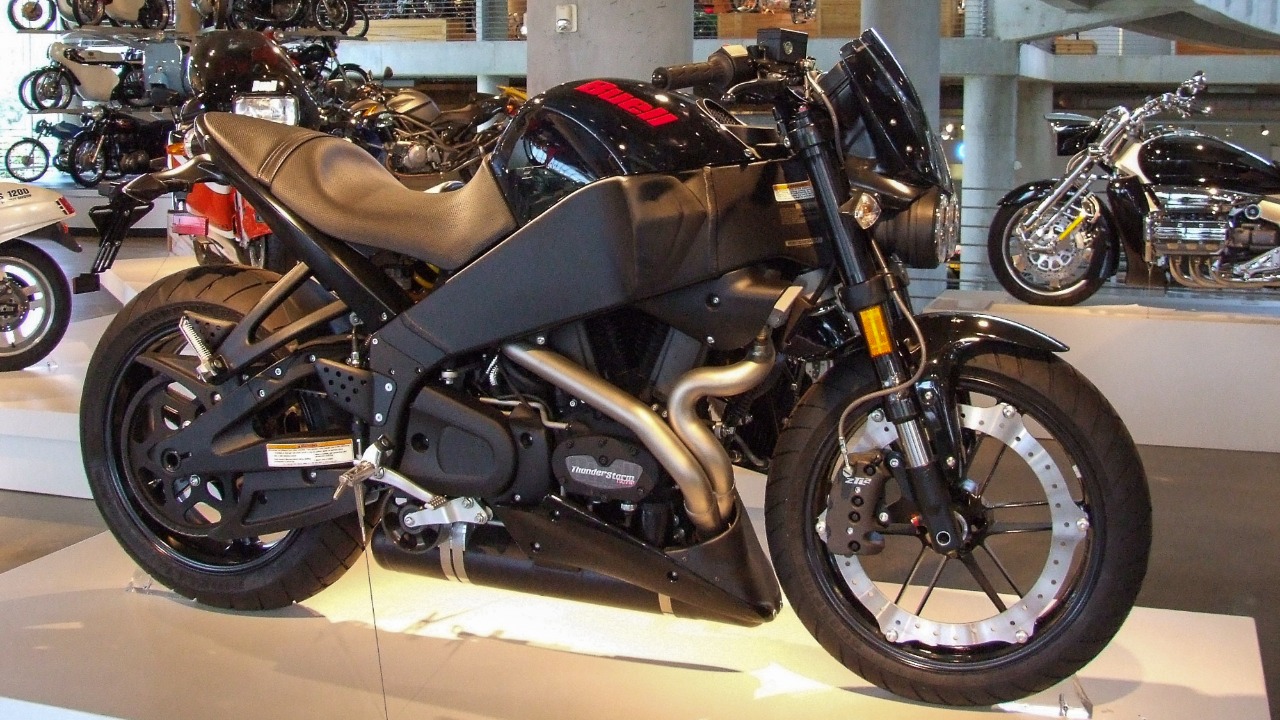
The XB12S Lightning used a 1,203 cc air-cooled V-twin with two valves per cylinder. According to Visordown’s review of the XB12S, it made 100 horsepower at 6,600 rpm and 81 lb-ft of torque at 6,000 rpm. It also had Buell’s ZTL front brake, with a large 375 mm stainless floating rotor.
The Lightning was compact and light, with a dry weight of about 179 kilograms. Visordown called it “a good, if quirky, handling bike” that looks great. However, the same review warned that reliability was an issue, the gearbox was “awful” and the clutch was very heavy.
We recommend the Lightning with a few honest conditions. It is one of the most entertaining American twins ever made, and its handling is sharp. On the other hand, it is not a bike for riders who want zero fuss. If you buy one, ask for service records and plan for a test ride to judge the gearbox. Find a sorted example, and you get an exciting motorcycle at a fair price. It also turns heads at every bike night.
9. Moto Guzzi V7 Stone
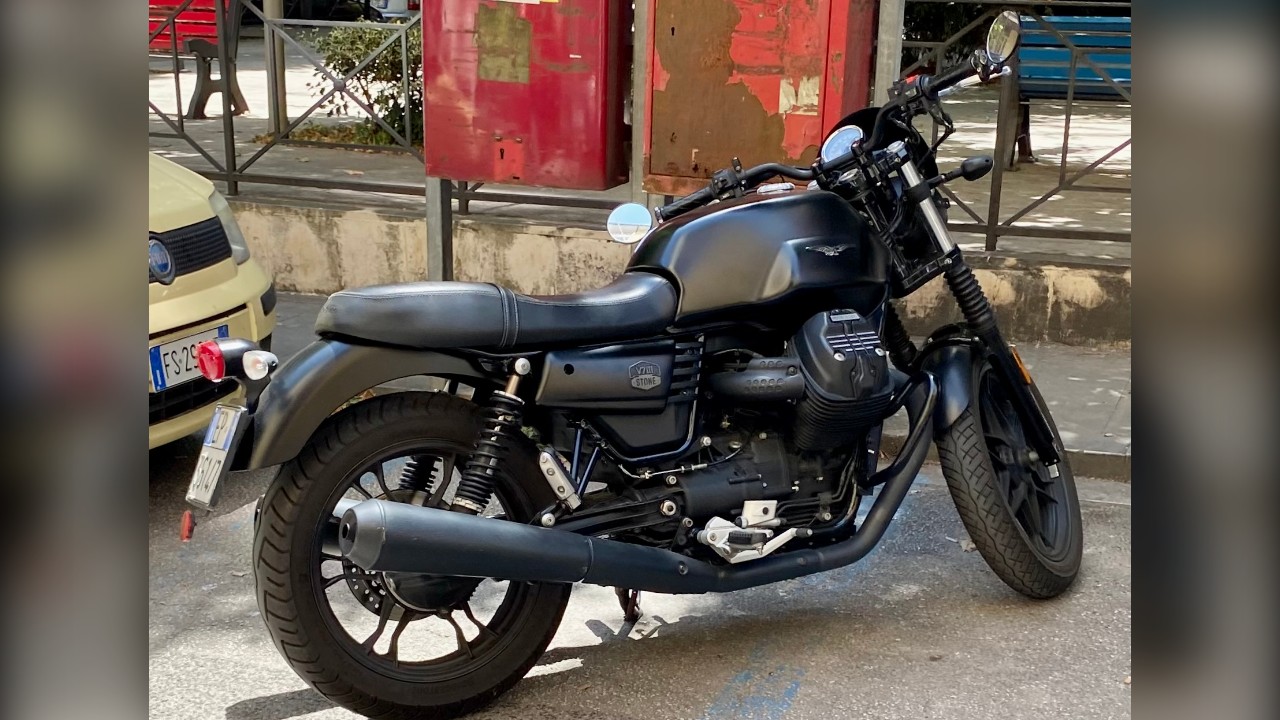
The V7 Stone is the simplest version of Moto Guzzi’s modern V7. In Rider Magazine’s test of the 2013 V7 Stone, it used a 744 cc, air-cooled 90-degree V-twin with fuel injection and shaft drive. On Rider’s dyno, it made 43.3 horsepower at 6,300 rpm and 42.4 lb-ft of torque at 3,200 rpm.
It came in matte black or pure white with blacked-out cast wheels. The base price was $8,390, and the bike weighed 435 pounds wet. In addition, its 31.6-inch seat height suited many riders. Rider also averaged 43.2 mpg and called the engine “uncommonly smooth for a V-twin.”
We recommend the V7 Stone because it is a classic-looking bike that you can ride every day without worry. It is light, friendly and easy to maintain, and shaft drive means no chain to clean. It will not win drag races, but it does not need to. The point of a V7 is the relaxed rhythm of that air-cooled twin at 50 mph. If you want a characterful first bike or a relaxed weekend machine, this Guzzi is a great place to start. It also suits riders who like simple, honest machines.
10. 2015 Indian Scout
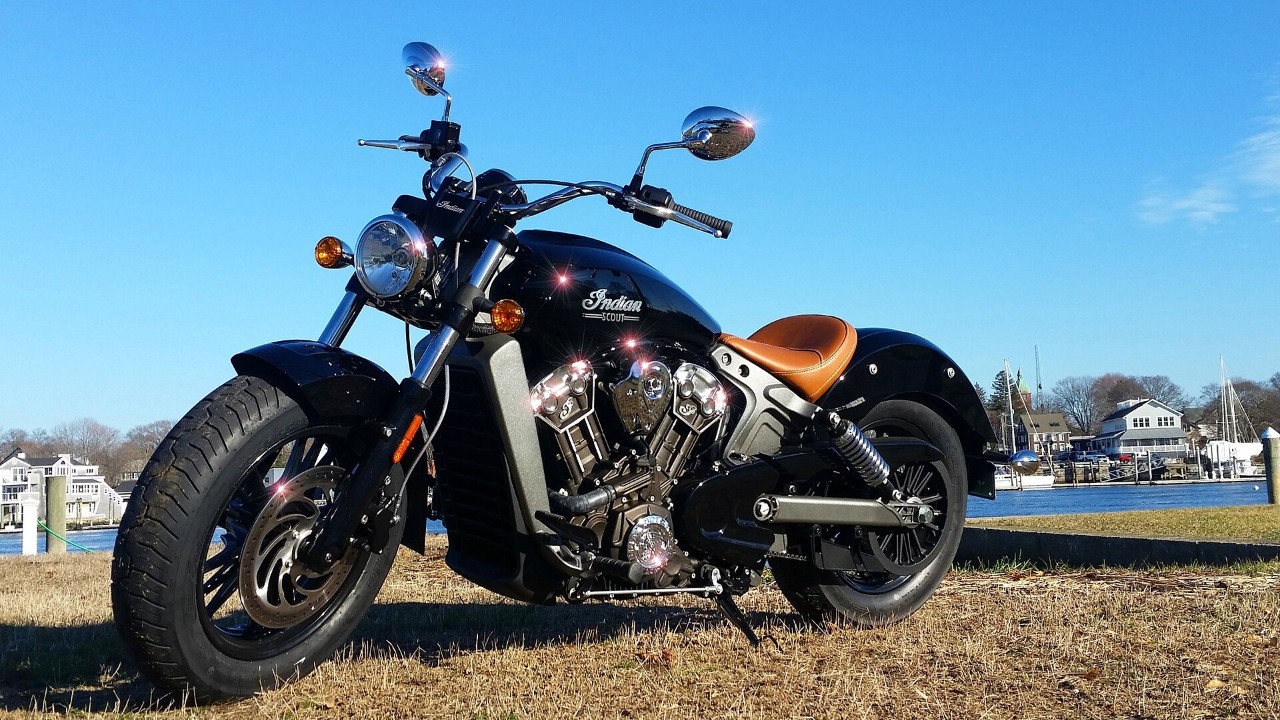
Polaris bought Indian Motorcycle in 2011, and the new Scout arrived for the 2015 model year. It used a 1,133 cc liquid-cooled V-twin, a six-speed gearbox and a belt drive instead of a chain. Indian built its frame from several aluminum castings bolted together and to the engine.
That modern layout made the Scout feel very different from older cruisers. It also kept maintenance and costs down, thanks partly to the belt drive. Braided brake lines came standard as well. Then, for 2016, Indian added the lower-cost Scout Sixty, which used the same frame with a 999 cc engine and a five-speed gearbox.
We recommend the 2015 Scout because it blends classic Indian style with modern engineering. The liquid-cooled engine pulls hard, and the low, light chassis makes it friendly in town. If you are coming from a smaller bike, the Scout is an easy step up. When buying used, check for a clean service history and any aftermarket exhaust changes. The Scout rewards you with a strong engine and a timeless look. Many riders find it easier to handle than they expect.
11. Kawasaki Vulcan 900 Custom
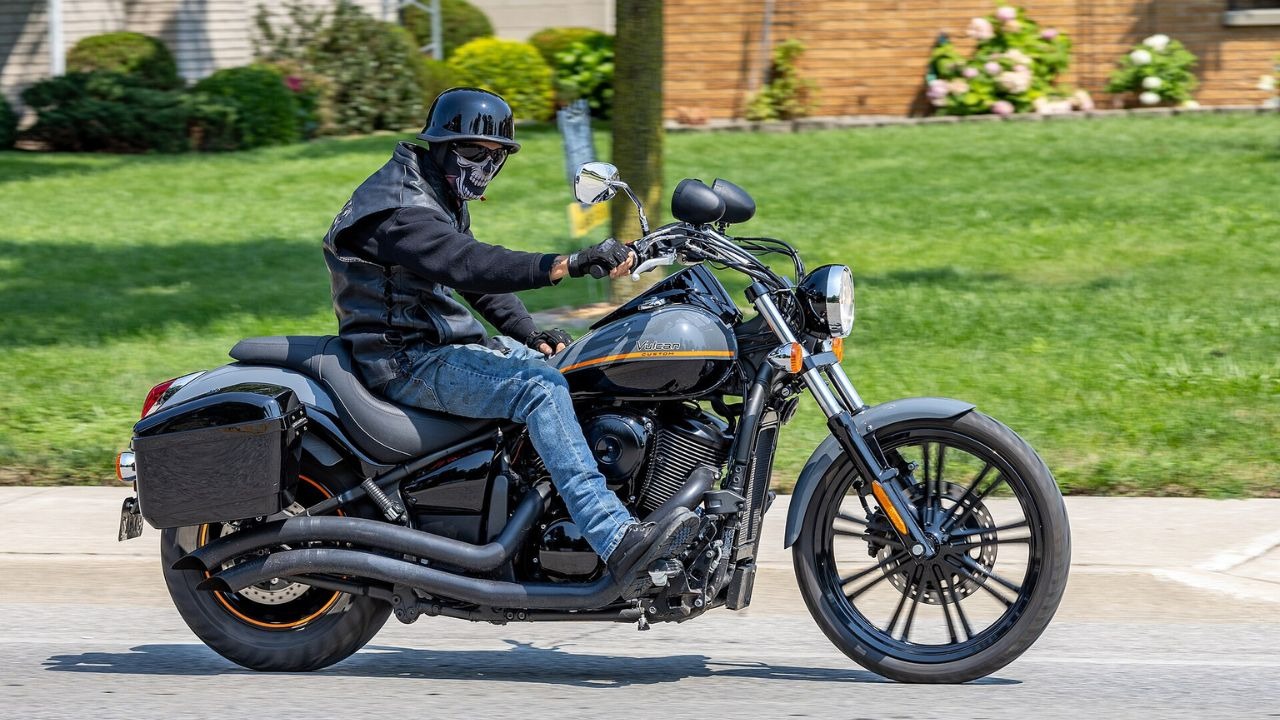
The Vulcan 900 Custom uses a 903 cc liquid-cooled V-twin with a five-speed gearbox and a belt final drive. Its look comes from a skinny 21-inch front wheel and a wide 180-section rear tire on a 15-inch rim. The seat sits just 27.0 inches off the ground.
The bike has barely changed over the years. In one 2020 Vulcan 900 Custom review, the reviewer noted that the Custom had been around for 13 years with no changes they could find. That year, it listed at $8,499, and the reviewer called it “an outstanding ride.”
We recommend the Vulcan 900 Custom because it is an easy, low-stress cruiser that rarely asks for much. The low seat makes it friendly for shorter riders, and the liquid cooling helps in traffic. It is not the fastest bike here, but it is one of the most relaxing. If you buy one, check the belt and the rear tire. Those are the main wear items, and both are easy to replace at any shop. Otherwise, you get a dependable cruiser for a modest outlay.
12. Harley-Davidson Sportster Iron 883
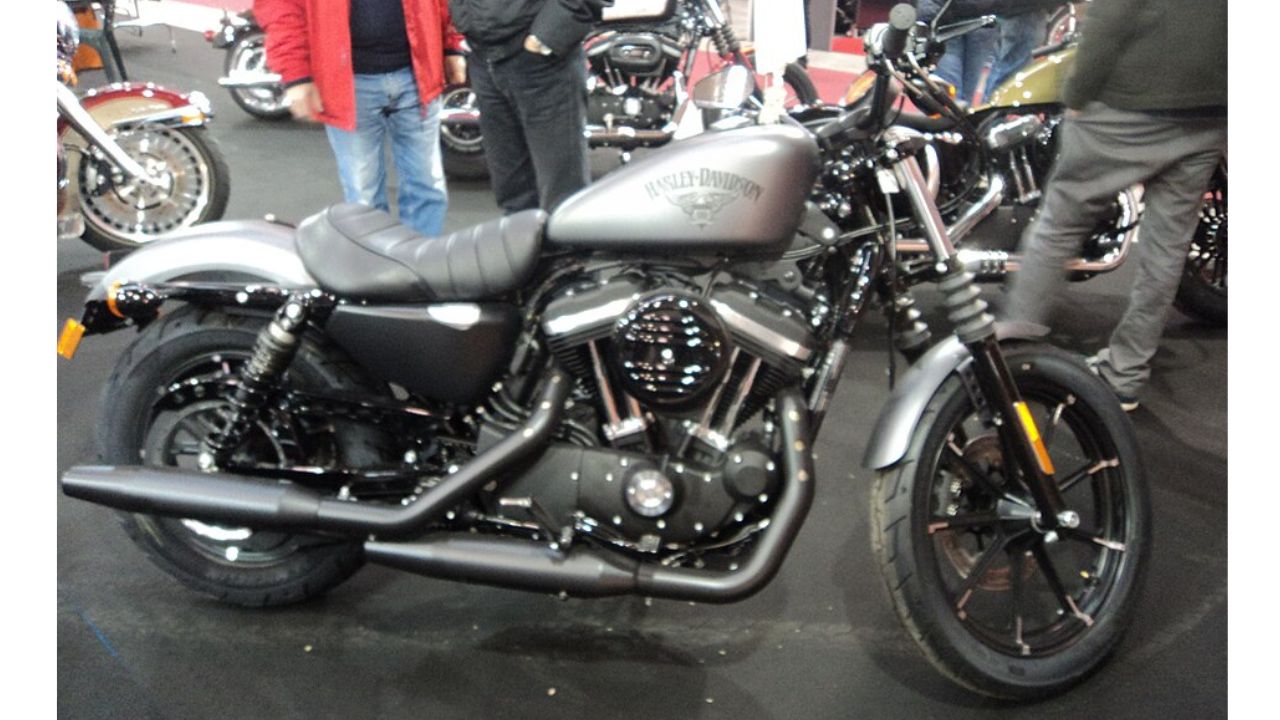
Harley-Davidson introduced the Iron 883 in 2009 as a smaller-engined take on the Nightster. It came with a blacked-out engine, cast wheels instead of spokes and narrower handlebars. Underneath, it used the Sportster’s 883 cc air-cooled V-twin.
From 2004 onward, Sportsters used rubber isolation mounts that cut the vibration riders feel. That change made the Iron far more pleasant than older solid-mount bikes. Meanwhile, the Sportster family carried on a line that started in 1957. That is a long run for any motorcycle nameplate.
We recommend the Iron 883 because it is a simple, stylish way into Harley ownership. It is light by Harley standards and easy to customize, with endless parts available. The 883 engine is not the most powerful, but it is tough and easy to work on. If you buy one, look for a bike that nobody has modified too heavily. A clean stock example is usually easier to resell. And it marks the end of an era, because Harley-Davidson built the last Evolution Sportster, a Gunship Gray 883, on November 18, 2022.
More from Fast Lane Only