Pontiac sold nearly 179,000 cars in 1935, the first year its hoods wore the bright Silver Streak band. That strip of chrome became the brand’s signature for two decades. By the time the Pontiac Chieftain arrived for 1949, the streak ran down the hood of nearly every car the division built.
Chrome alone never made a car memorable, though. Plenty of 1950s sedans wore just as much brightwork and now sit forgotten in barns. The Pontiacs that still draw a crowd pair the shine with a shape, a color or a story that people walk across a parking lot to see.
So we picked seven of our favorites from the chrome era, running from the first postwar Chieftain to the 1960 Ventura. These are our choices, and they lean toward the hardtops, convertibles and wagons that turn heads at shows today. Each one shows a different chapter of how Pontiac went from a sensible family brand to a style leader.
1. 1950 Pontiac Chieftain Deluxe Coupe
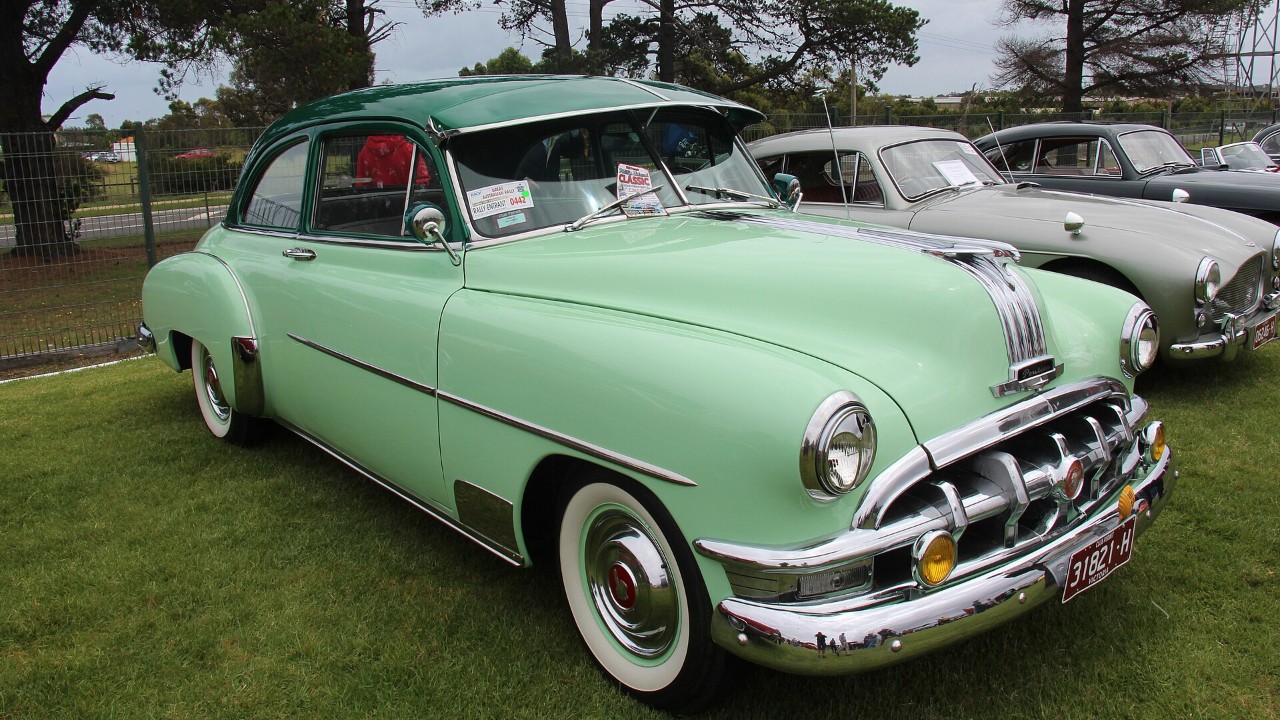
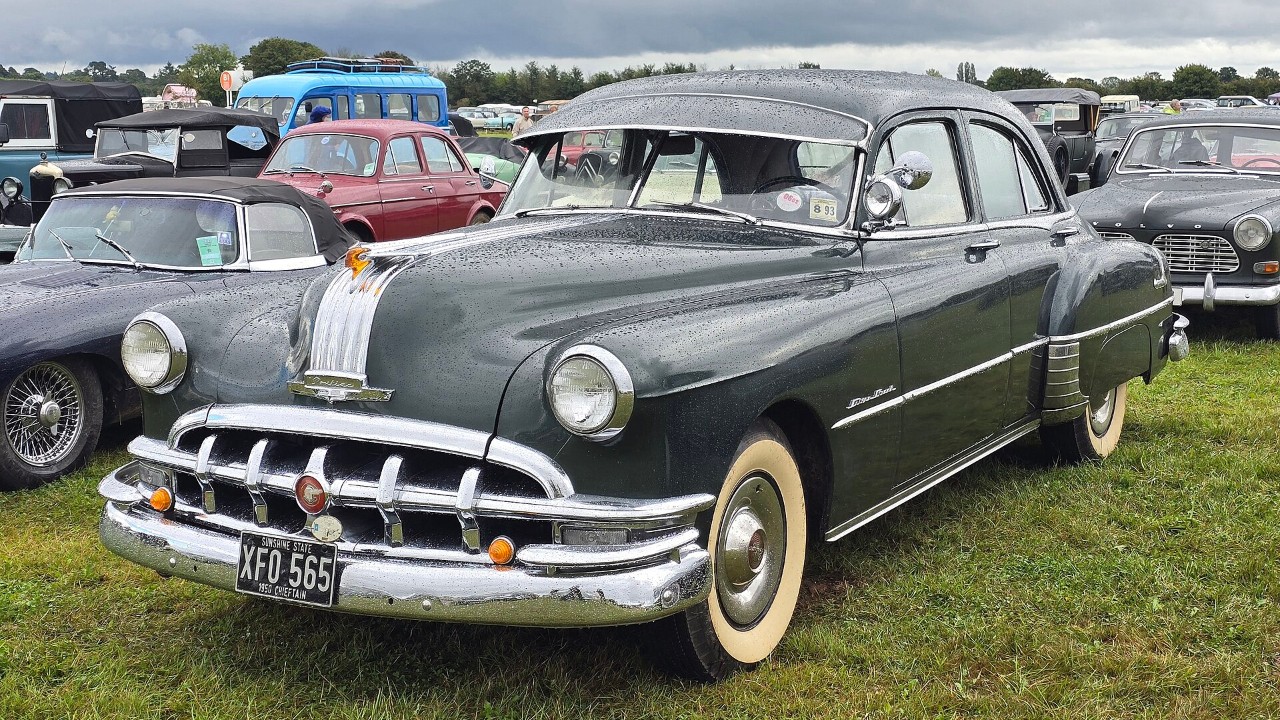
The Chieftain was Pontiac’s first all-new design after World War II, and it replaced the Torpedo as the smaller, lower-priced model. The 1949 lineup offered four body styles, from a business coupe to a Deluxe convertible. Then for 1950, Pontiac added the Catalina coupe, which widened the range just as buyers started to crave style.
Under the long hood, you had a choice of two flathead engines. In 1949, the 239.2-cubic-inch straight-six made 90 or 93 horsepower, while the 248.9-cubic-inch straight-eight made 103 or 106. Compression ratios explained the small gaps. Those numbers sound modest now, yet the eight gave the car a smooth, unhurried pull that suited its shape.
That shape is the reason we put this Pontiac Chieftain coupe first. The rounded body looks like it was poured rather than stamped, and the Silver Streak bands sit right where your eye lands. Designer Frank Hershey had created the streak back in 1935, and Virgil Exner carried it on after Hershey moved to Buick. On a Deluxe coupe, all that chrome finally had a body worthy of it.
In our view, a well-kept 1950 Chieftain Deluxe coupe looks more expensive than it ever was. Park one next to a modern crossover, and the crowd will pick the Pontiac every time.
2. 1952 Pontiac Super De Luxe Catalina
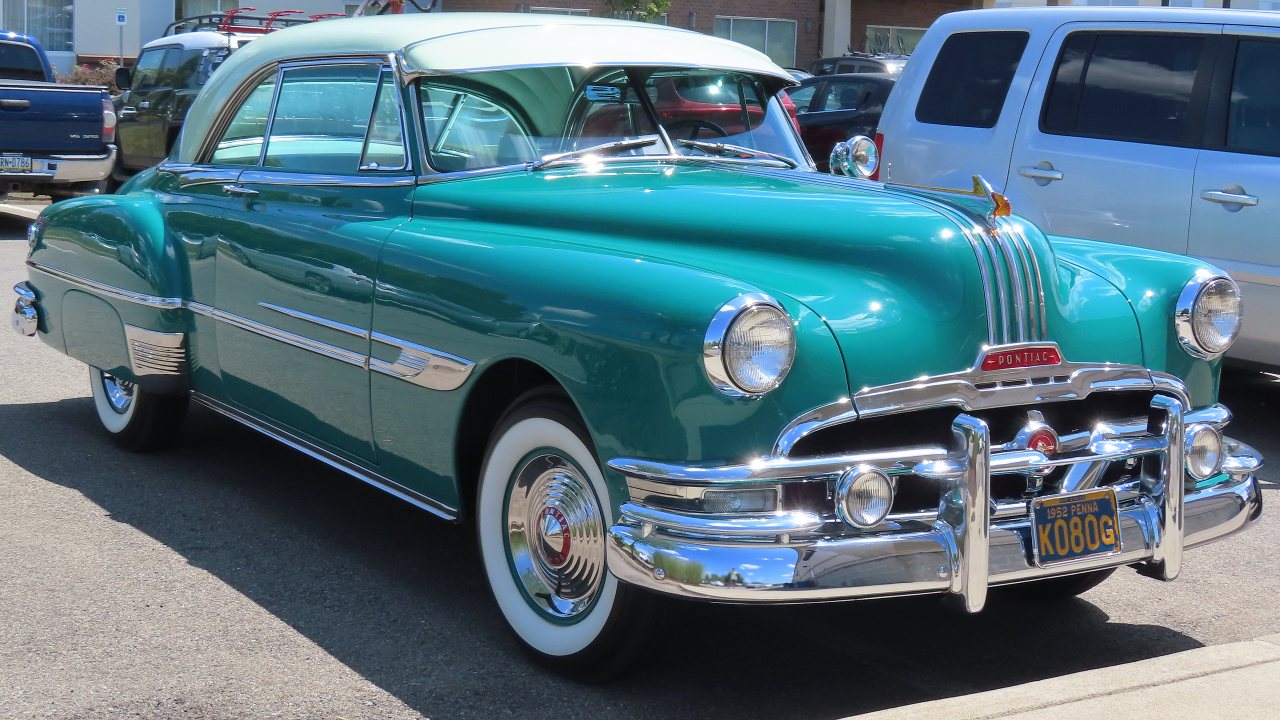
Pontiac’s Catalina name first appeared on a two-door coupe for 1950. By 1952, it gave buyers the airy, pillarless look that made hardtops the hot ticket of the decade. Roll the side windows down, and the whole roofline floats over the body with no post in the way.
The 1952 cars also got more muscle. The straight-eight grew to 268.4 cubic inches that year, and output rose by 15 horsepower on the eight and 10 on the six. Meanwhile, the hood trim reached its most elaborate form. According to Mac’s Motor City Garage history of the Silver Streak, the 1952 cars carried five narrow bright bands alternating with four body-color bands. Pontiac finished fifth in sales that year.
What makes this one special to us is the contrast. The body is upright and formal, but the hardtop roof gives it a sporting edge. In fact, two-tone paint on these cars can look almost like a jukebox on wheels. Bright trim outlines the windows, the bumpers and the grille, so the car glitters from every angle.
If you want a Pontiac that captures the optimism of early-1950s America, this is our pick. It is dressy without being stuffy, and it sounds great with that straight-eight burbling at idle.
3. 1955 Pontiac Star Chief Convertible
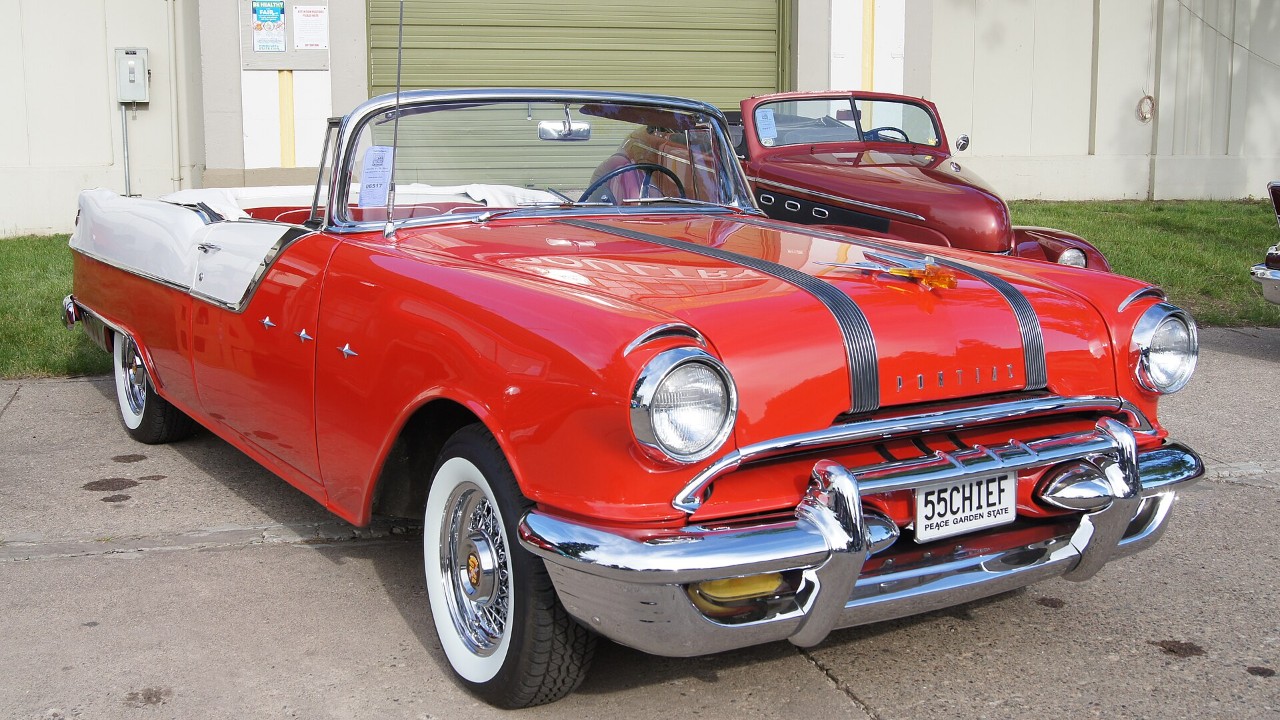
For 1955, Pontiac threw out its old flathead engines and introduced its first V8. The 287.2-cubic-inch Strato Streak made 173 horsepower as standard and 180 with the Hydra-Matic automatic. Later that year, a four-barrel Power Pack raised output to 200. As a result, the six-cylinder disappeared from the lineup entirely.
The convertible lived in the top Star Chief series that year. According to a detailed breakdown of the 1955 Pontiac range, the Chieftain lines offered sedans, wagons and a hardtop, but only the Star Chief offered an open car. It also rode on a longer 124-inch wheelbase, two inches more than the Chieftain. Wide fluted extensions on the lower rear fenders set the convertible and Catalina coupe apart.
Meanwhile, the Silver Streak took a new form. The traditional five strips gave way to a twin-stripe design, which Pontiac called TwinStreak. It looked lighter and more modern, and it ran only two model years.
Our take: a 1955 Star Chief convertible with the top down is about as good as mid-century chrome gets. The long body, the fresh V8 and the new twin streaks all arrived at once. You get the first year of Pontiac’s V8 era in its most glamorous body style.
4. 1957 Pontiac Star Chief
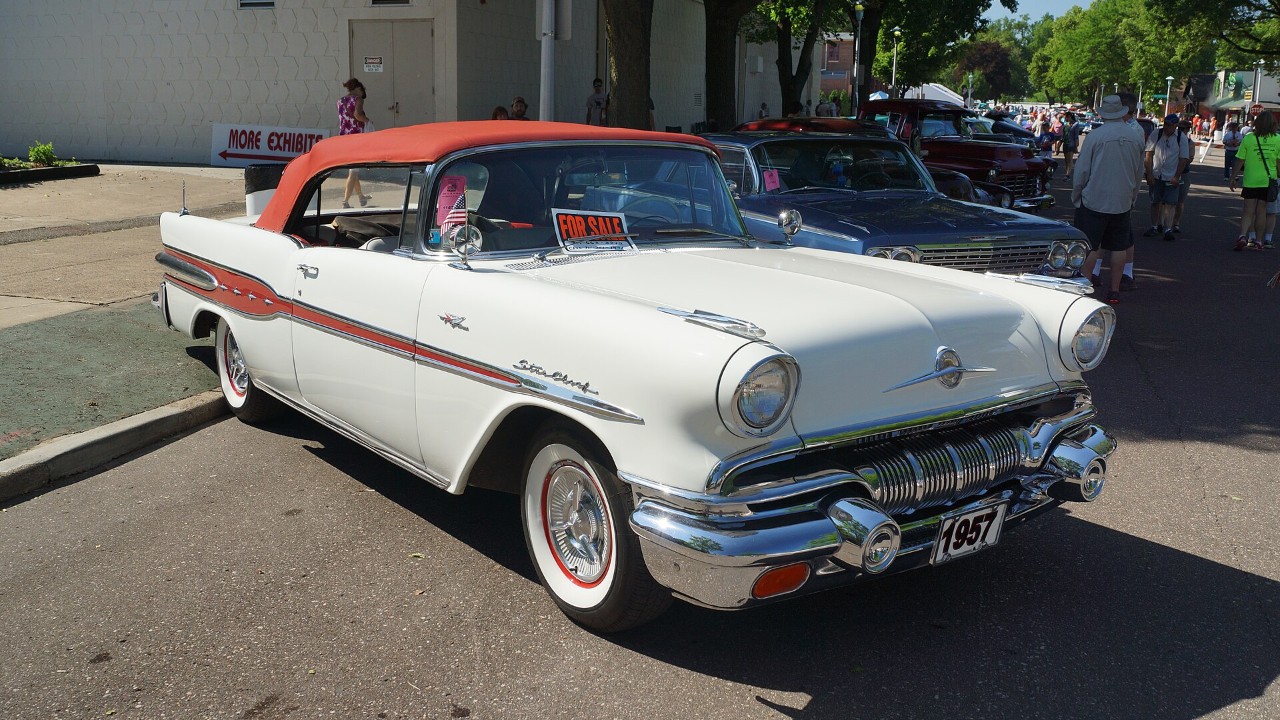
The 1957 Star Chief marks the moment Pontiac turned away from its past. New general manager Semon “Bunky” Knudsen pulled the Silver Streaks off the hood, calling them “an old man’s suspenders.” After more than two decades, the brand’s signature trim was simply gone.
In its place came the Star Flight design. According to Hagerty’s look at mid-1950s Pontiacs, it added larger fins and a rocket-shaped spear along the body side. The fake scoops above the headlights also disappeared. Hagerty adds that the V8 grew to 347 cubic inches for 1957, with 252 horsepower from a two-barrel carburetor and 317 with Tri-Power.
That same year, Pontiac also introduced the Star Chief Custom Bonneville. Those limited cars carried a 347 V8 with mechanical fuel injection, and they hinted at the performance image Knudsen wanted. Consequently, the plain Star Chief became the stylish bridge between the old Pontiac and the new one.
We love the 1957 car because it still wears plenty of chrome but finally looks fast standing still. The side spear draws a straight line from the headlights to the fins. If you want a 1950s Pontiac that feels like the start of something, this is the one we would chase.
5. 1958 Pontiac Parisienne
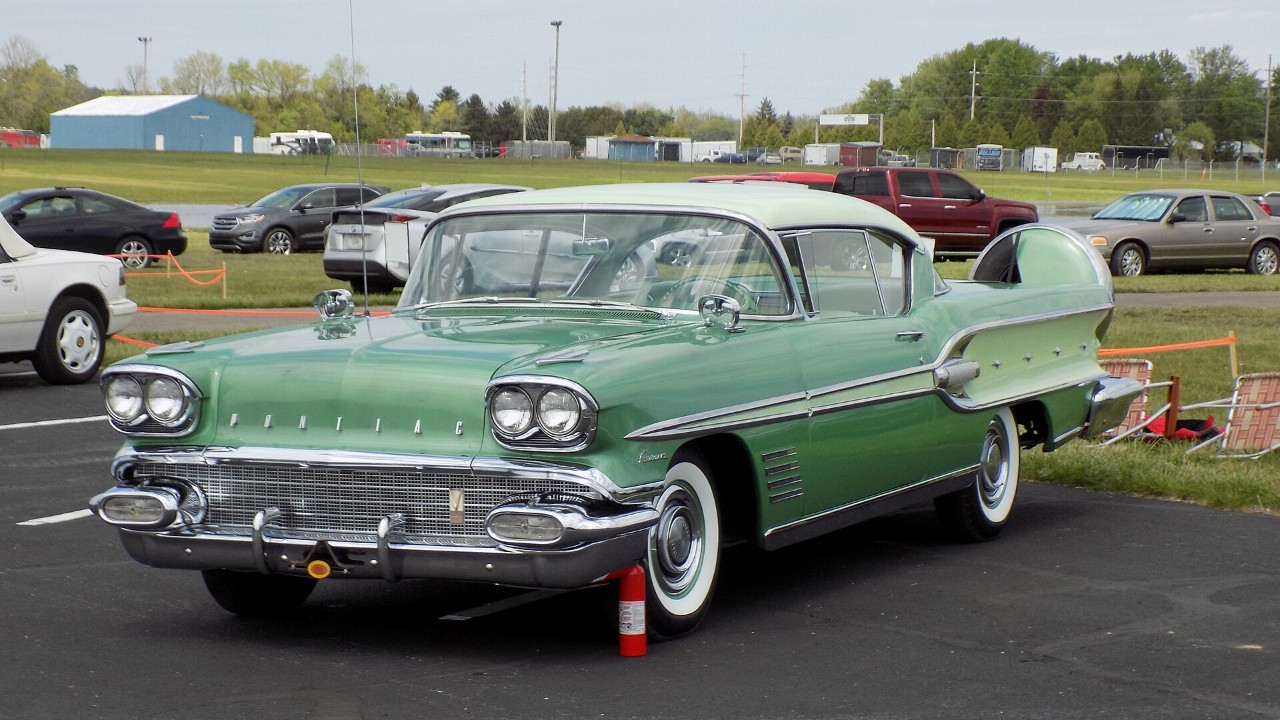
Here is one most American readers have never seen in person. The Parisienne was a Canadian Pontiac, and it entered the 1958 lineup as a super deluxe sub-series of the Laurentian line. It became its own model a year later.
Canadian Pontiacs were a clever hybrid. General Motors of Canada built them in Oshawa, Ontario, on Chevrolet chassis with Chevrolet drivetrains, then dressed them in Pontiac-styled body panels. As a result, the 1958 Parisienne could even be ordered with Chevrolet’s Turboglide automatic and Ramjet fuel injection. Engines in the first generation included 283 and 348-cubic-inch V8s.
The 1958 styling also gave the Parisienne plenty to show off. Pontiac’s big cars that year wore honeycomb grilles, quad headlamps and concave rear fenders. On a Canadian halo model, that look came with extra trim and a French-flavored name that sounded upscale to buyers north of the border.
In our opinion, the Parisienne is the best conversation starter at a U.S. show. Onlookers recognize the Pontiac face, then spot the badge and start asking questions. For a collector who wants a 1958 Pontiac nobody else has, it is hard to beat.
6. 1959 Pontiac Bonneville Safari
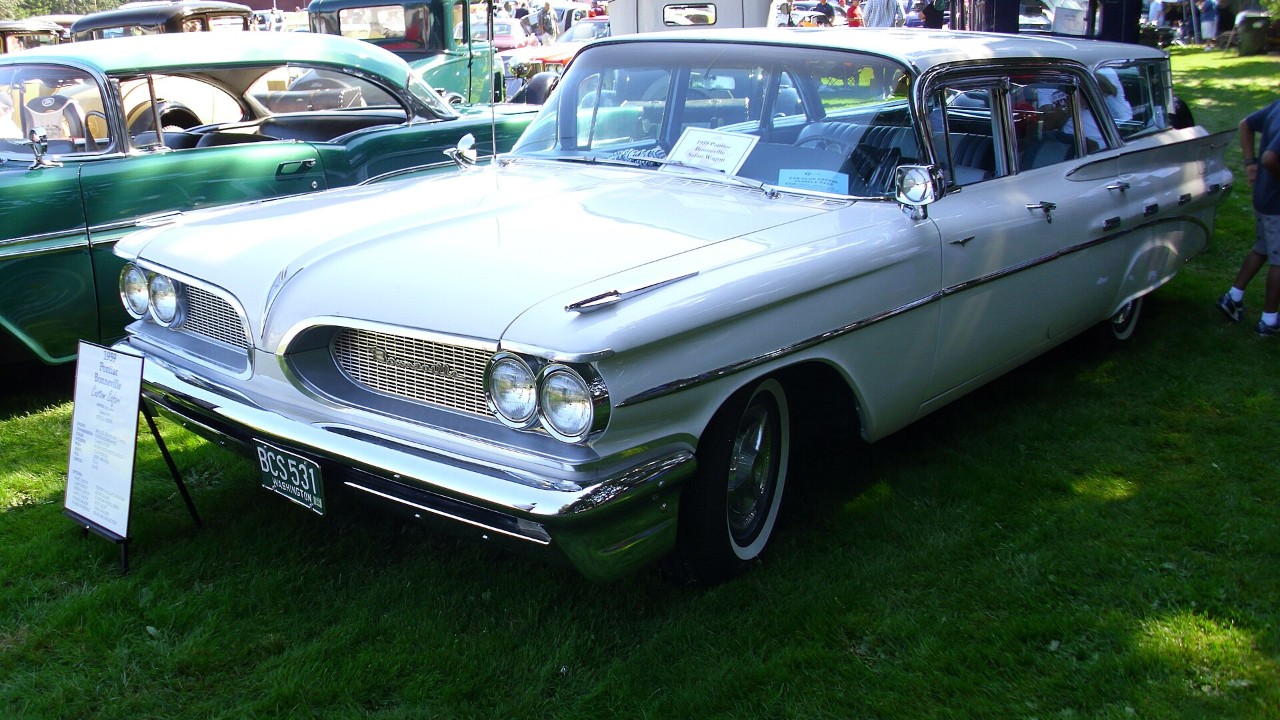
For 1959, the Bonneville became Pontiac’s senior series. Until then, it had been a hardtop and convertible only. That year, Pontiac added a four-door hardtop and the Safari station wagon, so families could finally buy the top trim with room for a crowd.
The 1959 cars also introduced the famous Wide Track slogan. Pontiac pushed the wheels outward to a front tread of 63.7 inches and a rear tread of 64 inches. As a result, the stance gave the car a low, planted look. Pontiac clearly wanted buyers to notice the difference from across the street.
A Safari wagon wears all of that over a long, flat roof. The body stretches back to a wide tail, and the tailgate adds yet more chrome. Wagons rarely got the glamour treatment in this era, which is why this one feels so unusual. In fact, the Bonneville Safari mixed the family hauler with the brand’s flagship trim.
Our take: the 1959 Bonneville Safari is the cool wagon of the chrome era. You can load the kids and the cooler, yet it still steals attention from the convertibles nearby. Find one with original trim, and you will rarely park it alone.
7. 1960 Pontiac Ventura Sports Coupe

The Ventura arrived for 1960 as a custom trim on the Catalina. It shared the Catalina’s 123-inch wheelbase, but Pontiac loaded it with every standard and optional Catalina feature. Buyers could only get it as two hardtops, the Vista four-door or the Sports Coupe two-door.
Inside and out, the extra touches added up. The Ventura carried unique badging, deluxe wheel covers and a sport steering wheel. Tri-tone Morrokide upholstery dressed the cabin. The Sports Coupe listed at $2,971 before options. Because the Ventura already bundled the Catalina’s optional equipment, there was little left to tick on the order form, and the result felt like a luxury car at a Pontiac price.
That price bought a lot of style. The 1960 body is wide and low, and the thin hardtop roof seems to hover over the glass. Although Pontiac had dropped the Silver Streaks three years earlier, the car still gleamed. Chrome framed the windows, the wheel openings and the long rear deck.
We think the 1960 Ventura Sports Coupe closes out the chrome era perfectly. It shows a brand that had found its confidence after the Chieftain years. From that first postwar Pontiac Chieftain to this hardtop, the division had changed almost completely in a single decade.
More from Fast Lane Only