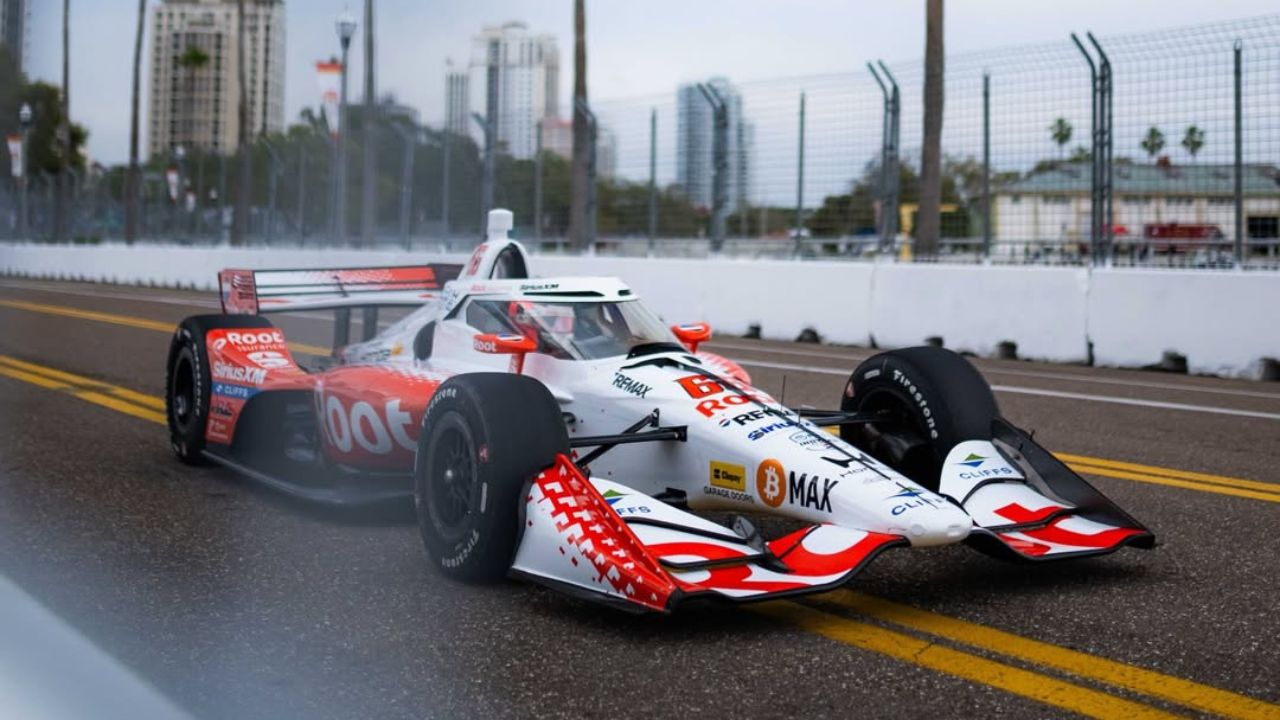
IndyCar is about to change how you experience qualifying drama. At the Java House Grand Prix of Arlington, the Firestone Fast Six will switch to a single-car, single-lap shootout that turns the pole fight into a series of high-pressure solo runs instead of a traffic-heavy sprint.
Fans will watch drivers tackle a new 2.73-mile street course with no drafting help, no second laps, and almost no margin for error, as the series tests a format that could reshape how you think about Saturdays in IndyCar.
What IndyCar is changing in Arlington
For the inaugural Grand Prix of Arlington, INDYCAR has decided that the Firestone Fast Six will no longer be a multi-car dash. Once the field reaches the final segment, you will see six cars head out one at a time for a single timed lap that decides the front three rows. The series confirmed that the updated approach applies only to the last segment, while the knockout structure of earlier rounds remains intact, in an announcement that framed Arlington as a live experiment for the future of qualifying.
This change comes as part of a broader update to the Java House Grand Prix of Arlington weekend, which runs at Globe Life Field and on the surrounding streets in Arlington, Texas. Event information notes that the race is built around a temporary circuit that threads through the entertainment district, and the qualifying tweak is meant to highlight both the new track and the pressure of pole day in a more focused way.
How the single-car Fast Six will actually work
When you follow qualifying, you will still see the familiar knockout structure that IndyCar has used on road and street circuits for about twenty years. The field first splits into groups, then trims down through two earlier segments. Only when the Firestone Fast Six begins will the new rulebook kick in, sending each of the six remaining drivers onto the track alone for a single timed lap.
The order in which those six drivers run will be set by their times from the previous segment, so the quickest driver in Segment 2 will head out last in the solo shootout. That format gives you a clear build in tension, with the benchmark time usually dropping as the session goes on. Coverage of the change explains that FOX will adjust its qualifying window to accommodate the one-at-a-time runs, which means you can expect the broadcast to lean heavily into in-car audio and split-screen timing as each lap unfolds.
INDYCAR has also detailed what happens if weather or track conditions disrupt the final segment. If the Firestone Fast Six single-car qualifying portion is hit by rain or a surface issue that changes grip significantly, officials have reserved the option to adjust the format or revert to earlier times to set the grid. That contingency language is meant to protect you from a lottery-style result if the track suddenly flips from dry to wet in the middle of the solo runs.
The Arlington street course that will showcase the format
You are not just getting a new qualifying format, you are getting it on a brand new circuit. INDYCAR has unveiled the track layout for the Grand Prix of Arlington and describes it as a 2.73-mile course that winds through the Arlington, Texas street course race area around major sports venues. The layout uses the streets near the Dallas Cowboy NFL stadium and the Texas Rangers Major League Ba ballpark, which gives you a backdrop that blends big-league architecture with tight city corners.
As you study the track map, you will see a mix of long straights and technical sections that reward precision braking. The series has kept the traditional knockout format for Segments 1 and 2 on this layout, which means you will still see traffic, slipstreaming, and strategic timing in the early rounds. By the time the Fast Six begins, however, the track will be clear for each solo lap, so you can focus on how each driver attacks the same set of corners without the clutter of traffic.
The event schedule for the Java House Grand Prix of Arlington at Globe Life Field confirms that qualifying will be one of the centerpieces of the weekend. Promotional material for the March 13 to 15 program highlights the single-car element as a key attraction, which signals that you should treat Saturday as appointment viewing, not just a prelude to the race.
Why IndyCar is willing to experiment
For about twenty years, since the arrival of road and street circuits in what was then called the Indy Racing League, you have grown used to a multi-car Fast Six. That format produced traffic games, slipstream battles, and the occasional blocked lap. It also created frustration when a driver on a flyer got held up by a slower car that had already banked a time.
Series officials have framed the Arlington change as an attempt to reduce those complaints and to give you a cleaner read on who is genuinely fastest on a single lap. Coverage of the announcement notes that INDYCAR will evaluate the updated qualifying format following the Arlington event to determine whether it should be used elsewhere. In other words, your reaction and the quality of the show in Texas will help decide whether this is a one-off experiment or the start of a broader shift.
Commentary around the change has pointed out that drivers such as Hinch and Rossi had already discussed the idea of single-car qualifying on their podcast and suggested that the series might try it at some point in the season. You are now seeing that conversation turn into reality, with Arlington serving as the test bed.
What you will feel as a fan watching the shootout
From your perspective on the couch or in the grandstands, the most obvious change will be the rhythm of the session. Instead of six cars on track together and timing screens full of overlapping laps, you will watch one driver at a time, with the cameras locked on that lap from pit exit to checkered flag. The pressure becomes more personal, since every mistake is visible and there is no traffic excuse.
Drivers will have only one shot to set a time, with no second chances. Reports on the format stress that there will be no opportunity to cool the tires and go again, so you will see teams focus on tire warm-up procedures and out-lap preparation in a way that might remind you of time trial disciplines in other series. The format also removes the strategic question of whether to run early or late in a busy session, because the order is set by performance and the track is clear for everyone.
Because FOX plans to lengthen the qualifying window, you can expect more build-up around each lap, from on-board views to team radio snippets as engineers talk drivers through brake temperatures and corner references. For you, that means less time staring at static timing graphics and more time immersed in the cockpit experience.
How the change affects teams and drivers
If you follow strategy closely, you will notice that the new format shifts the balance from traffic management to pure execution. In the old multi-car Fast Six, a driver could sometimes catch a tow on the straight or benefit from yellow flags that trapped rivals in the pits. In Arlington, the only variables are your car, your driver, and the track conditions at your assigned slot.
Engineers will have to decide how aggressively to trim out the car for that single lap, knowing that there is no second run to correct a misjudged setup. A low-downforce trim might unlock pole, but it also raises the risk of a lockup into a tight braking zone on the 2.73-mile layout. That trade-off gives you another storyline to track as teams reveal whether they favored stability or outright speed.
More from Fast Lane Only