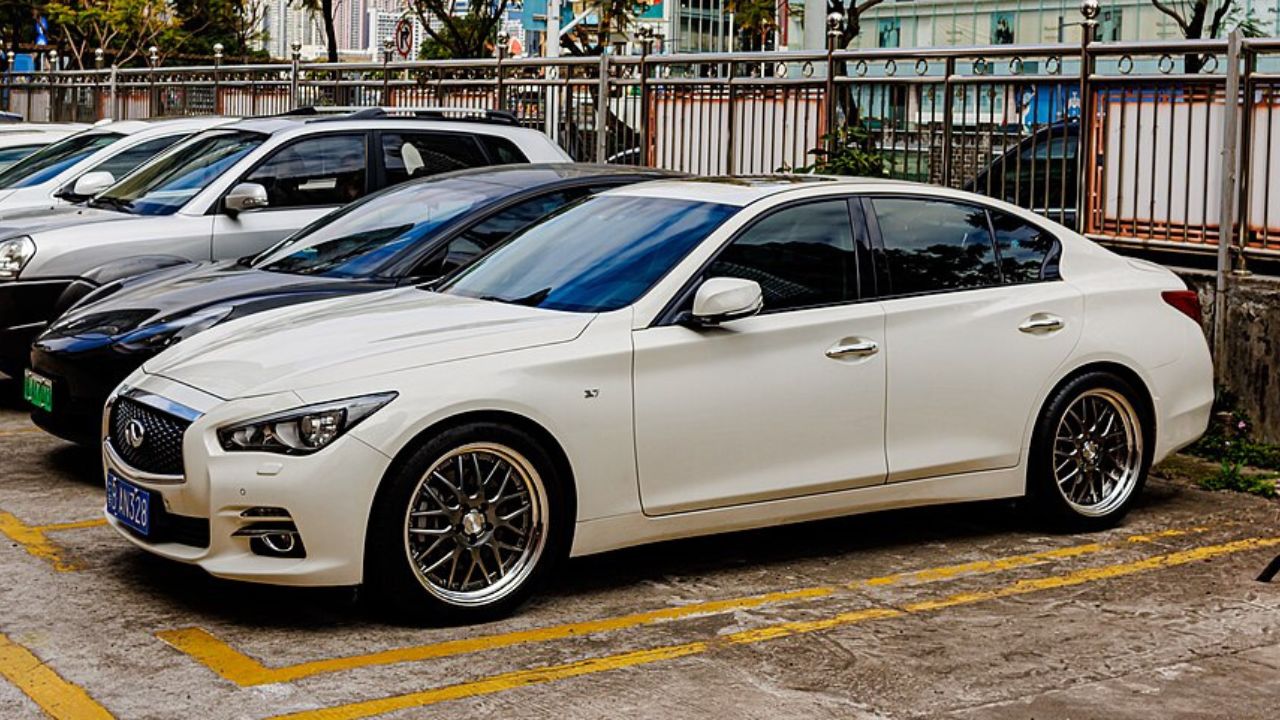
Infiniti is preparing to bring a new high-output version of its Q50 sedan to American showrooms, and the company has now confirmed that the car will wear the Q50 badge in the United States instead of reviving the Skyline name. The move signals a renewed push into the sport sedan segment with a focus on horsepower and driver engagement rather than crossovers alone. It also clarifies how Infiniti plans to balance its Japanese heritage with a brand identity that U.S. buyers already recognize.
What happened
Infiniti leadership has confirmed that the next high-horsepower performance sedan for the American market will be sold as the Q50, not as a Skyline. Executives described the car as a rear-wheel-drive, gasoline-powered sedan that targets enthusiasts who still want a powerful four-door with a traditional layout. The decision locks in the badge for the United States and separates the model from the Skyline branding used on related cars in Japan, which has a longer history on that side of the Pacific.
The confirmation followed months of speculation sparked by reports of a Q50 reboot with significantly more power than the current car. During that period, Infiniti evaluated how to position the sedan as a credible rival to established performance models such as the BMW 3 Series, Audi S4, and Mercedes-AMG C43. By affirming that the car will remain a Q50 in the United States, executives signaled that the company wants to build on the existing nameplate rather than attempt a nostalgic rebrand around Skyline. That decision was outlined when the Infiniti boss clarified that the high-output sedan would carry the Q50 name in American showrooms, not Skyline, in comments reported on a detailed Q50 briefing.
The new car is expected to sit above the current Red Sport 400 in performance terms, with output that moves the sedan deeper into premium sports territory. Infiniti has already used the Red Sport badge on versions of the Q50 that deliver 400 horsepower from a twin-turbocharged 3.0-liter V6, and the next step is widely understood to involve even more aggressive tuning and chassis work. Although full technical figures have not been publicly detailed, executives have framed the upcoming model as a high-horsepower halo sedan intended to remind buyers that Infiniti still knows how to build a quick four-door.
Reports describing the Q50 reboot highlight that Infiniti wants to sharpen the car’s dynamics and styling while retaining its core mechanical layout. The current Q50 has been on the market for several years, and while its engine remains competitive, the car has fallen behind fresher rivals in areas such as interior technology and refinement. A planned overhaul of the Red Sport variant, described in coverage of the Q50 Red Sport, outlines a strategy that layers updated design and cabin tech onto a familiar platform that already supports high power levels.
Infiniti’s decision to double down on a gasoline, rear-drive performance sedan runs counter to a broader industry pivot toward electric crossovers, but it aligns with what many of its most loyal customers still want. The brand built much of its enthusiast reputation on cars like the G35 and G37, which combined usable back seats with rear-wheel drive and strong V6 engines. By confirming that the car will remain a Q50 in the United States, Infiniti is effectively promising a modern interpretation of that formula rather than a clean-sheet experiment that might alienate existing fans.
Why it matters
For Infiniti, the name choice carries more weight than a simple badge swap. In Japan, the Skyline name spans decades of history that includes everything from modest family sedans to legendary GT-R variants. In the United States, however, Infiniti has spent years building equity around the G and Q badges instead. Keeping the Q50 designation avoids confusing American buyers who associate Skyline with Nissan rather than Infiniti, and it preserves a clear separation between the luxury brand and its mainstream sibling. That distinction was part of the reasoning described when executives confirmed the U.S. nameplate in the earlier name decision.
The move also signals that Infiniti is not ready to abandon the sport sedan segment, even as crossovers dominate its sales. The Q50 has long been one of the brand’s key cars for driving enthusiasts, and a higher-horsepower variant gives Infiniti a more credible answer to the performance models that German and Korean rivals are rolling out. A properly executed Q50 halo sedan can serve as a showroom draw that elevates the perception of the entire lineup, including SUVs that share its design language and technology.
At the same time, the decision highlights how automakers are trying to keep enthusiast sedans relevant in a market that is shifting toward electrification. Infiniti has talked about electrified models for its future portfolio, but the Q50 performance sedan is centered on a gasoline powertrain and a traditional rear-wheel-drive layout. That approach acknowledges that some buyers still prefer the sound, response, and refueling convenience of a powerful internal combustion engine, particularly in a segment where driving character is a major selling point.
Enthusiast interest in the Q50 reboot is already visible in the way designers and fans have begun to imagine what a modern successor to the G35 might look like. One set of G35-inspired renders envisioned a low, wide sedan with muscular fenders and a driver-focused cockpit, paired with a manual transmission and rear-wheel drive. While those images are speculative and do not represent official Infiniti designs, they capture the kind of car that many long-time fans hope the brand will build: a true sports sedan that prioritizes involvement over pure comfort.
The manual transmission in those renderings points to another key question for the upcoming Q50 performance model. Enthusiast wish lists often start with three pedals, but modern luxury brands have largely abandoned manuals in favor of quick-shifting automatics and dual-clutch gearboxes. Speculation around a Q50 reboot with a manual gearbox, including one report that described a rear-drive manual concept, reflects that tension between what purists want and what makes commercial sense. Infiniti has not confirmed a manual for the new high-horsepower Q50, so any such feature remains unverified based on available sources.
Even without a manual, a more capable Q50 can still matter for driving enthusiasts if Infiniti focuses on steering feel, braking performance, and suspension tuning. The current Red Sport 400 already delivers strong straight-line speed, but critics have called for sharper feedback and a more involving chassis. A reworked performance model gives Infiniti a second chance to refine those elements and to bring the car’s interior and technology up to the standard set by newer competitors. The report on a refreshed Red Sport cabin highlighted plans for upgraded materials and modernized infotainment, both of which are essential for a sedan that aims to justify a premium price.
From a brand strategy perspective, the Q50 performance sedan is also a test of whether Infiniti can reconnect with the buyers who once saw its cars as a more playful alternative to established German luxury. The G35 and early Q50 models earned reputations for strong engines and rear-drive balance, but the brand’s recent focus on crossovers has left some enthusiasts wondering whether that identity still exists. A clearly defined, high-horsepower Q50 with a distinct U.S. badge gives Infiniti a chance to answer that question with a tangible product rather than marketing slogans.
There is also a broader industry context. As electric performance cars like the Tesla Model 3 Performance and Hyundai Ioniq 5 N gain traction, traditional sport sedans must justify their existence with character and feel that electric rivals cannot easily replicate. A lighter gasoline sedan with a responsive engine and communicative chassis can still appeal to drivers who prioritize involvement over raw numbers. By committing to a powerful Q50 instead of pivoting directly to an electric performance sedan, Infiniti is betting that there is still room in the market for that kind of car over the next product cycle.
What to watch next
The next major milestone for the high-horsepower Q50 will be the official reveal of its powertrain specifications and chassis upgrades. Enthusiasts will be watching for confirmation of peak horsepower and torque, as well as whether the car retains a twin-turbocharged V6 or adopts a new engine configuration. Any mention of hybrid assistance or electrified components would signal a shift in how Infiniti thinks about performance, while a purely gasoline setup would reinforce the car’s role as a traditional sports sedan.
Transmission options will be another key detail. The possibility of a manual gearbox has generated attention in speculative coverage, including the G35-style manual sedan concept and the report on a potential Q50 with three. However, until Infiniti provides official confirmation, a manual remains unverified based on available sources. Buyers should expect at least one automatic transmission tuned for quick shifts and smooth operation in daily driving, with paddle shifters likely standard on performance trims.
Chassis and suspension details will reveal how serious Infiniti is about challenging segment leaders. Observers will be looking for adaptive dampers, upgraded brakes, and performance tires, all calibrated to deliver more precise handling than the current Q50. Steering tuning will be particularly important, given past criticism of Infiniti’s steer-by-wire systems. Any move toward more natural feedback and consistent weighting would be welcomed by drivers who care about connection to the road.
Inside, the Q50 performance model will need a clear step up in technology and materials to feel current against rivals. The existing car’s dual-screen infotainment system has been criticized for lag and dated graphics, so a modernized interface with quicker response and better smartphone integration is a likely priority. The report on the Red Sport interior suggested that Infiniti plans to address these shortcomings with updated software and higher-quality finishes, especially in touchpoints like the steering wheel, seats, and center console.
Pricing strategy will also be closely watched. If Infiniti positions the high-horsepower Q50 significantly above the current Red Sport 400, it will need to justify that premium with clear performance and equipment gains. Competitive pricing against the BMW M340i, Audi S4, and Mercedes-AMG C43 could make the car an attractive value play for buyers who want strong performance without stepping up to full M or AMG models. Conversely, an overly ambitious price tag could limit its appeal in a segment where brand perception still heavily favors German badges.
Another factor is how the Q50 performance sedan fits into Infiniti’s broader product roadmap. The brand has talked about electrification and new SUVs, and the resources devoted to a gasoline sport sedan will signal how much weight it still gives to enthusiast models. If the Q50 halo car arrives alongside clear plans for electrified crossovers and future EVs, it will look like part of a balanced portfolio. If it appears in isolation, observers may question whether Infiniti has a cohesive long-term strategy.
More from Fast Lane Only