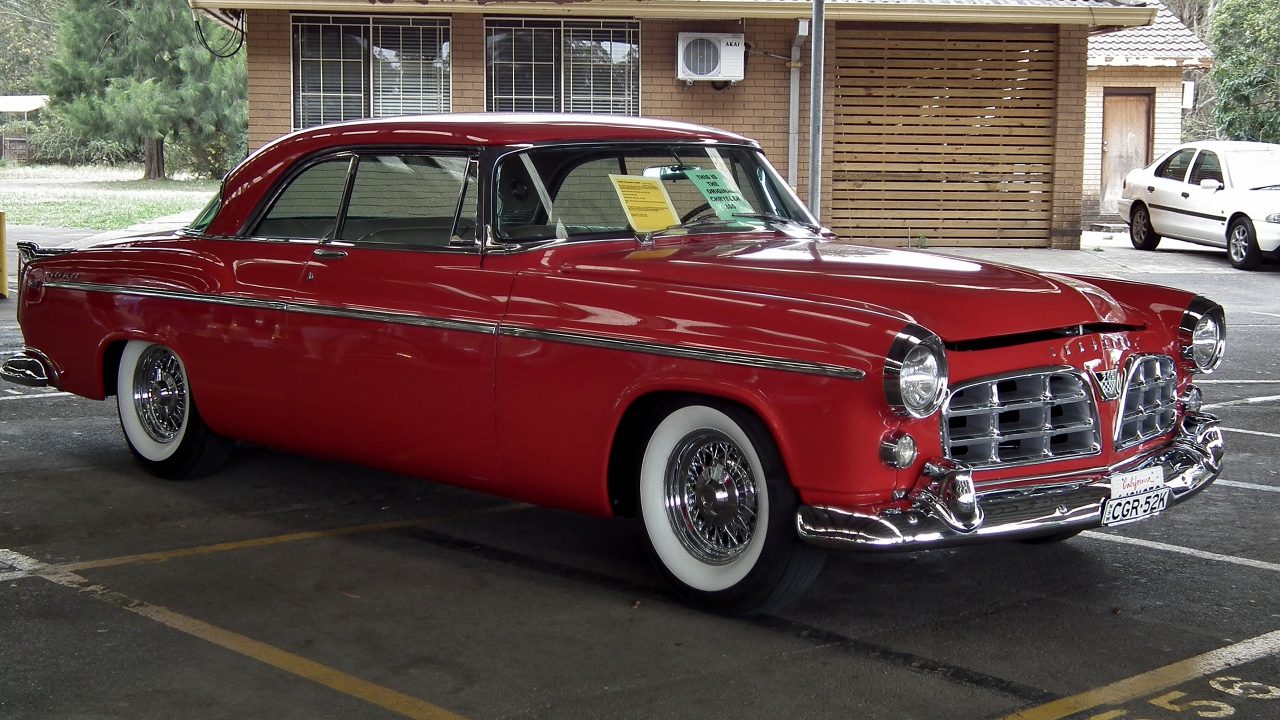
Chrysler built plenty of muscular machines in the late 1960s and early 1970s, but one experimental full-size bruiser has become a legend precisely because it existed only once. Conceived as a showcase for big-block performance wrapped in luxury sheet metal, the car pushed the company’s personal-luxury flagship into territory usually reserved for dedicated muscle cars. Decades later, its blend of brute force, bespoke bodywork, and near-total obscurity has turned it into one of the most intriguing one-off muscle creations to wear a Chrysler badge.
Rather than pursuing production volume, Chrysler treated the project as a demonstration of what its engineers and stylists could achieve without standard option constraints. The result was a car that shared its foundation with the production Chrysler 300 but differed significantly in power, design, and intent.
The luxury flagship that went off script
The foundation for Chrysler’s ultra-rare experiment was its full-size performance flagship, a car already known for combining big-block power with comfortable road manners. In standard form the Chrysler 300 targeted buyers who wanted speed without sacrificing space or refinement, a formula that placed it above the compact and intermediate muscle cars that dominated drag strips. The one-off project began by taking that established luxury platform and treating it less as a finished product and more as raw material for something far more aggressive.
The transformation from a luxury coupe into a muscle machine involved changes that made it significantly different from any standard Chrysler 300. While the production car already carried performance credentials, the special project sharpened its stance and attitude, signaling that this was no longer simply a fast cruiser. It became a statement piece, built to show that a big, plush two-door could be reimagined as a serious performance weapon without losing its premium identity.
One-of-one muscle in a world of scarce legends
Rarity alone does not guarantee reverence, yet in muscle-car circles scarcity often magnifies mystique. Collectors often reference the 14 Hemi ’Cuda convertibles built in 1970 and the small number of Hemi Challengers produced with race-oriented options. Against that backdrop, a Chrysler project that existed as a single finished example occupies a different category altogether, because it never even reached the limited-production status that makes those Hemi ‘Cuda and Hemi Challengers so sought after.
The Chrysler experiment was built as a true one-off, unlike the limited-production Hemi ’Cuda convertibles and Hemi Challengers. It was not a numbered run, not a dealer-only package, but a single car that blurred the boundary between factory prototype and finished street machine. That status places it in a rarefied group where provenance depends less on option codes and more on the documented story of how and why it was created.
A big-block heart tuned for the street
Under the hood, Chrysler equipped the car with hardware that spoke directly to the brand’s high-performance ambitions. Rather than rely on a temperamental race-bred engine, engineers chose a version of the company’s big-block V8 that could deliver immense torque while remaining usable in everyday driving. In this configuration the engine produced a formidable 375 hp and 480 lb-ft of torque, figures that placed the car squarely in the same conversation as the most serious street machines of its era while still suiting the weight and mission of a full-size luxury coupe.
Unlike the 426 Hemi, the 440 TNT delivered strong torque at lower engine speeds, making it more suitable for regular road use. That distinction between the 426 Hemi and the 440 TNT was central to the car’s character, because it allowed Chrysler to create a machine that felt brutally quick without demanding race-track discipline from its driver. The choice of engine turned the car into a torque-rich grand tourer rather than a high-strung drag-strip special, which aligned with its origins as a luxury-based platform.
From limited-series inspiration to singular legend
The car’s origins trace back to Chrysler’s earlier collaboration with Hurst on the production 300. That project produced the 1970 Chrysler 300 Hurst, a limited-edition high performance luxury muscle car created through a partnership between Chrysler and Hurst that blended upscale trim with serious power. The 1970 Chrysler 300H was marketed as a blend of luxury and performance.
The one-off muscle project pushed that idea even further, stripping away the constraints that had shaped the 300 Hurst and allowing designers and engineers to chase a purer expression of performance. Enthusiast groups that archive images of the 1970 Chrysler 300 Hurst and similar cars have highlighted how this single build stands apart from the already rare production models documented on enthusiast pages. Enthusiasts now regard the one-off car as a significant example of Chrysler’s luxury performance philosophy.
More from Fast Lane Only