The Isotta Fraschini Tipo 8 arrived in 1919 with eight cylinders lined up in a row under one very long hood. No production car had used that layout before. The Milan company built it for buyers who wanted speed and luxury in one machine. Within a few years, it had a following from Hollywood to the Vatican.
Isotta Fraschini was not a newcomer to fast cars. Before the war, the firm had built its name on powerful machines and racing. After World War I, however, it changed course and aimed straight at the top of the luxury market.
Here is how the straight-eight Isotta came to be, what made it different, who bought one and what the survivors are worth now.
From race cars to the Isotta Fraschini Tipo 8
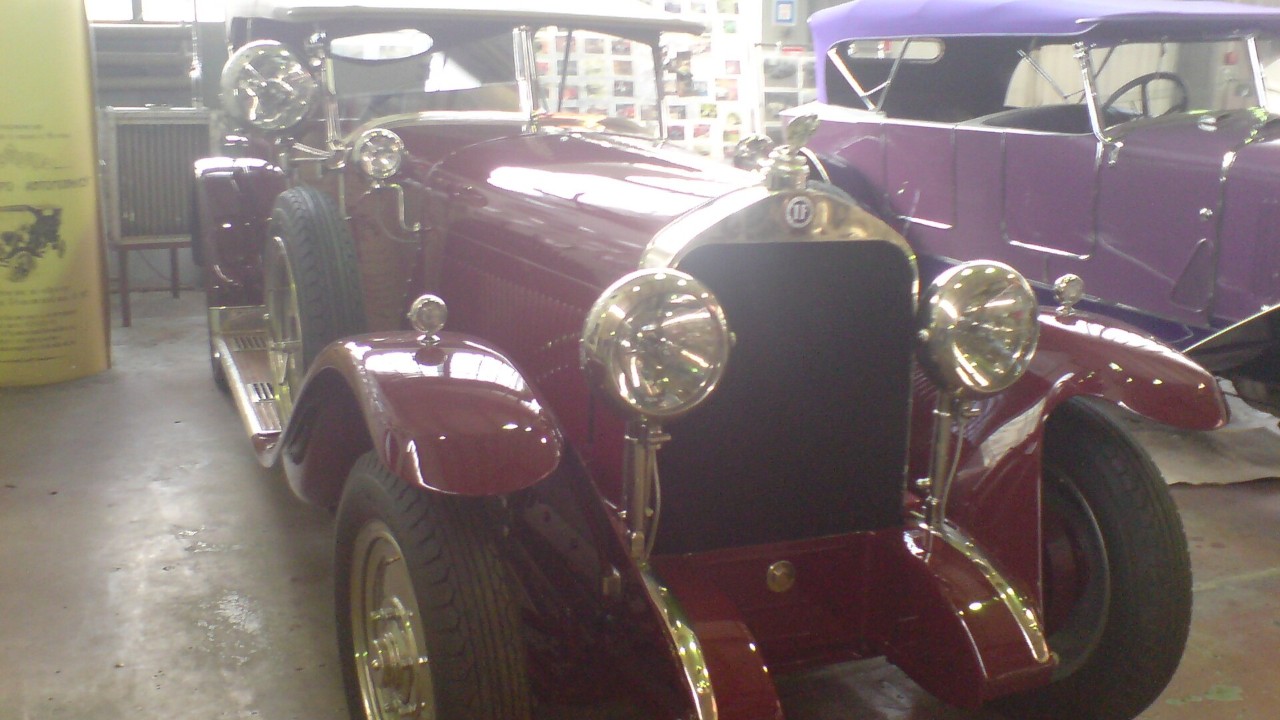
The company had real racing credentials. According to RM Sotheby’s, Isotta Fraschini won the 1908 Targa Florio. Then, in 1919, the firm reinvented itself as a luxury maker with the Tipo 8. RM Sotheby’s describes it as the first production car to feature a straight-eight engine.
Australian classic-car site Marque News makes the same claim. It calls the Type 8 the first production car powered by the straight-eight. The man behind it was engineer Giustino Cattaneo, who had full technical direction of the company’s cars. In fact, a record at a Lombardy museum describes him as the designer of every Isotta Fraschini car from 1905 to 1933.
What made the straight-eight special
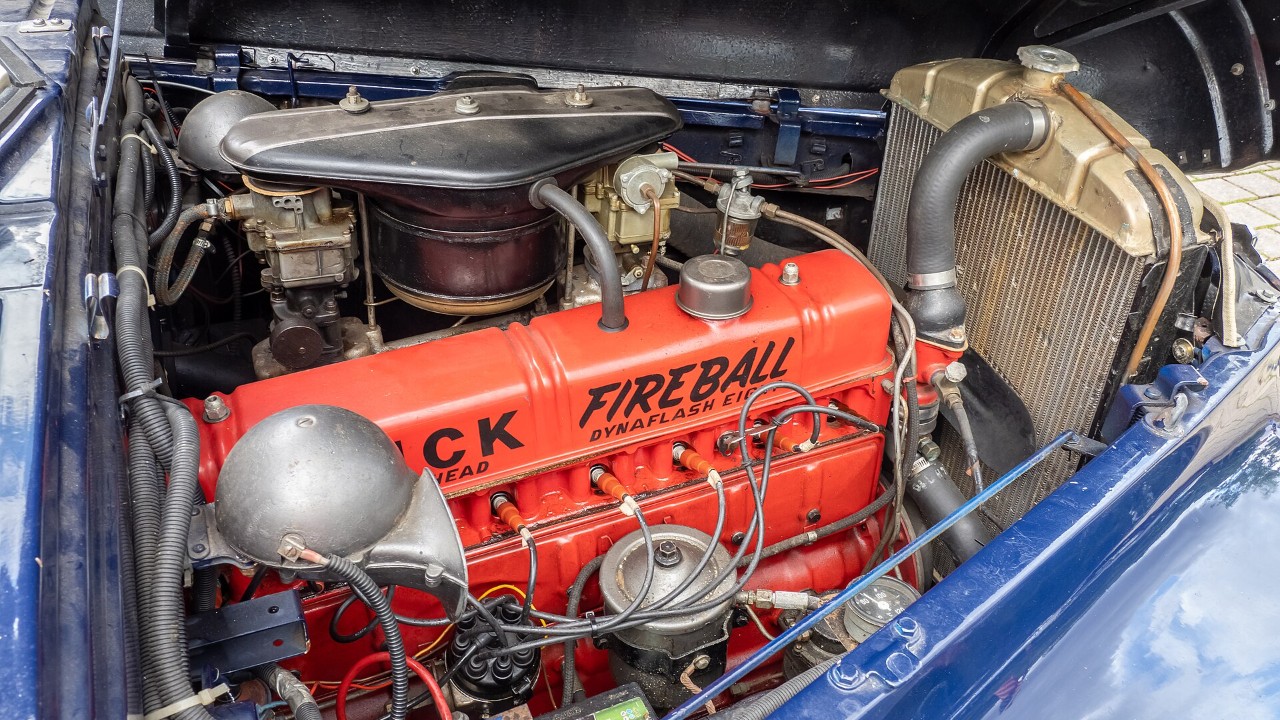
A straight-eight puts all eight cylinders in a single line. That makes for a long engine and an even longer hood. Italian auction house Sant’Agostino lists the Tipo 8 engine at 5,901 cc, with an 85 mm bore and a 130 mm stroke. Early cars made about 75 to 80 horsepower at roughly 2,200 rpm.
That power was not huge by later standards. Still, the engine delivered lots of low-speed pull. Marque News notes that the engine had an aluminum crankcase and light-alloy pistons. It also says the torque was strong enough that a driver needed first gear only when starting on a hill.
Speed came with the package, too. Sant’Agostino gives early cars a top speed of about 125 km/h, or roughly 78 mph. Later, power rose to 90 horsepower, and top speed climbed to about 140 km/h.
A chassis built for the coachbuilders
Isotta Fraschini did not sell the Tipo 8 as a finished car in the usual sense. Instead, the factory sold a bare chassis with its engine. The buyer then chose a coachbuilder to design and build the body. As a result, no two cars needed to look alike.
A 1924 Tipo 8 tourer with a LeBaron body shows the scale of these machines. RM Sotheby’s lists it with a 360.1-cubic-inch straight-eight rated at 80 bhp, a three-speed manual gearbox and a 145-inch wheelbase. It also had four-wheel mechanical drum brakes with Dewandre vacuum servo assistance. That car came through Ugo D’Annunzio’s New York Isotta agency.
Price kept the circle of owners small. Marque News says a Tipo 8 cost about four times as much as a comparable luxury car. The only exceptions were a Rolls-Royce or a Hispano-Suiza.
Who bought one
America became the Tipo 8’s biggest market. RM Sotheby’s says about half of all Tipo 8s went to the United States, where they found favor in Hollywood. Marque News puts output at about 1,350 Type 8 models and agrees that at least half went to America.
The owner list reads like a who’s who of the 1920s. RM Sotheby’s names Rudolph Valentino, Clara Bow, Jack Dempsey and William Randolph Hearst. It also lists the Queen of Romania, the King of Egypt, the Aga Khan and Pope Pius XI. Meanwhile, RM Sotheby’s calls the cars “the Italian Duesenberg” for their blend of speed and luxury.
The Tipo 8A and the end of an era
The original Tipo 8 ran from 1919 to 1924. Then Cattaneo raised displacement and power to create the Tipo 8A. According to the Lombardy museum record, the new car appeared at the Paris Salon in 1924. RM Sotheby’s lists one 8A engine at 7,370 cc and 110 bhp.
The good times did not last. After the 1929 Wall Street crash, demand collapsed, according to Marque News. Count Caproni di Taliedo bought the company in 1932, and Cattaneo resigned in 1933. Later, a 1947 prototype called the Monterosa failed to bring the luxury cars back.
What an Isotta Fraschini Tipo 8 is worth now
The cars still command serious money. A 1933 Tipo 8A Dual Cowl Sports Tourer by Castagna sold for $902,000 at RM Sotheby’s Amelia Island auction in 2017. That car also appeared in films, including Giant (1956) with James Dean.
Earlier cars trade too. Sant’Agostino sold a 1923 Tipo 8, shipped to Australia that year and fitted there with a torpedo body, for €260,000 plus fees. By comparison, the 1924 LeBaron tourer went unsold at RM Sotheby’s Arizona sale in 2015 against a $350,000 to $400,000 estimate. According to RM Sotheby’s, that chassis, number 489, is one of about twenty complete Tipo 8 Isottas that survive in all body styles.
More from Fast Lane Only