The Toyota Land Cruiser passed 10 million sales in the summer of 2019, and the milestone came in Australia. That number tells you how far the nameplate has traveled since production began in 1951. It also explains why the FJ40 gets all the credit, because it was Toyota’s best-selling vehicle in America through 1965.
But a famous family always has a few members who get talked over at dinner. Some were long-wheelbase workhorses. Others were diesels America never got, or luxury wagons that arrived just as buyers looked elsewhere. A couple were simply too good at their jobs to make headlines.
These are our picks for the eight Land Cruisers that deserved more attention than they got. The verdict is our opinion. However, the years, engines and numbers come from Toyota’s own history pages, Hagerty and auction records we checked for this story.
1. 1963 Toyota Land Cruiser FJ45 pickup
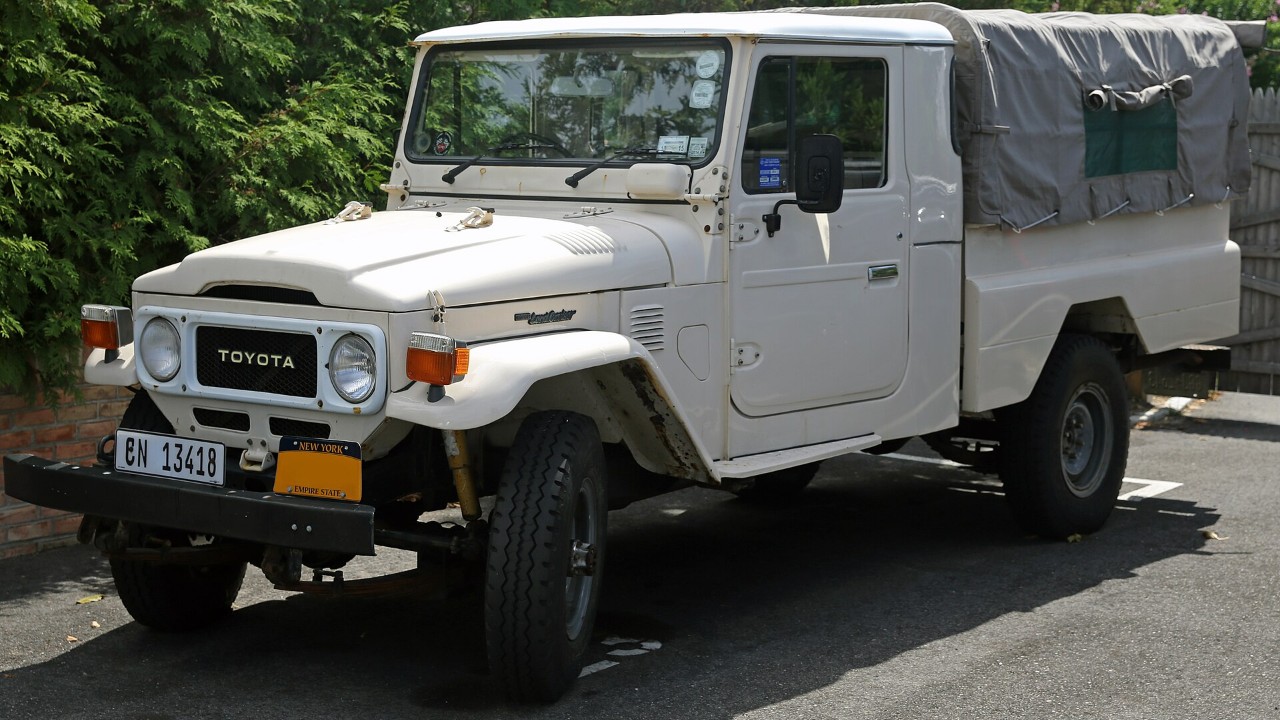
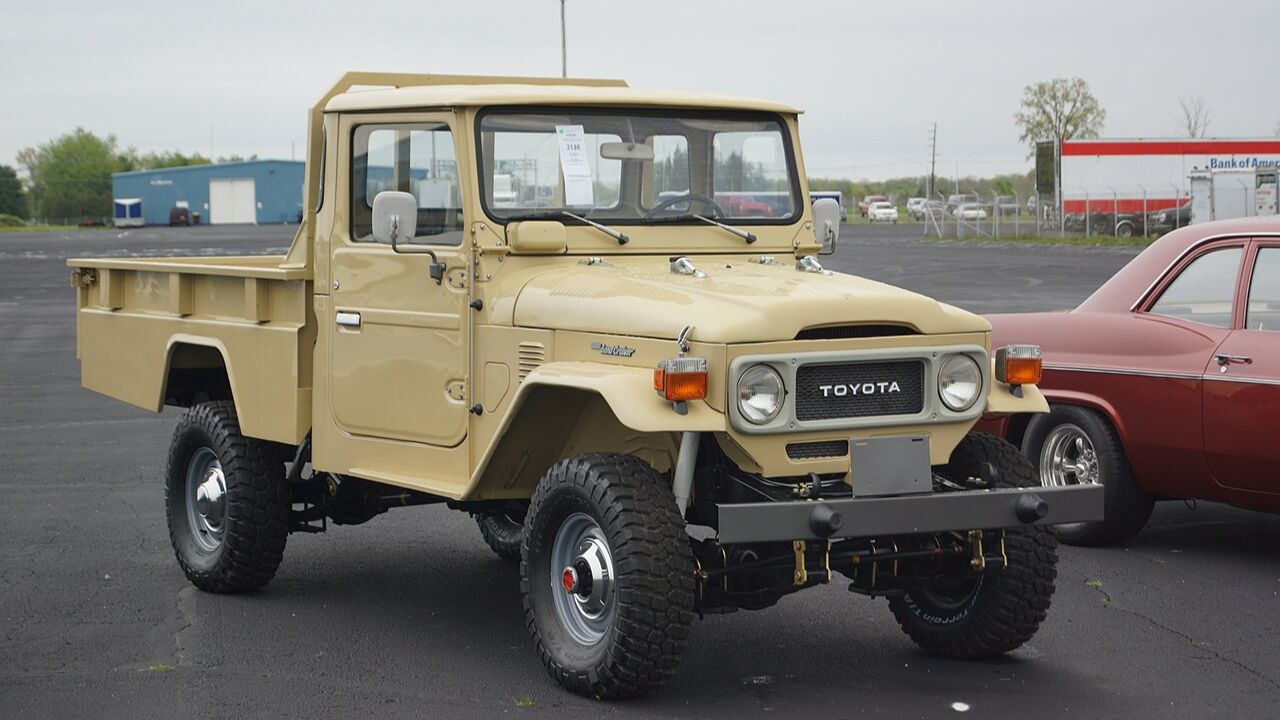
Toyota took aim at Land Rover’s farm and industry buyers in 1963 with a stretched 40 Series. The FJ45 rode on a 2,950 mm wheelbase, or 116.1 inches, and came as a pickup or a cab-chassis. That made it a real working truck rather than a short, stubby trail toy. A four-door version followed a year later, in 1964, but the pickup came first.
The pickup carried the same 3.9-liter inline-six as its short sibling, so it pulled hard for the era. Even so, the FJ40 soaked up the spotlight. According to Silodrome’s look at the FJ45 pickup, the truck is now far less common than the FJ40. In 2022, Barrett-Jackson offered a first-year 1963 FJ45 at Scottsdale with no reserve, after a frame-off restoration. The listing noted that precious few survive intact.
Our take: the FJ45 is the Land Cruiser for people who actually haul things. If you want the 40 Series look with a bed you can use, this is the one to hunt. Finding a clean one is the hard part, so be patient and check the frame carefully.
2. 1967–1980 Toyota Land Cruiser FJ55
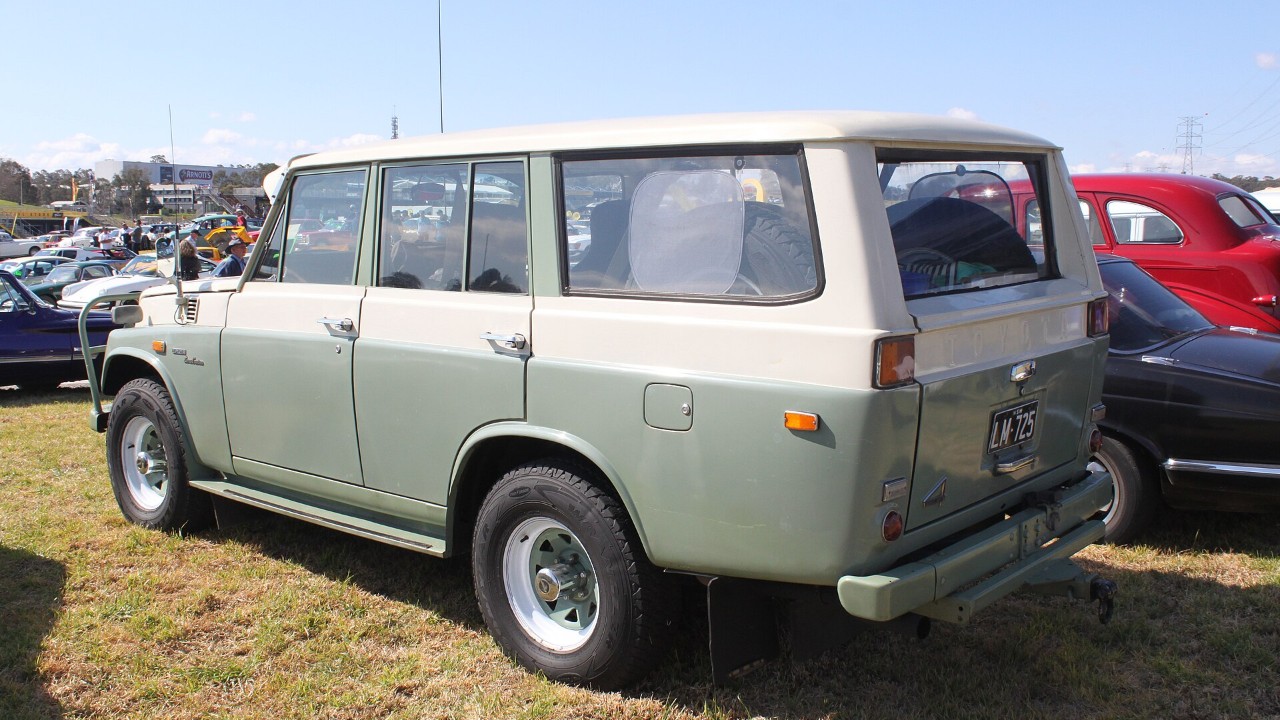
The FJ55 arrived in August 1967 as a proper four-door wagon. It replaced the limited-production FJ45LV, and Toyota built it on a wheelbase 16 inches longer than the FJ40’s. Early trucks used the 3.9-liter F six with 125 horsepower and a three-speed manual. In 1975, the 4.2-liter 2F brought 135 horsepower and a four-speed.
Owners nicknamed it the “Iron Pig” because the nose looks a little like a snout. That nickname stuck harder than the praise did. Meanwhile, the FJ40 became the poster truck, and the bigger wagon got used up as a family hauler. Hagerty’s FJ55 buyer’s guide lists rust as the top worry, from the drip rails to the frame rails and body mounts.
The market has noticed, though. Hagerty puts the median value across all conditions at $34,500. It puts excellent-condition trucks at $46,300, and quoted values are up 65.8% since 2020. In our view, the FJ55 is the most underrated wagon Toyota ever built. Buy the best body you can afford, because replacement panels mostly don’t exist. Hagerty notes that missing metal often has to be fabricated by hand, and that gets expensive fast.
3. 1984 Toyota Land Cruiser BJ42

Here is a Land Cruiser most Americans never saw on a showroom floor. Toyota never sold its diesel 40 Series trucks to the general public in the United States. Canada was different. In 1984, the BJ42 was the only North American Land Cruiser, and it came with a five-speed overdrive gearbox.
Under the hood sat the 3B, a 3.4-liter four-cylinder diesel rated at about 90 horsepower. That is not a big number. Even so, a slow-revving diesel and an overdrive top gear made the BJ42 a far easier highway truck than the gas FJ40. Diesel 40 Series trucks had also found buyers in Europe, with the BJ40 sold officially in West Germany from 1978.
So why the quiet reputation? Most of the attention went to the American-market gas trucks. Meanwhile, the diesels lived in markets that rarely made magazine covers. For Canadian buyers, though, the BJ42 was the only new Land Cruiser on offer that year. Our take: the BJ42 is the thinking person’s 40 Series. If you shop for one, confirm its import paperwork and the condition of the injection pump before you fall in love.
4. 1985 Toyota Land Cruiser 70 Series
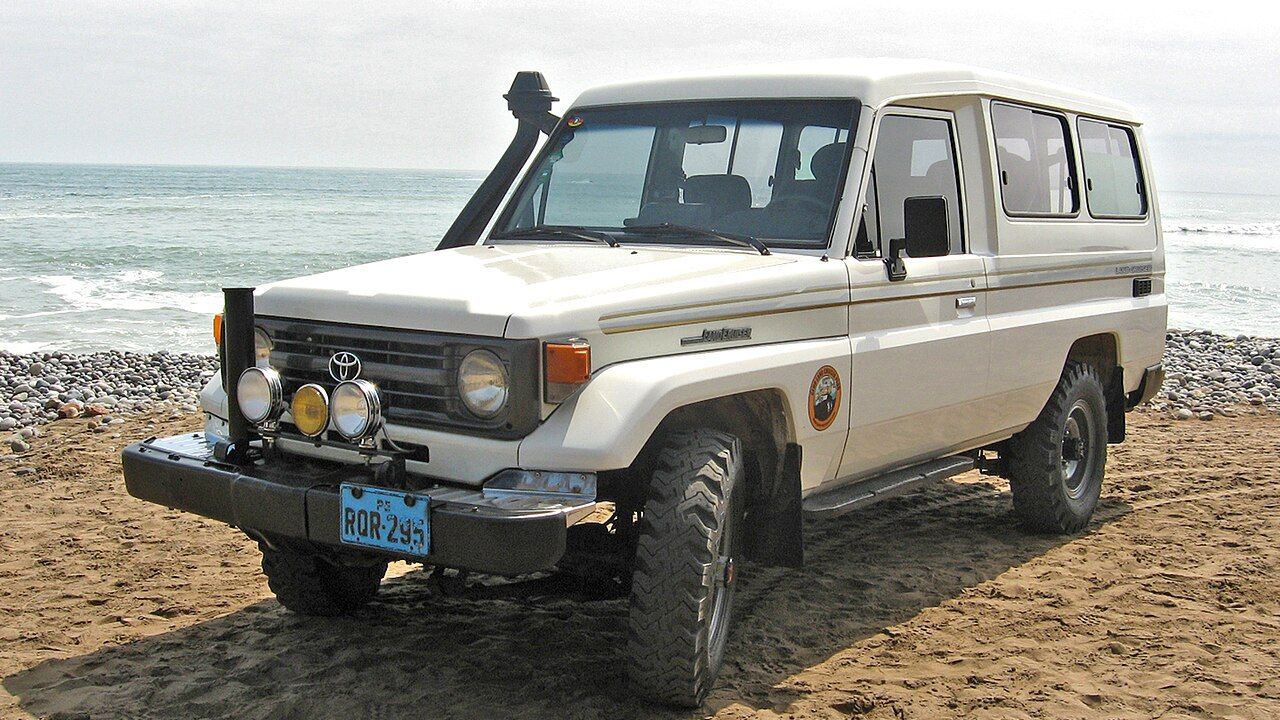
Toyota introduced the 70 Series in 1984 as the replacement for the 40 Series. According to Toyota’s own Land Cruiser history, it took over from the FJ40 in many markets, though not in the United States. That single decision explains why most Americans have never driven one. It also explains why the 70 Series rarely shows up in American Land Cruiser stories.
Elsewhere, the 70 Series became the tool of choice. Early diesel options included the 4.0-liter 2H six and the 3.4-liter 3B four, plus a 13B-T turbo four. Body styles ran from two-door and four-door pickups to wagons and a three-door Troop Carrier. Toyota also brought it back in Japan for a 12-month 30th Anniversary run in 2014. That run offered a four-door wagon and a double-cab pickup, both with a V6 and a five-speed manual.
The real headline is its age. Production began in 1984, and the 70 Series is still built for a handful of markets. In our view, few trucks have earned less fame for more work. If you want one in the U.S., look for a legally imported older truck and budget for parts shipped from abroad.
5. 1988 Toyota Land Cruiser FJ62 VX
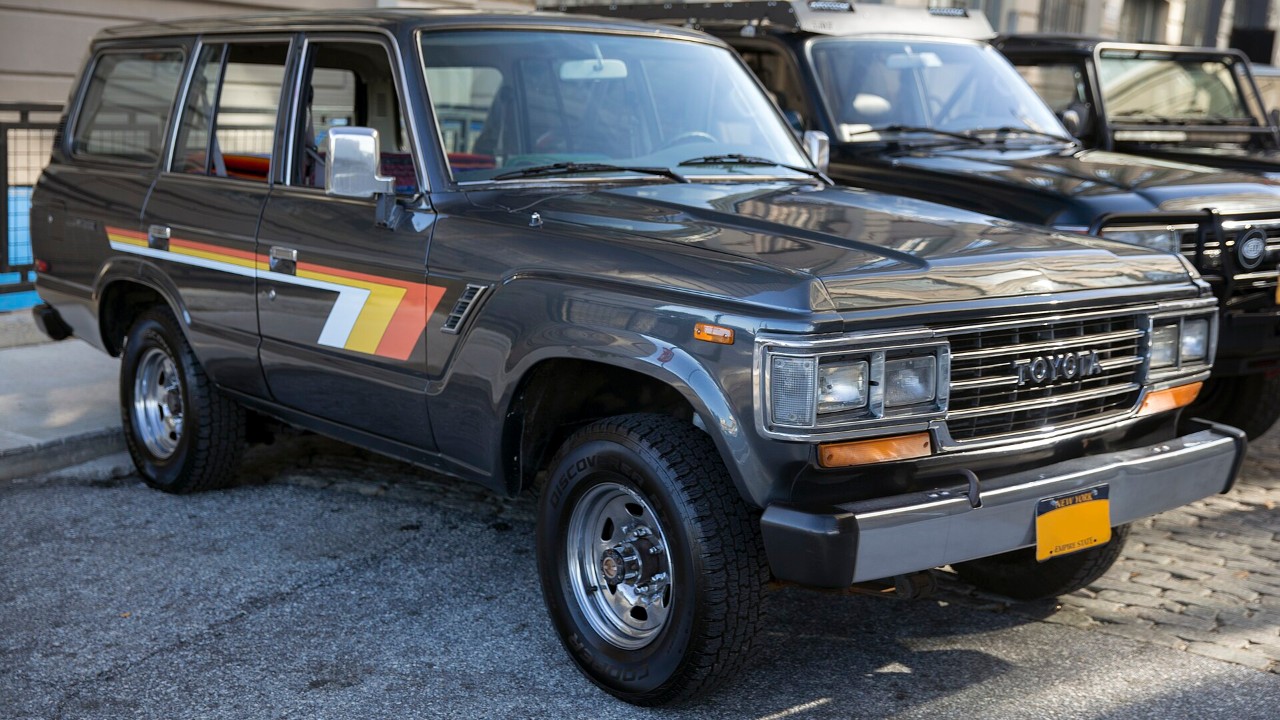
The FJ62 was Toyota’s attempt to turn a tough wagon into a nicer place to spend a road trip. In Japan, the FJ62G VX-Series arrived in 1987 and allowed the Land Cruiser to be sold as a passenger vehicle. For America, Toyota’s 1988 update added a 4.0-liter engine with 155 horsepower.
That engine was the fuel-injected 3F-E, a big step after decades of carburetors. Toyota kept building the carbureted 3F alongside it, too. The 60 Series also carried serious space. Toyota UK’s history of the station wagons quotes a luggage capacity of 2,760 liters and seating for five to ten, depending on the layout.
Yet the FJ62 landed between two louder stories: the rugged FJ40 before it and the plush 80 Series after it. Japanese production ended in 1990, and the last carbureted FJ62 rolled out of Venezuela in 1992. Our take: the FJ62 is the classic Land Cruiser you can live with daily. It has the boxy look collectors love, plus fuel injection and room for the whole family. Look for documented rust repair and a healthy cooling system before you buy.
6. 1996 Toyota Land Cruiser Prado J90
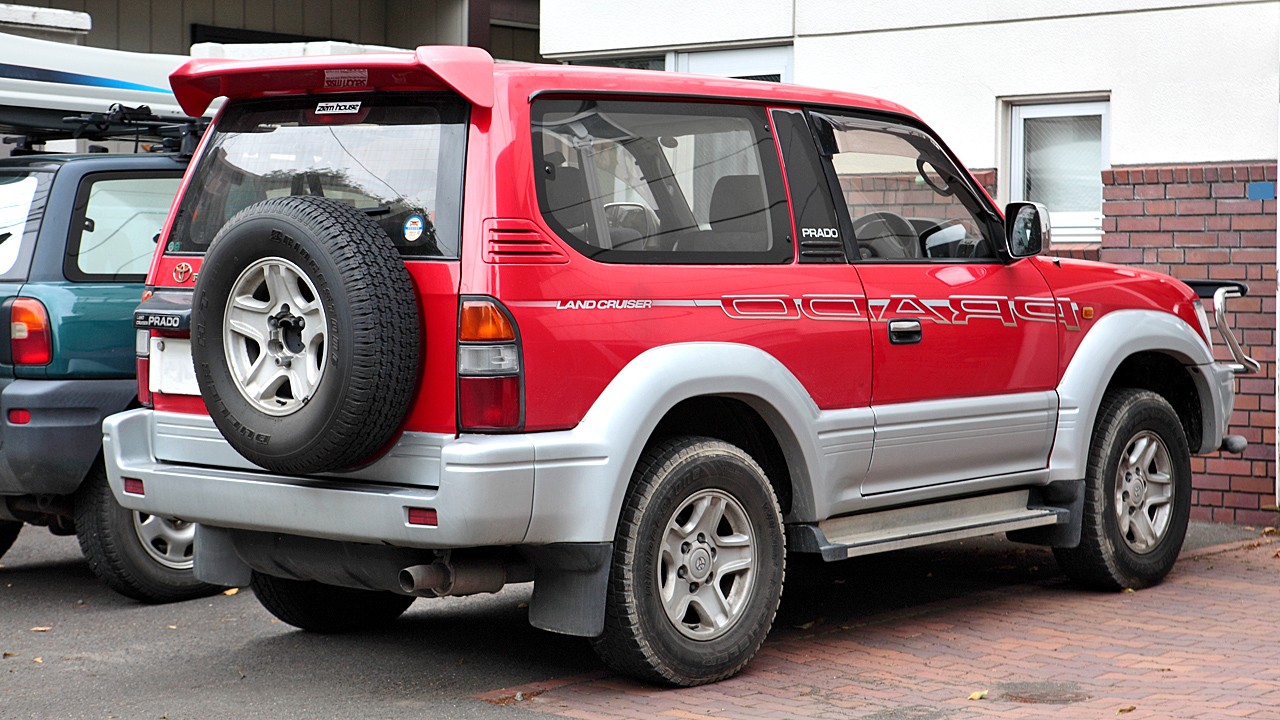
The J90 Prado went on sale in Japan on May 8, 1996, and it rarely gets mentioned in American circles. That’s because it never came here. Instead, it sold in markets such as Japan, Colombia and Malaysia, and Britain knew it as the Land Cruiser Colorado.
The Prado had a lighter, more modern brief than the big wagons. It used independent double-wishbone front suspension with coil springs and full-time four-wheel drive. Engines included a 3.4-liter V6 with 185 PS and a 3.0-liter turbo-diesel with 140 PS. Later, in July 2000, a common-rail 3.0-liter diesel with 170 PS replaced that older turbo-diesel. It came as a three-door or a five-door with seats for eight.
Here’s the part fans often miss. According to Toyota UK’s station wagon history, the independent front setup on the 100 Series was similar to the 90 Prado’s. In other words, this overlooked truck helped shape a bigger one. The five-door also grew slightly in 1999, from 4,675 mm to 4,690 mm long. Our take: the J90 is a smart, compact Land Cruiser that America never had the chance to love.
7. 1998–2007 Toyota Land Cruiser 100 Series

The 100 Series arrived for 1998, while the 80 Series was selling well. It brought the first V8 ever fitted to a Land Cruiser, a 4.7-liter engine that Toyota’s U.S. history rates at 230 horsepower. Output climbed to 275 horsepower for 2006.
It also brought independent front suspension to the big wagon for the first time. Purists grumbled, because the earlier 80 Series kept solid axles, as our story on why the 1994 Toyota Land Cruiser proved durability mattered explains. As a result, some markets kept selling a solid-axle 105 model alongside it. Toyota UK also notes that the 100 Series could carry hydropneumatic suspension with adjustable ride height.
The 100 Series also formed the basis for the Lexus LX 470, and that badge drew much of the luxury buzz. Meanwhile, the Toyota version did the same work with less fanfare. In our view, it is the best-balanced modern Land Cruiser for a used buyer. You get V8 smoothness, a roomy cabin and real trail hardware without stepping up to the newest model. Ask for full service records, and have the front suspension checked before you sign.
8. 2008–2021 Toyota Land Cruiser 200 Series

Toyota launched the 200 Series in early 2008 after five years of development. For America, it carried a 5.7-liter V8 rated at 381 horsepower and 401 lb-ft of torque. The standard towing package allowed up to 8,100 pounds.
Other markets got a 4.5-liter twin-turbo V8 diesel with 286 bhp, according to Toyota UK. The front coil springs alone offered 230 mm of travel, with 240 mm at the rear. Both versions offered serious off-road tech, including Kinetic Dynamic Suspension and CRAWL, an off-road speed-control system. Then again, it was big, thirsty and expensive, so many shoppers chose cheaper three-row SUVs. Toyota says the U.S. takes only a few thousand Land Cruisers per year. That is a tiny slice for a truck sold around the world.
The 200 Series ended its North American run after the 2021 model year, and the 300 Series followed it. Our story on how the 2021 Toyota Land Cruiser 300 modernized a legend covers what came next. Our take: the 200 deserved more credit as the last full-size Land Cruiser sold here. For scale, Toyota sold 318,000 Land Cruiser models worldwide in 2018 alone.
More from Fast Lane Only