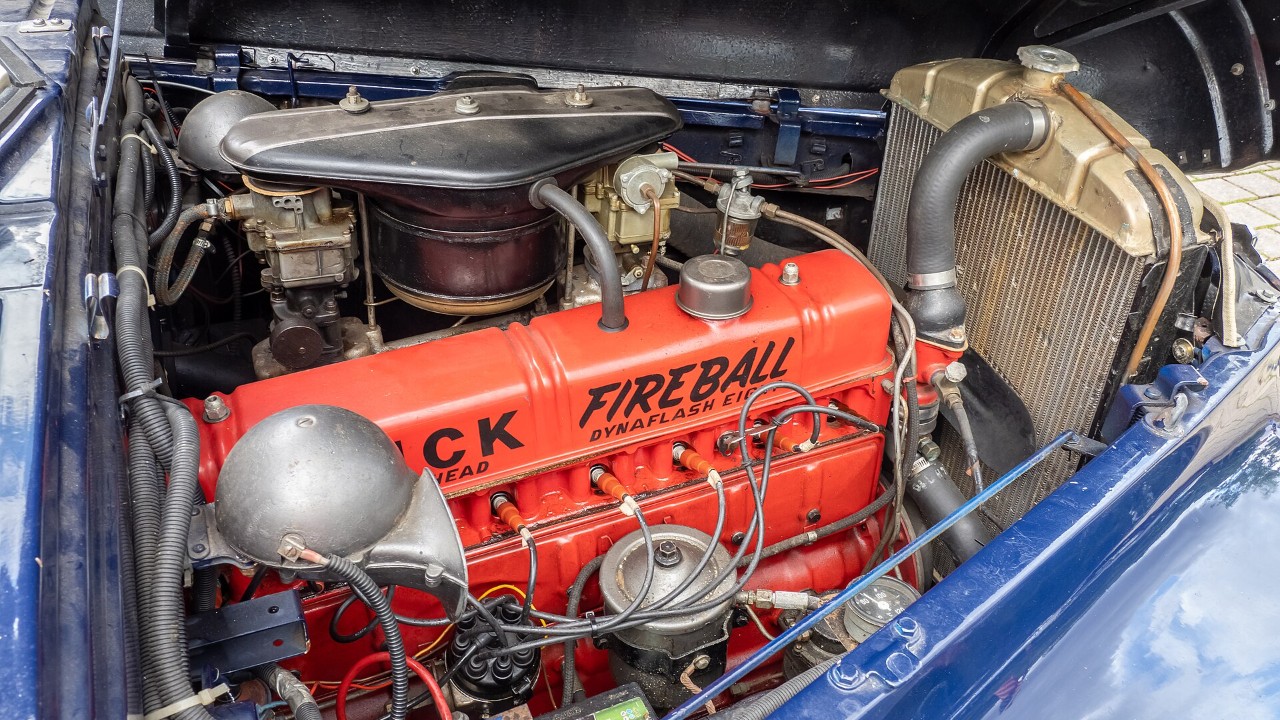
Pontiac built its last straight-eight engine for 1954, and Buick had dropped its own the year before. For roughly two decades, though, the long inline eight was the mark of a serious American car. Eight cylinders in a row ran smoothly by nature, and the long block gave makers room for big displacement without exotic parts.
Then the overhead-valve V8 arrived, and most of the eights disappeared within a few years. However, in our view the best of them were built to turn slowly, pull hard and run for ages, and that is the side of the story we care about here.
These are our picks: ten straight-eights we’d trust completely, from humble Pontiac flatheads to supercharged Mercedes and Duesenberg showpieces. Every year, size and output below comes from a source we checked. The trust part is our own opinion, built on how these engines were designed and how long their makers kept them.
1. 1931–1953 Buick Fireball straight-eight engine
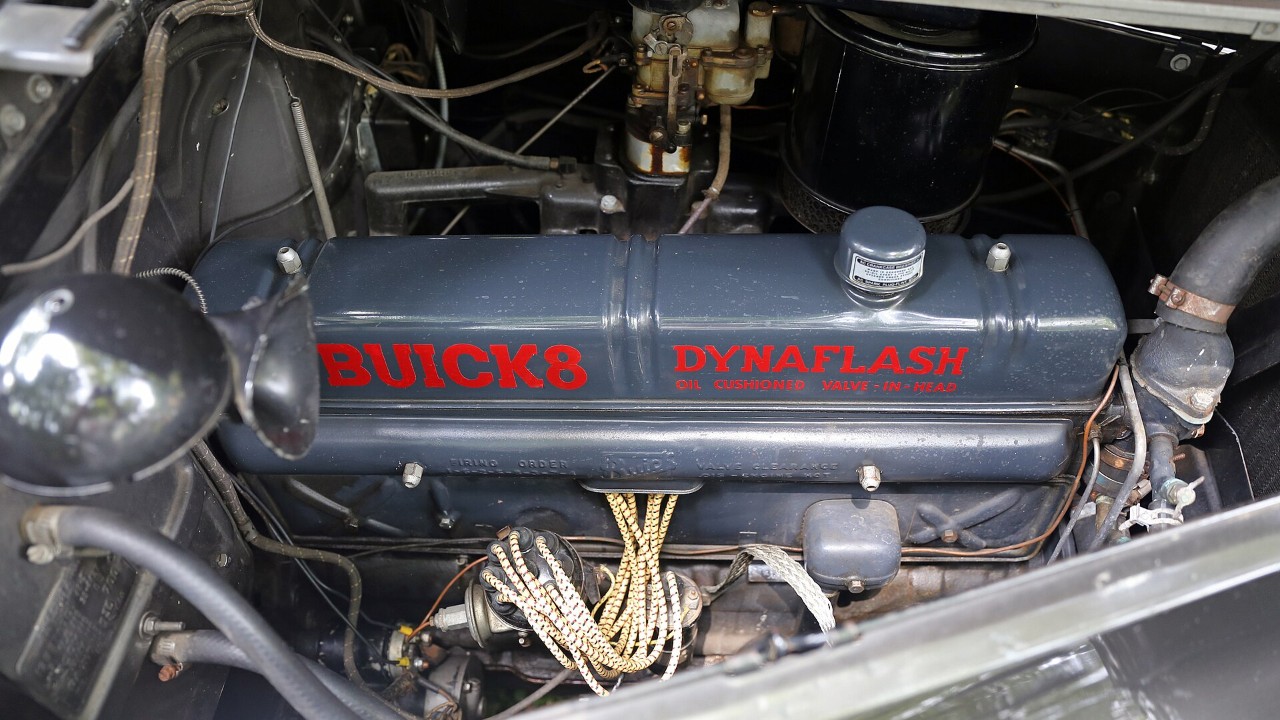
Buick did something most rivals skipped. While many straight-eights used side valves, Buick kept its valve-in-head, overhead-valve layout for its eights from 1931 on. Later, the company called its engine the Fireball 8.
Over its 23 years, this straight-eight engine family grew wide. The first engine in 1931 displaced 220.7 cubic inches. Then came the 248 from 1937 to 1950, the big 320 from 1936 to 1952, and finally the 263 from 1950 to 1953. By 1952, the 320 in the Series 70 made 168 horsepower, while the 263 gave 120 to 124 horsepower in the smaller cars.
The weak point was weight. The large-block version was heavy, and that hurt both performance and handling. Even so, Buick kept the eight in the Special right up to 1953, after its other lines moved to the new 322 V8. In our view, that loyalty says plenty. A healthy 248 or 263 should make a gentle, torquey companion.
2. 1940 Packard 356 straight-eight
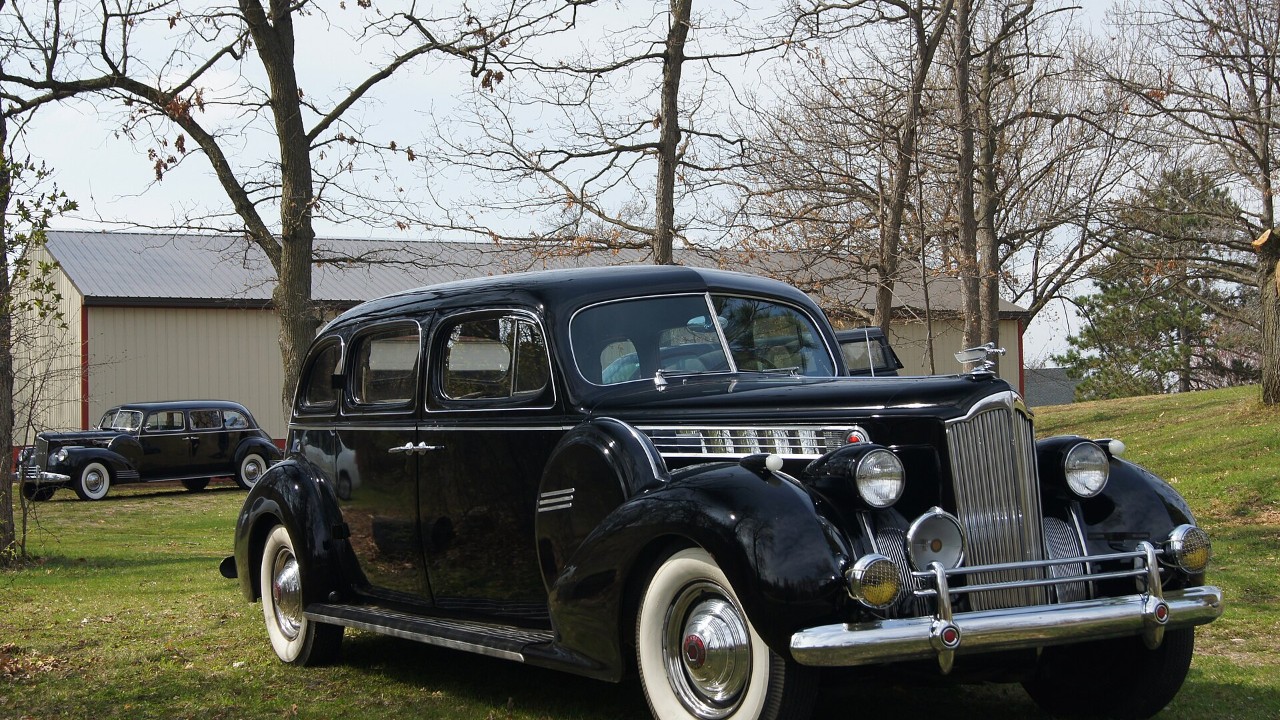
Packard’s top engine for 1940 was a revised L-head straight-eight of 356 cubic inches. In the Custom Super Eight One-Eighty, it made 160 horsepower at 3,500 rpm.
RM Sotheby’s sold a 1940 Custom Super Eight One-Eighty Club Sedan for $51,700 at Hershey in 2022. Packard’s Eighteenth Series, which carried this engine, debuted in August 1939. For the full family tree, our story on six Packard engines from the Twin Six to the 374 V8 walks through it.
Why trust it? Because a big, slow-turning eight like this one never had to work hard. It moved a heavy luxury car at low engine speeds, so each part carried a modest load. Our take: if you find a One-Eighty with a running 356, you have one of the most relaxed engines Detroit built before the war. Keep the cooling system clean and it should reward you.
3. 1933–1954 Pontiac Silver Streak straight-eight
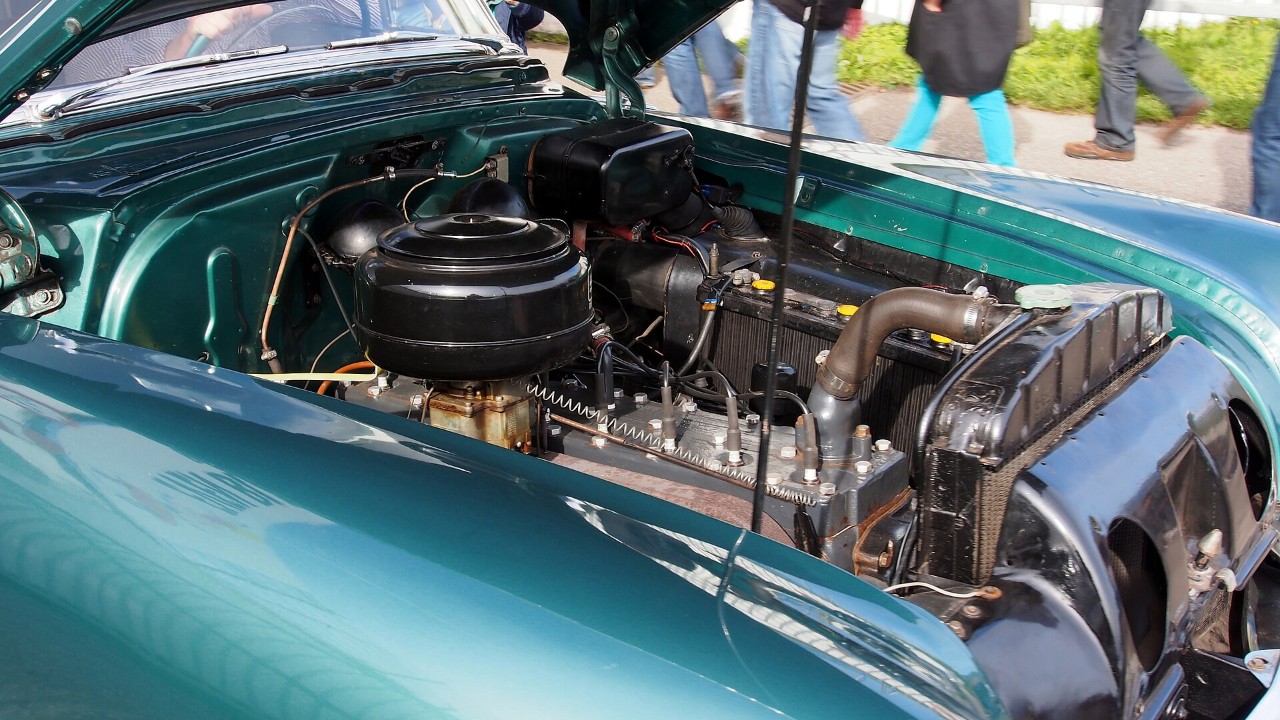
Pontiac’s eight carried a nickname from the hood, not the engine. The five chrome bands running down the hood and trunk earned the cars the Silver Streak name. Under that trim sat a plain side-valve L-head eight.
Pontiac kept improving it for 22 years. The first engine in 1933 displaced 223.4 cubic inches and made 77 horsepower. By 1937, a 248.9-cubic-inch version made 100 horsepower. In 1950, the final 268.2-cubic-inch size arrived. Finally, the 1954 engine made 122 horsepower with a manual gearbox and 127 with Hydra-Matic.
Pontiac retired its straight-eight engine only when the 287 V8 replaced it for 1955. In our view, the Silver Streak eight is the most trustworthy everyday engine on this list. It never chased high output. Instead, it simply kept selling family sedans for over two decades. If you want a prewar or early postwar driver, a Pontiac eight asks very little of you.
4. 1930–1952 Hudson Great Eight
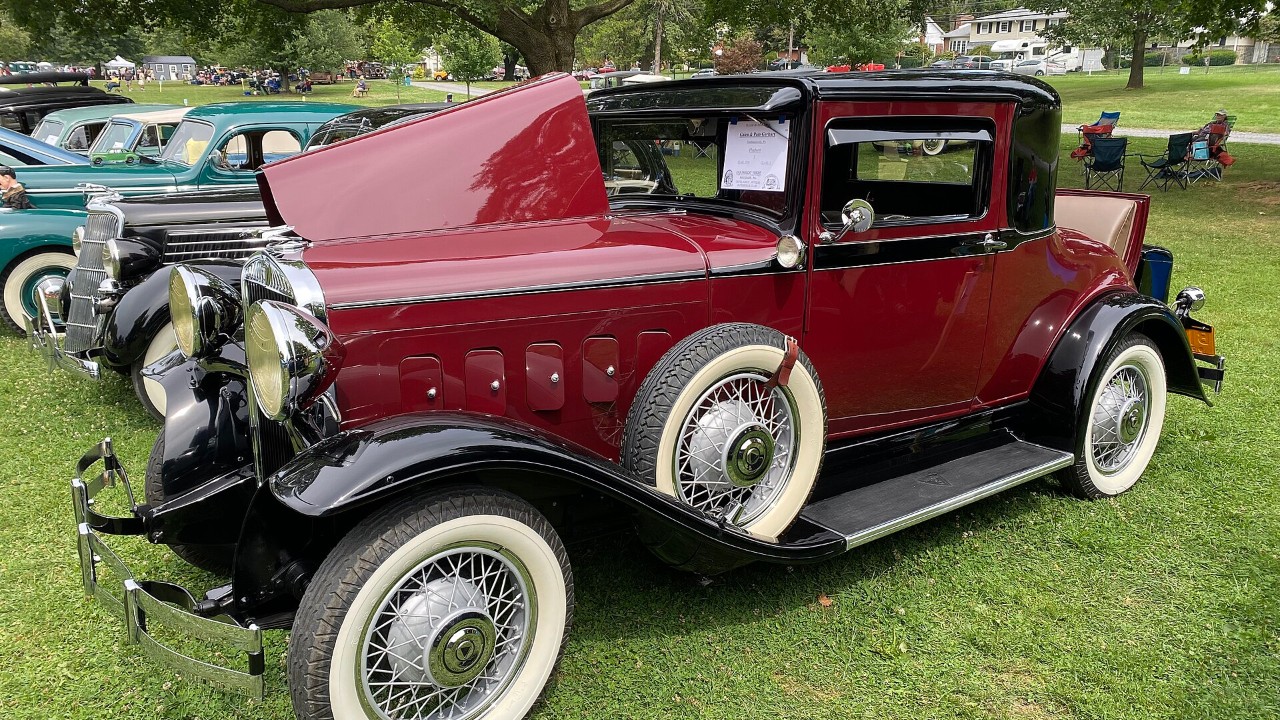
Hudson offered its first inline eight in 1930 and called it the Great Eight. Later, the names changed to Greater Eight and then Super-Eight. Through it all, the basic L-head design stayed.
In fact, its numbers tell you why it lasted. The engine displaced 254 cubic inches, with a 3.00-inch bore and a long 4.50-inch stroke. Hudson lubricated it with a pressure-and-splash hybrid system, as Mac’s Motor City Garage explains in its history of the last Hudson eights. In its final tune, it made 128 horsepower.
What finished it off was Hudson’s own six. The 1951 Hornet six displaced 308 cubic inches and made up to 160 horsepower in Twin-H form. As a result, the eight survived only in the 1952 Commodore 8, and Hudson built nothing but sixes from 1953. Our take: a straight-eight that a bigger six could replace was never built to be fast. It was built to last, and a 1952 Commodore 8 makes a fine farewell example.
5. 1931–1950 Chrysler flathead straight-eight
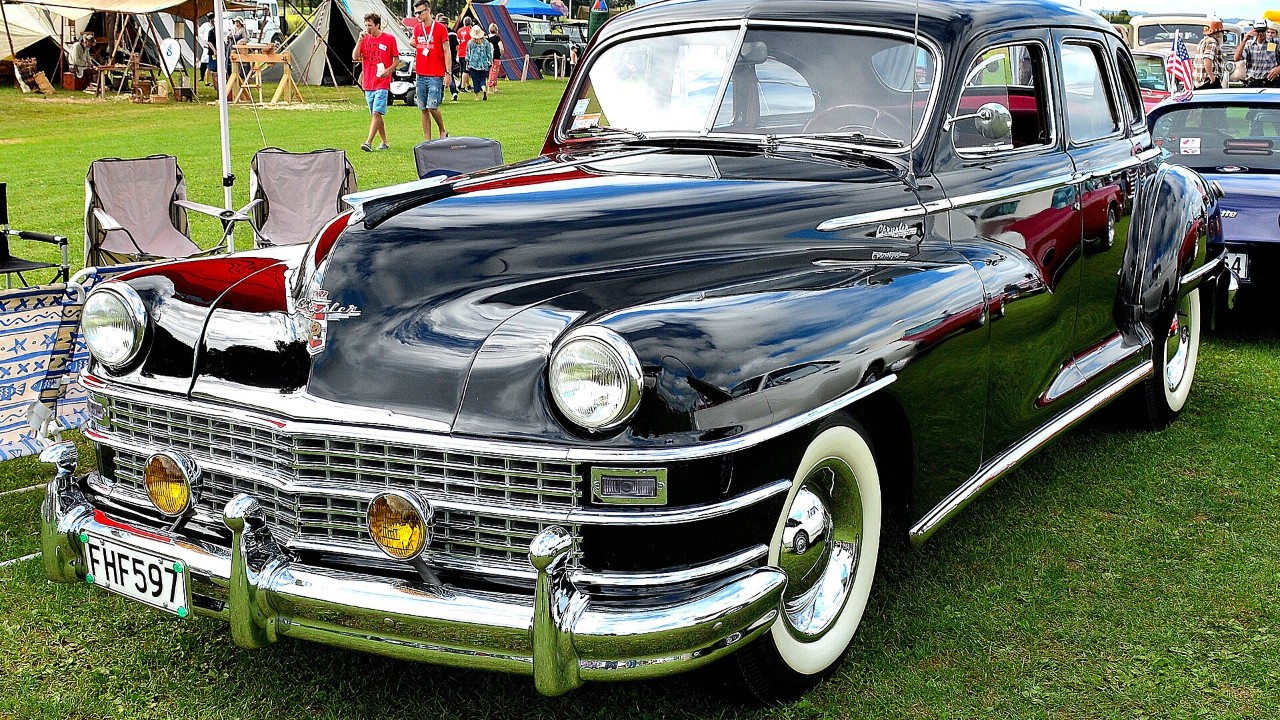
Chrysler’s flathead eight came in many sizes. The 1931 line alone included 240-, 261- and 282-cubic-inch versions. Later, 299- and 324-cubic-inch engines arrived, along with a 385 at the top of the range.
Chrysler also built a special straight-eight engine for its flagship. For the Imperial, it developed a new straight-eight with nine main bearings and a two-barrel downdraft carburetor. Then, starting with the Custom Imperial CW, that engine wore an aluminum cylinder head. By 1934, the 324 in the Imperial and Custom Imperial made 130 horsepower.
The 324 then outlived the war. Chrysler’s last listing for it runs from 1946 to 1950 in the Saratoga, New Yorker and Imperial, rated at 135 horsepower. In our opinion, a postwar New Yorker with this eight makes one of the easiest straight-eight cars to own today. It’s a simple flathead, and nine main bearings give the crankshaft plenty of support.
6. 1928–1937 Duesenberg Model J straight-eight
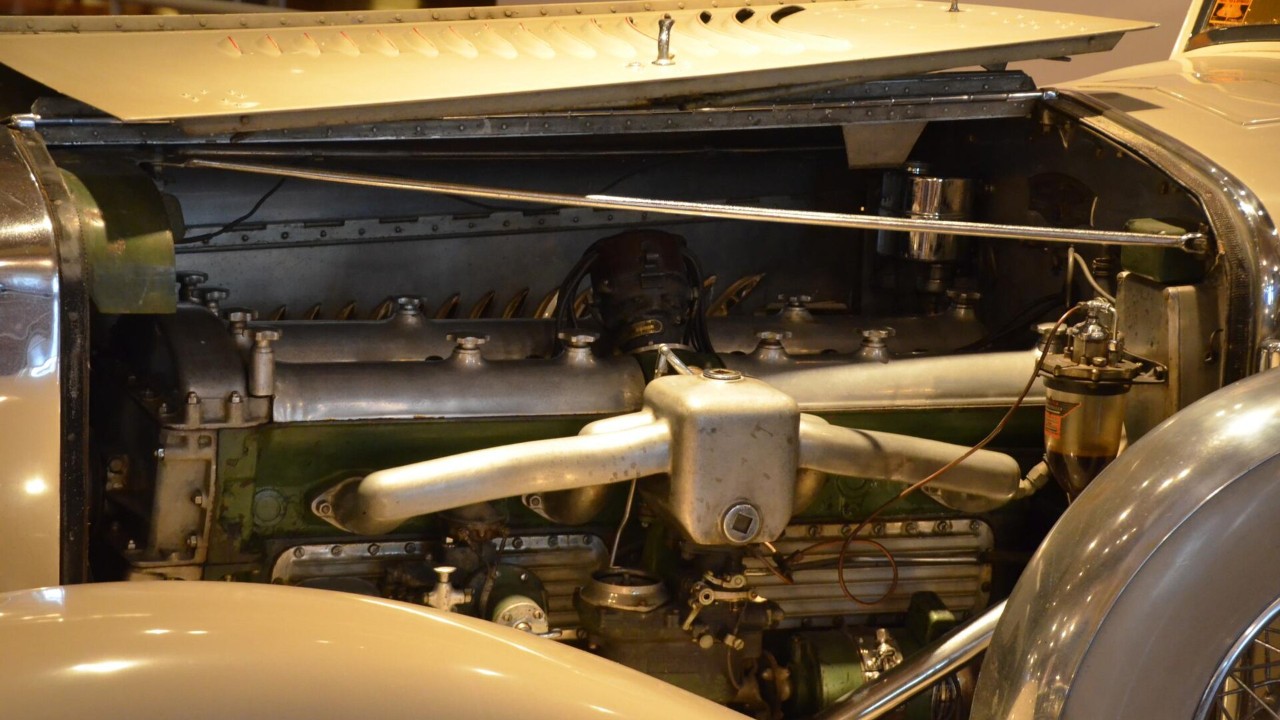
Duesenberg showed the Model J at the New York car show on December 1, 1928. Its engine was a 420-cubic-inch straight-eight with dual overhead camshafts and four valves per cylinder. Duesenberg designed it, but Lycoming, another Cord-owned company, manufactured it.
In standard form, it made 265 horsepower, enough for about 116 mph. Then, in May 1932, the supercharged SJ arrived with 320 horsepower. Duesenberg built 481 Model Js and variants through 1937, including 36 SJs. A bare chassis cost $8,500 at first and $9,500 after 1932, before any coachwork.
Here is the number that earns its spot. About 378 of those 481 cars survive. For a hand-built, twin-cam luxury engine from the 1920s, that survival rate tells you a lot. Our take: this is the straight-eight to admire, even if few of us will ever turn its key. For another giant of the era, see our story on Bugatti’s six Type 41 Royales.
7. 1929–1932 Lycoming straight-eight in the Cord L-29
Lycoming built engines for other brands long before the Duesenberg. A Lycoming straight-eight powered the 1925 Auburn 8-63, according to Old Cars Weekly’s history of the Auburn Speedster. Then, in 1927, Cord bought Lycoming outright.
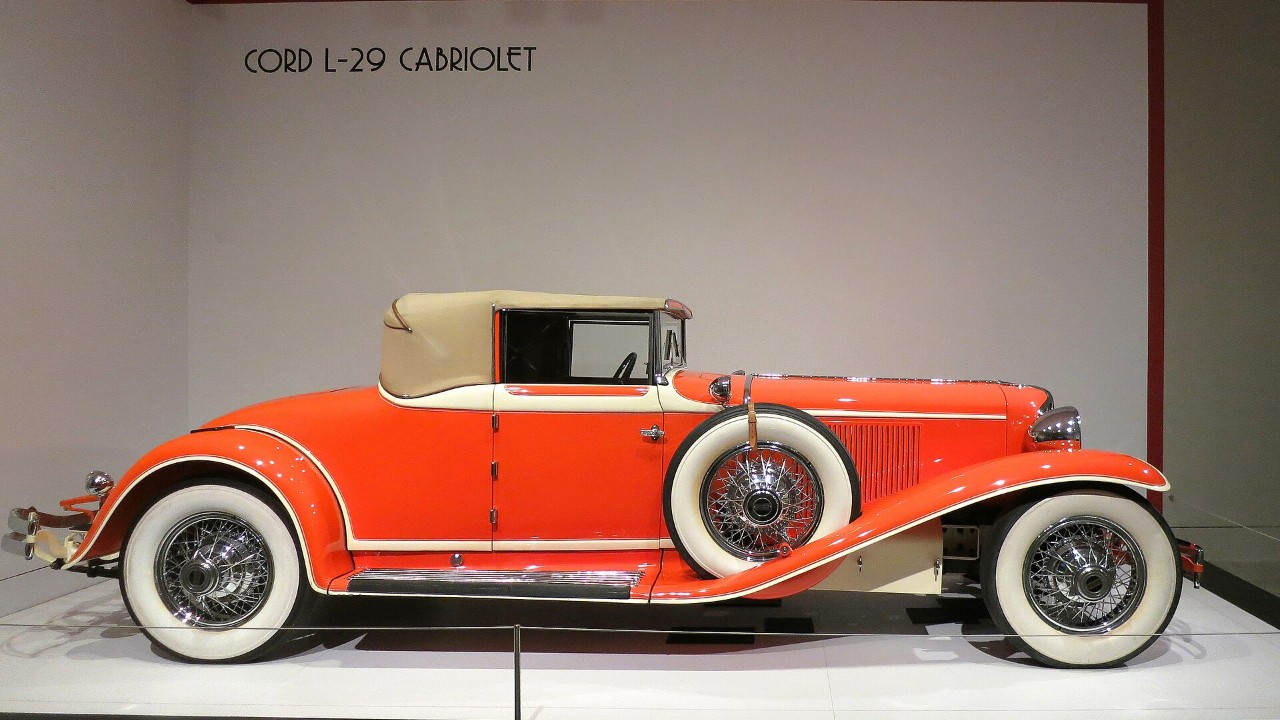
The Cord L-29 shows the engine at its most unusual. In the L-29, the Lycoming eight drove the front wheels. The engine was a 301-cubic-inch L-head rated at 125 horsepower. Cord built the L-29 from 1929 to 1932 and sold just 4,400 of them.
Why would we trust it? Because the Lycoming eight was a plain side-valve design. The exotic part of the L-29 was the front-drive layout, not the engine. In our view, that makes the Lycoming the steady workhorse of the Auburn-Cord-Duesenberg empire. If you ever get to drive an L-29, the engine is the part to worry about least.
8. 1928–1942 Studebaker President straight-eight
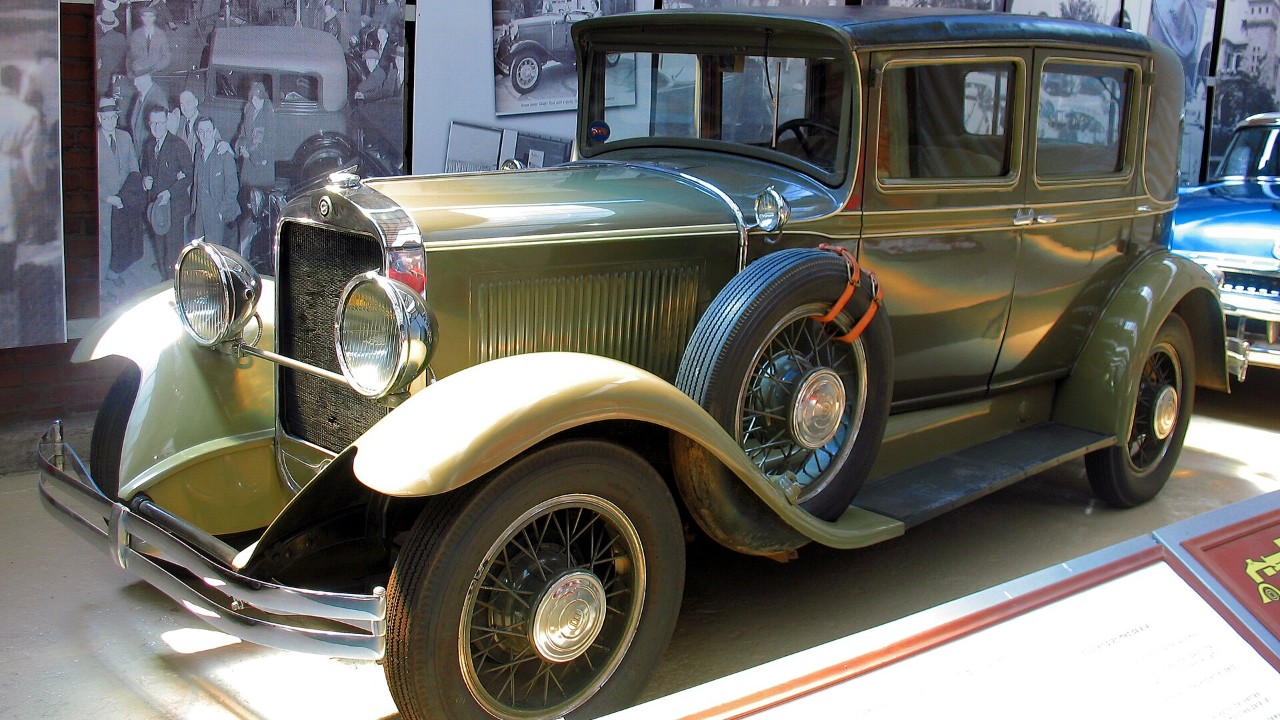
Studebaker replaced its big 354-cubic-inch six with a straight-eight in January 1928. The new engine displaced 312.5 cubic inches, and it ran smaller and smoother than the six. Its crankshaft ran in nine large main bearings, each with drilled oil passages.
Studebaker proved the point right away. In mid-July 1928, four President eights covered 30,000 miles at Atlantic City in 19 days. That year, the President set more than 100 stock car records. By 1931, displacement grew to 337 cubic inches and output reached 122 horsepower.
The eight also went racing. A President finished third in the 1932 Indianapolis 500, a strong result for a production-based engine. In our view, no engine on this list has a better endurance résumé from its own era. Thirty thousand miles in under three weeks is exactly the kind of test we’d want before trusting any engine completely.
9. 1930–1942 Nash Twin-Ignition Eight
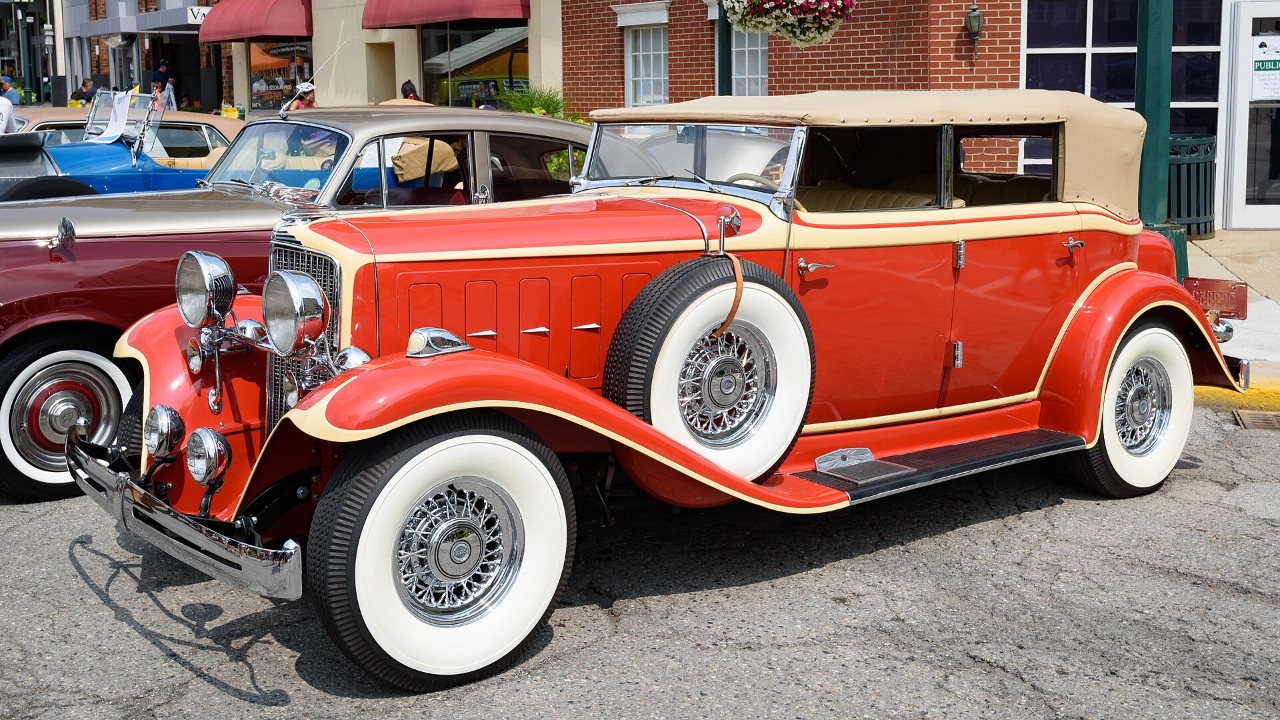
Nash built its eights with two spark plugs per cylinder. For 1930, the company even named a series after the idea, the Twin Ignition Eight. In 1931, it switched to the shorter Eight-90 name.
After that, the engine kept improving. From mid-1932, the Ambassador Eight used a 322-cubic-inch straight-eight with twin ignition and overhead valves. It made 125 horsepower and rode in cars with 133- or 142-inch wheelbases. Later, from 1935, the Ambassador Eight used the smaller former Advanced Eight engine instead.
Nash dropped twin ignition only during the war. For 1942, its Six and Eight both reverted to a single plug per cylinder. Meanwhile, the Classic Car Club of America recognizes the 1932 Advanced 8 and Ambassador 8, plus the 1933 and 1934 Ambassador 8, as approved classics. Our take: two plugs per cylinder gave you a backup on every combustion chamber, which is exactly why we’d trust it.
10. 1934–1936 Mercedes-Benz 500K straight-eight

The K in 500K stood for Kompressor, and the supercharger was the star. The 500K used a 5,018 cc straight-eight. When the driver pushed the throttle pedal all the way down, a Roots supercharger joined in.
Because of that, the on-demand setup mattered for longevity. Most of the time, the 500K ran as a large, unstressed eight. With the blower engaged, though, it made up to 160 horsepower. Mercedes-Benz built the 500K from 1934 to 1936, and in our view few cars of the decade looked more dramatic.
In our opinion, the part-time supercharger is the clever bit. It let one engine act as a calm touring unit and a sprinter, and the blower only worked when asked. Mercedes built 342 500Ks, including 29 Special Roadsters, before the bigger 540K replaced it.
More from Fast Lane Only