Jay Leno has driven just about everything. Hypercars, race cars, oddball prototypes, you name it. After decades of testing incredible machines, it takes a lot to catch his attention.
That is why his time with David Lee’s 1963 Ferrari 250 GT SWB California Spyder stood out. The horsepower number alone does not sound impressive. This V12 makes somewhere between 170 and 179 horsepower. Plenty of regular family cars can match that today.
But once the car started moving, everything changed. Leno walked away genuinely impressed. And the reasons why say a lot about what made old Ferraris so special.
A Car With a Hollywood Connection
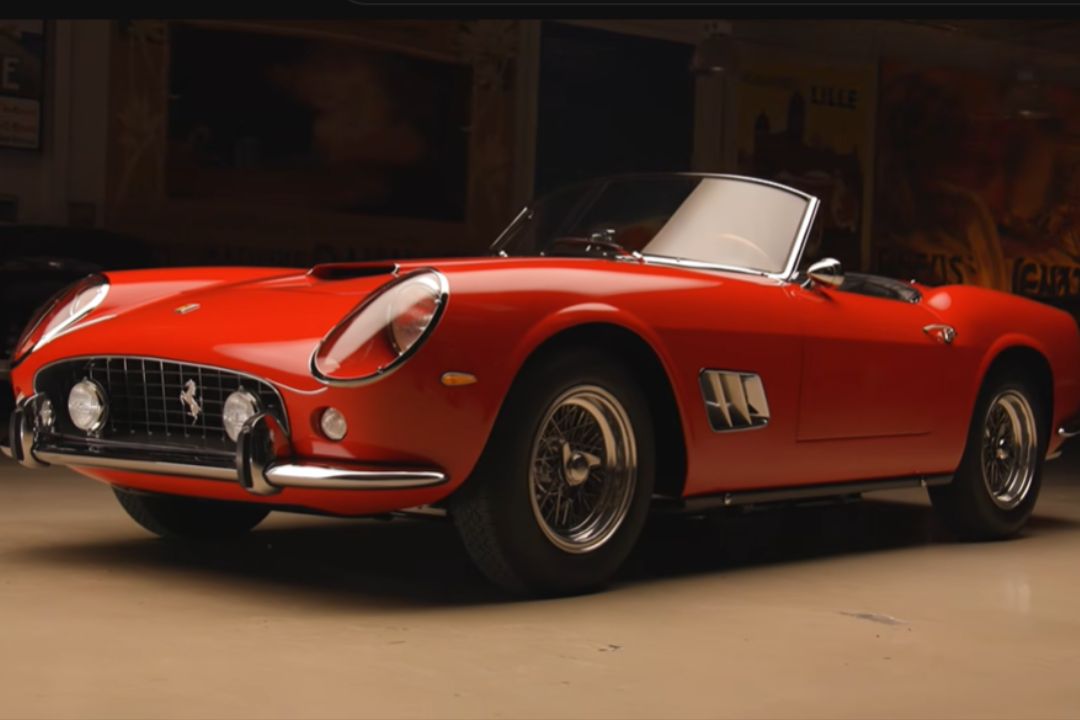
This Ferrari has a fame that goes beyond car people. Its design became famous thanks to the replica version used in Ferris Bueller’s Day Off. David Lee said this car had been his dream ever since he saw that movie in high school. This visit also marked his fifteenth time appearing on Jay Leno’s Garage.
The car itself is a short wheelbase California Spyder. Only 37 were ever built in this exact setup. Pininfarina designed the body, giving it those smooth curves and classic Ferrari proportions. Under the hood sits a 3.0-liter V12 engine with three Weber carburetors. It pairs with a 4-speed manual transmission and disc brakes.
History matters a lot with a car like this. It passed through about five owners before Lee bought it. A Massini Report confirmed the car still has its original matching numbers. It was delivered new to California and spent most of its life in the San Francisco Bay Area before heading south.
Why 179 Horsepower Still Feels Fast
That modest horsepower number is easy to overlook until you think about how light the car is and how directly it delivers power. Leno praised the strong torque and the light, quick steering. David Lee compared the driving feel to a go-kart. There are no driver aids helping out. It is just you and the car.
That detail matters. Nothing filters the experience in this Ferrari. Every move of the wheel and every push of the throttle goes straight into how the car reacts. Even powerful modern cars can feel numb because of all their electronics. A car built in 1963 has none of that in the way.
Lee also pointed out that this car came out of the auction ready to drive. That is not always true for old Ferraris. A vintage car that actually runs the way it should is rare, no matter what the horsepower sticker says.
Small Details That Tell a Bigger Story
Not everything on the car works perfectly, and that actually makes it feel more real. The dashboard clock does not work. Leno explained that old electric clocks like this one often stop when the battery voltage drops. Sometimes they start ticking again once the engine revs up. It is a quirky flaw, not a big deal.
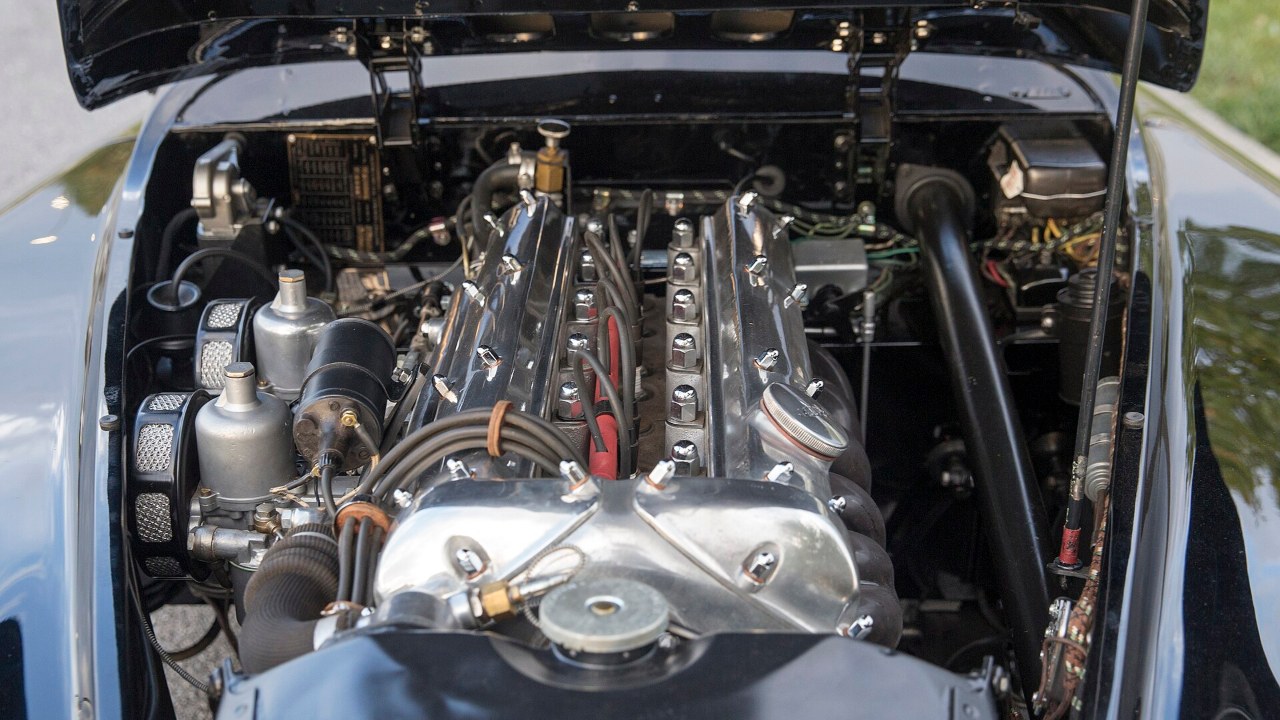
During the walkaround, Leno and Lee talked about how Enzo Ferrari drew early inspiration from Packard V12 engines. That history connects straight to the engine sitting under this car’s hood. When they opened the front hood, you could see the triple carburetors, the ignition coils, the distributors, and two oil filters.
Even the transmission got a moment of conversation. Leno guessed it was a 5-speed. Lee corrected him. It is actually a 4-speed. Little moments like that show how well Lee knows this car.
On the Road
The best part of the whole visit was the drive itself. Leno’s reaction was not really about speed. It was about how much the car talked back to him. The torque felt strong for such a small engine. The steering answered instantly. The car moved with a kind of agility that heavier modern cars often lose.
That contrast came up in conversation too. Leno and Lee talked about the difference between raw, mechanical sports cars like this Ferrari and modern machines like the Rimac. Modern performance often comes from instant power and heavy tech. This Ferrari gets its performance from simplicity and low weight instead.
What Makes This Ferrari Different
Horsepower numbers do not always tell you how a car actually feels. This 1963 California Spyder proves that. It impressed one of the most experienced drivers in the world, not because it was fast by today’s standards, but because everything about it worked together so well. That balance is exactly why cars like this one are still so loved more than sixty years later.
More from Fast Lane Only: