Jeff Gordon did not just win races, he rewired what stock car racing looked like, who watched it, and who believed they could belong in it. His rise from California kid in a rainbow-colored Chevrolet to corporate magnet and front-office power broker turned a regional spectacle into a national habit and dragged NASCAR’s modern era into focus almost by sheer force of lap time.
His story is not just about trophies, it is about how one driver’s timing, talent, and polish collided with television, sponsorship money, and a changing America, reshaping the sport’s audience, its business model, and even the pipeline of drivers who followed him into the garage.
From kid prodigy to the “ARRIVAL!”
I like to think of Jeff Gordon’s early years as the racing version of a superhero origin story, except the cape was a quarter midget and the villain was bedtime. Beginning his racing journey at the age of five, Gordon piled up championships in quarter midgets and sprint cars so fast that the adults around him had to scramble just to keep up with the paperwork. By his teens he was already a known quantity in short-track circles, a prodigy whose résumé looked less like a kid’s hobby and more like a hostile takeover of every series he entered, a pattern that carried into his early stock car days as he moved through the ranks with startling speed, as detailed in his Gordon biography.
That rise was not an accident of geography either, it was a deliberate break from tradition. The Early life of Jeff Gordon ran through Vallejo and Corona in California, not the Carolinas, and he was featured in local media as a teen sensation long before he ever strapped into a Cup car. When he finally landed in NASCAR’s top series, his debut was treated less like a rookie quietly clocking in and more like the “ARRIVAL!” of a new era, as one account memorably put it, with Jeff Gordon’s entry framed as the ignition switch that helped flip the sport from regional traffic to national highway, a shift that Jeff Gordon himself came to embody.
Ending Earnhardt Sr’s grip and redefining dominance
On track, Gordon did not just win, he rearranged the sport’s power structure, and he did it in the shadow of Dale Earnhardt Sr, which is a bit like trying stand-up comedy while the headliner is still on stage. In contrast to Earnhardt Sr, who spread his seven championships over 15 years, Gordon compressed his own decade of supremacy into a tighter window, stacking wins and titles in a way that effectively ended Earnhardt Sr’s grip on the points standings and signaled that the balance of power had shifted to a younger, more aggressive style of racing, as chronicled in accounts of how he ended that era.
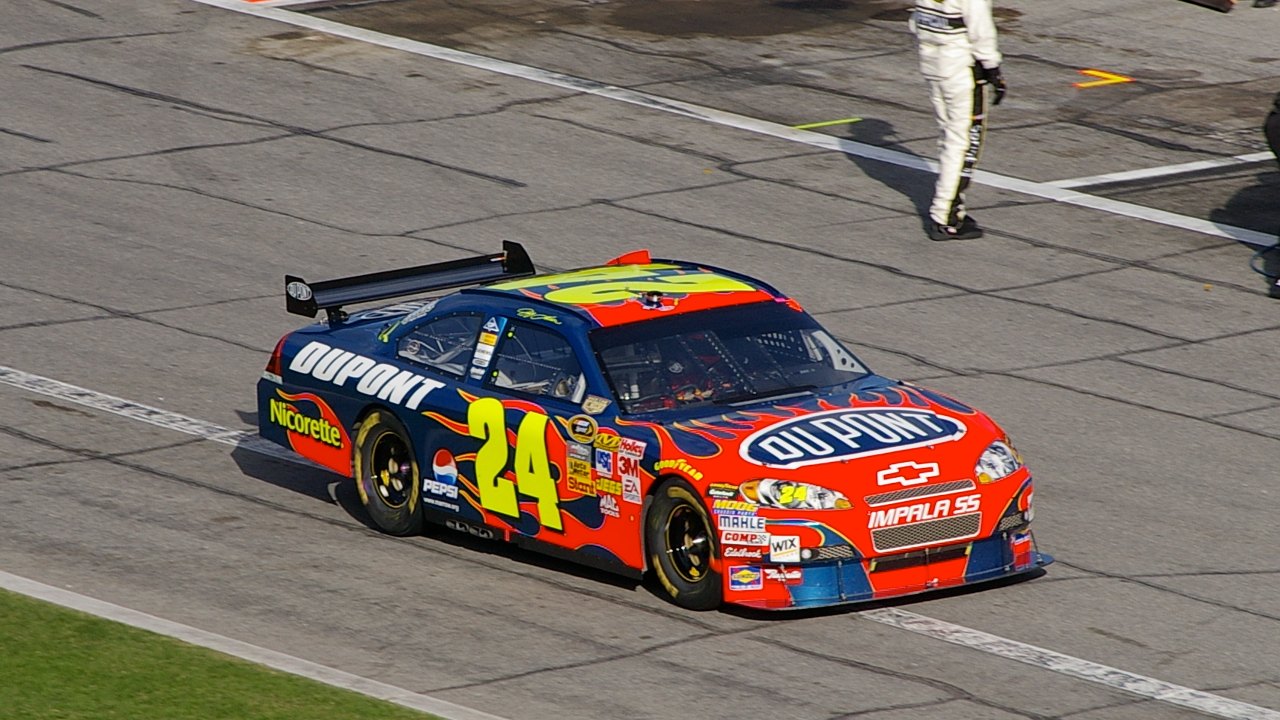
That kind of takeover only works if the driver cashes the checks his hype writes, and Gordon did exactly that. He burst onto the Cup scene with multiple wins at age 23, quickly turning potential into hardware and forcing veterans to recalibrate what a “young driver” could be expected to do in a top ride, a leap that helped create new opportunities for the next wave of talent, as noted in coverage of how Gordon changed expectations. To be an agent of change required that kind of relentless success on the track, and he delivered it in a big way, turning his rainbow-colored No. 24 into a rolling scoreboard that told the rest of the garage the old hierarchy was officially under new management, a transformation that contemporaries described when they called him a game changer.
From California outsider to mainstream frontman
If the wins were the engine of Gordon’s influence, his background and personality were the turbocharger. Being from California, he arrived as a cultural outlier in a sport rooted in the Southeast, and that outsider status turned into an unlikely asset as NASCAR tried to grow beyond its traditional base. One fan analysis put it bluntly, arguing that, Bottom line, being from California helped take the sport out of its southern roots and made it a national attraction, with Gordon’s popularity serving as a bridge between old-school fans and new viewers who might never have set foot in a North Carolina short track, a shift captured in a Bottom-line assessment of his influence.
That bridge only worked because Gordon leaned into the role without pretending to be something he was not. He has spoken about how moving east as a teenager was a fortuitous decision that still left him feeling like an outsider, yet that same distance made him relatable to fans in places like Boston and Chicago who were just discovering stock car racing. Jimmie Johnson once pointed out that there are now more drivers from the state of California than any other state in the Cup field, a pipeline that traces back to Gordon’s success and visibility, and he has acknowledged that his move and his willingness to be that outsider helped bring NASCAR into the mainstream, a dynamic he and Johnson have discussed in reflections on how he brought the sport into new markets.
TV ratings, rainbow paint, and the sponsorship revolution
Gordon’s impact did not stop at the checkered flag, it ran straight through the commercial breaks. His 2005 Daytona 500 win drew a record 18.7 m viewers, and the very next year Jimmie Johnson’s victory pulled in 19.4 m, a one-two punch that showed how a new generation of stars could anchor massive national audiences and keep them coming back, as detailed in reporting on how Gordon and Johnson drove those numbers. Those figures were not just bragging rights, they were proof of concept for networks and advertisers that NASCAR could deliver Super Bowl-level eyeballs more than once a year, with Gordon’s presence and rivalry web helping to sustain that surge.
Visually, he was a walking, or rather roaring, billboard for the sport’s new era. The DuPont colors with the rainbow scheme on his No. 24 were a sharp break from the more traditional, blue-collar liveries that had dominated the grid, and that bright palette made him instantly recognizable to casual viewers flipping channels on a Sunday afternoon. His success in that car helped rewrite the playbook for corporate partnerships, showing that a driver could be both a relentless competitor and a polished spokesperson, a combination that reshaped NASCAR Sponsorships and left a lasting Legacy and Impact on how brands approached the sport, as outlined in analyses of Legacy and Impact. To be an agent of change in that environment required winning, but it also required being articulate and comfortable in front of cameras, traits that observers repeatedly highlighted when describing how Gordon pushed the sport beyond the record book.
Executive era: reshaping the future from the pit box
Retirement from full-time driving did not slow Gordon down so much as change his seat assignment. Even now, in his active post-racing life, he has juggled roles as a broadcast analyst for Fox Sports and as a top executive for Hendric Motorsports, trading fire suits for headsets and boardrooms while still logging miles on private jets to keep up with the schedule, as described in profiles of Even his travel routine. That dual role lets him shape the narrative of the sport on television while also influencing strategy, driver development, and sponsorship decisions inside one of its powerhouse organizations, effectively giving him a hand on both the microphone and the steering wheel of NASCAR’s future.
He has also become one of the sport’s most visible ambassadors in key markets that did not always see stock cars as their thing. In Chicago, for example, Jeff Gord has emphasized how important the city is for NASCAR’s growth, talking about the need to reach new fans and continue to innovate in how the sport presents itself, a message that fits neatly with the way he once helped introduce racing to audiences far from its traditional heartland, as reflected in coverage of his comments on All of the Chicago market. In that sense, his rise did not just reshape NASCAR’s modern era, it set the template for what a modern NASCAR star, and later executive, is supposed to look like, blending speed, media savvy, and a willingness to carry the sport into rooms where the roar of V8s used to be background noise at best.
More from Fast Lane Only: