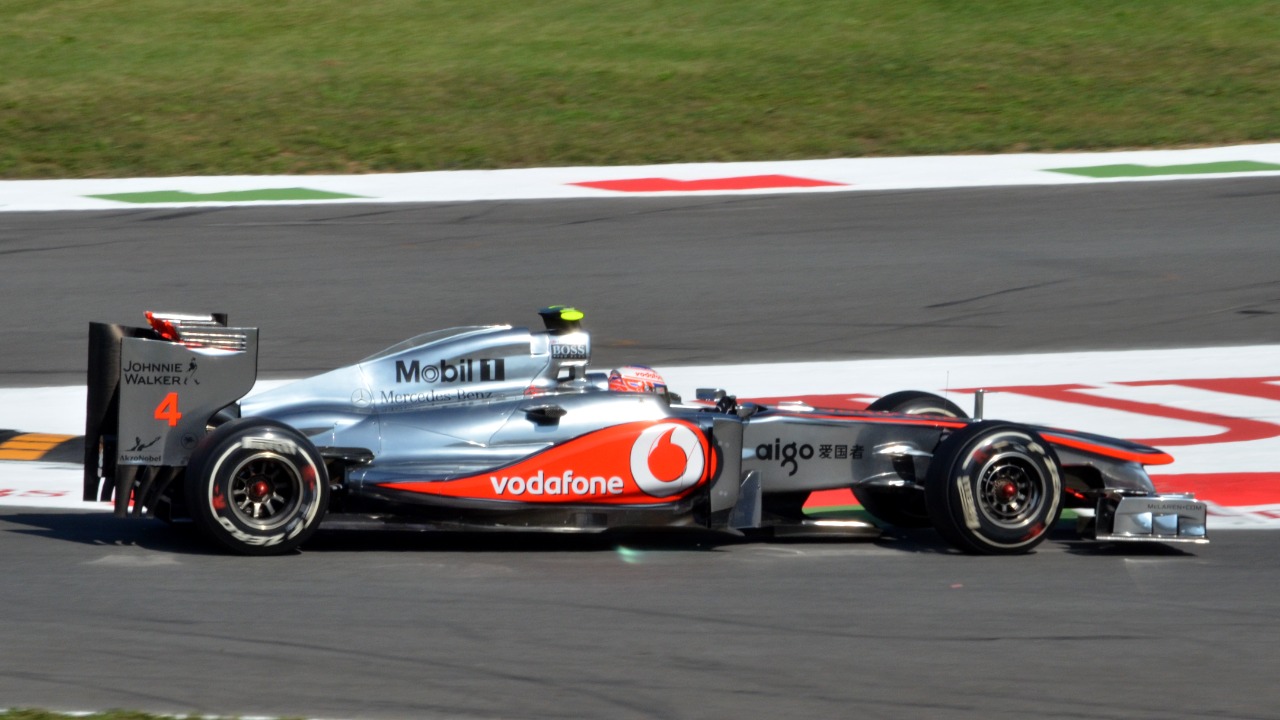
Jenson Button built a Formula 1 title not on wild aggression but on a style so fluid it often looked deceptively slow. His 2009 championship season showed how a driver who caresses the car rather than wrestles it can turn mechanical advantage into an unanswerable campaign over a long year.
By leaning on smooth inputs, meticulous tyre care and a deep feel for changing grip, Button converted a fast but fragile opportunity into a world title. His approach, often contrasted with more visibly spectacular rivals, proved that in modern grand prix racing, efficiency and restraint can be the sharpest weapons of all.
The two driving styles that defined Button’s approach
At the heart of Button’s success was a conscious choice between what Apr describes as the two archetypes of Formula 1 driving: the visibly aggressive racer and the calm, almost minimalist operator. In that framework, Drivers are often split into those who attack the car with sharp steering and heavy braking, and those who prioritise flow and balance through the corner. Button placed himself firmly in the second camp, building his reputation on a style that prioritised stability over drama and allowed him to keep the car in its ideal operating window for longer stints.
He has credited this philosophy to an emphasis on feel and timing rather than brute force, a mindset captured in analysis of Why Smooth Driving that highlights how Button attributes his smooth driving to years of refining inputs and combining that smoothness with situational aggression when the race demanded it. In that breakdown, the concept of The Two Driving Styles is not just aesthetic, it is a performance choice that shapes how a driver manages tyres, fuel and risk over a race distance, and Button’s commitment to the calmer side of that divide became the foundation of his title run.
How smooth inputs unlock grip and speed
Button’s style worked because it was rooted in how a Formula 1 car actually generates grip. Modern cars are hypersensitive to weight transfer, and the way a driver moves that weight between the four tyres determines how much traction and stability is available mid corner. Technical analysis of his technique explains how he used the throttle and brake to subtly shift the car’s balance, manipulating the grip and the load on each axle through the turn rather than shocking the chassis with sudden movements, a principle unpacked in detail in a segment from Mar that focuses on how he brings the balance forward under braking.
Another key element is how the outside tyres carry the majority of the load as the car corners, which is why abrupt steering or throttle changes can overwhelm them and trigger understeer or oversteer. In a separate technical explanation, the same Mar analysis walks through how, through a corner, the outside wheels are carrying much more load and why a driver who feeds in steering and power progressively can keep those tyres within their optimal slip angle, a concept that mirrors Button’s trademark gentleness on turn-in and exit, as explored in outside wheels. By smoothing every phase of the corner, Button effectively widened the car’s performance envelope, which allowed him to be fast without appearing to be on the ragged edge.
Tire preservation and the hidden gains of Smooth technique
Where Button’s smoothness really paid off was in tyre life, a decisive factor in the refuelling and high-degradation era that framed his championship. Instead of leaning on peak grip for a handful of laps, he stretched performance across entire stints, often turning races into exercises in patience and consistency. The Smooth approach to inputs, with gentle transitions on steering, throttle and brake, reduced the scrubbing and overheating that destroy rubber, which meant Button could maintain pace while rivals slid around and chewed through their tyres.
Technical breakdowns of his method highlight that this technique also benefits tire preservation, with Smooth transitions reducing scrubbing and overheating and extending tyre life in Formula 1, where tyre degradation often dictates strategy, a point captured in analysis of his technique. By keeping his tyres alive longer, Button could run flexible strategies, defend track position without falling off a performance cliff and attack late in stints when others were forced to back off, turning tyre management into a quiet but decisive advantage.
The Brawn GP double diffuser and why Button still had to deliver
Any discussion of Button’s title has to acknowledge the machinery under him. The Brawn GP BGP 001 arrived at the start of 2009 with a controversial aerodynamic innovation, the double diffuser, that transformed it from a survival project into the class of the field. The car, fitted with a novel “double diffuser” design, stunned the paddock by being instantly competitive, and Button, who had endured years in uncompetitive machinery, suddenly found himself in a car perfectly suited to the BGP 001 car, a leap in fortune captured in the account of the double diffuser. Much of the criticism of that season was not levelled at Button personally but at his Brawn GP team, with rivals arguing that the Double Diffuser Row handed them such a head start that others needed most of a season to catch up.
Yet even those sceptical of Brawn’s advantage concede that the driver still had to execute. Contemporary analysis notes that, whatever people may have to say about the advantage that the diffuser gave Brawn over its rivals, Button still had to translate that into poles, wins and a consistent points haul against team-mate Rubens Barrichello and even Lewis Hamilton at McLaren, a reality underlined in assessments of how Whatever Brawn achieved with the car. Earlier in the season, much of the criticism of the 2009 F1 campaign was focused on the idea that Button’s early run of wins owed everything to that diffuser and that rivals simply needed a season to catch up, a narrative captured in the discussion of how Much of the debate revolved around the legality and impact of the device. Button’s smooth style mattered because it allowed him to exploit that early advantage without mistakes, banking points while the rest of the grid scrambled to respond.
Consistency, feel and the art of staying out of trouble
Button’s team-mate Rubens Barrichello offered perhaps the clearest insight into why this style worked so well over a season. He described Button as having “a great feeling for what the car is doing”, linking that sensitivity directly to the benefits of being a smooth driver. In Barrichello’s view, a smooth driver has a good feeling for the car and can sense the limit earlier, which makes it easier to avoid the kind of small errors that can ruin a race, an assessment preserved in the description of how Barrichello saw Button’s strengths.
That feel translated into a remarkable ability to stay out of trouble in a season when the margins were brutally fine. In a campaign where a missed braking point or a wheel marginally out of line just once during a 192-mile race could prove extremely costly, Button’s mixture of speed and restraint allowed him to avoid the kind of lock-ups and off-track excursions that cost rivals dearly, a dynamic captured in contemporary analysis of that 192-mile pressure cooker. Over the course of the year, that consistency became as valuable as outright pace, especially once Brawn’s early advantage narrowed and the title fight turned into a test of who could extract clean, points-scoring drives from imperfect weekends.
Why Button’s smoothness still resonates in modern F1
Button’s style has become a reference point for a new generation of drivers and fans trying to understand why the fastest laps often look the least spectacular. Modern coaching material on Why Smooth Driving is Key to Motorsport Success uses his technique as a case study, explaining how Apr’s breakdown of The Two Driving Styles shows that Drivers who prioritise smoothness can carry more speed through corners with less tyre wear, a combination that remains central to today’s high-degradation races, as explored in the analysis of how this approach delivers a decisive advantage. The lesson is that elegance behind the wheel is not a cosmetic choice, it is a performance tool that can decide championships when the margins are tight.
That influence is visible even in modern social breakdowns of his technique, where creators dissect how Jensen Button had one of the smoothest driving styles in F1, building speed by edging up to the limit very gradually rather than snapping at it, a point made explicit in the short-form analysis of Jenson Button Driving Style Explained. For younger drivers coming through karting and junior formulas, Button’s 2009 season stands as a template for how to turn a fast car into a title: understand the tyres, respect the physics, and trust that the smoothest line, not the wildest, is often the quickest way to a world championship.
The lasting value of a seemingly gentle champion
Looking back, what made Button’s title distinctive was not just the Brawn GP fairy tale but the way his personality and technique aligned with the demands of that era. He was not the most aggressive overtaker on the grid, nor the most flamboyant qualifier, yet his calm, measured approach under pressure allowed him to convert early-season dominance into a sustainable campaign even as rivals closed the gap. That blend of patience and precision is why his championship is still dissected in coaching materials and technical videos rather than dismissed as a quirk of regulations.
For all the focus on raw speed, Button’s story underlines a quieter truth about elite motorsport: championships are often won by the driver who wastes the least, not the one who attacks the most. By treating the car gently, reading the tyres and trusting in the science of smooth inputs, he turned what looked like a soft-touch style into a hard-edged competitive weapon, and in doing so, he gave Formula 1 one of its clearest demonstrations that smooth really can be fast enough to deliver a world title.