A federal judge has concluded that President Donald Trump and his administration overstepped their authority by freezing billions of dollars that Congress had already committed to building a national network of electric vehicle chargers. The ruling sharply rebukes the White House and The Department of Transportation, finding that officials could not simply pause a signature Biden-era infrastructure program because they disagreed with its goals. It also restores a key pillar of the federal push to expand charging access, particularly along highways and in communities that private investors have been slow to reach.
By declaring that the administration defied Congress when it halted the EV charger funds, the court has turned a technical fight over administrative law into a broader test of separation of powers. States, automakers, and charging companies now have fresh clarity that the $5 billion program remains in force, even as the Trump team signals it will keep looking for ways to slow or redirect federal climate spending.
The judge’s ruling and why it matters
The legal clash centered on the National Electric Veh charging initiative, a roughly $5 billion program that Congress approved to help states install fast chargers along major corridors and in underserved areas. Shortly after Transportation Secretary Sean Duffy took office in February, the DOT suspended the National Electric Veh effort and related EV charger infrastructure funding, effectively freezing grants that states had already begun to plan around. U.S. District Judge Tana Lin later found that the Trump administration’s halt of the $5 billion in EV charger funds was unlawful, concluding that the DOT had no authority to unilaterally shelve a program that Congress had explicitly funded and directed.
Judge Tana Lin’s order permanently bars the administration and the DOT from tampering with or pausing the EV charging money unless they follow established administrative law. Her decision states that the Department of Transportation violated the law when it paused funding for the $5 billion Biden-era program, which had been designed to accelerate public charging networks nationwide. By ruling that Trump’s DOT illegally froze $5B in EV charger funds, the court underscored that agencies cannot simply ignore statutory mandates because a new president wants a different policy direction.
Congressional intent versus executive power
At the heart of the dispute is a basic constitutional question: who gets to decide whether a funded program lives or dies. Congress had already approved and appropriated the EV charging funds, instructing the DOT to work with States to deploy chargers along designated routes. When the Trump administration moved to suspend the EV charger infrastructure program, Judge Tana Lin concluded that the executive branch had effectively tried to rewrite that legislative decision on its own. The judge said the administration unlawfully suspended EV charger funding that Congress had authorized, and that such a move defied the separation of powers.
The ruling stresses that once Congress has spoken clearly, agencies must either carry out the law or use formal rulemaking processes to change course, rather than relying on abrupt internal guidance. Lin’s order notes that the DOT did not follow established administrative law as required when it froze the program, and that the Department of Transportation could not sidestep those procedures simply by issuing new guidance. By siding with the States that challenged the freeze, the court affirmed that Congress, not the president, controls the purse strings, and that even a powerful cabinet department like the DOT must respect those limits when it handles EV charging money.
States, Maryland, and the coalition that pushed back
The lawsuit that produced the ruling was led by Maryland, which argued that the funding freeze threatened its plans to expand charging access along key corridors and in disadvantaged communities. Maryland and 19 other States contended that the Trump administration’s suspension of EV charger funding would derail projects already in the pipeline and undermine their climate and transportation strategies. The judge sided with Maryland over the Trump administration’s suspension of the EV charger program, agreeing that the sudden halt violated both the statutory framework and the expectations that Congress had created when it approved the money.
For the States, the stakes were not abstract. Many had already mapped out where to place chargers to support drivers of vehicles like the Ford F-150 Lightning, Chevrolet Blazer EV, and Hyundai Ioniq 5, and had begun coordinating with utilities and private operators. The court’s decision means States can resume planning and construction backed by the federal program, rather than scrambling to fill a multibillion-dollar gap. By ruling that the Trump administration illegally suspended EV charging funds approved by Congress, the judge gave governors and transportation departments renewed certainty that the federal government will honor its commitments.
Implications for EV drivers, automakers, and the charging industry
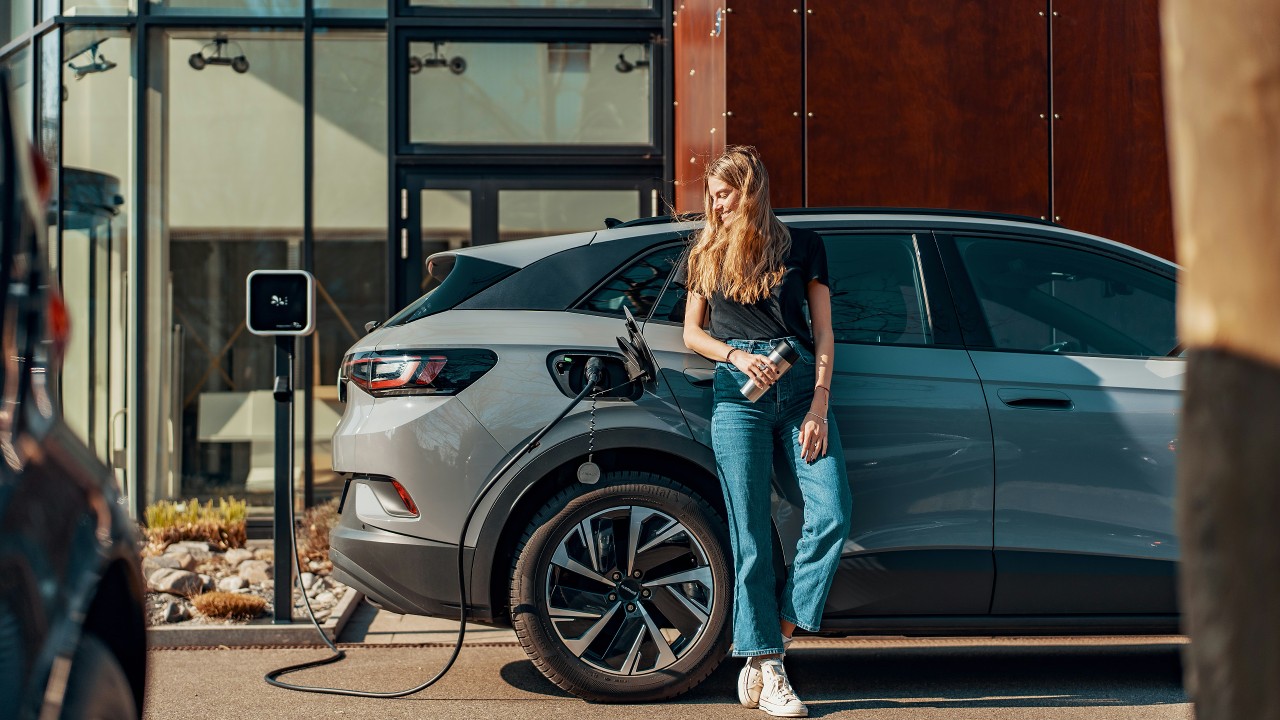
For drivers, the ruling could help ease one of the biggest anxieties around electric vehicles: whether there will be a reliable charger when they need one. The $5 billion program is aimed at building out fast-charging corridors so that owners of models such as the Tesla Model 3, Nissan Ariya, or Kia EV6 can travel long distances without elaborate planning. By forbidding the Trump administration from tampering with EV-charging money, the court effectively keeps that buildout on track, which is critical for drivers in rural regions and along interstate routes where private investment has lagged.
Automakers and charging companies also gain a clearer signal that federal support for infrastructure will not vanish overnight with a change in administration. The judge’s order, which permanently bars the Trump administration from unlawfully suspending the EV charger program, reassures companies that have been weighing whether to invest in new hardware, software, and service networks. For firms that operate public chargers or integrate them into navigation apps like PlugShare and ChargePoint, the decision reduces regulatory uncertainty and supports long term planning. It also reinforces the broader federal strategy, launched under Biden, to use public funds to catalyze private investment in EV charging networks nationwide.
A broader test for Biden-era climate programs
Although the case focused on EV chargers, the reasoning has implications for other Biden-era climate and infrastructure initiatives that the Trump administration has tried to slow or reshape. Earlier this year, a judge temporarily blocked the Trump administration from freezing 10 billion dollar in federal funding meant to help low-income communities, signaling judicial skepticism toward sweeping funding pauses that bypass formal rulemaking. The EV charger decision builds on that pattern, indicating that courts are prepared to scrutinize efforts to halt or redirect large sums that Congress has already dedicated to specific purposes.
The ruling also sends a message to future administrations of either party that aggressive attempts to dismantle a predecessor’s agenda must still operate within the guardrails of administrative law. By finding that the Trump administration unlawfully suspended the EV charger infrastructure program and that The Department of Transportation violated the law when it paused funding for the $5 billion Biden-era program, Judge Tana Lin effectively warned that shortcuts will not survive in court. For climate policy, that means programs like the EV charging network, which are central to reducing transportation emissions and supporting cleaner vehicles, are more likely to endure beyond a single presidential term, unless Congress itself decides to change course.
More from Fast Lane Only