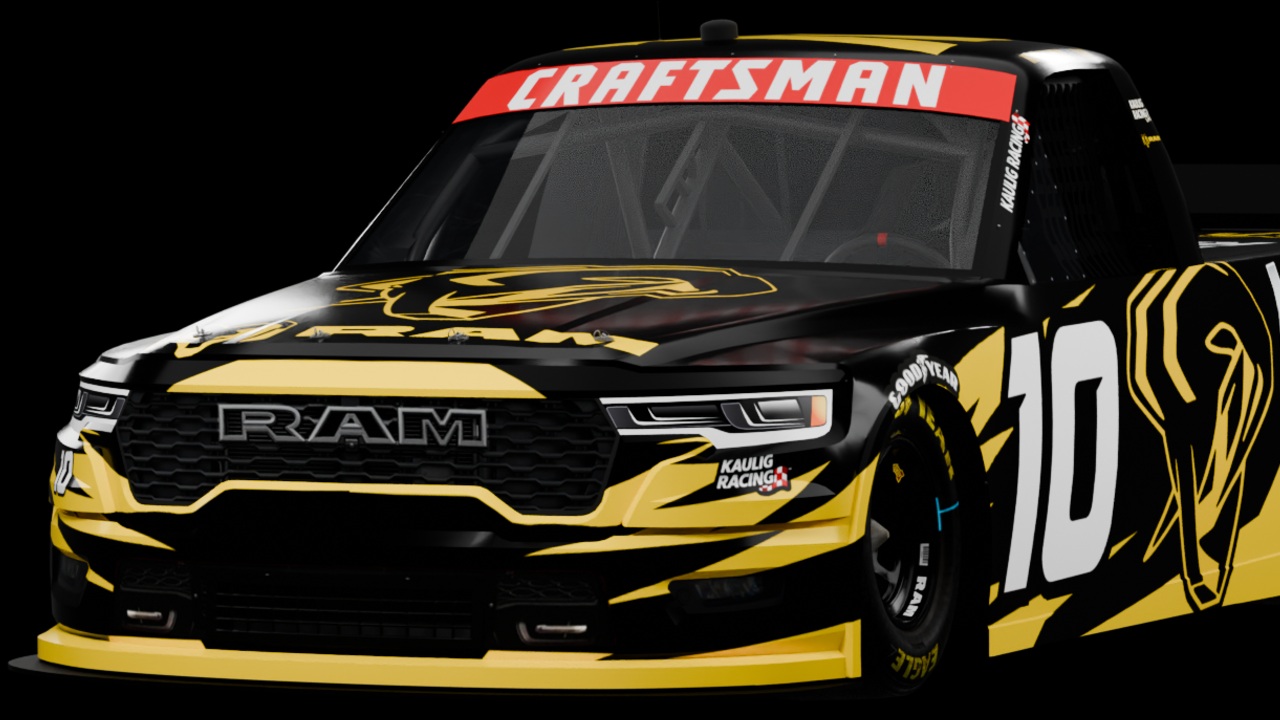
Kaulig Racing has put its stamp on the NASCAR Craftsman Truck Series before turning a single competitive lap, unveiling a five-truck Ram program backed by an experienced and carefully matched crew chief roster. The organization has not finalized every driver, but the technical leadership is already in place, signaling how seriously Kaulig intends to treat its first full-scale foray into the series.
By pairing proven Cup and ARCA winners with rising engineering voices, the team has built a structure designed to accelerate its learning curve while still chasing immediate results. The choices behind the pit box are as revealing as any driver announcement, offering an early look at how Kaulig plans to translate its Cup and Xfinity ambitions into a sustainable Truck operation.
Building a five-truck Ram foundation
The decision to launch with five Ram entries rather than easing in with a smaller fleet reflects a bold, volume-driven strategy. Kaulig Racing is effectively creating its own mini ecosystem inside the Truck Series, with multiple data streams, shared simulation work, and parallel development paths that can shorten the time it takes to become competitive. Committing to five trucks also signals confidence in the technical alliance with Ram and in the organization’s ability to scale its personnel and infrastructure quickly.
That scale is not theoretical. Reporting on the program confirms that Kaulig and Ram have jointly announced a full crew chief lineup for the five-truck effort, locking in leadership on the pit box even as some driver seats remain fluid. The team has also publicized that these trucks will operate as a cohesive unit rather than as isolated entries, with the crew chiefs expected to collaborate closely on setups and race strategy across the Ram stable.
Veteran leadership at the top of the pit box
At the heart of the new structure is a clear bet on veteran experience to anchor the program. One of the most notable names is Stillman, a crew chief whose résumé stretches back to his NASCAR National Series debut with Ricky Rudd in the Cup Series in 1999. Stillman is described as a five-time race winner at the national level, and that combination of longevity and success gives Kaulig a stabilizing presence who has already navigated multiple rule packages, manufacturer changes, and competitive cycles.
Placing a figure like Stillman in the Truck lineup does more than add a recognizable name. It gives younger engineers and crew chiefs a mentor who has managed pressure situations at the sport’s highest level, from fuel-mileage gambles to late-race restart calls. His background in the Cup Series, where strategy windows are often narrower and the competition deeper, should translate into a more disciplined approach to race management for the Ram trucks, particularly on intermediate tracks where small decisions compound over long green-flag runs.
Strategic pairings with rising drivers
Kaulig’s approach is not simply to stack veterans; it is to pair them with drivers whose trajectories match their strengths. A prime example is the alignment of Eddie Pardue with reigning ARCA Menards Series champion Brenden Queen in the No. 12 truck. Pardue brings a deep well of experience, having worked 33 Cup races and 384 national series events, and that volume of race-day decision making is a significant asset for a driver stepping into a full-time Truck role after success in ARCA.
For Queen, who arrives with the confidence of a recent championship, the partnership offers a bridge between developmental dominance and the week-to-week grind of a national touring series. The ARCA Menards Series rewards raw speed and adaptability, but the Truck Series layers in more complex pit strategies, traffic management, and playoff pressure. With Pardue on the box, Queen gains a crew chief who has already navigated those dynamics across hundreds of starts, which should help convert ARCA pace into consistent Truck finishes rather than sporadic flashes.
Balancing known quantities and “free agent” flexibility
While some pairings are locked in, Kaulig has also left room for flexibility through what it has described as a “Free Agent Program” truck. This entry is structured to rotate drivers while maintaining a consistent crew chief, allowing the team to evaluate talent in live race conditions without sacrificing continuity on the technical side. For a new Truck operation, that model serves two purposes: it creates a rolling audition platform and it ensures that the crew chief can build a robust notebook on how different driving styles respond to the same baseline setups.
The presence of a dedicated “Free Agent Program” truck also reflects Kaulig’s broader talent strategy. Rather than committing every seat long term, the organization can bring in prospects from ARCA, late models, or even part-time Cup and Xfinity drivers looking for additional seat time. With an experienced crew chief overseeing that rotation, the team can compare data across multiple drivers in a controlled environment, which should sharpen its understanding of where performance gains are coming from, the truck itself or the person behind the wheel.
Positioning within the Truck Series landscape
Context matters for any new entrant, and Kaulig’s timing places its Ram program in a Truck Series field that is both deep and in transition. Established powerhouses remain, but there is also a wave of younger organizations and manufacturer realignments that have reshaped the competitive order. By arriving with five trucks and a crew chief roster that blends Cup-tested veterans like Stillman with high-mileage leaders such as Eddie Pardue, Kaulig is signaling that it intends to compete with the front-runners rather than accept a slow build at the back of the grid.
The organization’s public confirmation that it has already set its crew chief lineup, even before revealing every driver, underscores that philosophy. In the modern NASCAR ecosystem, where simulation, data sharing, and organizational depth often separate contenders from midfield teams, Kaulig is betting that getting the leadership structure right from day one is the surest way to make its Ram trucks relevant in the points race. If the pairings with drivers like Brenden Queen deliver as intended, the five-truck assault could quickly shift from an ambitious experiment to a permanent pillar of the Truck Series paddock.
More from Fast Lane Only