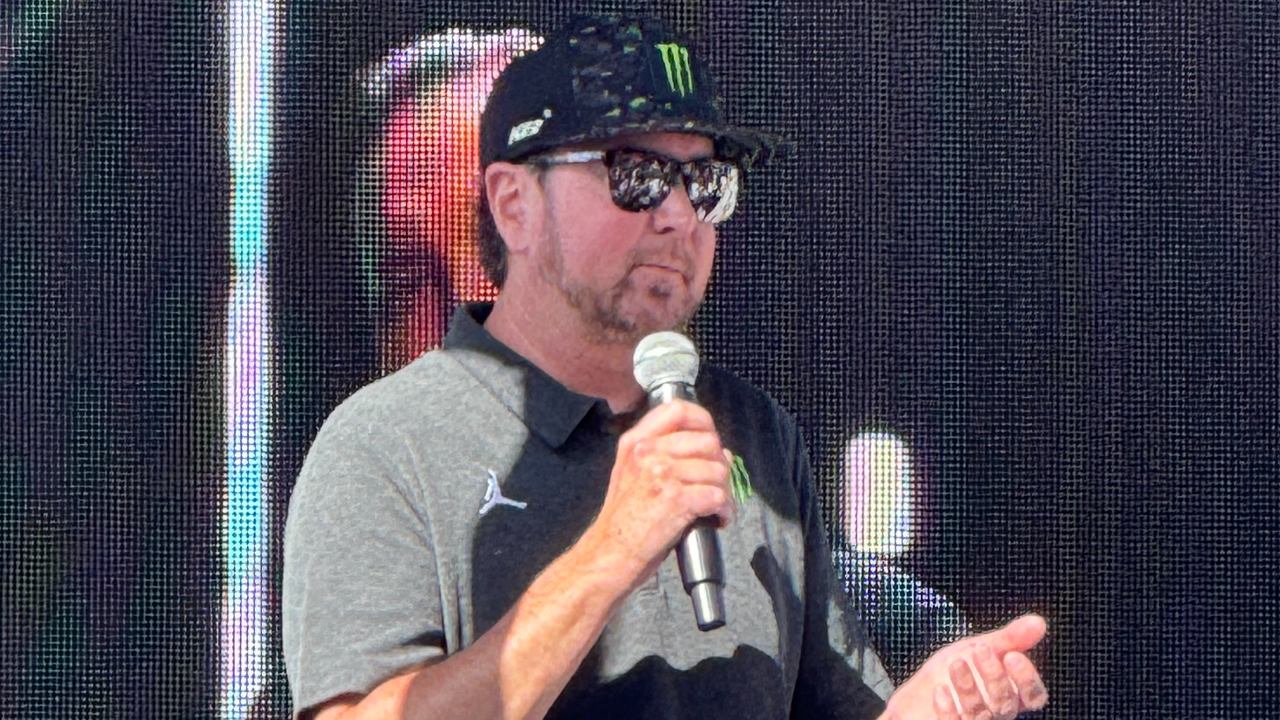
Kyle Busch has never been shy about speaking his mind, but his reaction to Kurt Busch’s NASCAR Hall of Fame selection carried a different weight. Instead of a quick congratulatory note, the younger Busch offered a candid, emotional assessment of what the honor means for his brother and for a family that has spent decades inside the sport’s pressure cooker. His comments peeled back the competitive veneer and revealed how deeply he believes Kurt’s career belongs among stock car racing’s immortals.
The Hall of Fame nod for Kurt Busch, part of the Class of 2026, arrives at a moment when both brothers are far enough removed from their peak title battles to see the bigger picture. Kyle’s blunt pride, mixed with a sense that this recognition was overdue, underscores how the Busch legacy has shifted from raw rivalry to shared respect. It is a rare glimpse of vulnerability from a driver more often defined by intensity than sentiment.
Kyle Busch’s unfiltered pride in Kurt’s milestone
When Kyle Busch addressed Kurt Busch’s Hall of Fame selection, he did not couch his reaction in corporate language or generic praise. He framed the induction as an “incredible achievement” and made clear that he “couldn’t be prouder” of his older brother, a choice of words that signaled genuine admiration rather than obligation. For a driver whose public persona is often clipped and guarded, the tone of his message stood out as unusually open and heartfelt.
That emotional edge reflected how Kyle views the scale of Kurt’s career. By emphasizing the magnitude of being inducted into the NASCAR Hall of Fame, he placed Kurt’s body of work alongside the sport’s most revered names, not simply as a statistical match but as a competitor whose presence shaped eras. His statement framed the honor as the natural culmination of years of relentless work, reinforcing that, in his eyes, the Hall did not elevate Kurt so much as finally acknowledge where he already belonged.
Why Kurt Busch’s résumé made the Hall inevitable
Kyle Busch’s confidence that Kurt would eventually be enshrined rests on a résumé that checks nearly every box the Hall of Fame typically demands. Kurt Busch is one of the rare drivers to win at the highest level across a wide range of tracks and eras, adapting to different generations of cars while remaining a weekly threat. That versatility, combined with a championship pedigree, made his induction feel less like a surprise and more like the formal confirmation of a career that had long met the Hall’s standard.
Reporting on the selection has underscored that point by noting how Kurt’s victories span short tracks, intermediates, and superspeedways, a breadth that separates him from drivers whose success was concentrated in one niche. The framing that “for Busch, the induction was to come sooner or later” captures the prevailing sentiment that his record made the Hall of Fame an eventuality rather than a debate. Kyle’s blunt endorsement simply echoed what many inside the garage had already concluded: Kurt’s numbers and longevity left little room for doubt.
The Class of 2026 and Kurt’s place within it
Kurt Busch will enter the NASCAR Hall of Fame as part of the Class of 2026, a group that also includes Ray Hendrick and Harry Gant. The trio was named together, a decision that links Kurt’s modern-era accomplishments with Hendrick’s storied short-track dominance and Gant’s late-career surge that turned him into a fan favorite. By pairing these three, the Hall has constructed a class that spans generations and styles, from weekly bullrings to the brightest Cup Series stages.
The Hall has scheduled the Class of 2026 Induction Ceremony for January 23, 2026, a date that will formally cement Kurt Busch, Ray Hendrick and Harry Gant in the institution’s history. The official Hall of Fame materials present the group as a cohesive class, while additional reporting highlights how Gant and Busch are viewed as elite competitors in the Cup Series and how Hendrick’s long career in Virginia anchored his reputation. Within that mix, Kurt stands as the contemporary standard-bearer, the driver whose career many current fans watched unfold in real time, which adds emotional resonance to Kyle’s reaction.
A family rivalry that evolved into shared legacy
For much of their overlapping careers, Kyle and Kurt Busch were defined as much by their rivalry as by their shared last name. They battled for wins, clashed on track, and often carried themselves as independent forces rather than a unified front. Kyle’s recent comments about Kurt’s Hall of Fame nod reveal how that dynamic has softened with time, as the younger brother now speaks less like a rival and more like a historian of Kurt’s journey, acknowledging the grind and growth that led to this moment.
That shift is evident in the way Kyle framed Kurt’s induction as the product of sustained excellence rather than isolated flashes of brilliance. By stressing how proud he is of Kurt’s “incredible achievement,” Kyle implicitly recognizes the years of reinvention that kept his brother relevant through changing rules, teams, and competitive landscapes. The Hall of Fame’s decision to place Kurt alongside figures such as Harry Gant and Ray Hendrick reinforces that narrative of endurance, grouping him with drivers whose careers were defined by persistence as much as peak performance.
What Kurt’s induction means for the modern NASCAR Hall of Fame
Kurt Busch’s entry into the Hall of Fame also signals how the institution is gradually shifting its center of gravity toward the modern era. Earlier classes were dominated by pioneers and foundational figures, but the inclusion of a driver whose prime unfolded in the 2000s and 2010s shows that contemporary careers are now being weighed against the sport’s full historical arc. Kyle Busch’s forthright praise underscores that transition, as he speaks from the vantage point of an active star watching his own generation begin to cross the Hall’s threshold.
The composition of the Class of 2026 illustrates that balance. By honoring Kurt Busch alongside Harry Gant and Ray Hendrick, the Hall of Fame is blending different eras and disciplines, from Cup Series championships to regional short-track dominance. The official Hall materials that list Kurt Busch, Harry Gant and Ray Hendri as central figures in the weekend’s events, combined with reporting that details how Gant and Busch are considered elite Cup competitors while Hendrick built a decades-long career in Virginia, show an institution intent on telling a broad story. Within that narrative, Kyle’s candid reaction functions as a bridge, connecting the emotional reality of a younger brother’s pride with the formal recognition of a sport that has finally placed Kurt among its legends.
More from Fast Lane Only