Buying a car that someone else modified always comes with a little mystery. This time, the car was a 2015 Dodge Charger SXT with a Hemi V8 swapped in where the V6 used to be. It cost just $2,000, and its new owner did not believe it had ever run since the swap.
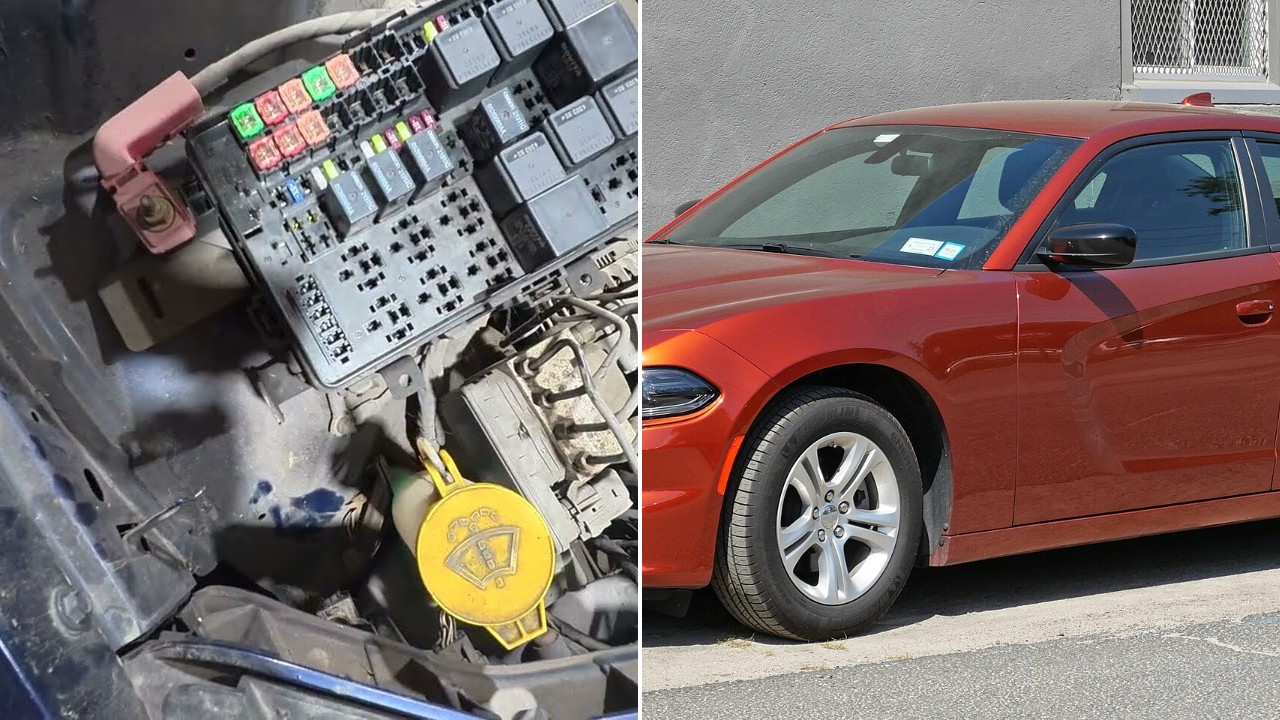
The man behind @AutoAuctionRebuilds had suspected the starter in an earlier episode. So this time, he set out to replace it and finally hear the engine. Instead, he found a much stranger problem hiding in the relay box.
A New Starter And A Short-Lived Start
First, he swapped the starter, which he believes came from O’Reilly Auto Parts for roughly $130. In fact, he calls it the easiest starter he has ever changed, at about 10 minutes out and 10 minutes back in.
Then came the moment of truth. The Charger fired up for the first time on camera, and he could not hide his excitement. However, the celebration did not last. The engine ran for about a second and died, again and again.
“It just coughs and then it dies.”
Looking at the old starter, he found its wire burned to a crisp. His theory is that someone finished the swap, could not get it to run, and kept cranking until they cooked the starter.
Chasing A Shutdown Relay Code
Because it started at all, he knew the car had fuel, spark and air. So he suspected a security or theft-deterrent problem at first. He also noticed modules from different model years, including one he says came from a 2020 car.
Next, a scan tool showed a code for the automatic shutdown relay, the part that powers much of what sits under the hood. When he tested it, the relay clicked on and off instead of staying on. Swapping in a matching relay from another slot changed nothing, and the fuses tested fine.
The Relays That Were Never Relays
Finally, he pulled up the relay diagram to jump the circuit by hand. While reading the part number, he noticed the label said LED, two to six bulbs, trailering. The parts in the shutdown relay slot and the radiator fan slot were turn signal flasher relays.
“Those aren’t relays. Those are flasher relays.”
As he explains, a flasher relay switches power on and off on purpose to blink a turn signal. So the engine could never stay running, and the cooling fan would never work either. Using spare relays already in the box, he swapped the right parts into both slots and cleared the codes.
This time, the Hemi started and kept running. He calls it one of the dumber things he has ever seen.
“Turn signal flasher relays being used to power a cooling fan and the entire engine.”
What Buyers Of Swapped Cars Can Learn
Here is our take for anyone eyeing a cheap engine-swap project:
- Check the basics first. Fuses and relays cost little, and the wrong part can stop an engine cold.
- Read part numbers and labels. Two relays can look the same and do very different jobs.
- Ask what the last owner changed, including modules from other model years.
- Budget for wiring and electronics, not just the engine and transmission.
- Make sure the paperwork is clean before you spend money on a swapped car.
Where The Charger Stands Now
After the fix, he took it for a short drive around the block. The air conditioning blew cold, the windows worked and it shifted fine. Still, the tachometer and backup camera did not work, and the headlights pointed badly. He also points out that it keeps the V6 rear differential and exhaust.
“What I’m so happy about right now is we fixed it for free.”
Even so, he calls the Charger junk as a car and says it might serve as a donor for a wrecked car he wants from an insurance auction. He also says the parts in it may come from a stolen car, so he wants the highway patrol to inspect it. No outcome on that was known when the video ended.
More from Fast Lane Only