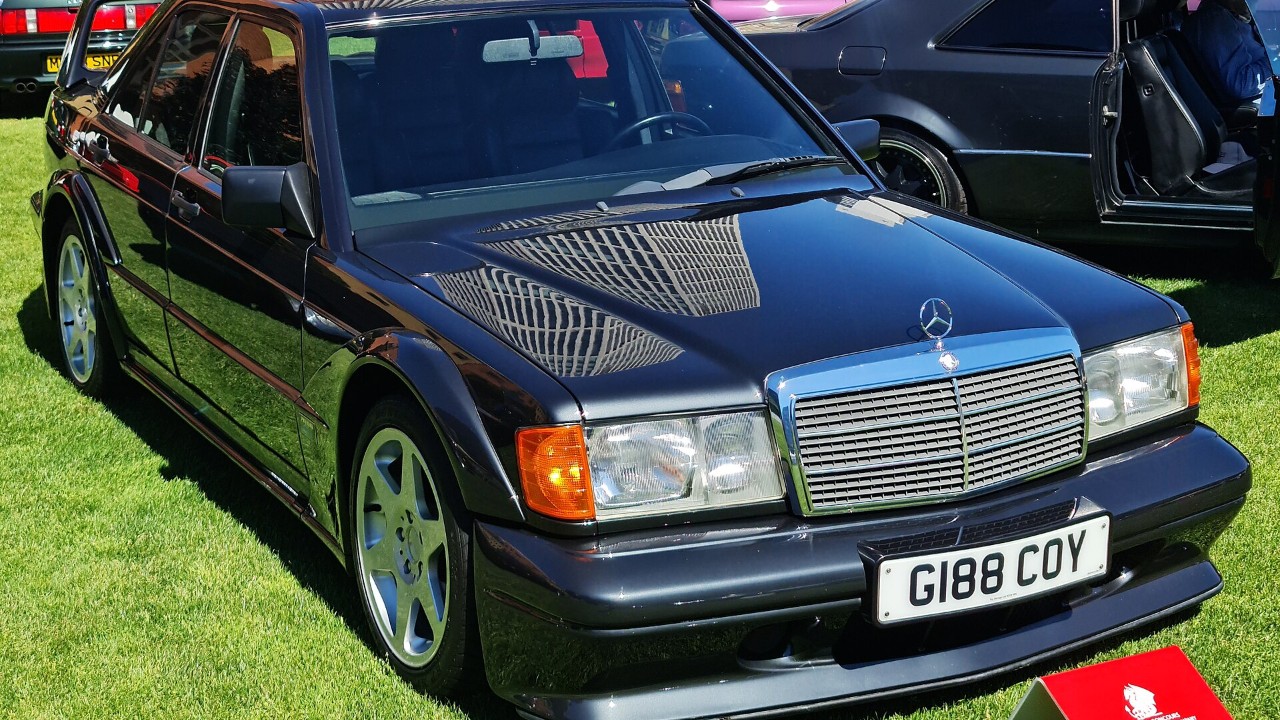
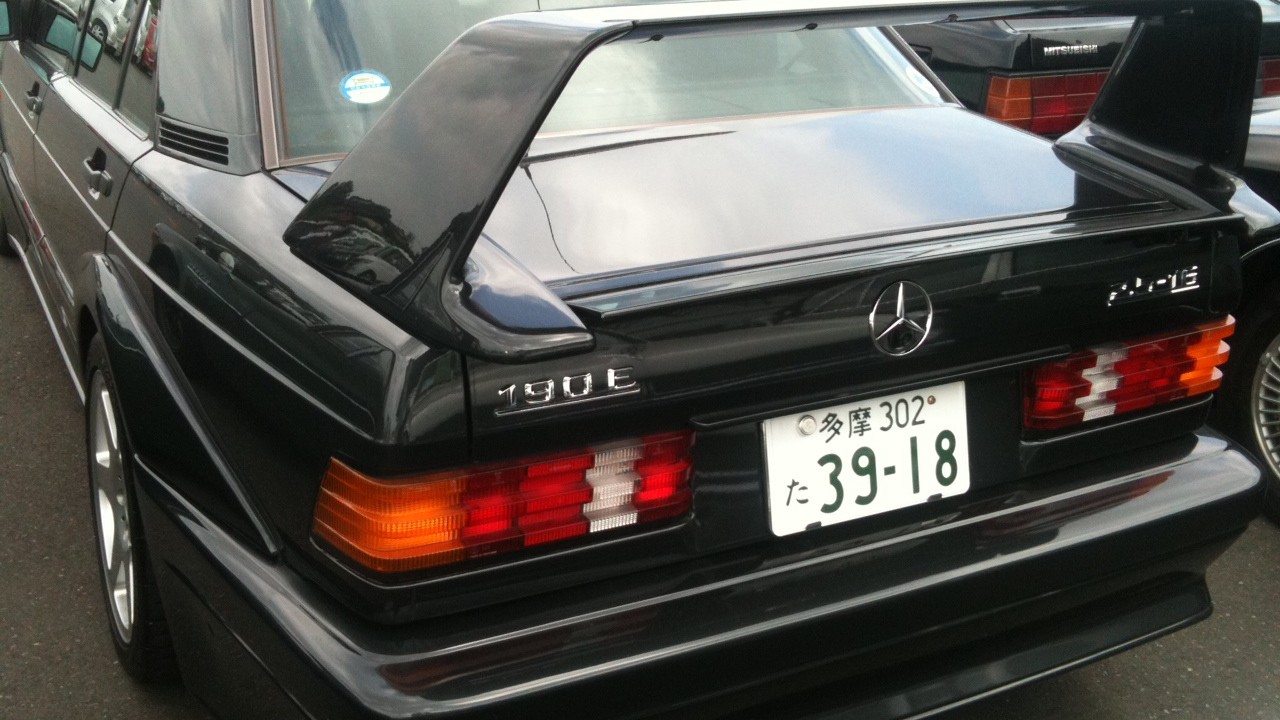
The giant rear wing on the Mercedes-Benz 190 E 2.5-16 Evolution II was there because a racing rulebook said so. The German touring car championship, the DTM, required road versions of any race car it allowed. So Mercedes built 502 street cars, wing and all.
The result looked nothing like the sensible compact sedan it came from. It had flared fenders, deep aprons and a box-shaped wing on the trunk. It also cost more than three times as much as a 190 E 1.8.
Here is how a homologation rule put a wind-tunnel wing on the compact 190 E, and what Mercedes got for it on the track.
The rule behind the 190 E Evolution II
Homologation means proving a race car is based on a real production model. For the DTM, the minimum was 500 cars delivered to customers, according to Mercedes-Benz’s own history of the car. That is why the run was so small. Mercedes built about 1.9 million 201-series sedans, but only 502 Evo IIs.
The rule went further than the body shell. Any aero devices or performance parts on the race car also had to appear on the road car, the Audrain Automobile Museum explains. In other words, if Mercedes wanted the wing on the track, customers had to get it too.
The 190 E Evolution II followed an earlier step. In 1989, Mercedes built the 190 E 2.5-16 Evolution, also in small numbers. Mercedes says that car’s drivetrain was the basis for the Evo II. Even so, the company traces the Evo II engine back to the 190 E 2.3-16 of 1984.
A wing from the wind tunnel
The Evo II debuted at the Geneva Motor Show, held March 8 to 18, 1990. Its rear wing was not a styling exercise, though. Mercedes engineer Rüdiger Faul developed it with Professor Richard Läpple of the Stuttgart University of Technology, according to Mercedes.
The front spoiler was adjustable as well. Meanwhile, wide fender flares covered 17-inch alloy wheels, which some fans nicknamed “Roman chariot” wheels. Mercedes-Benz Classic text, published by Sports Car Digest, also notes a partly covered rear window for better airflow.
Underneath, the Evo II used hydraulic, height-adjustable suspension. As a result, the car could sit lower to fill those big arches. The Audrain museum calls that self-leveling system the car’s most advanced change over the standard 2.5-16.
What the road car could do
Power came from a 2.5-liter, 16-valve four-cylinder, part of the M 102 engine family. Mercedes rates it at 173 kW, or 235 PS. The Audrain museum lists the same output as 232 hp at 7,200 rpm, along with 181 lb-ft of torque.
Mercedes capped the top speed at 250 km/h, about 155 mph. The engine used a shorter stroke to rev higher, according to Mercedes-Benz Classic. Also, the road car came with a five-speed manual, the Audrain museum notes.
Mercedes-Benz Classic says each car was finished in blue-black metallic and individually numbered. The Audrain museum, however, says two of the 502 were finished in silver. Price started at DM 115,259.70, according to Mercedes.
How the Evo II raced
The racing 190 E Evolution II made its DTM debut at the Nürburgring Nordschleife on June 16, 1990. Then Kurt Thiim scored its first win at Diepholz on August 5, 1990. Later that year, Roland Asch won an invitational race at Kyalami in South Africa on November 27.
In racing trim, the engine made well over 300 hp, and up to 373 hp in championship-winning form, according to Mercedes-Benz Classic. The Evo II also faced strong rivals, including the BMW M3 and cars from Audi, Opel and Alfa Romeo.
The big year came in 1992. Klaus Ludwig won the DTM title in an Evo II, while Thiim and Bernd Schneider finished behind him, Mercedes says. Both Mercedes and the Audrain museum record that 1992 championship.
Where to see one today
Mercedes keeps an Evo II in the Youngtimer exhibition at the Mercedes-Benz Museum in Stuttgart. In the United States, the Audrain Automobile Museum in Newport, Rhode Island, has shown a black 1990 example in its Collecting Moving Forward exhibition.
Both cars carry that tall wing, the part a rulebook put on the road. Mercedes-Benz Classic also notes the “Evolution” badges on the front wings, a small reminder of where the car came from. Mercedes built 502 of them in total, against about 1.9 million 201-series sedans.
More from Fast Lane Only
- Unboxing the WWII Jeep in a Crate
- 15 rare Chevys collectors are quietly buying
- 10 underrated V8s still worth hunting down
- Police notice this before you even roll window down
This article was created with the help of AI and was reviewed and edited by Fast Lane Only editors before publication.