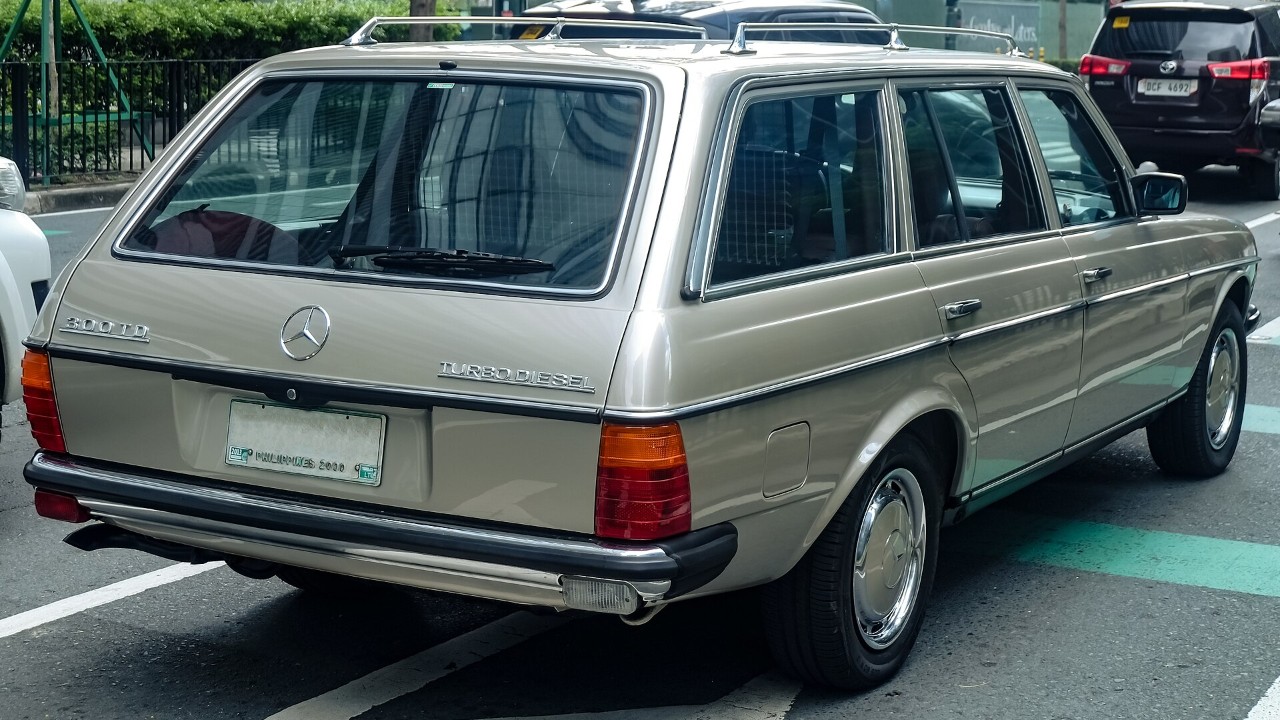
Taxi drivers across Germany once ran their W123s past 500,000 kilometers with only minor repairs, and the Mercedes-Benz 300TD estate came from that same tough family. That kind of record explains why so many old Benzes keep running decades after they left the showroom.
Not every Mercedes earned that reputation, though. Some were plush cruisers that cost a fortune to keep running. The ones that lasted tended to share a few traits: slow-revving diesels, simple engineering and owners who used them hard every day.
These are our picks for the Mercedes-Benz models that seem built to outlive their owners. The verdict on each is our opinion. However, the facts behind them come from the production records and the service histories these cars left behind.
1. Mercedes-Benz 300TD Turbodiesel (S123)
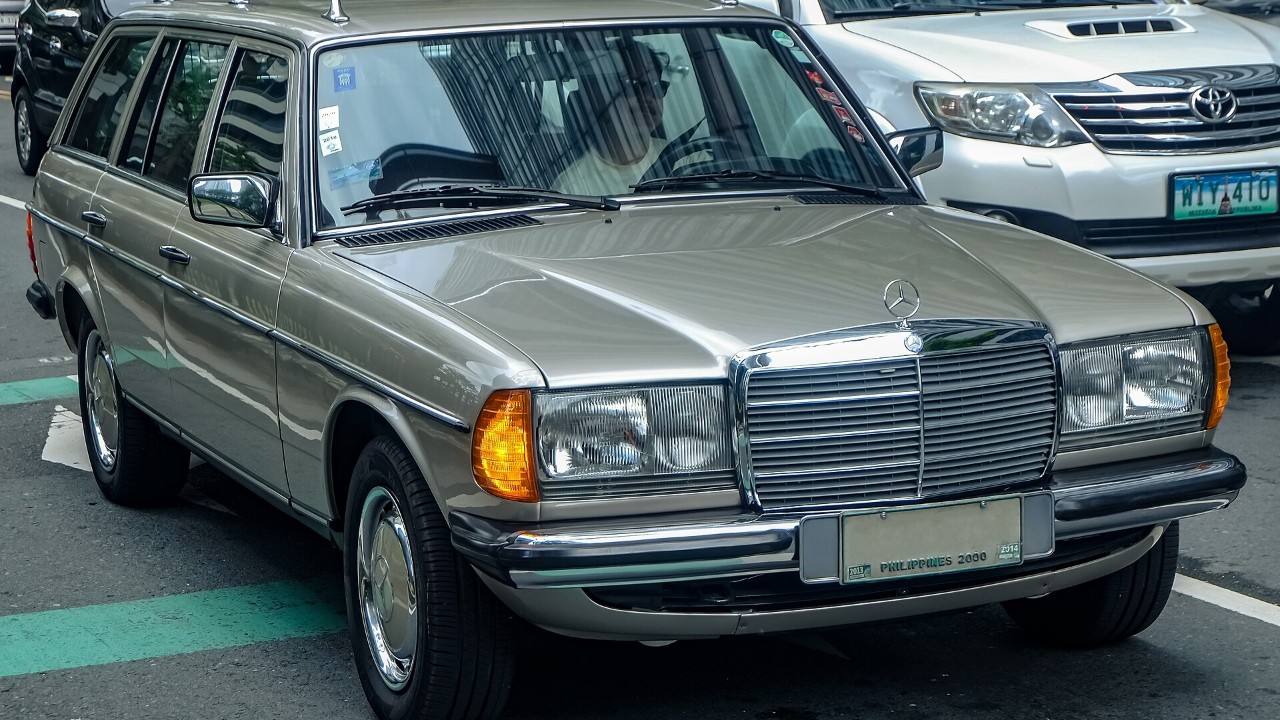
Mercedes showed its first factory-built estate at the 1977 Frankfurt motor show, and the S123 went into production at the Bremen plant in April 1978. The “T” in its name stood for Tourismus und Transport. In other words, Mercedes meant it to haul families and cargo, often at the same time.
Mercedes built 199,517 of these estates. When the wagon reached the United States in 1979, buyers got only one engine, the 3.0-liter five-cylinder OM617 diesel. Later cars added a turbocharger and wore a Turbodiesel badge. Because the whole W123 family sold nearly 2.7 million units, parts support is also strong, and Mercedes-Benz Classic now reproduces original parts for the W123.
Our take: the Mercedes-Benz 300TD is the wagon we’d pick for a road trip with no end date. It is slow and noisy by modern standards. Yet the engine thrives on steady miles, and the body was designed to carry real loads. Because the US cars came only with the diesel, almost every American S123 shares that same hardy drivetrain. That makes shopping simpler, too.
2. 1973 Mercedes-Benz 220D (W115)
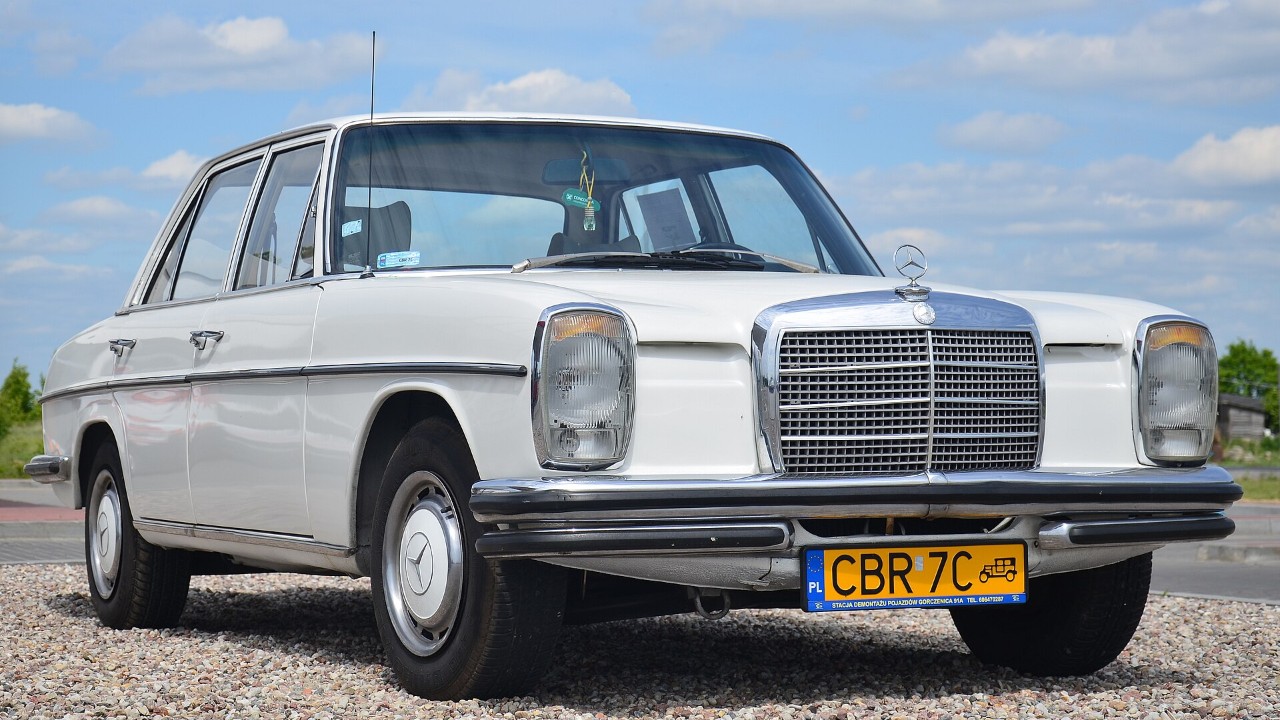
The W115 carried a “/8” on its ID plate to mark its 1968 launch, so Germans nicknamed it Strich-Acht, or “stroke eight.” Mercedes built 1,919,056 cars in the W114 and W115 family between 1968 and 1976. Among them were 345,376 examples of the 220 D sold up to August 1973.
Speed was never the point. The 220 D used a 2.2-liter four-cylinder diesel rated at 60 PS, and a manual car needed 28.1 seconds to reach 100 km/h. Even so, the family’s toughest record belongs to a close sibling. In Thessaloniki, Greek taxi driver Grigorios Sahinidis drove his 1976 240D more than 4.6 million kilometers. Then, in 2004, he handed the car to the Mercedes museum in Stuttgart and received a new C200 CDI in return.
In our view, that taxi says everything about this generation. The 220D is not exciting to drive. But if you want a classic that shrugs off daily use, few cars from the early 1970s make a stronger case. Also, its slow pace has an upside, since the engine rarely works hard. We’d happily trade speed for that kind of peace of mind.
3. 1984 Mercedes-Benz 300SD (W126)
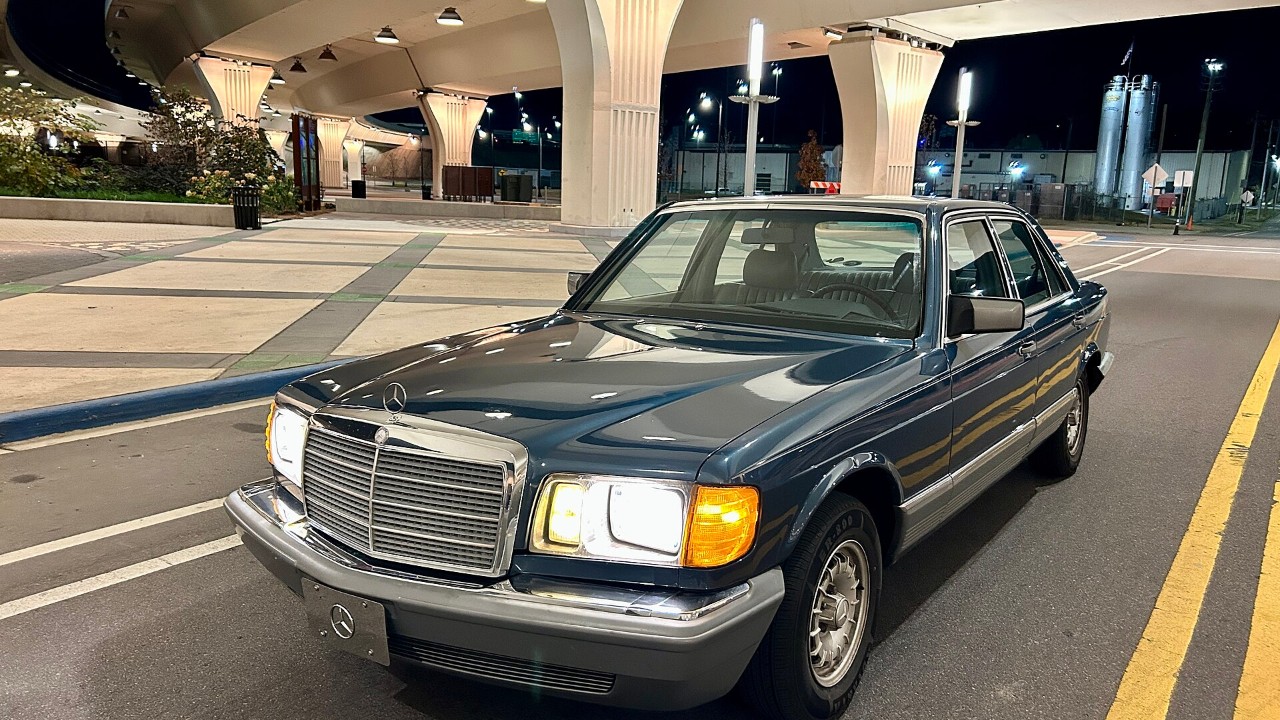
Mercedes built its diesel S-Class for North America and a few other export markets. The car went on sale there as the 300 SD Turbodiesel. Its engine was a 2,998 cc five-cylinder, and by the 1984 model year it made 125 PS with 184 lb-ft of torque.
That is modest output for a flagship. However, the rest of the car was pure W126, and Mercedes built 892,123 cars of that generation between 1979 and 1991. As a result, a big pool of donor cars exists for body panels, interior pieces and suspension parts.
Our take: the 300SD is the luxury car for people who hate car payments. You get the full S-Class experience, from the solid doors to the quiet cabin, with an engine that seems to run forever. Find one with service records and patience for the slow on-ramp sprint, and it could easily be the last big sedan you buy. In fact, we’d rather own a tidy 300SD than a tired V8 S-Class, because there is simply less to go wrong.
4. Mercedes-Benz 190D 2.5 (W201)
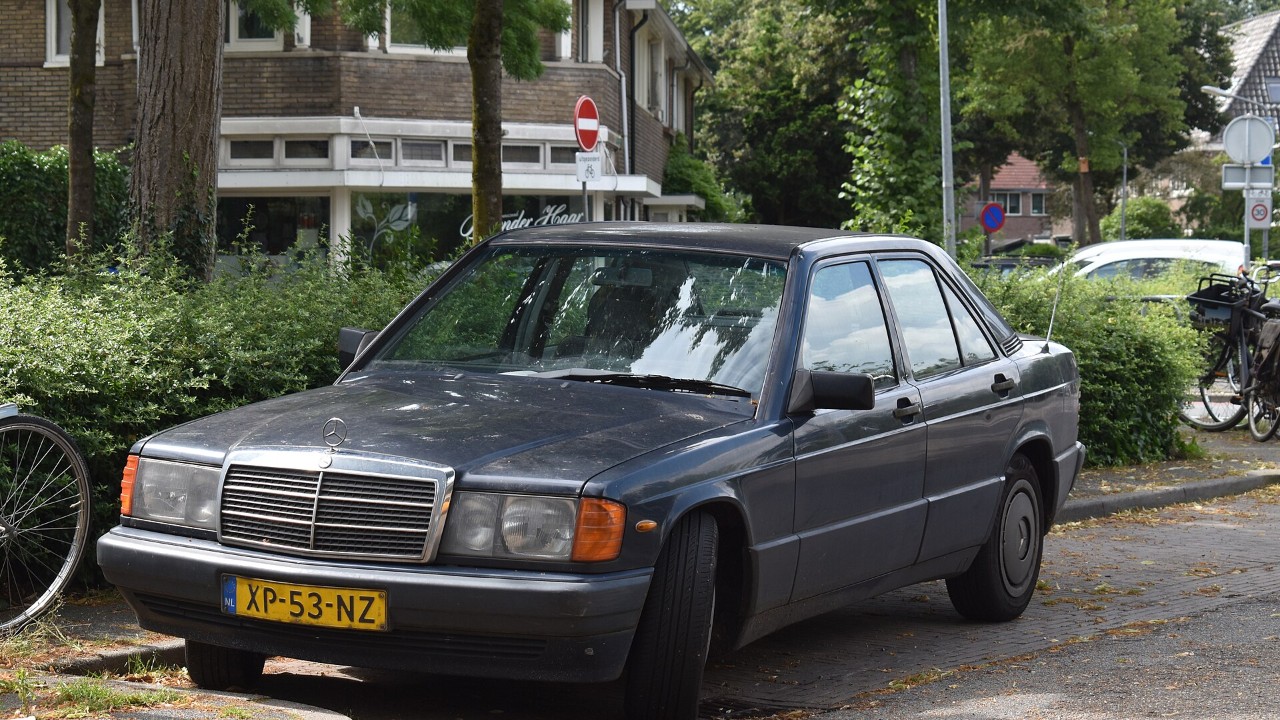
The compact W201 took eight years to develop, from 1974 to 1982, and Mercedes engineered it like a much bigger car. That effort shows in the diesel versions. The 190 D 2.5 arrived in June 1985 with a five-cylinder OM602 diesel rated at 94 PS, and Mercedes kept building it until August 1993.
In that time, the factory turned out 147,502 of the 2.5-liter cars. Meanwhile, the W201 range as a whole passed 1.87 million units. In a 35 mph offset crash into a concrete barrier, the small sedan protected its occupants without serious cabin deformation. That says a lot about how solidly Mercedes built the shell.
Our view is simple: the five-cylinder 190D is the sweet spot of the range. It has more torque than the four-cylinder diesel, and it avoids the complexity of the turbo car. For a small classic that you can actually use every week, we’d look here first. If the bigger Benzes feel like too much car, this one keeps the toughness in a tidier size. Even better, Mercedes sold the 2.5 for eight full years, so there are plenty of cars to choose from.
5. 1994 Mercedes-Benz E300 Diesel (W124)
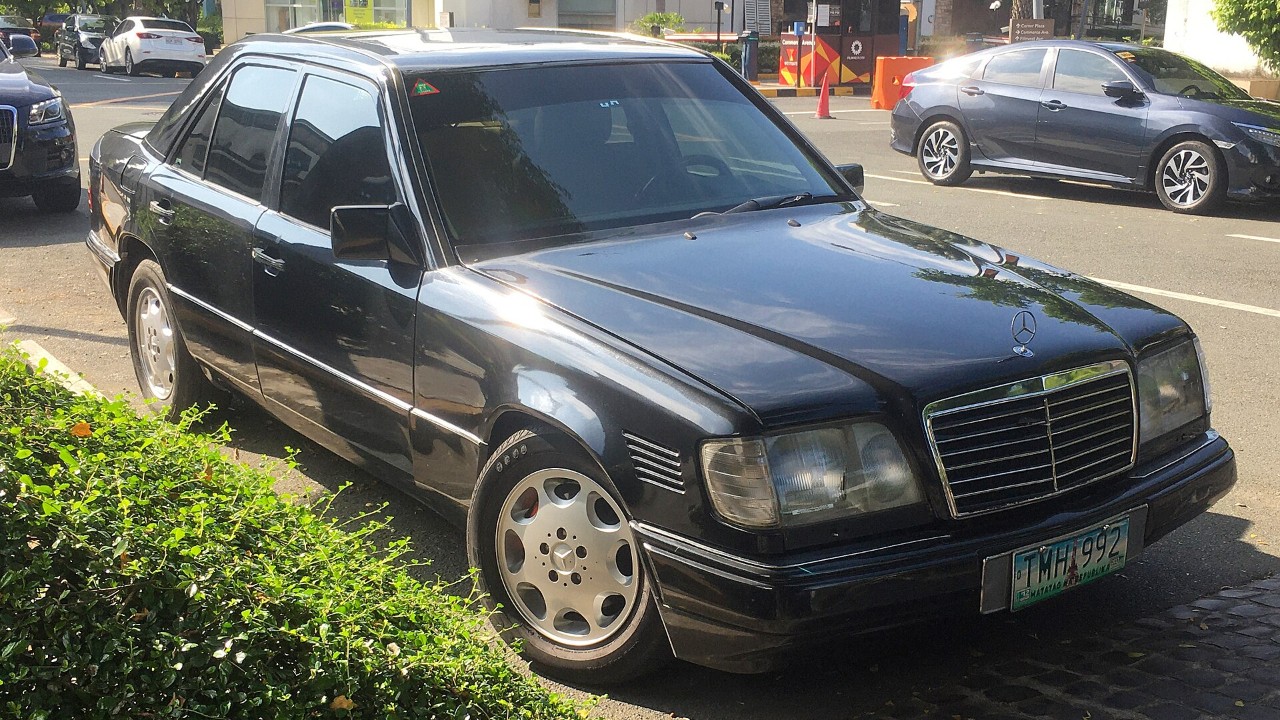
The W124 earned its reputation early. In a 1995 ADAC breakdown survey, the diesel version topped its class with 11.8 recorded breakdowns per 1,000 four-year-old cars. That is a number any used-car buyer can appreciate.
For 1994, American buyers could order the E300 Diesel sedan. Under the hood sat the new OM606, a 3.0-liter inline-six with 24 valves and twin overhead camshafts. It made 136 PS, and Mercedes built 23,166 E 300 Diesel sedans between July 1993 and August 1995. Across all body styles, the W124 family reached 2,721,817 units.
Our take: this may be the most usable car on our list. It has the safety, air conditioning and highway manners of a 1990s sedan, yet its engine belongs to the old school. We’d buy one before almost any modern used luxury car at the same price. Look for a sedan with a documented maintenance history, and you’re starting with the right car. In addition, the 24-valve six gives it enough power to keep up with modern traffic.
6. 1967 Mercedes-Benz 200D (W110)
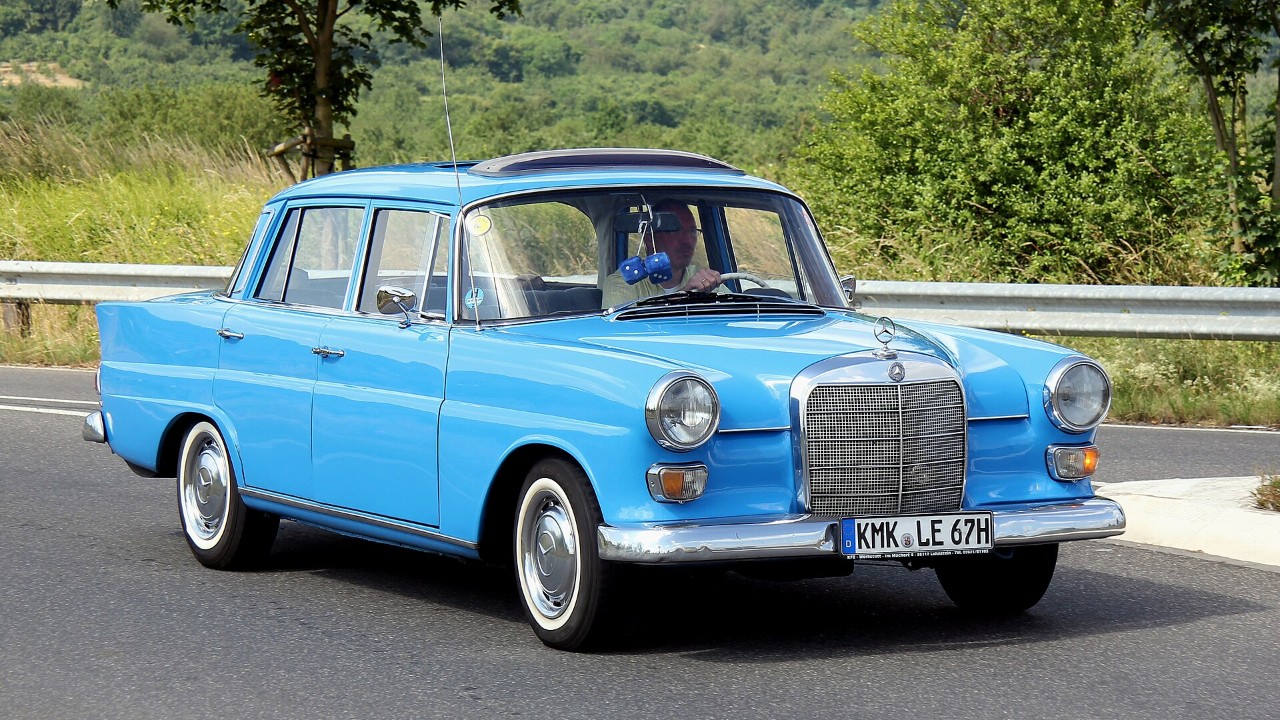
The Fintail sedan ran from 1961 to 1968, and Mercedes built 628,282 of them. Taxi drivers loved the smaller 190c and 190Dc versions. They were shorter and easier to maneuver than the bigger W111, yet they offered the same cabin and luggage space.
In July 1965, the 200D replaced the 190Dc. It kept a 1,988 cc four-cylinder diesel rated at 55 PS. However, Mercedes gave the new engine five main bearings instead of three, which made the crankshaft far sturdier. Buyers took 161,618 of the 200D before production ended in 1968.
We think the 200D is the Fintail for owners who plan to drive it. The tail fins give it real 1960s charm, and the stronger diesel gives it a fighting chance in modern use. Just don’t expect to merge quickly. This is a car for back roads and patient drivers, and that suits it fine. As a bonus, the five-bearing crank gives it a clear edge over the 190Dc it replaced. For more classic Benzes we admire, see our list of 8 Mercedes-Benz models we’d refuse to sell at any price.
7. Mercedes-Benz 230 G (W460)
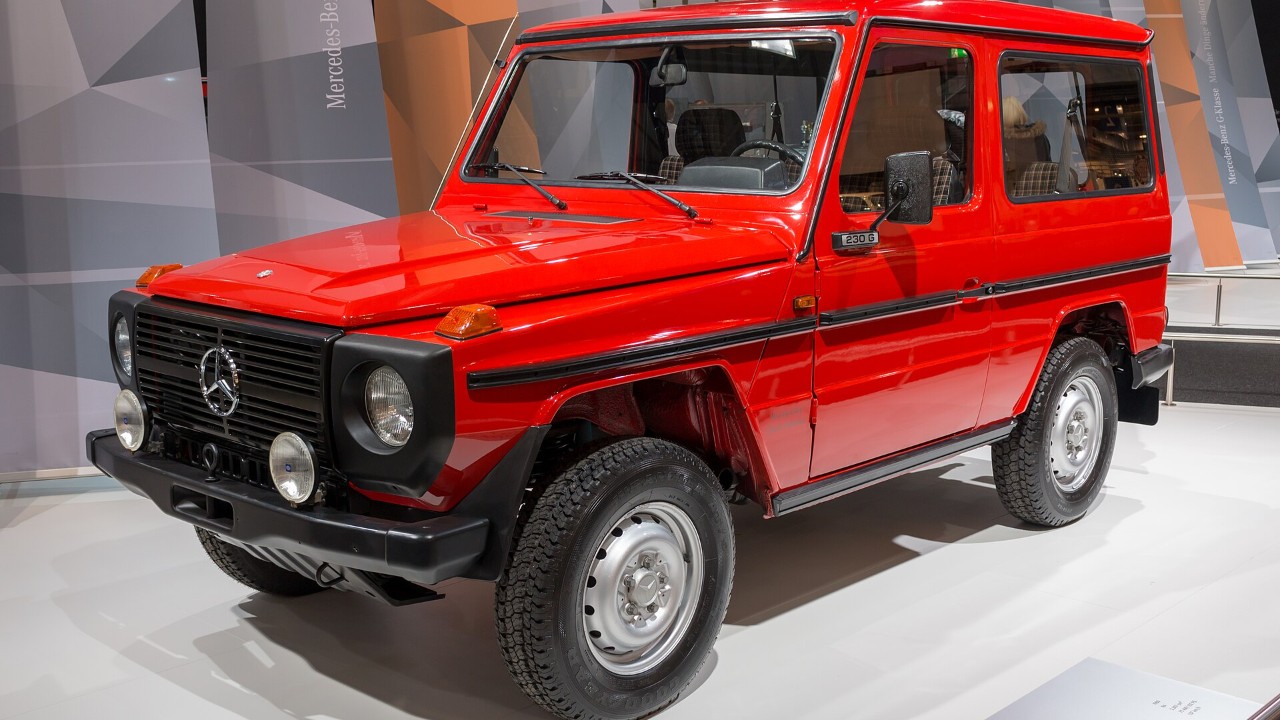
The G-Class started with a suggestion from the Shah of Iran, who wanted a military off-roader. So in 1972, Daimler-Benz teamed up with Steyr-Daimler-Puch of Austria. Stuttgart handled the design and testing, while the team in Graz planned production. Assembly began in Graz in 1979, and the civilian W460 went on sale in September of that year.
The early 230 G used a 2.3-liter four-cylinder gasoline engine with 91 PS. It needed 26 seconds to reach 100 km/h, and fuel injection only arrived with the 230 GE in 1982. Meanwhile, the Argentine Army became the first military to adopt the G in 1981. That military role explains the simple, rugged layout.
Our take: the 230 G is the purest version of the idea. It has no luxury pretensions at all, just a boxy steel body and serious off-road hardware. Mercedes built its 400,000th G-Class on December 4, 2020. That long run proves how well the original recipe held up. So if you find an early 230 G, keep it original, because its simplicity is the whole appeal.
8. Mercedes-Benz Unimog 401
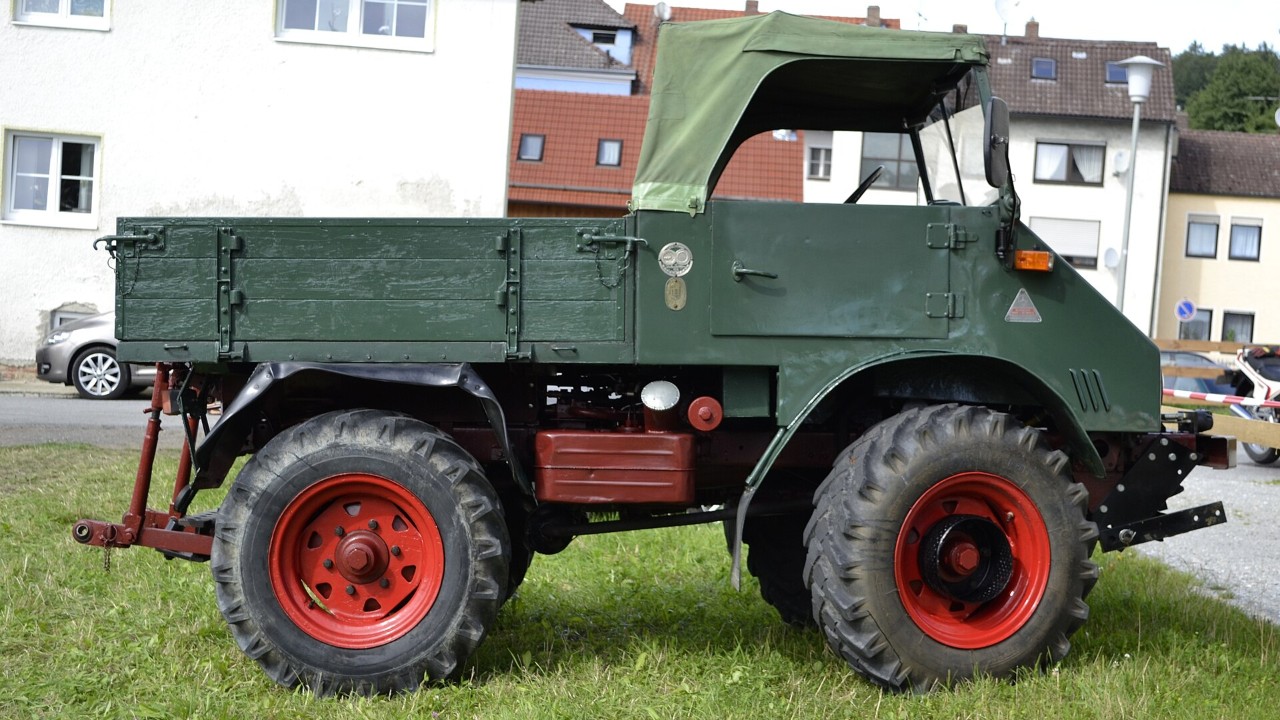
The Unimog began as a farm machine. Albert Friedrich started development on January 1, 1946, and the name came from Universal-Motor-Gerät, roughly “universal motor device.” Boehringer built the first 600 trucks in Göppingen from 1948. Then Daimler-Benz moved production to its Gaggenau plant in 1951, where it stayed until 2002.
The 401 series of 1953 replaced the old ox-horn badge with the three-pointed star. That year, Mercedes also offered an enclosed cab as an option. Westfalia built the first cabs, and their rounded shape earned the nickname “Froschauge,” or frog’s eye. Power came from the OM 636 diesel, which had become standard at the end of 1947 with 25 PS.
In our view, the 401 deserves a spot on any list of tough Mercedes products. It was designed to plow fields, run tools and haul loads on the same day. Plenty of these trucks spent decades doing exactly that. If you find one with the frog’s-eye cab, you’re looking at the version we’d want most. Also, Gaggenau built these trucks for half a century, so the knowledge base runs deep.
9. Mercedes-Benz Sprinter 212 D (T1N)
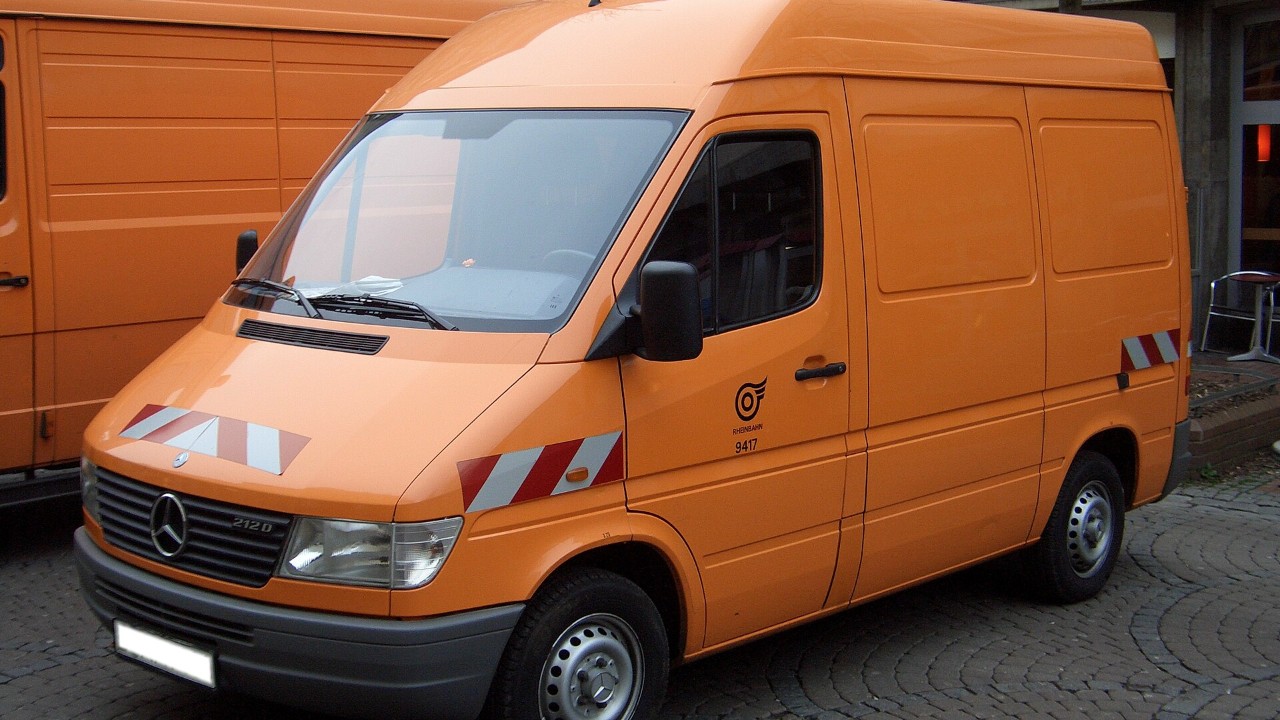
The first Sprinter launched in Europe in 1995 to replace a Transporter line that dated back to 1977. Judges named it International Van of the Year for 1995. Because Toyota already used the Sprinter name in some markets, Mercedes also sold it there as the Transporter T1N.
The 212 D used a 2,874 cc five-cylinder diesel rated at 122 PS and 203 lb-ft of torque. Later, the van came to North America for the 2002 model year, first with Freightliner badges and then as a Dodge from 2003. Mercedes kept its own badge off the American vans, reportedly to protect its luxury image.
Our take: the early Sprinter is a working-class hero, not a luxury car. Even so, it belongs here, because its whole design centered on hard daily work. If you want to see how Mercedes treated its other diesel models, browse our picks of 10 forgotten luxury cars that pure drivers still love. For now, the T1N remains the van that set the template for every Sprinter since 1995. That’s a big legacy for a plain work van.
More from Fast Lane Only