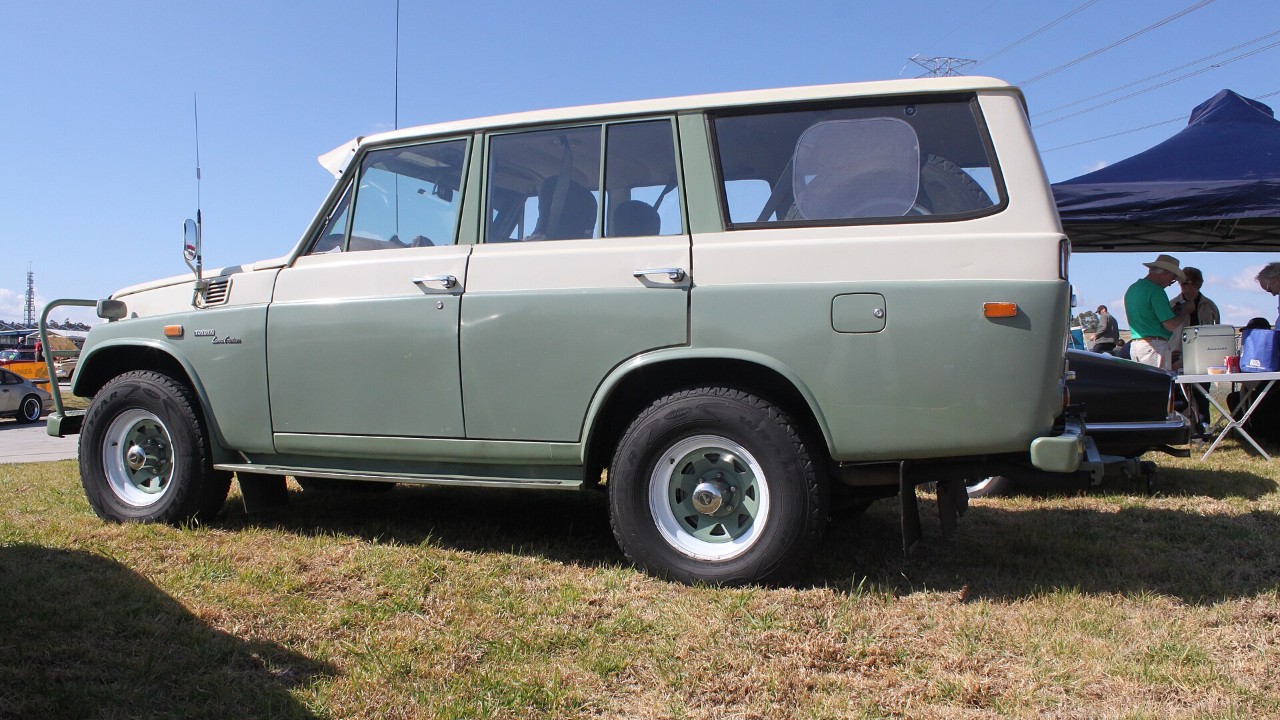
Toyota’s FJ55 Land Cruiser earned the nickname “Iron Pig” for its snout-like nose, and owners now use the name with affection. That says a lot about off-roaders. A 4×4 can look odd, boxy or even a little crude, and people will stop to stare at it in a parking lot anyway.
Plenty of four-wheel-drive vehicles fade into the background once they get old, though. The ones that keep drawing a crowd usually have something extra. It might be a shape nobody else used, an engine that makes no sense on paper, or a long history of real work in hard places.
These are our picks for the 4x4s that turn heads wherever they show up. The verdict is our opinion. However, the years, engines and production figures behind each choice come from the record, and they range from the FJ55 Land Cruiser and other 1960s workhorses to a modern luxury wagon.
1. 1971 Toyota Land Cruiser FJ55
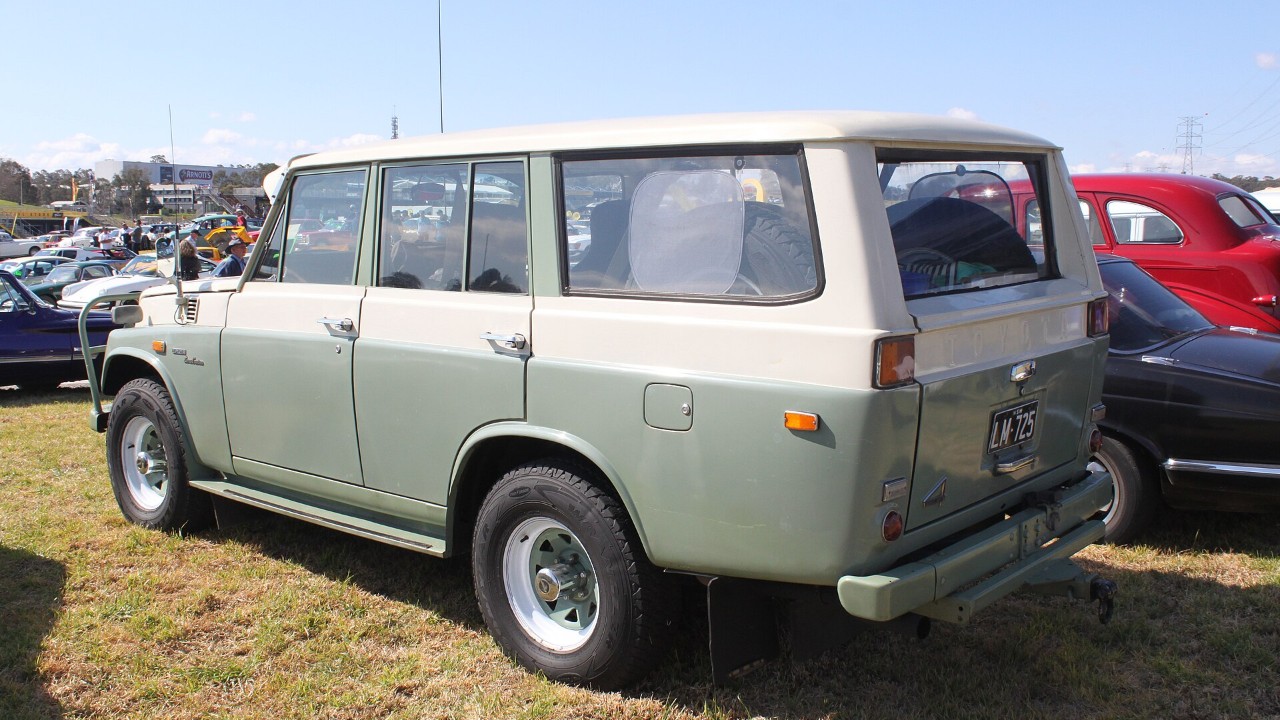
The FJ55 Land Cruiser arrived in August 1967 as a replacement for Toyota’s four-door FJ45LV. According to Hagerty’s FJ55 buyer’s guide, it was Toyota’s first Land Cruiser designed from the start as a wagon. That gave it a big cargo area and a fold-down rear seat, which is why families and overlanders like it today.
Early trucks like our 1971 example used a 3.9-liter “F” straight-six rated at 125 horsepower. A three-speed manual with a non-synchronized first gear sent power to a two-speed transfer case and part-time four-wheel drive. For 1975, Toyota switched to the 4.2-liter “2F” at 135 horsepower and a four-speed manual. Production ended in July 1980, when the FJ60 took over the Land Cruiser name.
Our take: few trucks look this distinctive from the front. Hagerty notes that rust is the main enemy, and replacement panels generally don’t exist, so check the roof, rockers and frame closely. If you like obscure Toyotas, our list of Land Cruisers that deserved more attention goes deeper. Hagerty put the median quote for an FJ55 Land Cruiser at $34,500 when it last updated that guide.
2. International Harvester Scout II
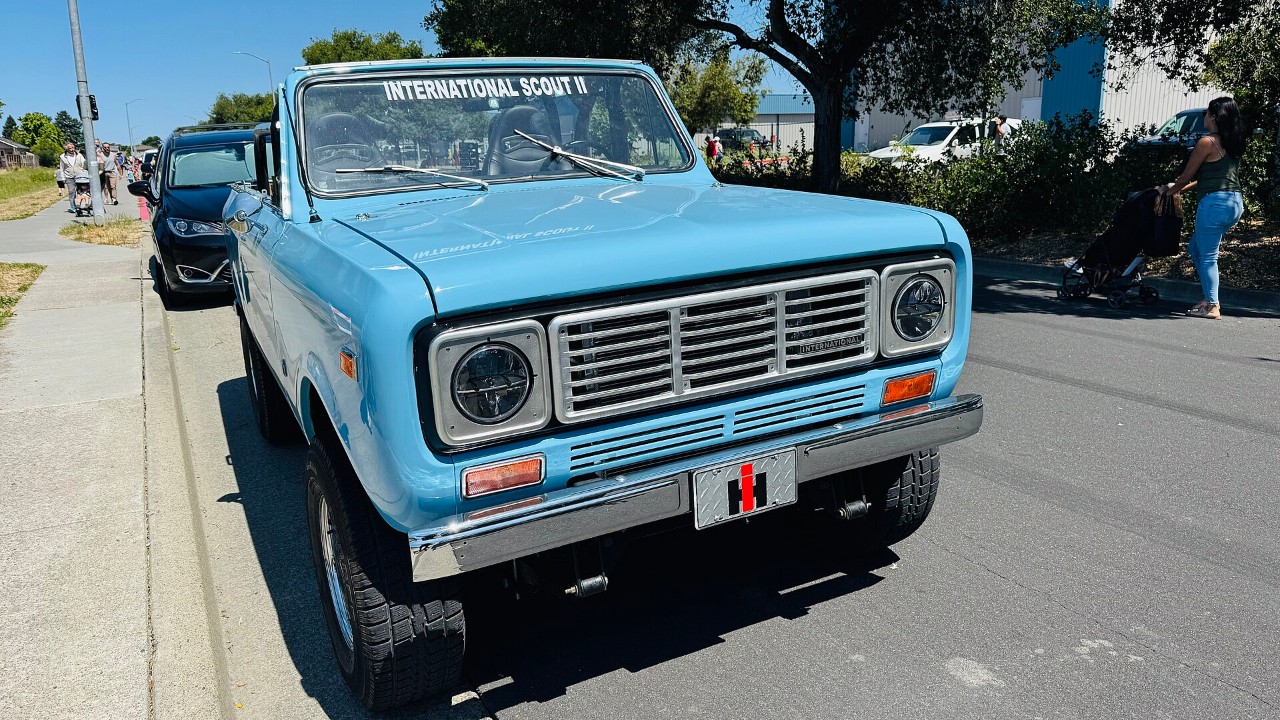
International Harvester built the Scout II from April 1971 until the last Scout rolled off the line on October 21, 1980. Its engine list covered a wide range. Buyers could pick a 196-cubic-inch IH four, AMC’s 232 or 258 inline-sixes, or IH’s own 304 and 345 V8s. Because of that range, a Scout could be a frugal runabout or a torquey tow rig.
Later, International added a diesel option. Starting in 1976, a Nissan SD33 diesel joined the lineup, and a turbocharged SD33T replaced it for 1980. The stretched Terra pickup and Traveler wagon also arrived for 1976, each 18 inches longer than the standard Scout. Across the whole 1960 to 1980 run, International built 532,674 Scouts.
Our take: the Scout II looks like nothing else from its era, and that alone makes people look twice. Production ended during a strike and a cash crunch at International Harvester. Now the name is coming back, because Volkswagen’s Scout Motors showed new Terra and Traveler concepts in October 2024. We covered the earlier trucks in our list of Scouts that turn heads everywhere they go. A clean original Scout II remains the real thing.
3. Lamborghini LM002
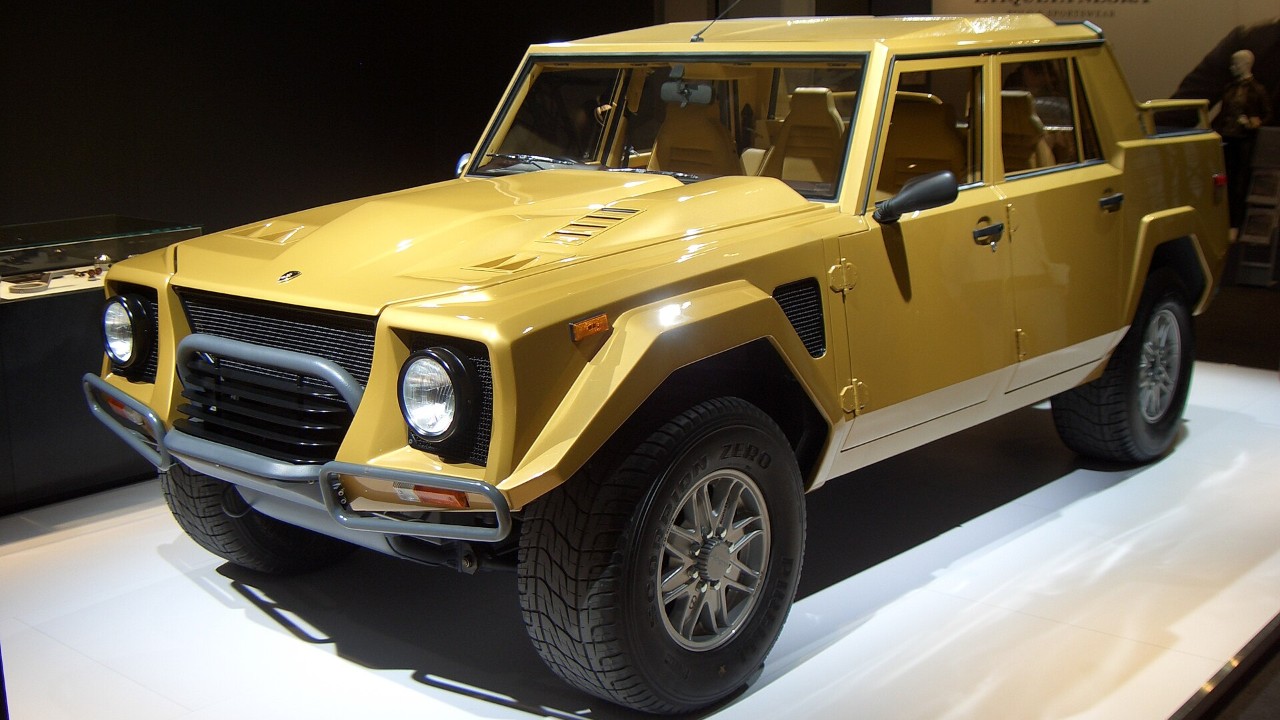
Lamborghini’s road to the LM002 began with the 1977 Cheetah prototype. That earlier vehicle carried a rear-mounted Chrysler V8 and targeted oil exploration companies. By the time the production LM002 arrived in 1986, the engine had moved up front and grown to 12 cylinders.
The LM002 used the 5.2-liter V12 from the Countach. Pirelli developed Scorpion tires with custom run-flat treads for it, so even the rubber was bespoke. A 169-liter fuel tank, about 45 gallons, helped feed that thirsty engine. Production ran from 1986 to 1993, and Lamborghini built 301 examples in total. Fans gave it the nickname “Rambo-Lambo.” Later, Lamborghini even built a race prototype, the Evoluzione, rated at 600 PS.
Our take: an off-roader with a supercar engine still sounds ridiculous today. That’s exactly why it stops traffic. A Countach V12 in a boxy off-road body was a bold bet in the 1980s, and it looks even stranger now that luxury SUVs are everywhere. In our view, the LM002 arrived decades ahead of today’s exotic-SUV craze. With just 301 built, spotting one in person is a rare event, and every sighting draws a crowd.
4. 1997 Hummer H1 6.5L diesel
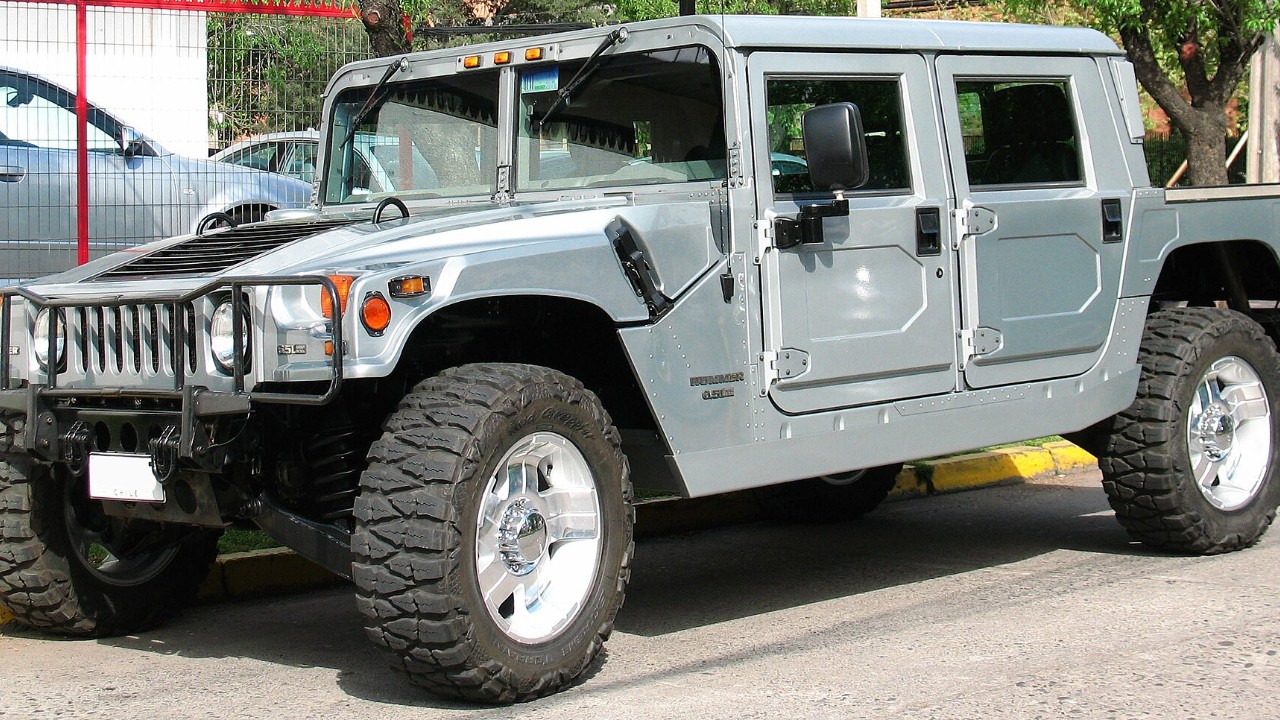
AM General built the Hummer H1 in Mishawaka, Indiana, as a civilian version of the military Humvee. Arnold Schwarzenegger took an interest in the design and pushed the company to sell one to the public. Production then ran from 1992 to 2006, with no 2005 model year.
The H1 brought serious military hardware to the street. Its drivetrain sat high in a wide center channel, which gave it 16 inches of ground clearance. A central tire inflation system let drivers lower pressures off-road and raise them on pavement. For 1996, AM General also raised the body half an inch to fit a turbocharger on the 6.5-liter diesel.
Our take: no other civilian vehicle looks quite like an H1, and it fills a whole lane. That presence alone makes heads turn at every stoplight. AM General built only 11,818 in total, with a peak of 1,432 in 1995. By contrast, output fell to just 252 in 2004. In our view, a turbodiesel truck from the late 1990s is the sweet spot, because it pairs the original look with the updated engine.
5. 1970 Range Rover Classic
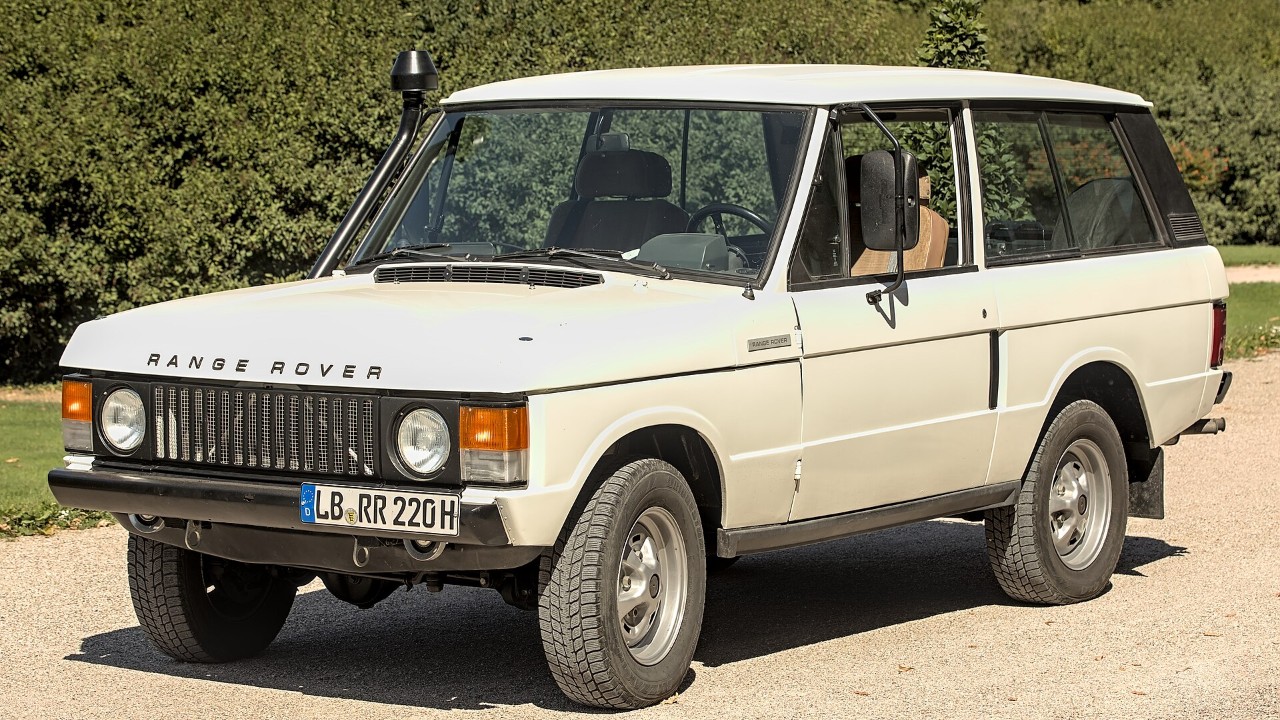
The Range Rover went on sale in June 1970, and it changed what a 4×4 could be. Rover gave it a detuned version of its Buick-derived 3.5-liter V8, rated at 135 horsepower. Instead of the leaf springs on the Land Rovers of the time, it rode on coil springs.
For its first 11 years, the Range Rover came only as a two-door, like our 1970 example. A four-door finally arrived in 1981. Even so, the two-door stayed in UK production until 1984. Along the way, a Range Rover became one of the first two vehicles to cross the Darién Gap from north to south, during an expedition in 1971 and 1972. In total, production of the original model reached 326,070 between 1970 and 1996.
Our take: the early two-door is the cleanest version of the design. It pairs coil-spring comfort with a V8 and real off-road ability, all in a simple two-door body. In our view, an early two-door turns more heads than almost any later Range Rover. That clean, simple shape made the first truck a design landmark, and it ran for more than a quarter-century.
6. 1972 Jeep Commando
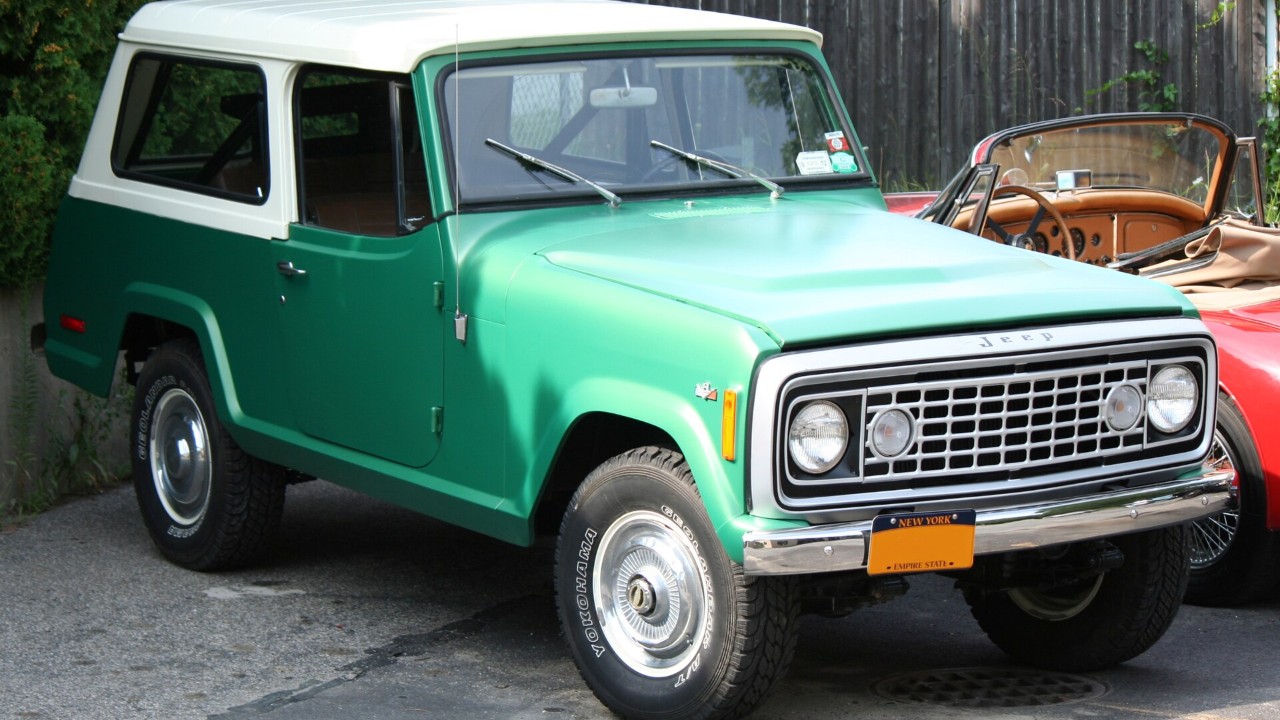
AMC bought Jeep in 1970, and the 1972 Commando was one of its first big changes. The company dropped the “Jeepster” name and gave the truck a full-width, egg-crate grille. That front end looked so much like a Chevrolet K5 Blazer’s that it became one of the least Jeep-like faces of the era.
Under the hood, AMC engines replaced the old four and V6. Buyers could choose a 232 or 258 inline-six or a 304 V8 rated at 150 horsepower for 1972. The wheelbase grew from 101 to 104 inches, which improved the ride. AMC also moved the fuel tank to the rear and raised its capacity from 11.5 to 16.5 gallons. AMC also added larger drum brakes, a wider track and a stronger frame. Four-wheel drive stayed standard.
Our take: the odd grille is exactly why this Jeep stands out at a show. AMC built 10,685 Commandos for 1972 and 9,538 for 1973, for 20,223 in all. Then the full-size Cherokee replaced it for 1974. In our view, that short two-year run makes the Commando one of the most unusual Jeeps you can buy.
7. Land Rover 90
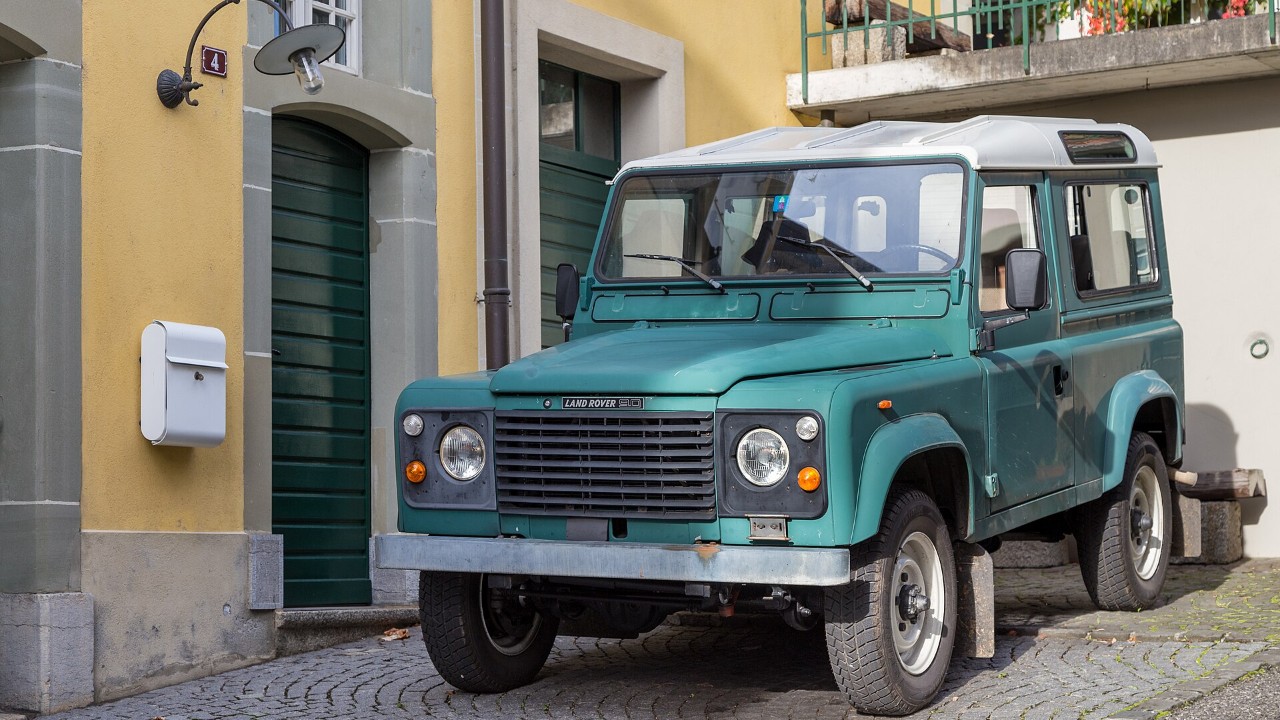
The Land Rover Ninety arrived in 1984, a year after the longer One Ten. It rode on a 92.9-inch wheelbase with coil springs front and rear. That setup gave a more forgiving ride and better axle articulation than the leaf-sprung Series trucks before it.
Land Rover also borrowed permanent four-wheel drive from the Range Rover, with a two-speed transfer box and a lockable center differential. Early engines included a 2.5-liter diesel rated at 68 horsepower and a 2.5-liter petrol engine at 83. Then, in 1985, a 114-horsepower V8 joined the range. It became the first V8 offered in a short-wheelbase Land Rover. As a result, the 90 felt far more modern than the Series trucks it replaced.
Our take: the 90 is the shape most people picture when they think of a Land Rover. Because the Discovery arrived in 1989, the company renamed the Ninety the Defender 90 for the 1991 model year. In our view, that boxy profile turns heads in any town, from a city street to a mountain road. A V8 version is the one we’d hunt for, since it was the first short Land Rover to offer eight cylinders.
8. First-generation Toyota 4Runner
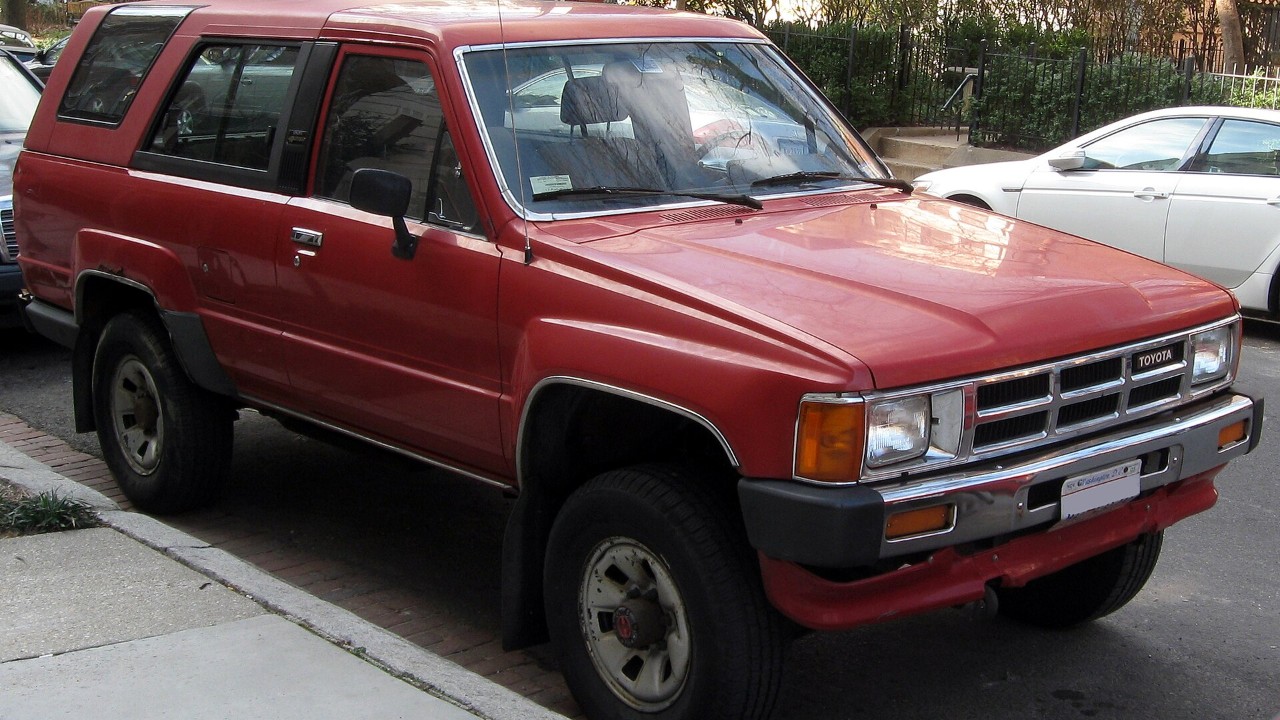
Toyota introduced the 4Runner in 1984 by turning its small 4×4 pickup into a two-door wagon. According to Hagerty’s look at the first generation, the rear roof was a removable fiberglass cap held on by 14 bolts. A roll bar sat behind the rear seat, and the power rear window retracted into the tailgate.
Early trucks used a 2.4-liter four rated at 96 horsepower, and fuel injection raised that to 100 in the second year. For 1986, Toyota replaced the solid front axle with independent suspension and a track three inches wider. A turbocharged four with 135 horsepower appeared in 1986 and 1987. Finally, a 3.0-liter V6 arrived for the last two years, rising to 150 horsepower in 1989.
Our take: an open-roof 4Runner on a sunny day is impossible to ignore. The removable top gives it a playful character, and the standard roll bar adds a rugged look. In our view, an early solid-axle truck is the one to find for trail use. Hagerty listed a 1987 SR5 at $14,548 new, with a condition-three value of $7,100 to $16,200 at the time.
9. 2022 Jeep Grand Wagoneer
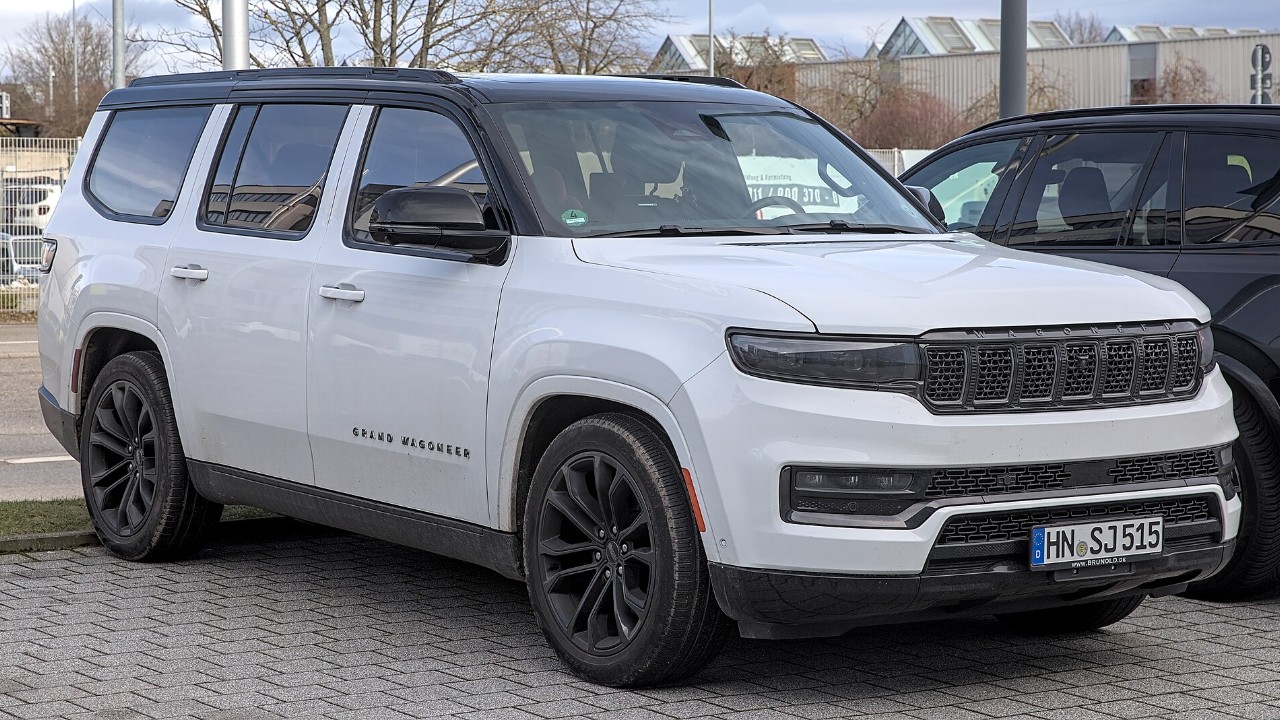
The Grand Wagoneer name returned for 2022 on a full-size luxury SUV built at Warren Truck Assembly. FCA spent $1 billion to retool the plant for the Wagoneer and Grand Wagoneer. Jeep revealed the production models on March 11, 2021, and dealer deliveries began that October.
According to The Drive’s first-drive review, every 2022 Grand Wagoneer used a 6.4-liter V8 with 471 horsepower and 455 lb-ft of torque. Four-wheel drive came standard, and the top Series III added a two-speed transfer case and an electronic rear limited-slip differential. Towing reached 9,850 pounds. Inside, buyers could order up to seven screens, while seven seats came standard. Even the base setup included a 12.1-inch center display, a 10.25-inch climate screen and a 12.3-inch driver cluster. Later, for 2025, Jeep added Quadra-Trac full-time four-wheel drive.
Our take: this is the newest truck here, but its sheer size makes it hard to miss. In our view, it also carries one of the best-known names in SUV history. The Drive listed a base price of $88,995, and its Series III test truck came to $110,575 with options.
More from Fast Lane Only