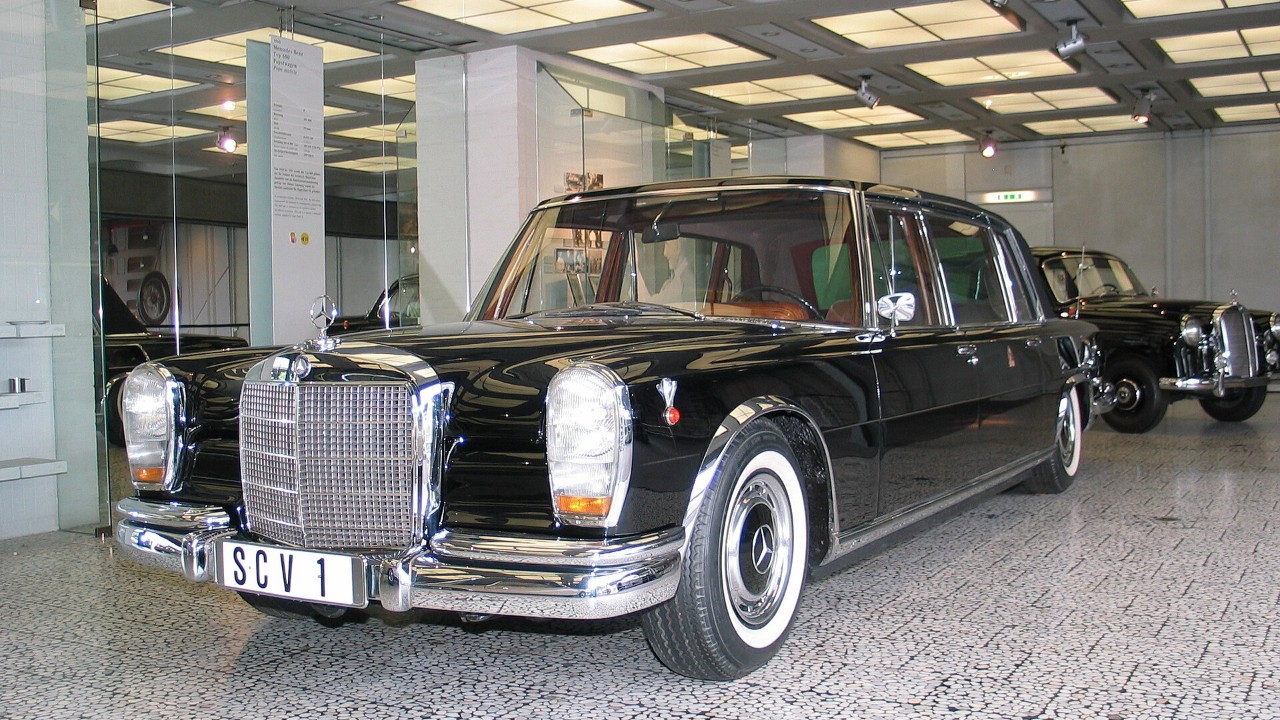
When the Mercedes-Benz 600 went on sale in 1963, it was the most expensive car in the world. The open-roof Mercedes-Benz 600 Pullman Landaulet sat at the very top of that range, and a shah, presidents and a pope rode in one. In other words, it was a car for being seen.
Limousines have always worked that way. They were rolling stages for state visits, weddings and parades, built long and heavy so the people inside could be seen. Most have since been retired, scrapped or worn out in hard service. A few, though, have the kind of presence that makes people on the sidewalk stop and point.
These seven are our picks for the limousines that do that best. The build numbers, specs and owner histories come from museum records, owners’ clubs and the cars’ published histories. Which ones turn the most heads, however, is our opinion.
1. Mercedes-Benz 600 Pullman Landaulet
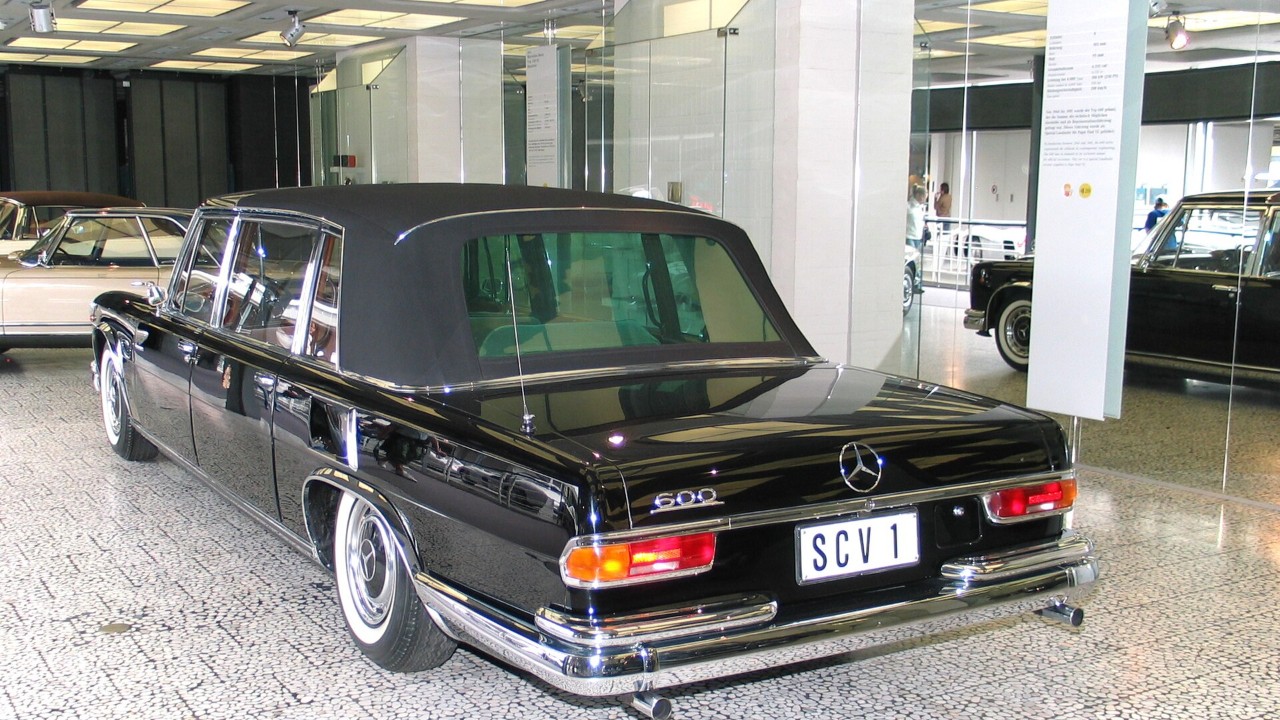
Mercedes built 2,677 examples of the 600 between 1963 and 1981. However, only 59 were landaulets, with a folding roof over the rear seats. As a result, the Mercedes-Benz 600 Landaulet is a very rare sight. In 1965, the German government used landaulets during Queen Elizabeth II’s state visit.
Under the long hood sat a 6.3-litre V8 with mechanical fuel injection, rated at 250 PS. The clever part, however, was the hydraulic system. An engine-driven pump pressurized fluid to about 150 bar. That fluid then powered the windows, seats, trunk lid, sunroof and even the air-conditioning flaps. According to the Petersen Automotive Museum’s 600 Pullman Landaulet page, the car earned a reputation for being overengineered and costly to maintain.
The owners list reads like a history lesson. A pope’s specially built landaulet now sits in the Mercedes-Benz Museum in Stuttgart. Meanwhile, Josip Broz Tito owned two, and the Shah of Iran had three. In our view, no limousine on earth commands a crowd quite like this one. Its upright grille and huge doors look formal from a block away. Then the roof folds back, and suddenly everyone wants to know who is riding inside.
2. 1938 Packard Twelve limousine
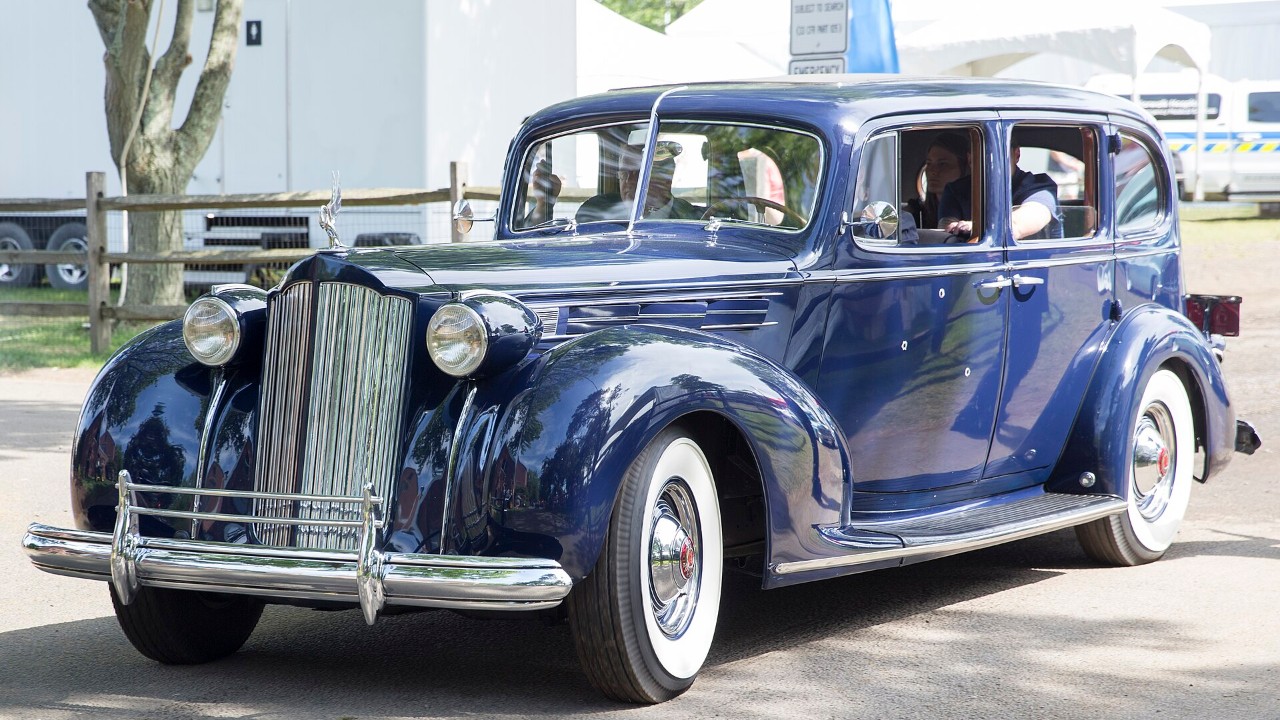
Packard built its Twelve in two eras, from 1916 to 1923 and again from 1933 to 1939. By 1938, the 16th Series car used a 473.3-cubic-inch V12, the size Packard had adopted in 1935. For 1938, Packard made 566 Twelves. Then it built 446 more for 1939, the last year a Packard carried a V12.
These were also expensive cars, even by the standards of the day. For 1938, the costliest Twelve was an All Weather Cabriolet by Brunn, priced at $8,510. The Twelve also had friends in high places. In October 1935, President Franklin D. Roosevelt sent an armoured Packard Twelve to Joseph Stalin. Over the whole run, Packard built 5,262 Twelves.
Why does a 1938 limousine turn heads now? First, the proportions are enormous. The long hood exists to cover twelve cylinders, and the body sits upright in the classic prewar way. Second, the supply is small, because Packard ended V12 production after 1939. If you like Packards in general, our gallery of Packards so elegant they stop traffic covers more of the family. Our take: for pure prewar American presence, the last Packard Twelves are hard to top. After 1939, Packard’s flagship became the Custom Super Eight, and the V12 era was over.
3. 1968 Vanden Plas Princess 4 Litre Limousine
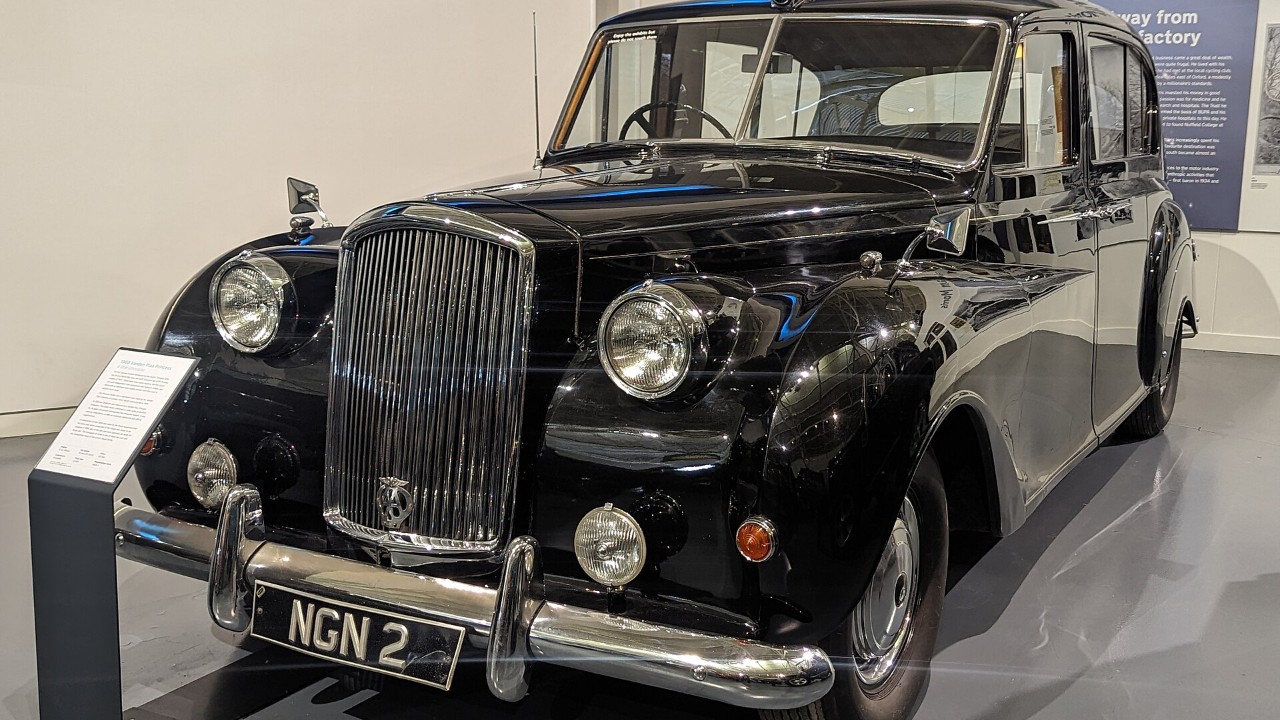
This limousine had three names over its life. It made its debut at the October 1952 Earls Court Motor Show as the Austin A135 Princess, known inside the company as the DM4. Later, in 1959, the car lost its Austin name. Then, from 1960, it was sold as the Vanden Plas Princess 4 Litre Limousine.
Power came from Austin’s 3,993cc D-series straight six. Early cars used triple SU carburettors, and a single Stromberg replaced them later. An automatic gearbox arrived in 1956. According to the Vanden Plas Owners Club history of the DM4, about 3,238 were built before production ended in May 1968. That makes a 1968 car one of the very last.
The royal link is strong. In fact, the first two cars went to the Royal Household for the new Queen, and the palace repeated that order three more times. The final two cars survive today, one at Sandringham and one at the British Motor Museum in Gaydon. In our opinion, this is the most underrated British limousine. It has the stately upright shape people picture when they think of a 1950s state car. Yet it is far less known than its Rolls-Royce rivals. When it bowed out, British Motor Holdings chose the Daimler DS420 to replace it.
4. 1964 Cadillac Fleetwood Seventy-Five limousine
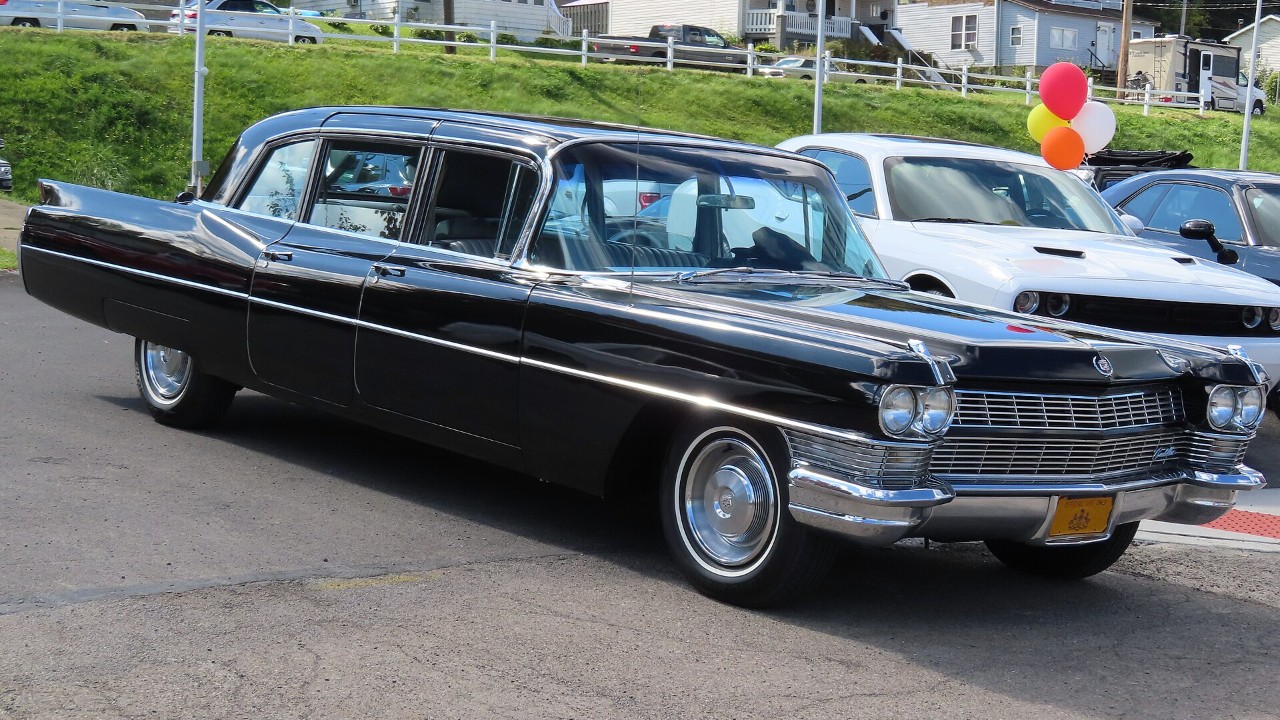
For 1964, Cadillac’s flagship gained a bigger engine and a new bit of comfort technology. First, the V8 grew to 429 cubic inches and 340 horsepower. More importantly for passengers, Cadillac introduced Comfort Control that year. It was a fully automatic heating and air-conditioning system, and Cadillac called it an industry first.
The Seventy-Five was Cadillac’s longest, heaviest and most expensive model. Even so, it looked like a bargain next to the Imperial competition. For example, in 1963 and 1964, the Series 75 sold for about $9,724 to $9,960. By comparison, a Ghia-built Imperial Crown limousine cost $18,500.
Styling matters on this list, and the 1964 car has a special detail. It was the 17th straight year for Cadillac tailfins, and the fins now had a fine-blade shape. A new bi-angular grille sat up front, and its main bar wrapped around the body sides. The earlier 1957 car is a different kind of statement, which we covered in how the 1957 Cadillac Fleetwood became rolling architecture. In our view, the 1964 Seventy-Five is the sweet spot. It carries the last of the fins, yet it has the crisp, clean lines of the mid-1960s. Park one outside a church or a hotel, and people will notice it before the guests.
5. 1987 Daimler DS420
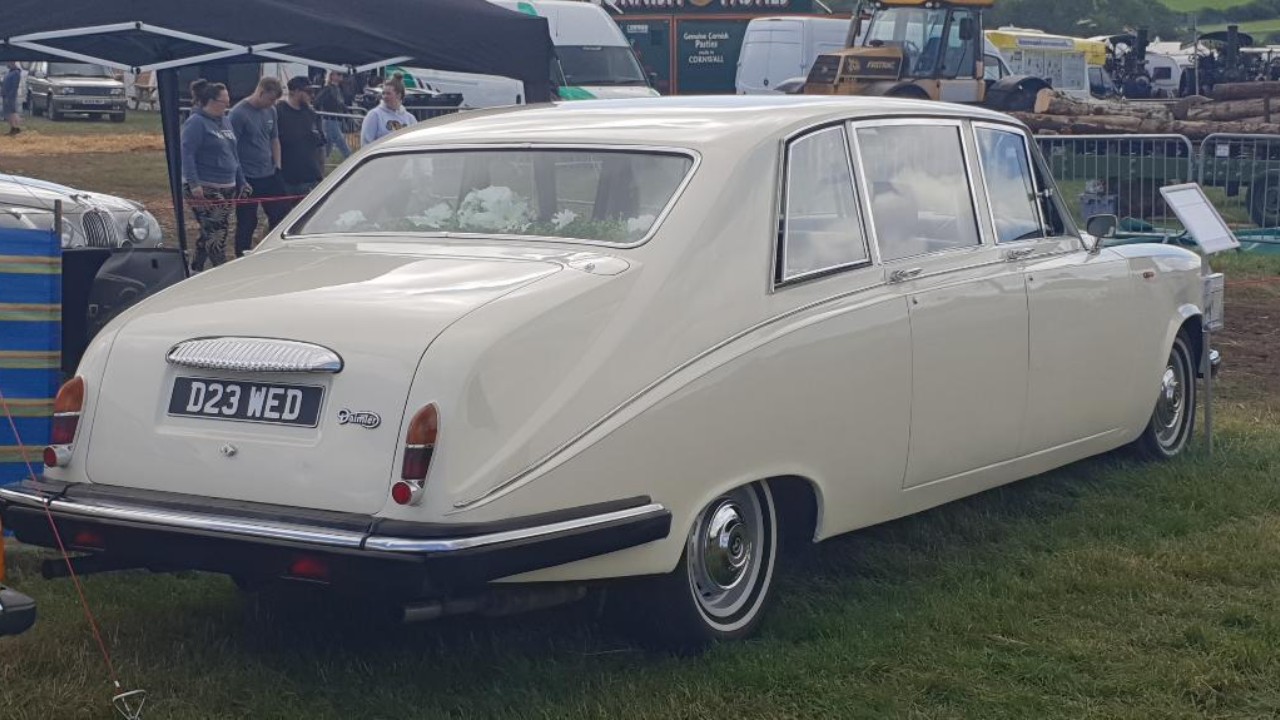
The 1987 DS420 is the final version of a long story. That year brought the third and last facelift, known as the Mark IV, with new plastic-coated bumpers and minor interior changes. By then, the car had moved factories, too. Vanden Plas first built it in Kingsbury, London, but that plant closed in 1979, and Jaguar took over production in Coventry.
Meanwhile, the car itself was huge. It measured 574 cm, or about 226 inches, and weighed 2,133 kg. In addition, ten reigning monarchs ordered DS420s over the years. Two 1987 cars, for instance, show its standing. Queen Elizabeth II received chassis 200970, which then served Prince Charles, Diana and their sons. That October, the Swedish court took delivery of a black 1987 car, chassis 201045.
It worked in business, too. Hong Kong’s Regent Hotel ran as many as 22 of them for its guests. Our take: the late DS420 looks old-fashioned in the best way. Its long, swooping body and fluted grille draw stares at any wedding or funeral it attends. If you want one, look for a car with a documented private or royal history, since many worked hard in the hire trade. The very last DS420, registered L420 YAC, left Browns Lane late in 1992, and the Jaguar Daimler Heritage Trust keeps it today.
6. 1960 Imperial Crown Limousine by Ghia
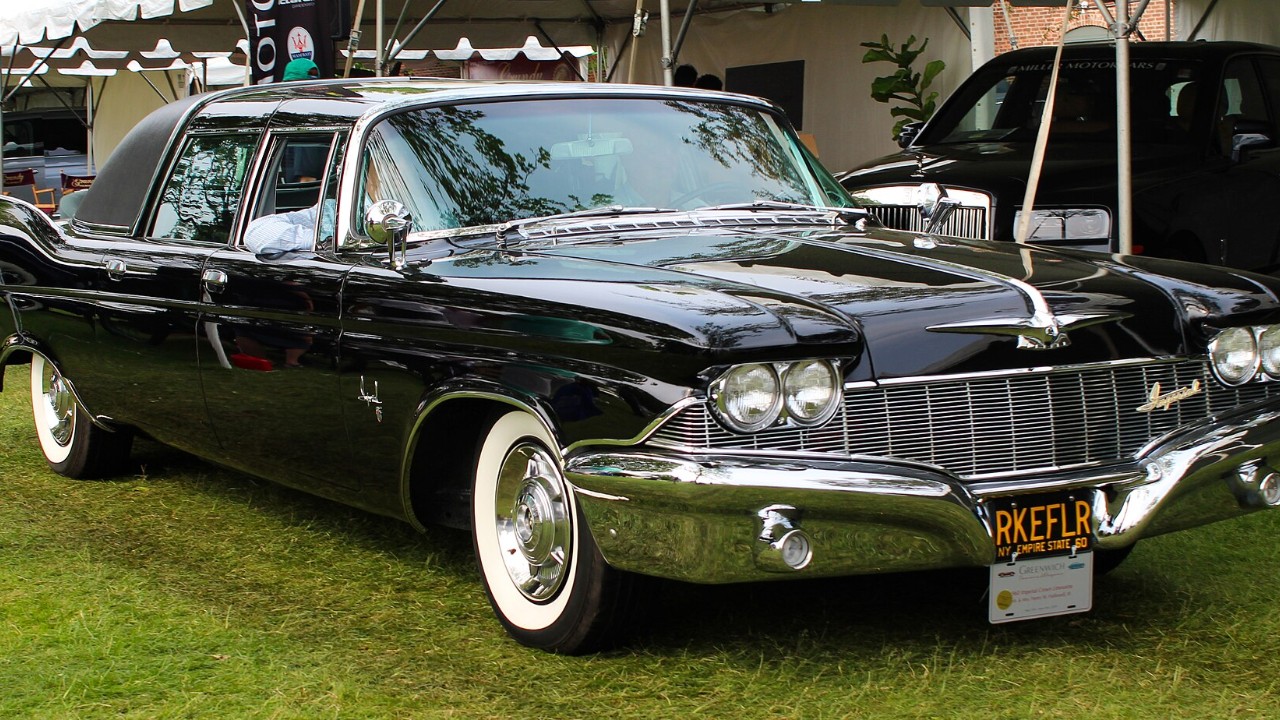
Chrysler had its biggest limousines finished in Italy. From 1957 through 1965, Ghia finished every long-wheelbase Imperial Crown limousine. Early cars started as two-door hardtops. Then Ghia’s workers cut them apart and lengthened them by 20.5 inches. As a result, each car took about a month to finish.
Ghia built 132 of them over nine years. In 1960 alone, it made 17. One of those 1960 cars belonged to Nelson Rockefeller, and it was the only one with blind rear quarters. Jacqueline Kennedy’s own car was a Ghia-built 1961 Imperial Crown with 1960 styling. That car rode near the front of President Kennedy’s funeral procession.
These were heavy, too. The Ghia cars weighed about 6,200 to 6,300 pounds. That made them the heaviest standard production cars sold by an American firm since the 1930s. The Imperial also kept body-on-frame construction for 1960, while other Chrysler cars moved to unibody. If you want to see how the regular Imperial stood out, read why the 1959 Imperial Crown stood apart from Cadillac. In our opinion, the 1960 Ghia car is the most dramatic limousine Detroit ever sold. The long body and tall fins turn a formal car into rolling sculpture.
7. 1990 ZIL-41047
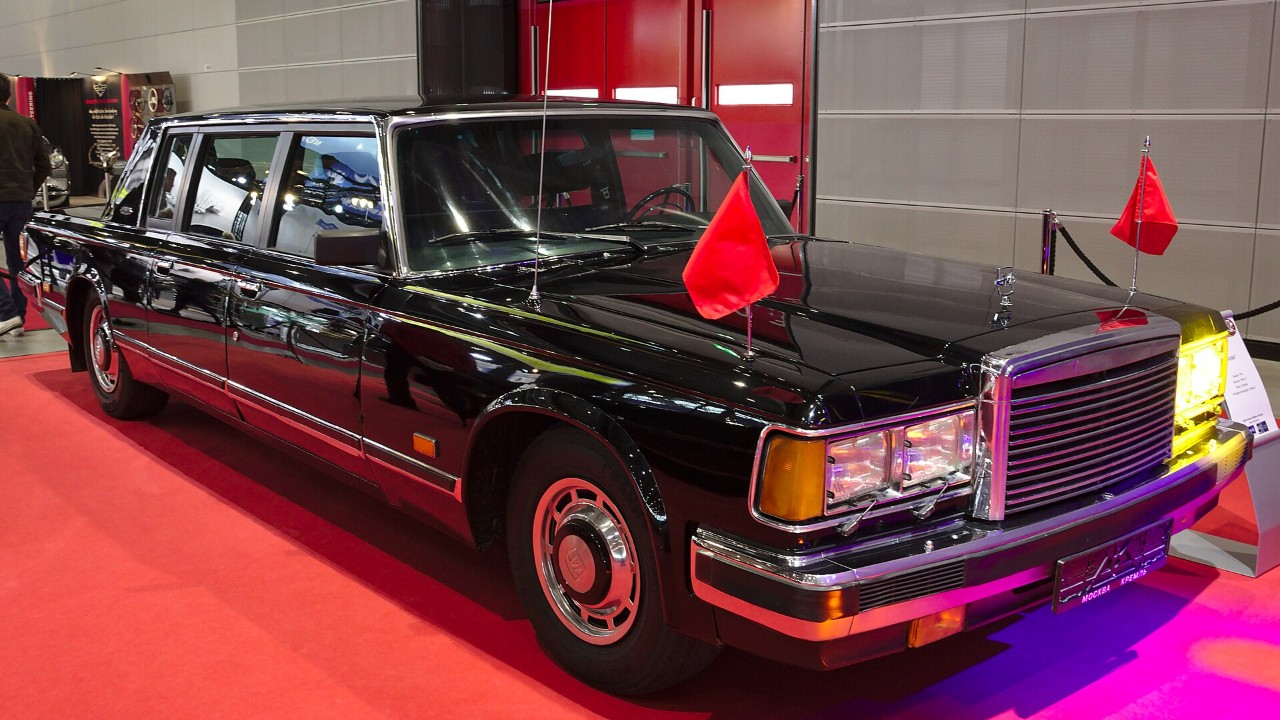
Moscow’s ZILs served the Soviet elite, not the public. The ZIL-41047 replaced the ZIL-4104 in 1985 with a visual update and a new name, but virtually no mechanical changes. Under the hood sat a carbureted 7.7-litre V8 rated at 315 horsepower. A three-speed automatic sent that power to the rear wheels.
The numbers match its role. The ZIL-41047 rode on a 3,880 mm wheelbase, measured 6,339 mm long and weighed about 3,400 kg. It seated seven, counting the driver. An armoured version, the ZIL-41052, followed in 1988. According to Driven to Write’s history of the ZIL limousines, Moscow even had special ZIL lanes. These lanes, in fact, gave senior officials in ZILs and Chaikas absolute right of way.
Then the world changed. After the Soviet Union collapsed, Russia’s leaders increasingly chose Western limousines such as the Mercedes-Benz S-Class. Our take: that history is exactly why a ZIL draws a crowd today. It is a Cold War artifact you can actually ride in, with the sheer size to match its reputation. Production of the ZIL limousine family ended in 2010, after 234 cars.
More from Fast Lane Only