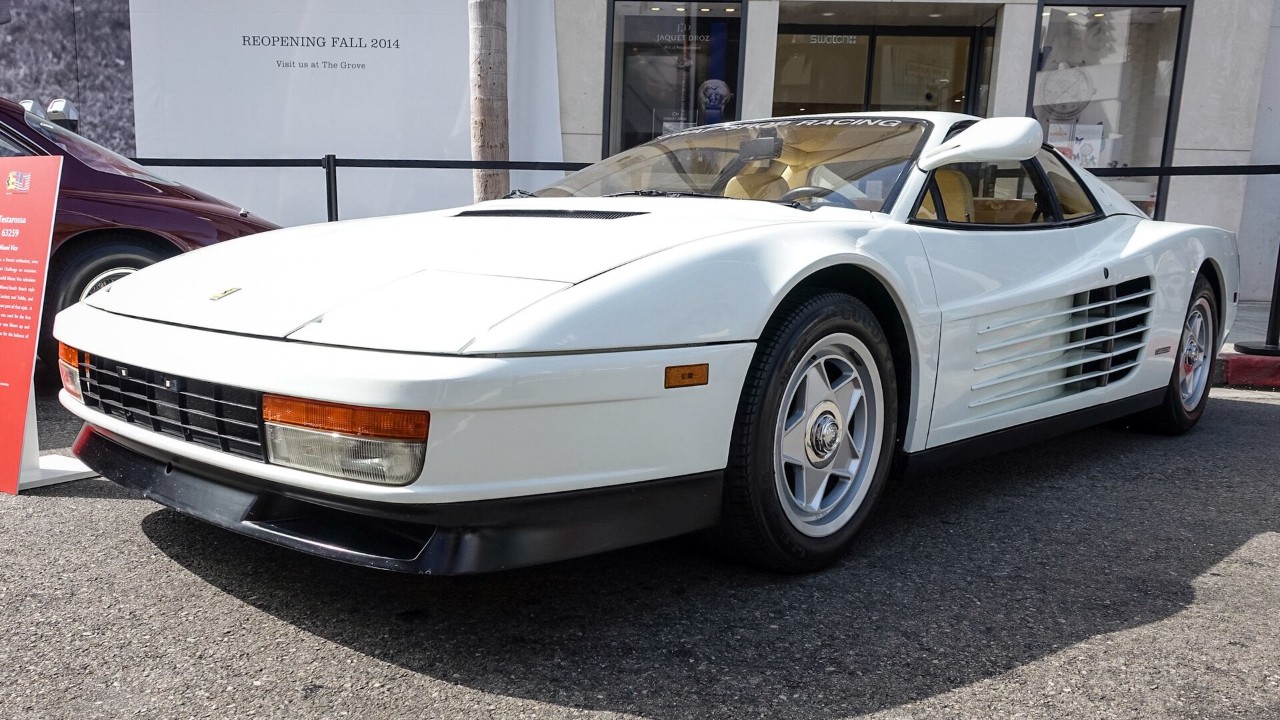
The black Ferrari that Sonny Crockett drove through the first seasons of Miami Vice was really a Corvette in a fiberglass suit. That Miami Vice Daytona started a court fight with Ferrari. In the end, the fight put Don Johnson’s detective behind the wheel of a real Testarossa.
The show ran on NBC from 1984 to 1990. It made pastel jackets, speedboats and night drives look like the height of cool. However, the car at the center of those drives carried a Chevrolet frame and a Ferrari badge it never earned.
Here is how the replica was built, why Ferrari went to court, and where the surviving cars ended up.
Why the Miami Vice Daytona was a Corvette
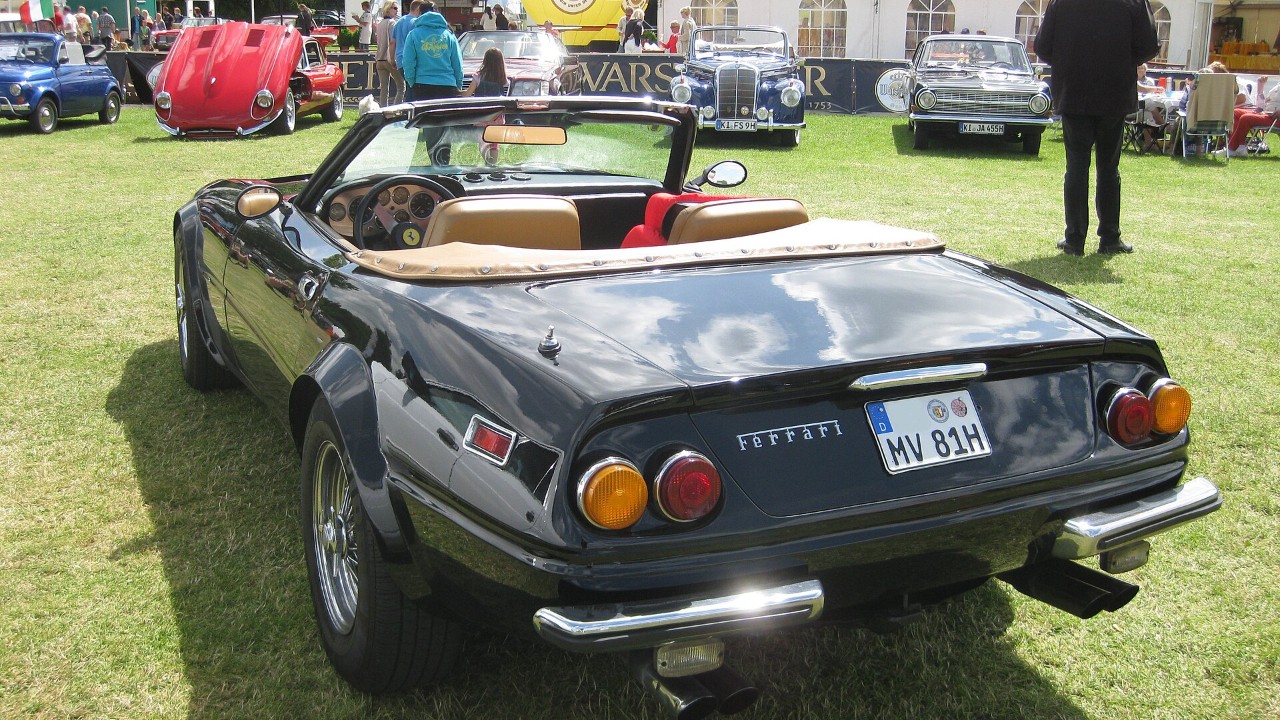
The script called for a black 1972 Ferrari 365 GTS/4 Daytona Spyder, according to SlashGear, citing Motor Trend. Ferrari’s North American arm flatly refused to supply genuine cars, SlashGear reports. Magnum P.I. got the same answer.
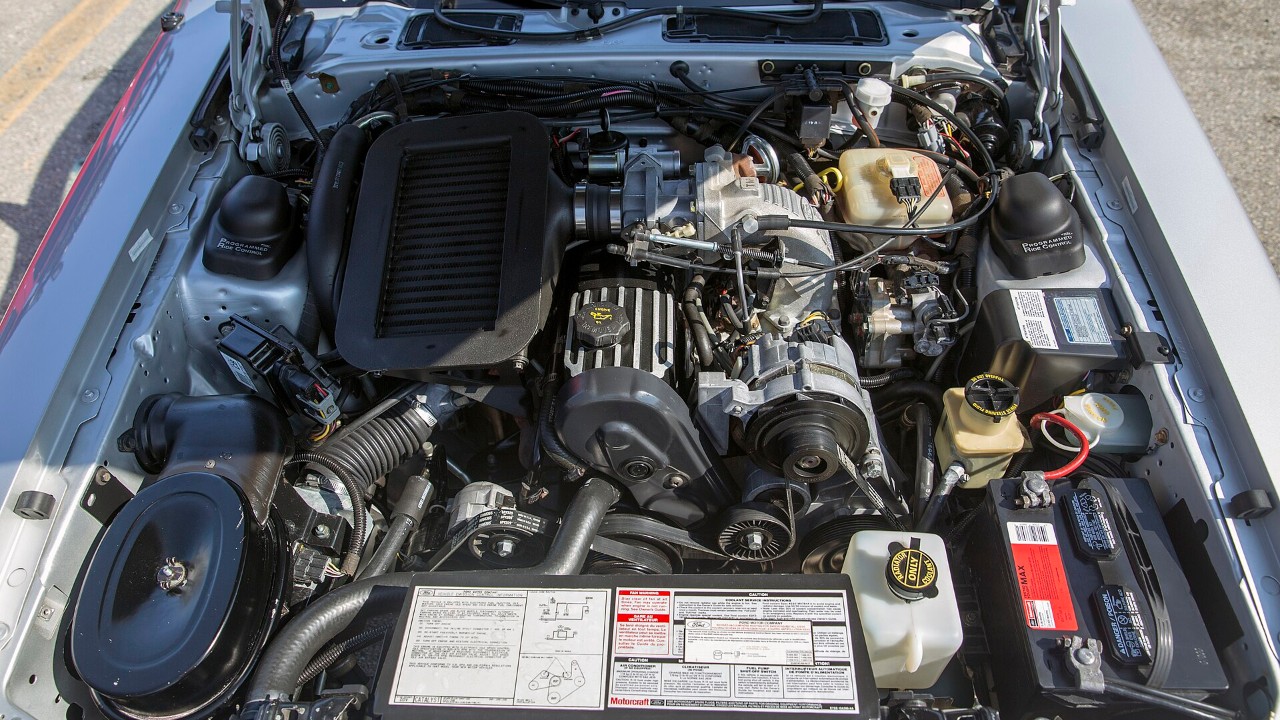
So the producers turned to a replica. Al Mardikian, who ran Trend Import Sales in Newport Beach, commissioned the first cars, Hagerty reports. Tom McBurnie of McBurnie Coachcraft, in the San Diego area, built the fiberglass bodies. Underneath sat Corvette running gear. In fact, the Volo car rides on a 1976 Corvette and the Petersen car on a 1981 Corvette, Hagerty says.
McBurnie built four cars for Mardikian, according to Hagerty. In all, his shop finished 92 complete cars and sold a little over 350 kits. A kit cost $8,000 at the time, while a turn-key car started at $39,000.
Two cars for the show, one real Ferrari for ten seconds
The two-hour pilot aired on NBC on September 16, 1984, Hagerty notes. Its best-known scene is a near-wordless night drive set to Phil Collins’ “In the Air Tonight.” Universal first leased two cars, a hero car and a stunt car, and later bought both.
The pilot did use one genuine Spyder, though. In that scene, Crockett sits in the parked car and reads a newspaper for about 10 seconds, SlashGear reports. The car never moves. Volo Auto Museum believes it was real because of its details.
The replicas wore a 1984 Dade County, Florida plate reading ZAQ 178, Hagerty says. That plate is one of the easiest ways fans spot the TV cars today.
Ferrari’s lawsuit and the Testarossa swap
Ferrari did not like seeing its design on a Chevrolet. In 1986, Ferrari SpA sued McBurnie Coachcraft on trade dress grounds, Hagerty reports. Then, in a final 1989 decision, a jury of five men and one woman sided with Ferrari. As a result, the court ordered McBurnie to stop building the cars.
The show itself settled sooner. A 1986 agreement between Ferrari and the producers required the replica to leave the series, according to Hagerty. Volo Auto Museum also says Ferrari sued Universal Studios, and the settlement wrote the Daytona out of the story.
The writers did it with a bang. In the season 3 premiere, an arms dealer blows up Crockett’s Daytona with a Stinger missile. Still, no McBurnie car died that day. The car in the explosion was a stationary prop, Hagerty says.
Meanwhile, Ferrari sent Universal two new 1986 Testarossas as a peace offering, SlashGear and Motorious both report. The cars arrived in black. The production then painted them white so they would show up better in night scenes, Hagerty says. A long-running rumor holds that Enzo Ferrari himself wanted the cars sent, but SlashGear treats that as a rumor only.
Where the Miami Vice Daytona cars went next
Universal later traded both replicas to Carl Roberts for a Testarossa replica stunt car, according to the Volo Auto Museum. Roberts then rented two Daytonas for the 1989 John Candy film Speed Zone, which was shot in Canada.
On the trip home, Car #1’s engine failed, Volo says. Its engine was swapped with the other car’s. Later, Roberts could not pay a repair bill. A lien went on the car, and it sold at a police auction to Roger Pamperine.
Car #1 had a hard life. Its rear frame section was replaced after a wreck, according to Volo. Eventually the museum bought it, then spent thousands of dollars undoing Roberts’ changes to bring back its TV look.
What the replicas and the real thing are worth
The gap between copy and original is huge. McBurnie replicas, mostly finished kits, sell at auction for $25,000 to $50,000, Hagerty reports. By comparison, four real 365 GTS/4 Daytona Spiders traded for $2.27 million to $2.53 million in the year before Hagerty’s report.
The record is even higher. RM Sotheby’s sold a 1972 Spider, chassis 15383, for €3.4 million ($3.7 million) at its 2024 Monaco sale, Hagerty says.
Today, the Volo Auto Museum in Volo, Illinois owns Car #1, which it calls the original Daytona used on the show. Car #4, still unrestored, sits on loan at the Petersen Automotive Museum in Los Angeles from a private collector who bought it in 1988, according to Hagerty.
More from Fast Lane Only