Nissan’s VG30E V6 went into sports cars, sedans, pickups and SUVs, from the 300ZX to the Hardbody truck. That kind of range only works when an engine can take abuse. It also shows why overhead-cam designs took over from pushrods in so many garages and junkyards.
Putting the camshaft in the cylinder head lets an engine breathe and rev more freely. However, more moving parts up top can mean more to go wrong, from timing belts to cam phasers. The engines on this list got the balance right, and that is why we keep seeing them in swaps, project cars and long-serving daily drivers.
These are our picks for 12 overhead-cam engines that seem built to outlast the cars around them. The verdicts are our opinion. Even so, the years, displacements and outputs come from maker records and engine histories.
1. Ford 2.3-liter Lima SOHC four (1986 Mustang SVO turbo)
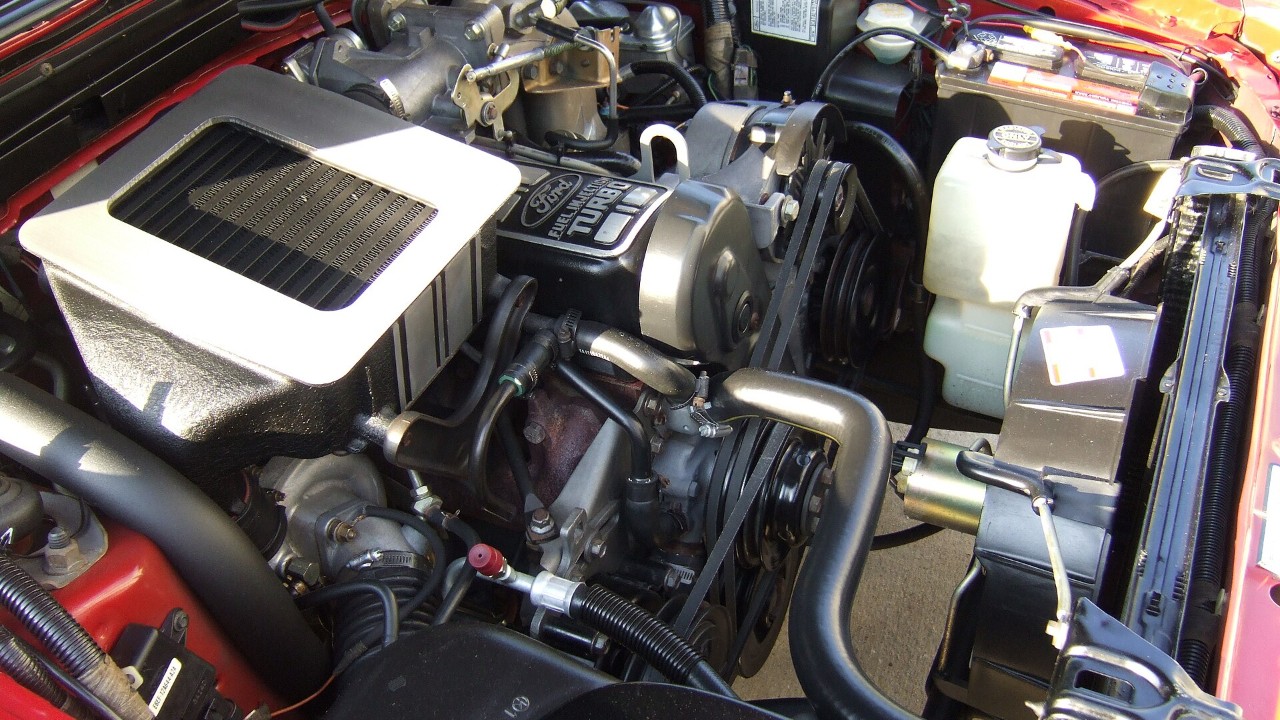
Ford designed the 2.3-liter four in-house and built it at its engine plant in Lima, Ohio. It first appeared for 1974 in the Pinto and Mustang II, and Ford also built it in Brazil from that year. According to Curbside Classic’s history of the engine, it had a taller, heavier block than the 2.0-liter European engine it was loosely based on. In fact, the two shared almost no parts.
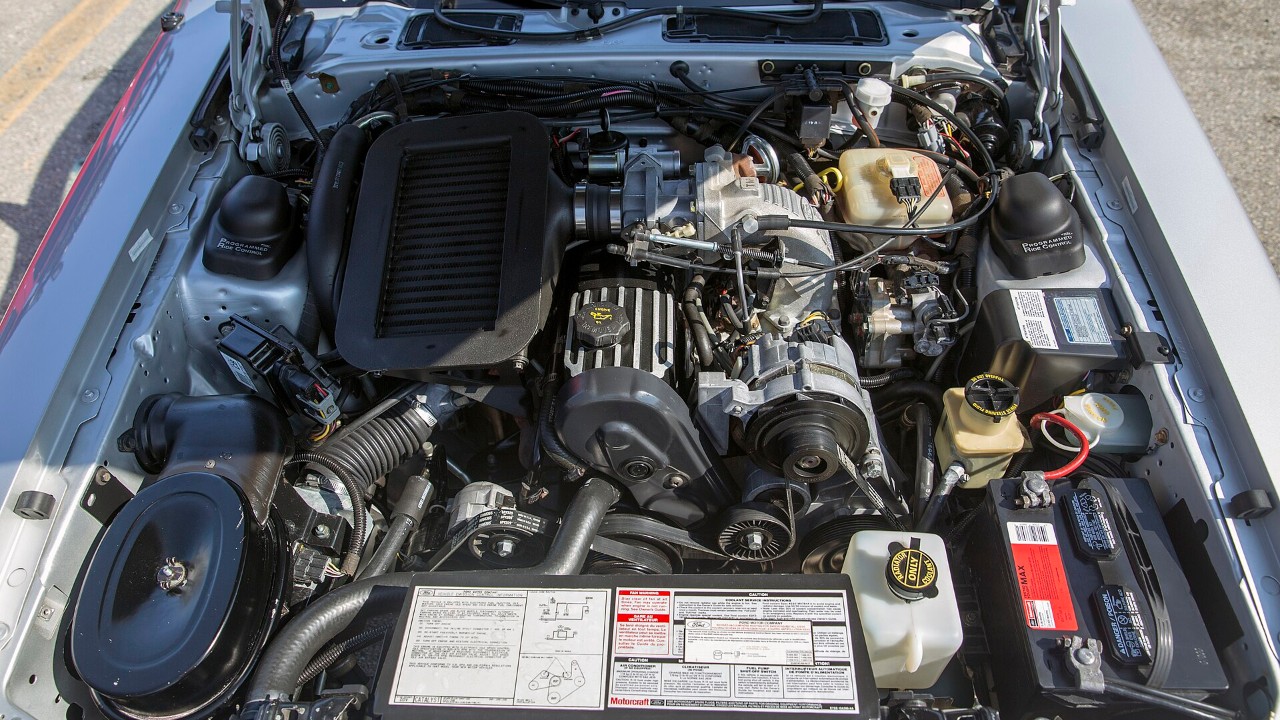
That extra metal paid off. Ford used a cast-iron block and a cast-iron overhead-cam head, and Curbside Classic calls the block and internals “very stout.” That strength made it a good base for turbocharging. The Mustang SVO launched with 175 hp, and the 1985½ update raised it to 205 hp. That is the engine in our photo of a 1986 SVO.
Our take: few four-cylinders have done so many jobs. The same basic engine pulled Rangers, Thunderbird Turbo Coupes and Merkur XR4Tis. The 2.3 version lasted until 1997, and a stroked 2.5-liter version ran in the Ranger until 2001. If you want a turbo car, look for one with a documented boost history and no tuner surprises.
2. Nissan VG30E SOHC V6
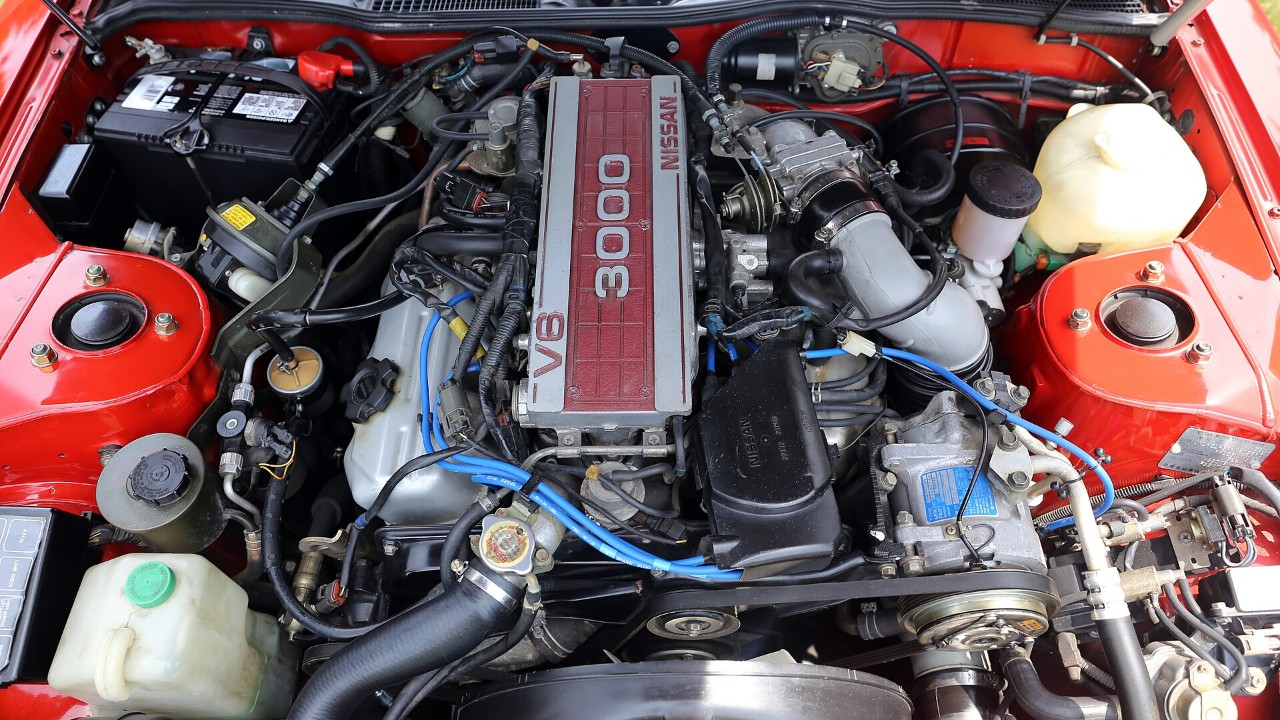
Nissan built the VG family from 1983 to 2004, and it was Japan’s first mass-produced V6. The 3.0-liter Nissan VG30E displaced 2,960 cc, with an 87 mm bore and an 83 mm stroke. It used a cast-iron block with aluminum heads, while a single overhead cam on each bank ran the valves. Like every VG engine, it used a timing belt rather than a chain.
That simple recipe went almost everywhere in Nissan’s lineup. The VG30E powered the 300ZX from 1984 to 1989, the Maxima from 1985 to 1994 and the D21 Hardbody truck from 1990 to 1995. The Pathfinder also used it from 1990 to 1996. In the 300ZX, Nissan rated it at 160 hp, and the Maxima reached the same figure in 1989. The version in our photo sits in a 1987 300ZX GL-L.
In our view, the iron block is the reason the Nissan VG30E has such a strong following. It can handle hard use in a truck and feel smooth in a coupe. If you buy one, change the timing belt on schedule, because every VG engine relies on one.
3. Nissan KA24E SOHC four
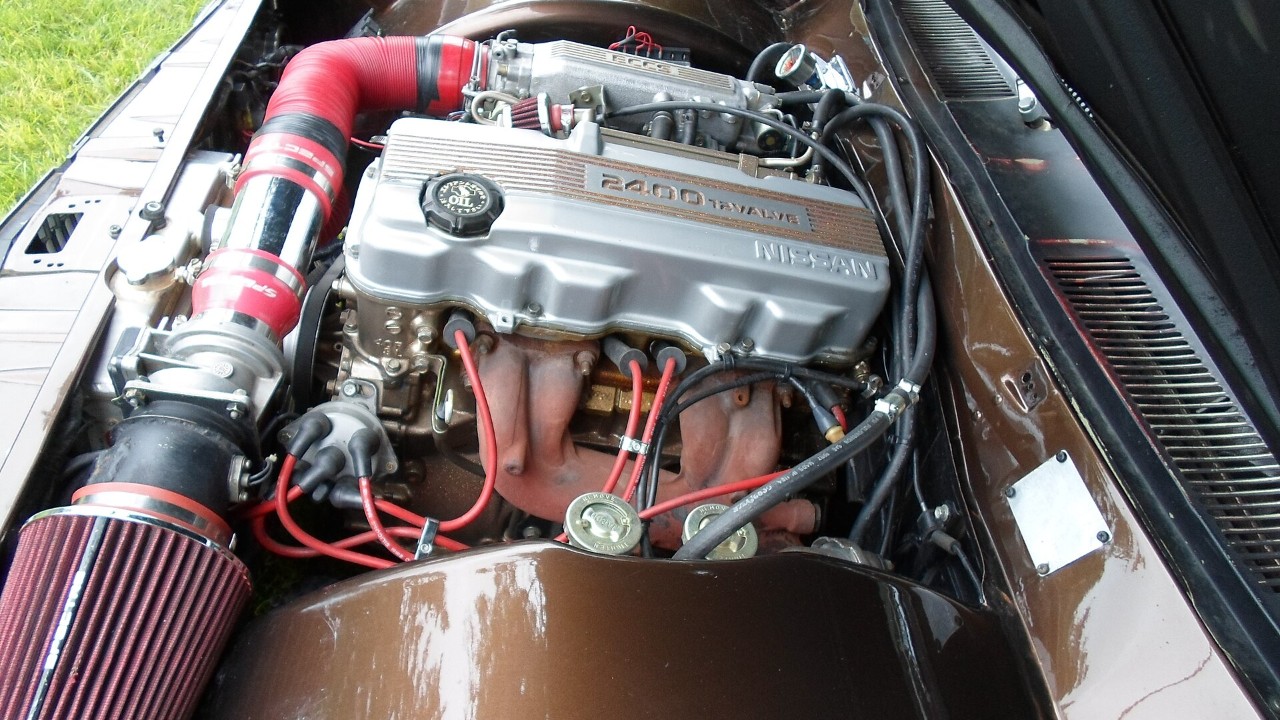
The KA24E is a truck engine that ended up in a sports car. Nissan built it from July 1988 to January 1997, and it displaced 2,389 cc. It used a cast-iron block, an aluminum head and a single overhead cam with three valves per cylinder. Also, a timing chain drove the cam instead of a belt.
With an 8.6:1 compression ratio, Nissan rated the KA24E at 134 hp at 5,600 rpm and 152 lb-ft of torque at 4,400 rpm. It went into the 240SX for 1989 and 1990, the D21 Hardbody pickup from 1990 to 1997 and the Pathfinder from 1990 to 1995. Meanwhile, the bottom end used a cast steel crank and cast steel rods. The whole engine weighs about 371 pounds.
Our take: this is one of the most useful swap engines Nissan ever made. Our photo shows one fitted to a 1973 Datsun 620 pickup, which is just the kind of second life a chain-driven iron four is good for. If you shop for a KA24E, listen for timing-chain rattle on a cold start before you buy.
4. Honda D16 SOHC VTEC four (1996 Civic)
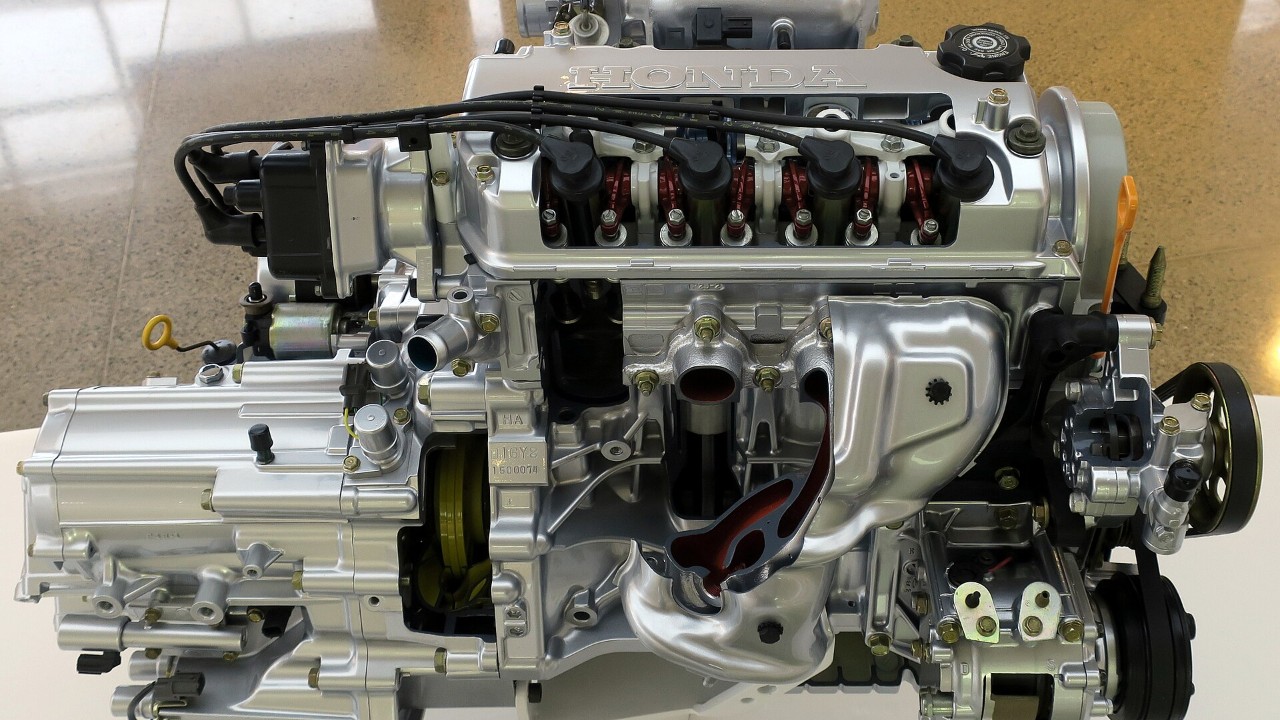
Honda’s D-series went into production in 1983 for the 1984 model year, and it ran until 2005. The family covered several sizes, from 1.2 to 1.7 liters. The 1.6-liter D16 displaced 1,590 cc. By the mid-1990s, Honda had given it a single overhead cam with VTEC and four valves per cylinder.
In the 1996 to 2000 Civic EX sold in the US and UK, the 16-valve SOHC VTEC four made 127 hp at 6,600 rpm. It also produced 107 lb-ft at 5,500 rpm, and its VTEC system switched over at 5,600 rpm. That was strong output for an economy car engine of the time. The same engine also served the 1996 to 2000 Civic Si in Canada. Our photo shows a 1996 Civic 1.6-liter VTEC engine and gearbox on display.
We think the D16 shows Honda at its most practical. It revs happily, and it suits a light car like the Civic perfectly. In our view, that mix of thrift and eagerness is why so many owners keep them running. If you buy one, ask for the service records before anything else.
5. Honda K24 DOHC four
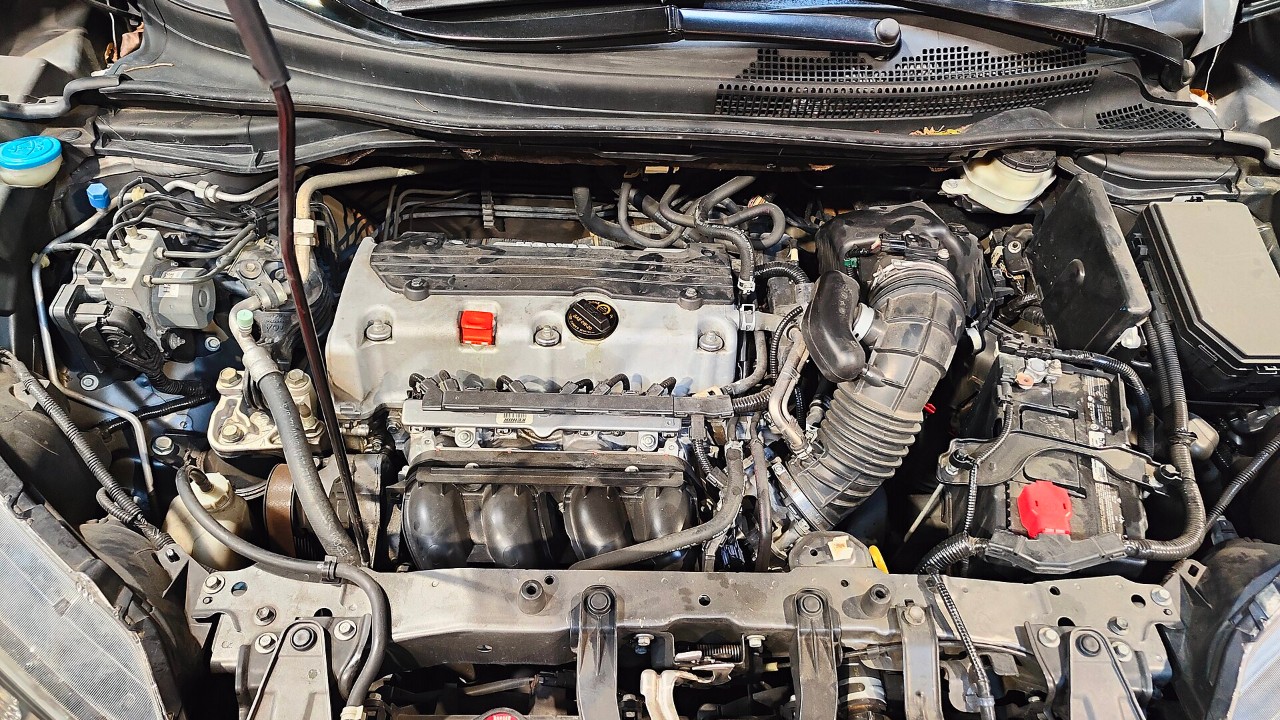
Honda introduced the K-series in 2001, and the family spans 1,998 to 2,354 cc. The K24 sits at the top of that range. It uses double overhead cams, four valves per cylinder and i-VTEC. In addition, Honda fitted roller rockers on the cylinder head to cut friction.
The K24Z6 in our photo comes from the 2010 to 2011 CR-V sold in the US and Canada. It made 180 hp at 6,800 rpm and 161 lb-ft of torque at 4,400 rpm. By comparison, the TSX version made 200 hp for 2004 and 2005, then 205 hp from 2006 to 2008. So the same basic engine could be a family-SUV workhorse or a sport sedan’s heart.
Our take: the K24 is the four-cylinder we would pick for a project car on a budget. Donor engines come from CR-Vs, Elements, Accords and TSXs, while the block shares its design with the K23. For more of Honda’s toughest designs, see our list of Honda engines that seem impossible to break under pressure. If you buy a donor, ask for oil-change records, because a K24 rewards regular service.
6. Honda J35 SOHC V6
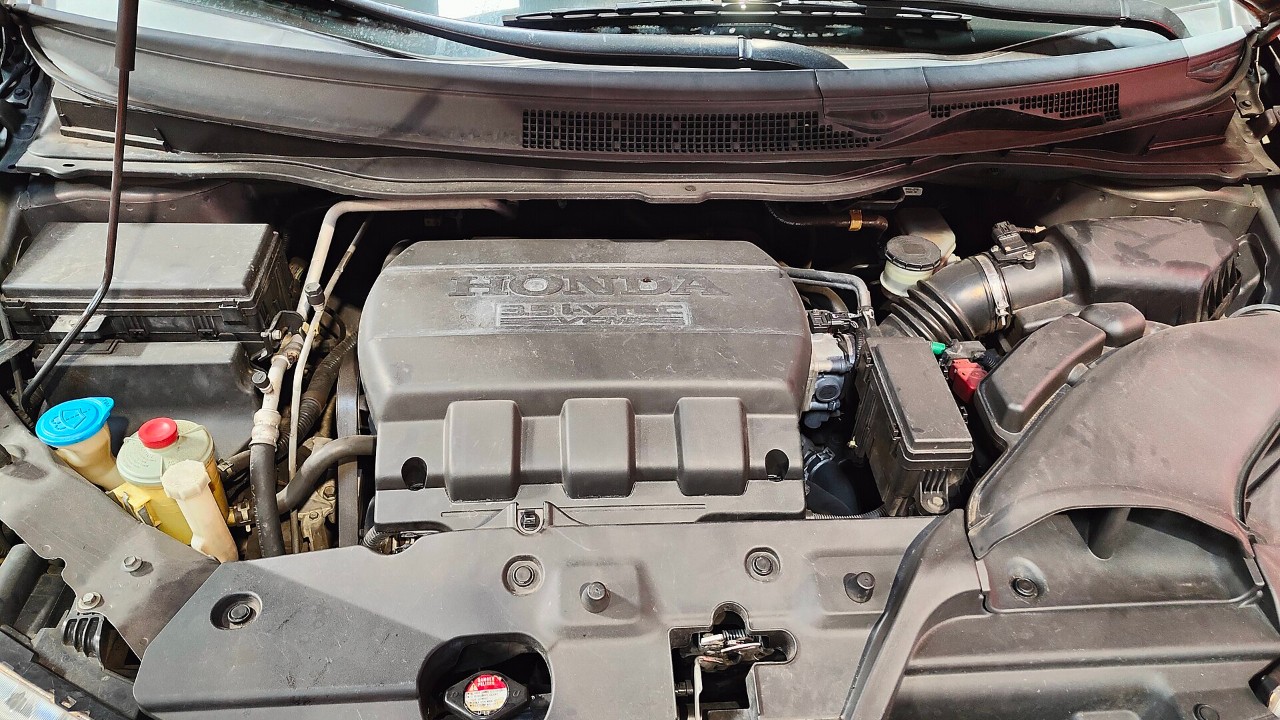
Honda introduced the J-series V6 in 1996. It is a 60-degree design, and Honda built it only for transverse mounting in front-drive cars and crossovers. The 3.5-liter J35 displaces 3,471 cc. It uses a single overhead cam per bank, 24 valves and VTEC, and one timing belt drives the cams.
Honda builds J-series engines at its Anna, Ohio, and Lincoln, Alabama, plants. The Anna plant built its first engine on July 22, 1985, and it has made more than 32.5 million engines, according to Automotive World’s report on its 40th year. Later J35Z engines use a die-cast aluminum block with cast-iron cylinder sleeves. Some versions also use Variable Cylinder Management to shut down cylinders at light load.
In our view, the J35 is one of the most dependable family-car V6s Honda has built. The 2009 to 2014 Acura TL version made 280 hp, which shows how far the design could stretch. If you shop for one, budget for the timing belt at the interval in the owner’s manual. On a VCM engine, also ask whether the cylinder-shutdown system has needed any work.
7. Honda F20C DOHC four (S2000)
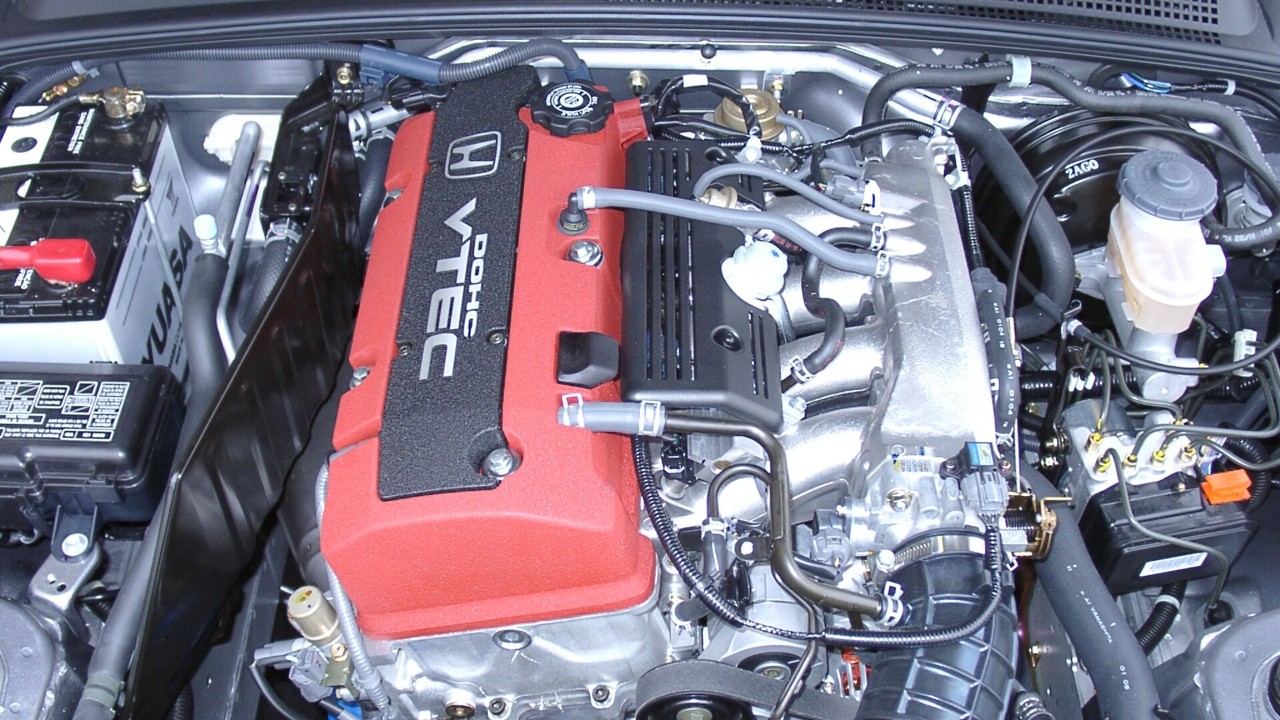
Honda built the F20C for the S2000, and it is a very different animal from a commuter four. The engine displaces 1,997 cc and sits lengthwise to drive the rear wheels. It uses roller followers and VTEC on both the intake and exhaust cams. Early cars could rev to 9,150 rpm.
The Japanese F20C ran a higher compression ratio and made 250 PS, or 247 bhp, at 8,300 rpm. Early North American and European versions made 237 PS. Overall, the F20C works out to 125 hp per liter, the highest specific output of any naturally aspirated piston engine in a car priced under $100,000. North American cars used the F20C from 2000 to 2003, before the larger F22C1 took over for 2004.
Our take: an engine this high-strung has no business feeling this tough, yet in our view the F20C does. Honda built it to rev and kept the rest of the car simple. If you look at an S2000, ask about oil level checks, because a high-revving engine needs a full sump, and look for signs of over-revving from missed shifts.
8. Toyota 1G-FE inline-six
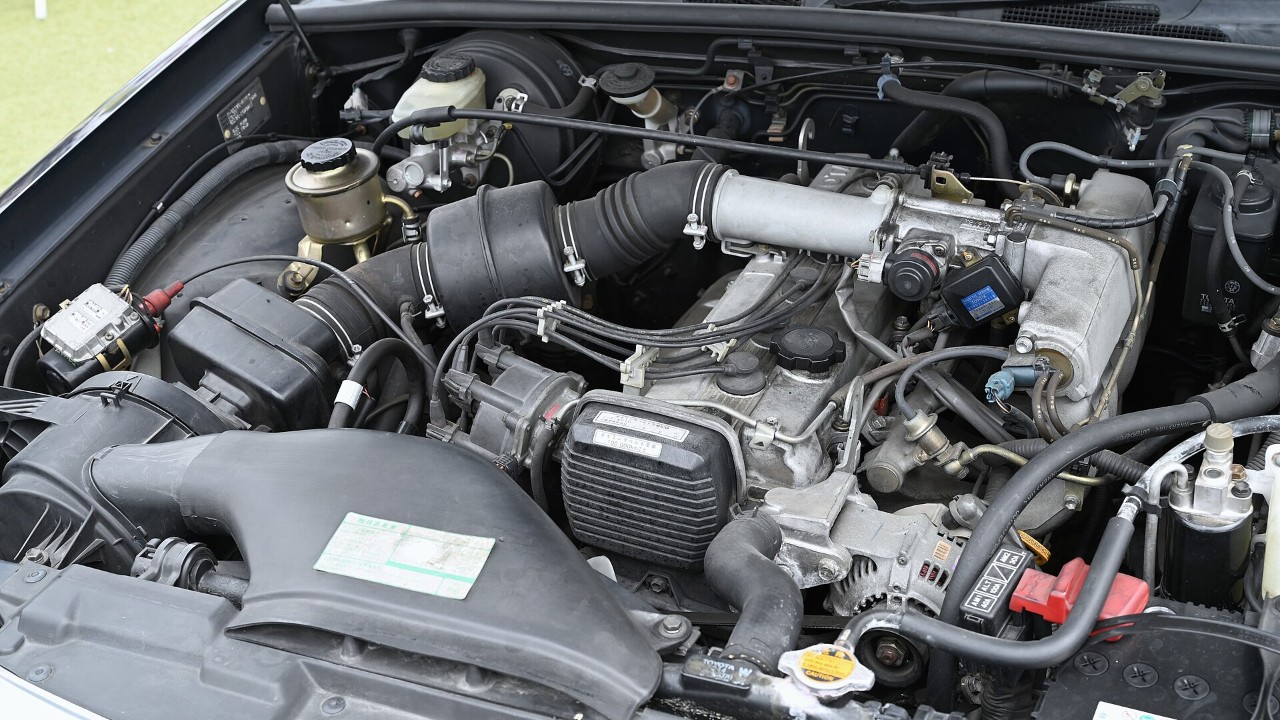
Toyota’s G family of inline-sixes ran from 1979 to 2008, and every one of them displaced 2.0 liters, or 1,988 cc. The twin-cam 1G-FE arrived in 1988. It used a narrow valve angle and Toyota’s slave-cam system, and a belt drives the valvetrain.
Toyota rated the 1G-FE at 135 PS at 5,600 rpm and 176 Nm at 4,400 rpm. Then, in 1998, VVT-i raised output to 160 PS in the Altezza and Lexus IS 200. The 1G-FE also served in the Crown, the Chaser, the Mark II, the Verossa, the GA70 Supra and the Soarer. That is two decades of work for one engine design. Before it, the single-cam 1G-E had served the S130 Crown. Our photo shows the engine bay of a 1994 Crown Sedan Super Deluxe.
We think the 1G-FE proves a small six can be both gentle and long-lived. It was never fast, but it served family sedans and executive cars that worked hard every day. In fact, the G family stayed in production until 2008, when Toyota retired the Crown Sedan that used it.
9. Toyota 1MZ-FE V6
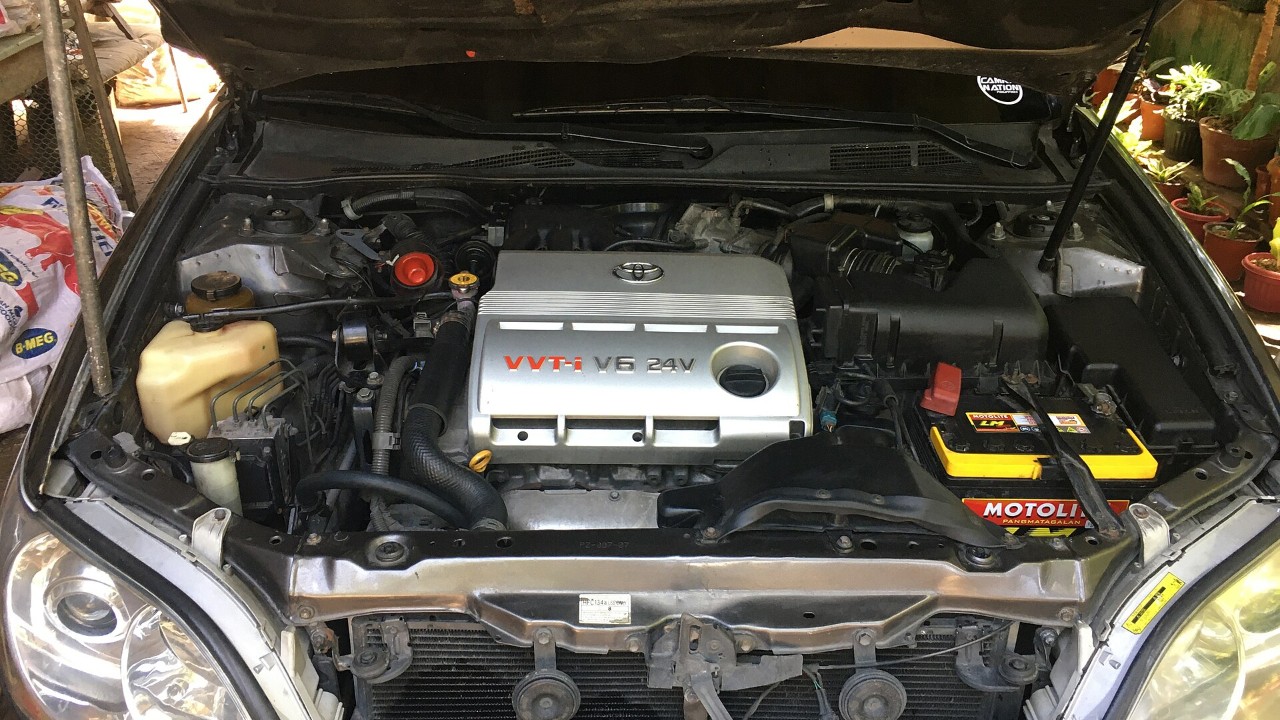
Toyota’s MZ family arrived in 1993, and the 3.0-liter 1MZ-FE displaced 2,994 cc. It used an all-aluminum block with cast-iron cylinder liners and double overhead cams. The base version made 194 to 201 hp. After Toyota added VVT-i in 1998, the 1MZ made 210 hp and 222 lb-ft, and the Highlander version made 220 hp.
The 1MZ went into some of America’s best-known family cars. It powered the Camry from 1994 to 2002, the Avalon from 1994 to 2004 and the Lexus ES 300 from 1994 to 2003. Also, the Sienna used it from 1997 to 2002, the Camry Solara from 1998 to 2003 and the Highlander from 2000 to 2003. That is a long list of cars built to carry families for years, and Toyota kept the MZ family in production until 2014.
Our take: the 1MZ is smooth, simple and long-lived, but it has one known flaw. The MZ engines can suffer from oil gelling, or sludge, and that led to a class action lawsuit. If you buy one, ask for oil-change records, and check the PCV system and valve cover gaskets.
10. Toyota 5S-FE four
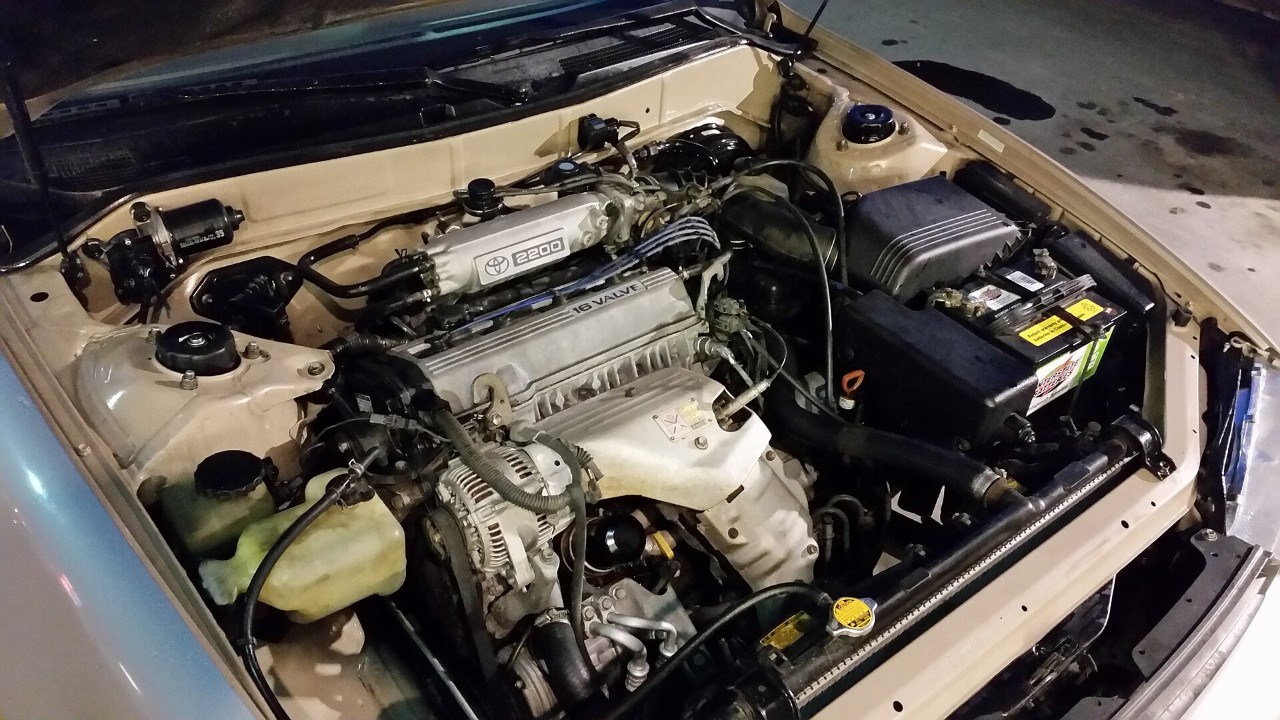
The 5S-FE is Toyota’s 2.2-liter version of the S-series four, with 2,164 cc and a 9.5:1 compression ratio. The S-series used an iron block and an aluminum head. In addition, the 5S is a non-interference engine. That means the pistons will not hit the valves if the timing belt breaks.
Toyota built the 5S-FE from 1990 to 2001, and it later replaced it with the 2AZ-FE. Output ran from 130 bhp in the early 1990s to 136 bhp for 2000 and 2001. Besides the Camry, it powered the US Celica GT and GT-S and the first Camry Solara. The Camry versions also got counter-rotating balance shafts for smoothness. By comparison, the 1994 to 1999 Celica and the 1991 to 1995 MR2 did without them.
In our view, the non-interference design is the 5S-FE’s best feature for owners. A snapped belt leaves you stranded, but it does not wreck the engine. For more on the brand’s long-life engines, see our list of Toyota engines that handle mileage better than most competitors. If you buy one, budget for a belt change anyway, because that is cheap insurance.
11. Nissan SR20DE four (1999 Infiniti G20)
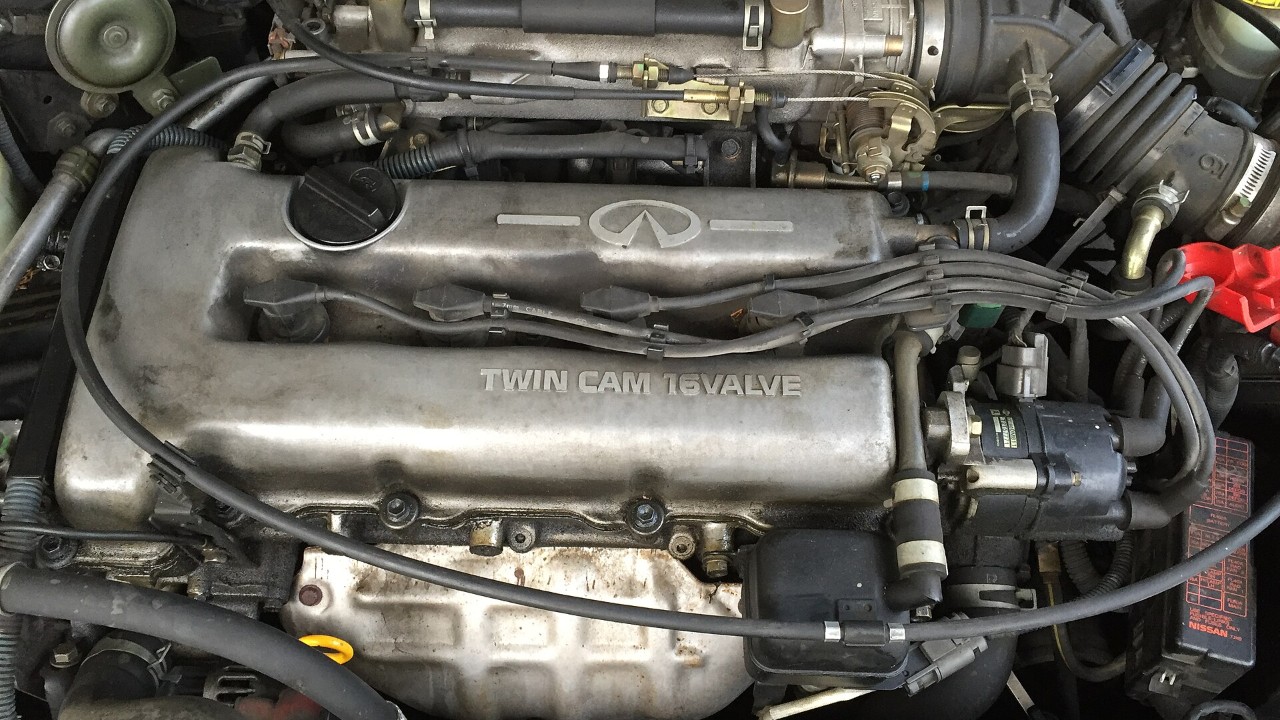
Nissan’s SR20DE first appeared in the U12 Bluebird in October 1989. It is a 2.0-liter, 1,998 cc four with an all-aluminum block and head, plus steel cylinder sleeves. It uses double overhead cams and 16 valves. Meanwhile, a timing chain drives the cams, so there is no belt to replace.
In 1991 SAE trim, with a 10.0:1 compression ratio, the SR20DE made 145 hp at 6,400 rpm and 132 lb-ft at 4,800 rpm. Across all its versions, factory ratings ran from 125 to 165 hp. Nissan used it in more than 15 models before the QR family replaced it in 2002, 13 years after its debut. In the US, the Infiniti G20 used it, and our photo shows the engine in a 1999 G20.
Our take: the SR20DE is a compact, square-bore four that loves to rev and seems to shrug off hard driving. Its 86 mm bore and 86 mm stroke give it a balanced feel. If you find one, listen to the timing chain on a cold start and check the service history before you buy.
12. Mercedes-Benz M104 inline-six (1995 E36 AMG)
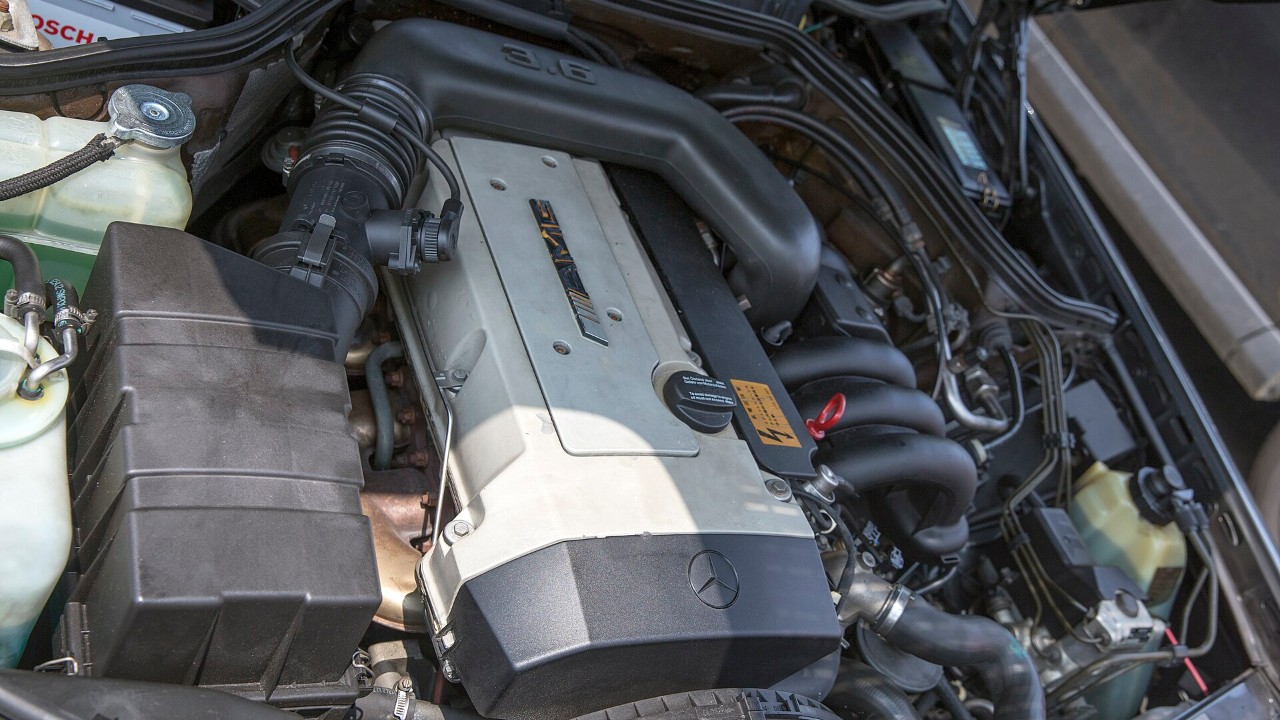
Mercedes-Benz built the M104 straight-six from 1989 to 1998. It used a cast-iron block, an aluminum head and double overhead cams with four valves per cylinder. The range covered 2.8, 3.0 and 3.2 liters. The 3.2-liter M104 E32 made 217 or 228 hp, depending on the version.
AMG then took the M104 to 3.6 liters, or 3,606 cc, for its M104.992 engine. It was rated at 276 hp at 5,750 rpm and 284 lb-ft at 4,000 rpm. However, AMG later conceded that output ranged from about 276 to 287 hp, because each engine was modified by hand. Our photo shows the M104 E36 in a 1995 AMG E36 wagon sold in Japan.
In our view, the M104 is one of the toughest-feeling Mercedes sixes of its era. The iron block gives it a solid base, and the AMG version adds real performance. If you buy one, ask for full service records, because a well-kept AMG six is the one to own. AMG fitted the 3.6 to the W124 E36 AMG, the W202 C36 AMG, the W210 E36 AMG and the W463 G36 AMG.
More from Fast Lane Only