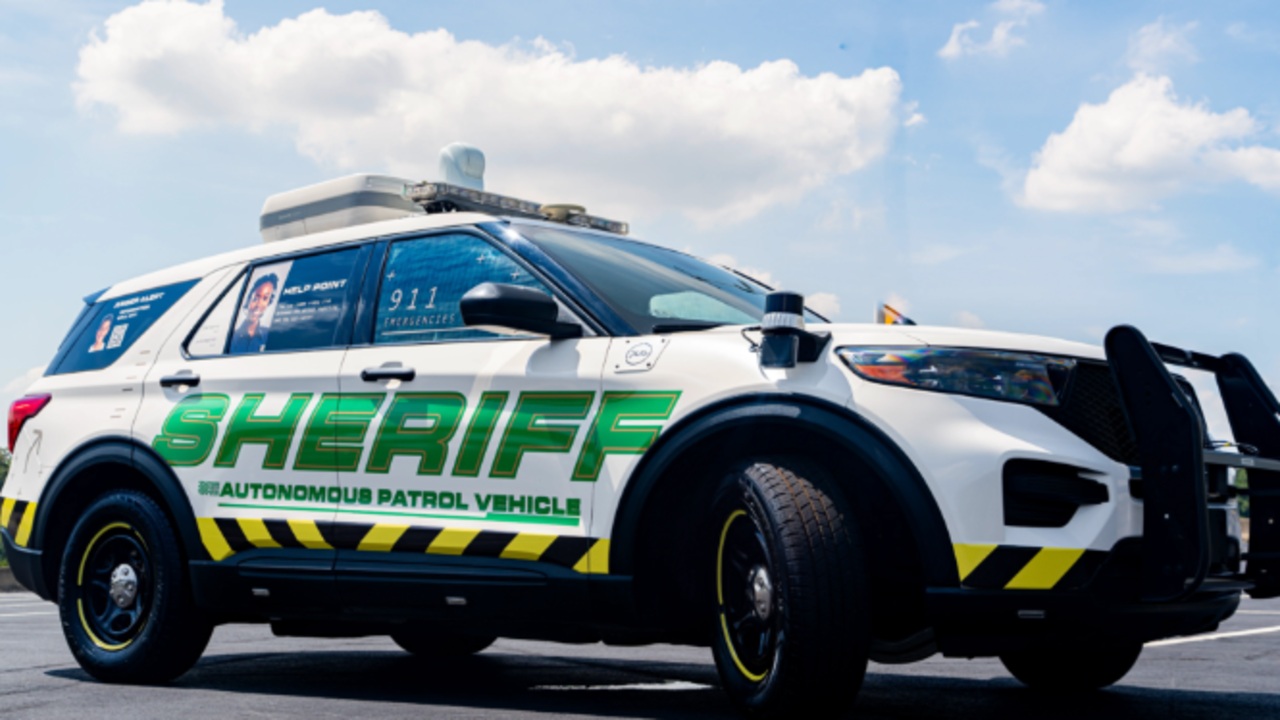
Miami-Dade’s newest patrol car glides along the street without an officer inside, bristling with cameras, sensors, and even a drone. It looks like the future of law enforcement, yet for now it cannot write a ticket, make an arrest, or legally compel anyone to do anything. The self-driving cruiser is a rolling symbol of how quickly police technology is racing ahead of the laws that are supposed to govern it.
Marketed as a breakthrough in public safety, the vehicle is instead trapped in a legal gray zone where it can watch, record, and “show presence,” but not actually enforce a single statute on its own. I see it less as a robotic cop and more as a very expensive, very conspicuous camera car that exposes how unprepared regulators are for autonomous policing.
What the PUG can actually do on Miami streets
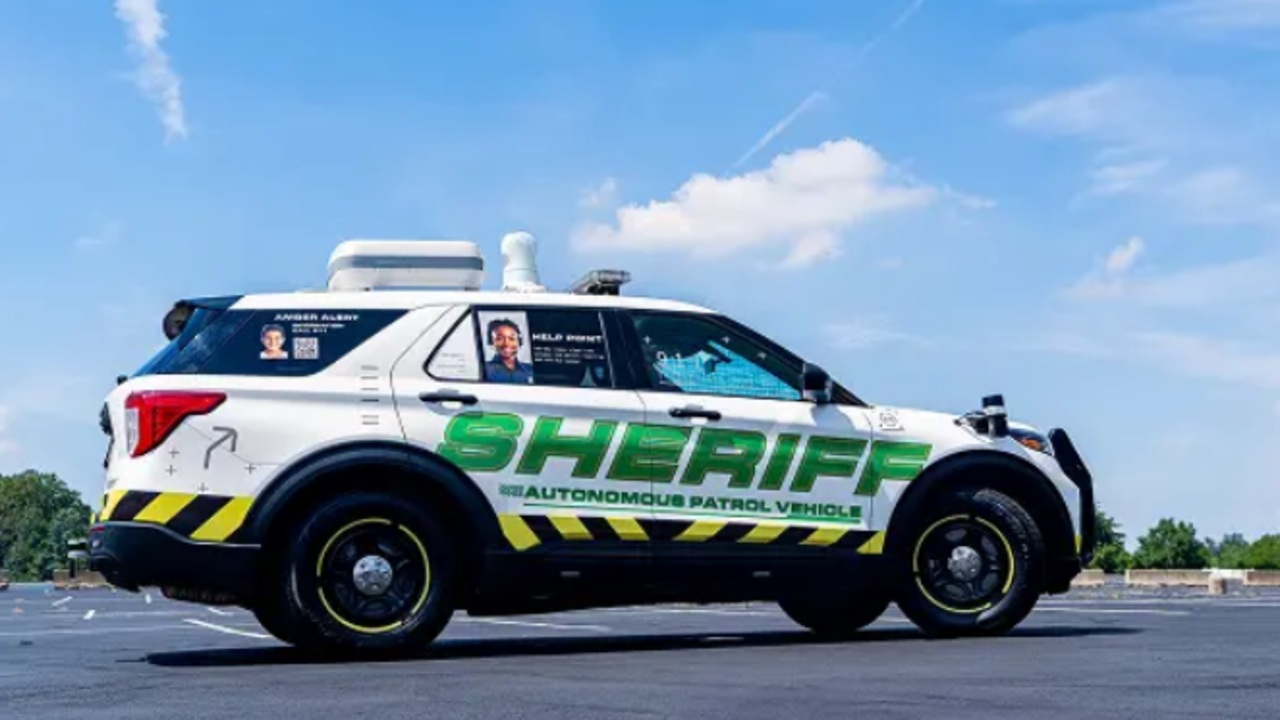
The Miami-Dade Sheriff Office is testing a self-driving cruiser known as the PUG, a compact electric vehicle that patrols on its own and is packed with law-enforcement hardware. The PUG carries license plate readers, a roof mounted drone, and a 360 degree camera array that lets it scan its surroundings and stream video back to human operators. According to descriptions of the program, Deputies can also summon the PUG to active crime scenes so it can launch its drone, capture aerial footage, and provide extra situational awareness for officers on the ground, turning the car into a mobile sensor hub rather than a traditional patrol unit.
Despite its futuristic look, the PUG is not a fully autonomous cop. The vehicle was donated to Miami Dade by the non profit Policing Lab, and it is being used as a test platform for how a driverless car might support law enforcement rather than replace officers. Reporting on the rollout notes that the PUG can move through neighborhoods on preplanned routes, project a police presence, and relay what it “sees” to a control center, but it still depends on human Deputies to interpret that data and decide whether to intervene. In practice, it is closer to a roving surveillance camera than a patrol partner with legal authority.
A “police car of the future” that cannot enforce the law
Local officials have pitched the PUG as a glimpse of the police car of the future, the kind of vehicle that could one day appear in a rearview mirror and signal a traffic stop without anyone in the driver’s seat. Promotional clips show The Miami Dade Sheriff Office highlighting how the car can operate itself, cruise slowly through communities, and interact with residents through external speakers and screens. The message is clear: automation is coming to policing, and Miami-Dade wants to be seen at the forefront of that shift.
Yet the same coverage makes it clear that, for now, the PUG is not empowered to pull anyone over or issue citations on its own. One detailed account of the program notes that the car can look around, record, and even broadcast messages, but it has no legal pathway to write a ticket or initiate an arrest without a human officer taking over. Another report on the self-driving police cruiser patrolling Miami-Dade streets underscores that the vehicle is being framed as a way to increase visibility and “touch” the community, not as a replacement for in person policing. The technology is advanced enough to navigate traffic, but the law still treats enforcement as something only a human officer can do.
The legal gap exposed by driverless enforcement
The PUG’s limitations are not just a Miami problem, they reflect a broader legal gap around autonomous vehicles and accountability. In California, a widely discussed incident involving a driverless Waymo that was pulled over for an illegal U turn in Los Ang highlighted how existing traffic codes assume there is always a human behind the wheel. As one detailed account of that stop explained, state law there ties most moving violations to an actual driver, which makes it difficult for officers to issue a ticket when the “driver” is an algorithm. A separate discussion of the same case noted that Individuals online quickly seized on the question of who should be cited, the passenger, the company, or no one at all.
Those unresolved questions echo in Miami-Dade, where the PUG can roam neighborhoods but cannot lawfully compel a motorist to stop or accept a citation. If a self-driving police car signals a driver to pull over, and the driver refuses, who is responsible for the outcome, the human supervisor watching a video feed, the agency that deployed the car, or the manufacturer that wrote its code. Reporting on the California incident makes clear that lawmakers there are still trying to update statutes so that autonomous vehicles can be held accountable, but that process is incomplete. Until similar legal frameworks exist in Florida, the PUG will remain a high tech observer, not an enforcer.
Presence, perception, and the risk of rolling surveillance
Miami officials have emphasized that simply putting the PUG on the road is valuable because visible police presence can deter crime. In a televised segment on the self-driving cruiser, one commentator framed the car as a way to extend that presence without tying up an officer, likening it to telling a digital assistant like Siri to “go police” a neighborhood. Miami Dade Sheriff Ros has described the program as a way to connect with the community in a way the agency has “never done before,” suggesting that residents might approach the car, ask questions, or report concerns while it patrols.
That framing, however, glosses over the fact that the PUG is also a dense package of surveillance tools that can quietly collect data even when it is not actively interacting with anyone. The vehicle’s license plate readers can log every car it passes, its cameras can capture faces and activities on sidewalks, and its drone can extend that gaze into backyards and rooftops once launched. Coverage of the program notes that the PUG can patrol on its own for extended periods, which means it can build a detailed record of where people live, drive, and gather without the friction of assigning a human officer to sit in a cruiser. In effect, Miami-Dade has deployed a mobile sensor tower that is not yet constrained by the same expectations residents might have when they see an officer step out of a marked car.
Why Miami’s robot cruiser matters beyond Florida
Even in its current, legally toothless form, the PUG is an important test case for how far communities are willing to let automation seep into everyday policing. Car buyers are only slowly warming to advanced driver assistance in their own vehicles, yet Miami-Dade is already experimenting with a fully self-driving police platform that can operate with no one inside. One detailed look at the program points out that the PUG is more capable as a robot car than many consumer models, but it is still constrained by the lack of clear rules about what a driverless police vehicle is allowed to do. That mismatch between technical capability and legal authority is likely to surface in other cities as agencies look for ways to stretch limited budgets and staff.
I see Miami’s experiment as a preview of the debates that will follow. If the PUG remains a glorified camera car, residents may question whether the benefits justify the privacy tradeoffs and cost, especially when it cannot enforce the law on its own. If lawmakers eventually grant driverless cruisers real enforcement powers, the stakes will rise sharply, forcing communities to confront who is accountable when an algorithm makes a bad call. For now, the PUG glides through Miami-Dade as a symbol of that tension, a self-driving police car that can patrol, record, and project authority, but still cannot legally act on what it sees without a human stepping in.
More from Fast Lane Only: