The Mustang Grande sold 22,182 copies in its first year, 1969, and almost nobody talks about it now. That says a lot about how people remember Ford’s pony car. After all, everyone knows the 1965 original, the Boss cars and the big-block Shelbys. Meanwhile, dozens of other Mustangs slipped out of the spotlight.
Some were luxury trims that buyers loved and collectors ignored. Others, by comparison, were limited editions, club favorites or rental cars with a racing story behind them. In other words, the forgotten Mustangs are often the most interesting ones to own.
These are our picks for 12 forgotten Mustangs we swear we’d never sell. The verdict is our opinion, plain and simple. However, the engines, production figures and sale results below come from model histories, auction houses and Mustang specialists.
1. 1971 Ford Mustang Grande
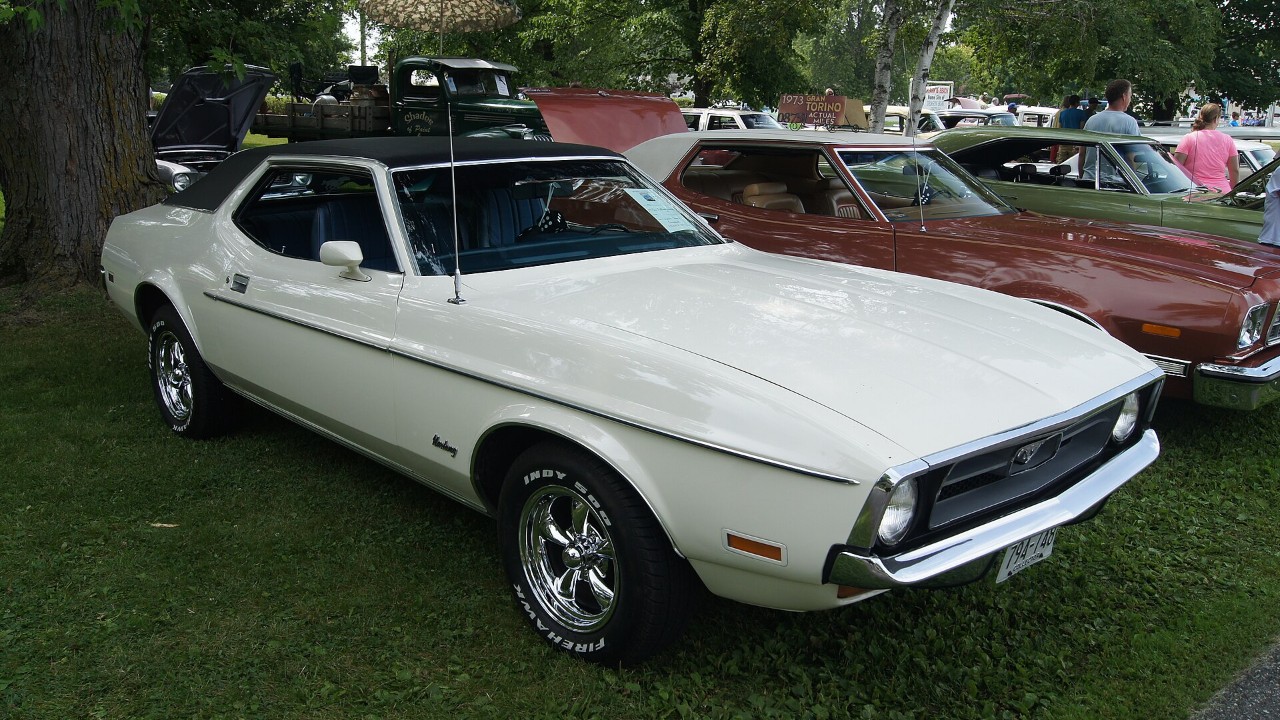
First, some history: Ford launched the Mustang Grande for 1969 as the comfortable Mustang. It came only as a hardtop, with a soft ride, 55 pounds of extra sound deadening and a deluxe cabin with simulated wood trim. For 1971, the whole Mustang grew 3 inches wider so it could swallow Ford’s 429-cubic-inch big-block V8.
Then, that same year, the Grande gained a vinyl roof and Grande badges on its C-pillars. Meanwhile, the 1971 Mustang engine list ran from a 250-cubic-inch six to the 429 Cobra Jet, rated at 370 horsepower. That range tells you how wide Ford’s pony car had become. Between those extremes sat a 351 Cleveland two-barrel with 240 horsepower, which sounds like the right match for a quiet, padded cruiser.
Our take: the 1971 Mustang Grande is the one we would keep for long weekend drives. Indeed, it feels like a personal luxury car in a pony car body. We like that a Mustang Grande surprises people who think every Mustang is a muscle car. Find one with the vinyl roof, the C-pillar badges and a V8, and you have a Mustang that rewards a long, relaxed drive more than a stoplight sprint.
2. 1982 Ford Mustang GT hatchback
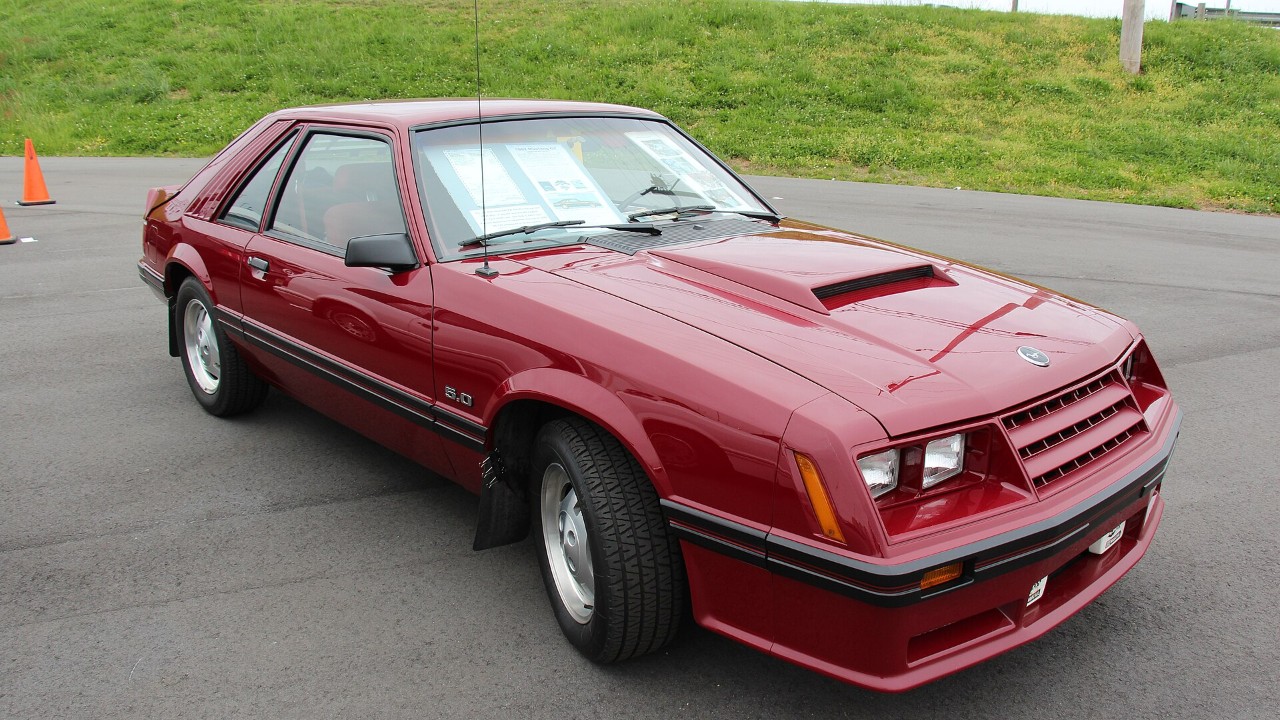
The Fox-body Mustang arrived for 1979, and three years later Ford brought back the GT name. The 1982 GT used a High Output version of the 302-cubic-inch V8 rated at 157 horsepower. Ford’s ads put it bluntly: “The Boss is Back!” That was a bold promise for a car with 157 horsepower, and we love Ford for making it.
That number looks small today, but it mattered. In short, the GT gave buyers a V8 hatchback with real attitude. It also opened a decade of 5.0 Mustangs that the aftermarket would embrace. In fact, the formula grew quickly. By the 1987 facelift, the same basic V8 was rated at 225 horsepower and 300 lb-ft of torque.
Our take: we would never sell a clean 1982 Mustang GT hatchback because it marks the moment the Mustang started fighting back. After all, it is the first chapter of the 5.0 story. We would hunt for an unmodified one and leave it that way. The early Fox GT is the car that proved Ford had not given up on the V8 pony car, and that history is worth protecting.
3. 1984 Ford Mustang GT 20th Anniversary convertible
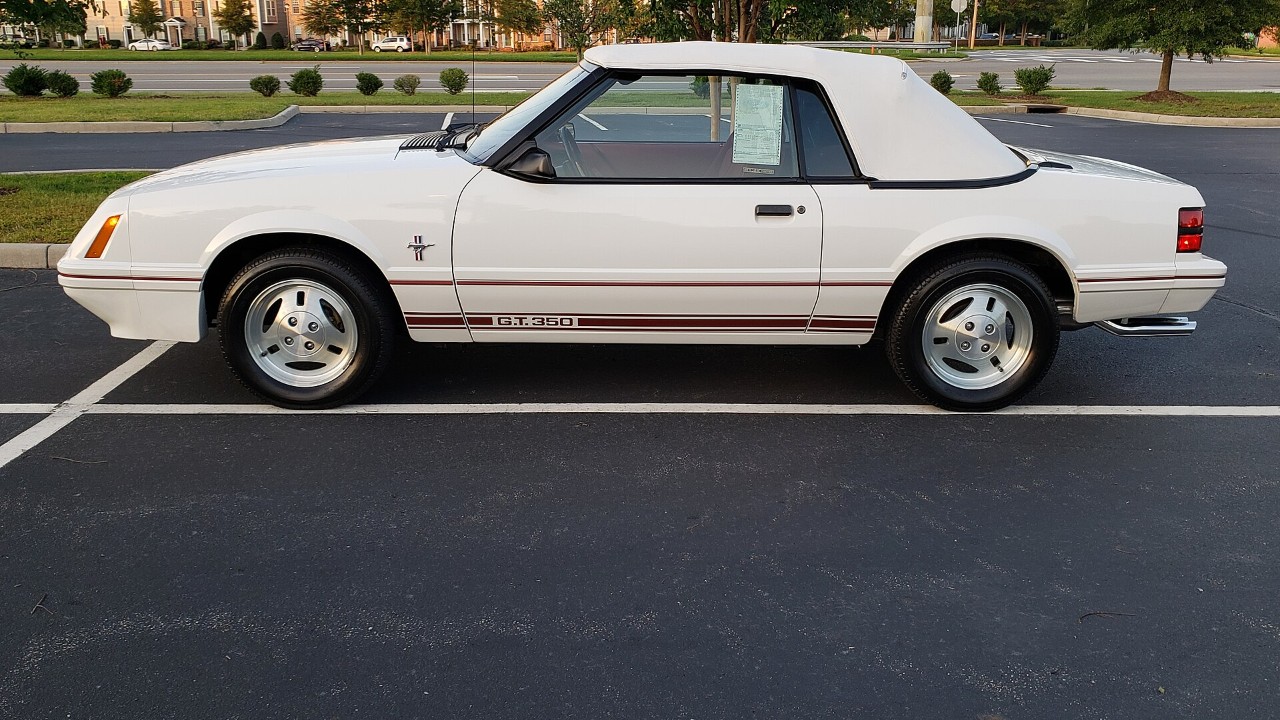
For the Mustang’s 20th birthday, Ford built 5,261 hatchbacks and convertibles under the G.T.350 name. Every one wore Oxford White paint with a Canyon Red interior. Red G.T.350 stripes ran along the rockers, and tri-bar pony emblems sat on the front fenders.
Buyers had two engine choices. First, the carbureted 302 came only with a manual transmission. Alternatively, the electronically fuel-injected 302, rated at 165 horsepower, came only with an automatic. Either way, the convertible gave you open-air V8 cruising with a direct link to the original Shelby name. For our money, the fuel-injected automatic is the relaxed choice for weekend drives, while the carbureted manual is the one for purists.
Our take: the 1984 Mustang GT 20th Anniversary convertible is the forgotten anniversary car. The white-and-red look ages well, and the production total also keeps it special. We would keep one with its stripes, badges and paperwork intact. Two decades earlier, the G.T.350 name had belonged to Shelby’s original Mustang, so the badge carries real weight. Ford was reaching back to its own past, and the white-and-red car did it with style.
4. 2003 Ford Mustang Mach 1
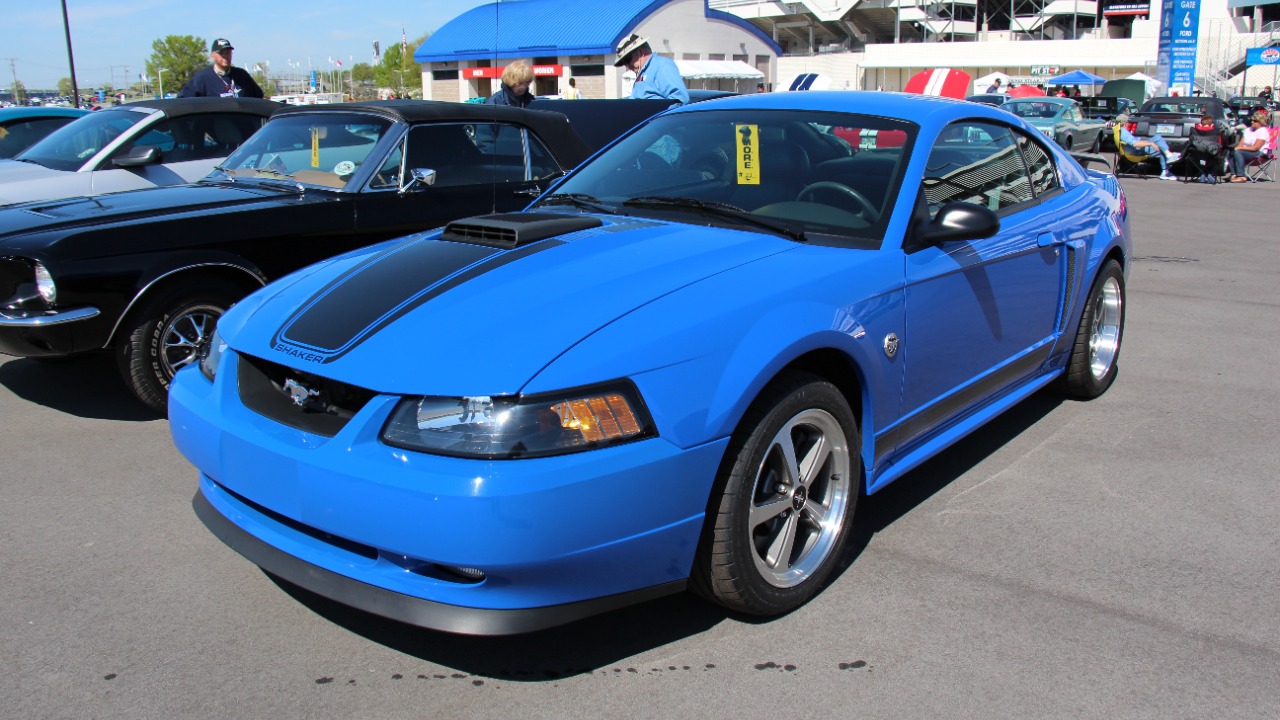
Ford first advertised the new Mach 1 as a one-year, 6,500-unit run. However, demand blew past that plan. Ford built 9,652 in 2003 and another 7,182 in 2004. Power came from a 4.6-liter DOHC 32-valve V8 rated at 305 horsepower, paired with a Tremec five-speed manual or a four-speed automatic.
That said, the party piece was the hood. Ford built a semi-functional “Shaker” scoop on the 1970 Mach 1’s tooling, and it fed cool air toward the airbox. The car also borrowed the Bullitt GT’s 13-inch Brembo front rotors, Tokico shocks and lower, stiffer springs. In fact, it was a big step up from the Bullitt’s 265 horsepower. Out back, Ford used its 8.8-inch solid axle with a 3.55 final drive ratio.
Our take: the 2003 Mach 1 sits in the shadow of the Cobra from the same years, and that is a mistake. We would keep one for the Shaker hood alone. Watching that scoop shake at idle is a little bit of 1970 in a 21st-century car, and the overrun in production shows plenty of buyers felt the same way. For more of the era’s best, see our list of 8 Mustang Cobra models that raised the stakes.
5. 1987 Saleen Mustang
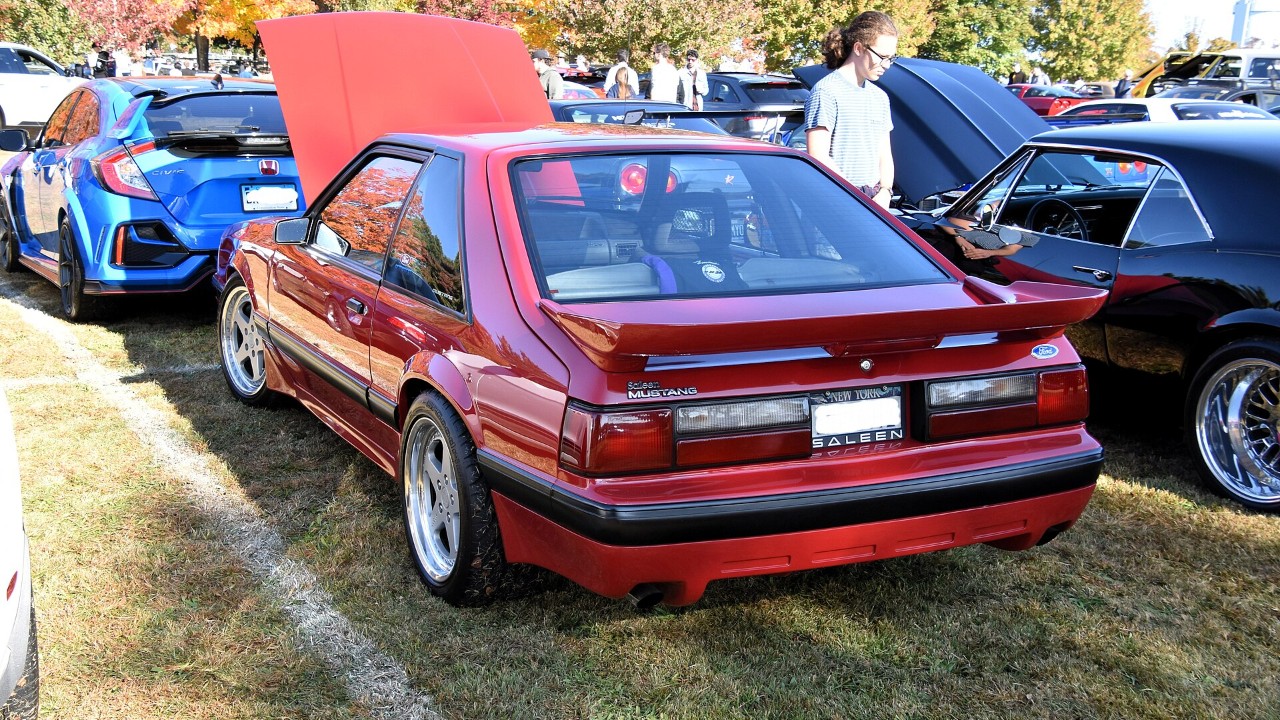
At first, Steve Saleen started small. According to Hagerty, Saleen converted three factory Mustangs in 1984. Later, output grew to just over 200 by 1986 and well over 700 by 1988. For 1989, Saleen built nearly 900. Saleen poured his racing experience into the suspension and power upgrades.
In those years, the recipe centered on Racecraft suspension, 16×7 Riken alloy wheels and Saleen aero body parts. Inside, owners found a three-spoke Momo steering wheel, a Hurst shifter and sport seats. Hagerty also notes that collector interest in Fox-body Mustangs has climbed. Original cars can sell for more than modified ones, and Saleen’s records on each car can affect value.
Our take: the 1987 Saleen Mustang is the thinking fan’s Fox body. It handles, it looks the part, and it carries a documented story. That is why we would never let go of one with its paperwork. A Saleen shows what a small, determined shop could do with Ford’s pony car. For the wider Fox story, see our 10 Fox Body Mustangs that helped revive affordable performance in the 1980s.
6. 2007 Ford Shelby GT-H convertible
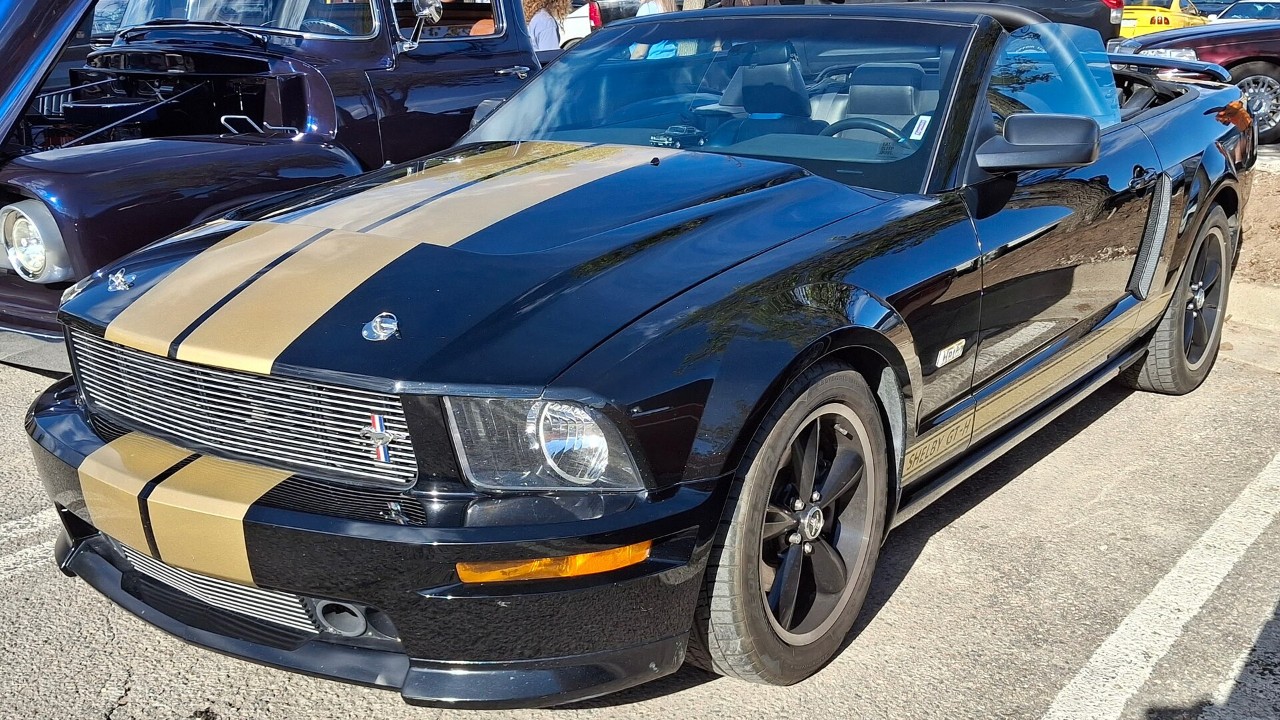
Shelby and Hertz have worked together since the 1960s, when the GT350 joined the “Rent-A-Racer” program. In 2007, the program added a convertible. According to the Shelby announcement, about 500 convertibles were built for Hertz rental fleets at Shelby Automobiles’ facility in Las Vegas.
Each car wore black paint with gold “Le Mans” stripes, the classic Hertz livery. It also got the Ford Racing Power Pack and Handling Pack, a 3.55:1 rear axle and 18-inch black wheels. Inside, a numbered dash badge carried Carroll Shelby’s signature. Outside, it had a pinned hood, a brushed aluminum grille and body side scoops. Hertz offered it at select airports, including Phoenix, Los Angeles, Denver, Las Vegas and Honolulu. Later, RM Sotheby’s sold one at its 2015 Auburn Spring sale for $34,100.
Our take: a rental car is an unusual keeper, but the 2007 Shelby GT-H convertible is no ordinary rental. Instead, it links straight back to the 1960s Hertz cars. We would keep ours in black and gold forever, with the Hertz sill plates and numbered badge intact. It is a rental car with a pedigree.
7. 1973 Ford Mustang Mach 1
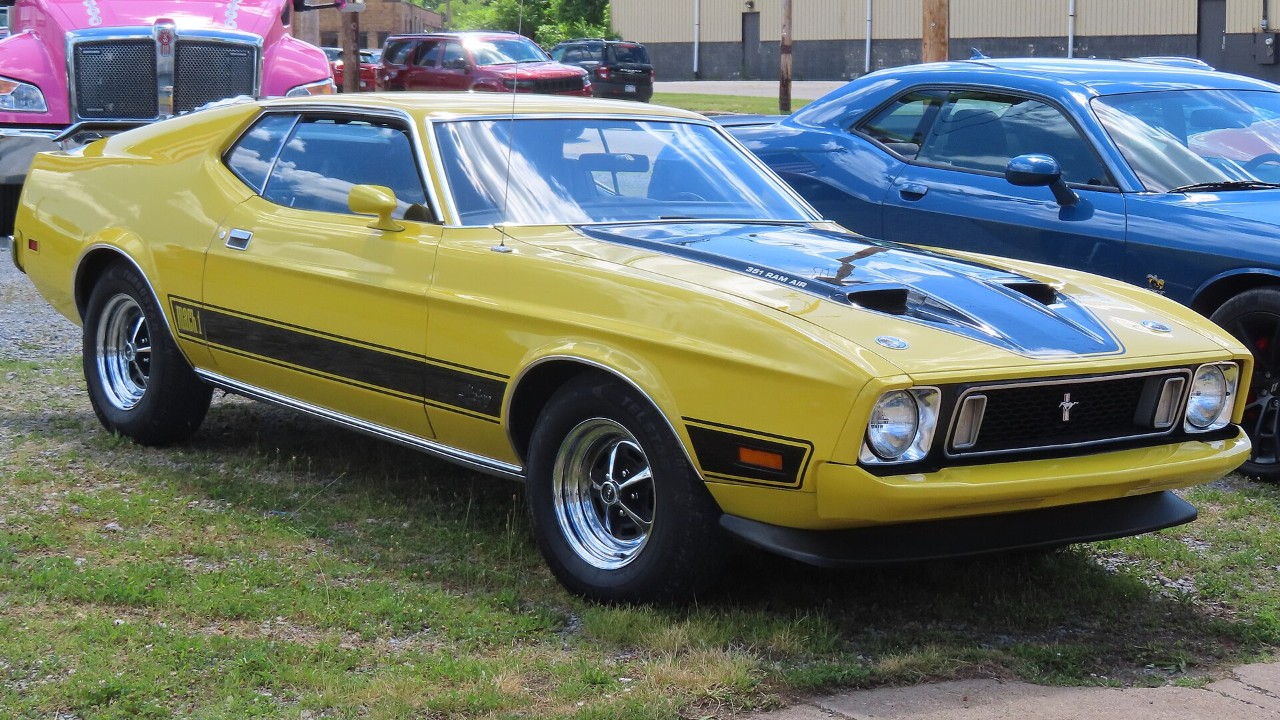
The 1973 Mach 1 closed out the big 1971 to 1973 generation. Its engine lineup was broad, and every listed choice was a V8. The 302 two-barrel made 140 horsepower, and the 351 Cleveland two-barrel made 177. Finally, at the top sat the 351 Cleveland CJ four-barrel at 266 horsepower. Those numbers look low partly because Ford had switched to SAE net ratings in 1972.
The hood told a story, too. In fact, its NACA-style ducts did nothing on most cars. They only worked with the Ram Air option, which in 1973 was limited to the 351 two-barrel. Ford also offered a “Tu-Tone” hood treatment that was purely for show. In 1974, the Mach 1 name moved to the Pinto-based Mustang II.
Our take: the 1973 Mach 1 is the last of the big, long-hood fastbacks, and it gets overlooked next to the 1969 and 1970 cars. We would keep one with the 351 CJ if we could find it. Its size makes it a fine highway car. It is also the last Mach 1 with the wider body of the 1971 redesign.
8. 2008 Ford Shelby GT500KR 40th Anniversary
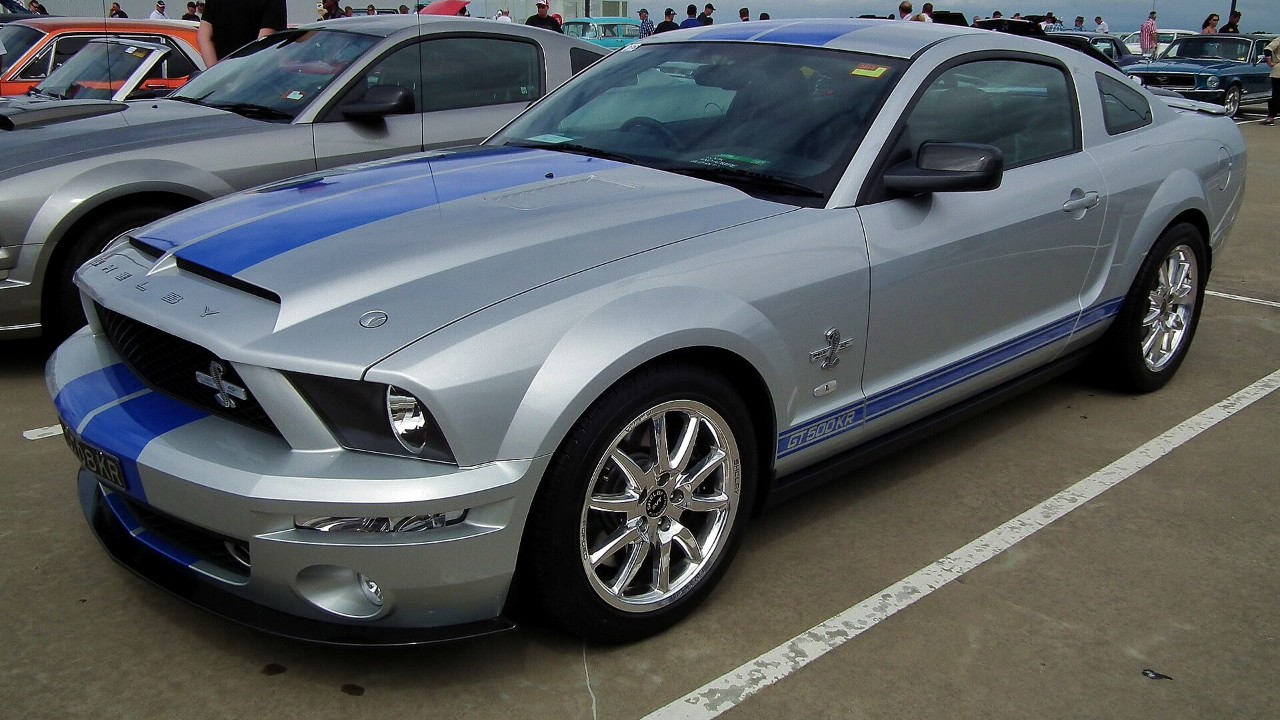
The original 1968 GT500KR, short for “King of the Road,” used a 428 Cobra Jet rated at 335 horsepower. Forty years later, Ford and Shelby revived the name with a 540-horsepower car. The plan called for 1,000 40th Anniversary Editions for the U.S. in 2008 and another 571 in 2009.
That 1,571 total was no accident. Instead, it matched the original 1968 GT500KR run. That original car’s 335-horsepower rating is widely seen as underreported, which only adds to the KR’s reputation. The new KR also found fame on TV, because the 2008 Knight Rider reboot used a GT500KR as KITT. As a result, an entire generation of young fans met the King of the Road through a talking car, not a drag strip.
Our take: the 2008 Shelby GT500KR 40th Anniversary gets lost between the regular GT500s. That is a shame, because few modern Mustangs have such a clear tie to a classic. We would never sell a low-mile example with its anniversary details intact. The KITT connection is a fun bonus, but the real appeal is the 540-horsepower link to a 1968 classic.
9. 1993 Ford Mustang SVT Cobra hatchback
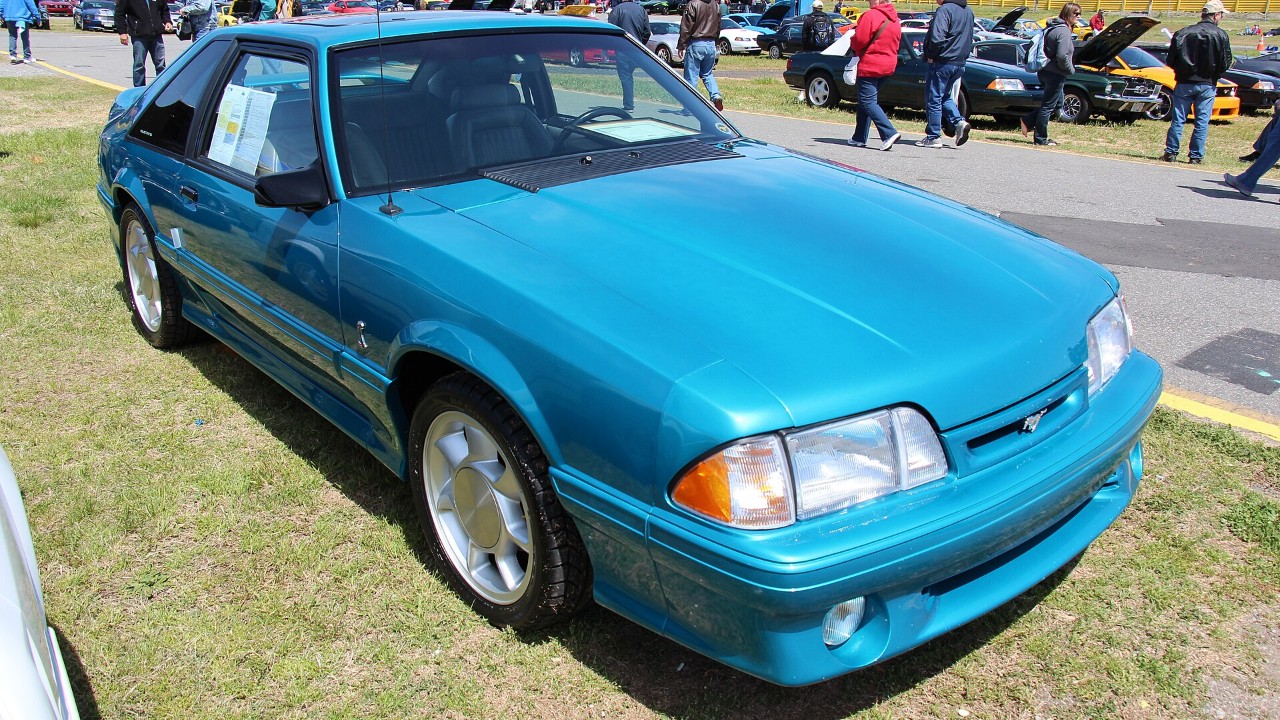
The 1993 SVT Cobra was the Fox body’s farewell. According to Mustang Specs, Ford built 4,993 Cobras plus 107 Cobra R race cars. The Cobra hatchback listed at $18,505. Its 5.0 V8 was rated at 235 horsepower, thanks to GT40 cylinder heads, bigger valves and a stouter camshaft. SVT also fitted a 65 mm throttle body, 24 lb/hr fuel injectors and smaller pulleys that underdrove the accessories.
SVT changed far more than the engine. For example, the Cobra got a stronger clutch, Tokico shocks, softer springs and 17-inch wheels. It also had rear disc brakes in place of the GT’s drums. Buyers chose from three main colors: black, Vibrant Red or Teal Metallic. Of those, teal was the rarest, with 1,355 built. Red was the most common, at 1,882 cars.
Our take: the 1993 SVT Cobra hatchback is the Fox body done properly, by Ford’s own skunkworks. We would never sell one, especially in that rare teal. It is the car that turned the Fox body into a well-rounded performance machine, with brakes, wheels and suspension to match the engine.
10. 1975 Ford Mustang II Ghia
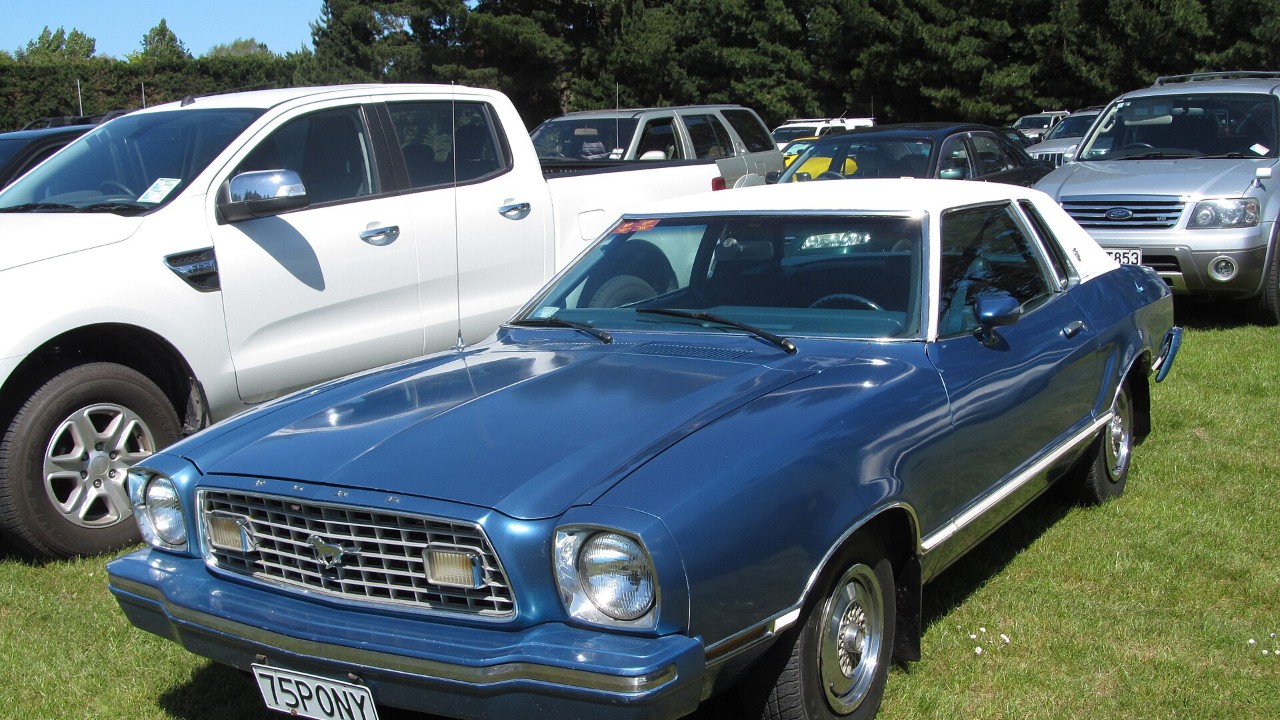
The Mustang II arrived for 1974 on a platform derived from the Ford Pinto. Motor Trend named it Car of the Year, and Ford built 385,993 in the first year. The Ghia was the luxury version, named for the Italian coachbuilder Ford had recently bought.
For 1975, the Ghia gained opera windows, a padded vinyl half-top and an optional Silver Luxury Group. That year also brought a 302-cubic-inch V8 to the Mustang II for the first time. At the time, it was rated at 140 net horsepower with a two-barrel carburetor. That mattered, because the base four and optional V6 dropped to 83 and 97 horsepower once 1975 catalytic converters arrived. As a result, the Ghia could finally pair its plush cabin with V8 torque.
Our take: the 1975 Mustang II Ghia is the Mustang on this list most people overlook, and that is why we love it. Still, it was right for its time, and buyers proved it. We would keep a V8 Ghia just to watch people smile at car shows. It is a snapshot of the mid-1970s, opera windows and all.
11. 1994 Ford Mustang Cobra convertible
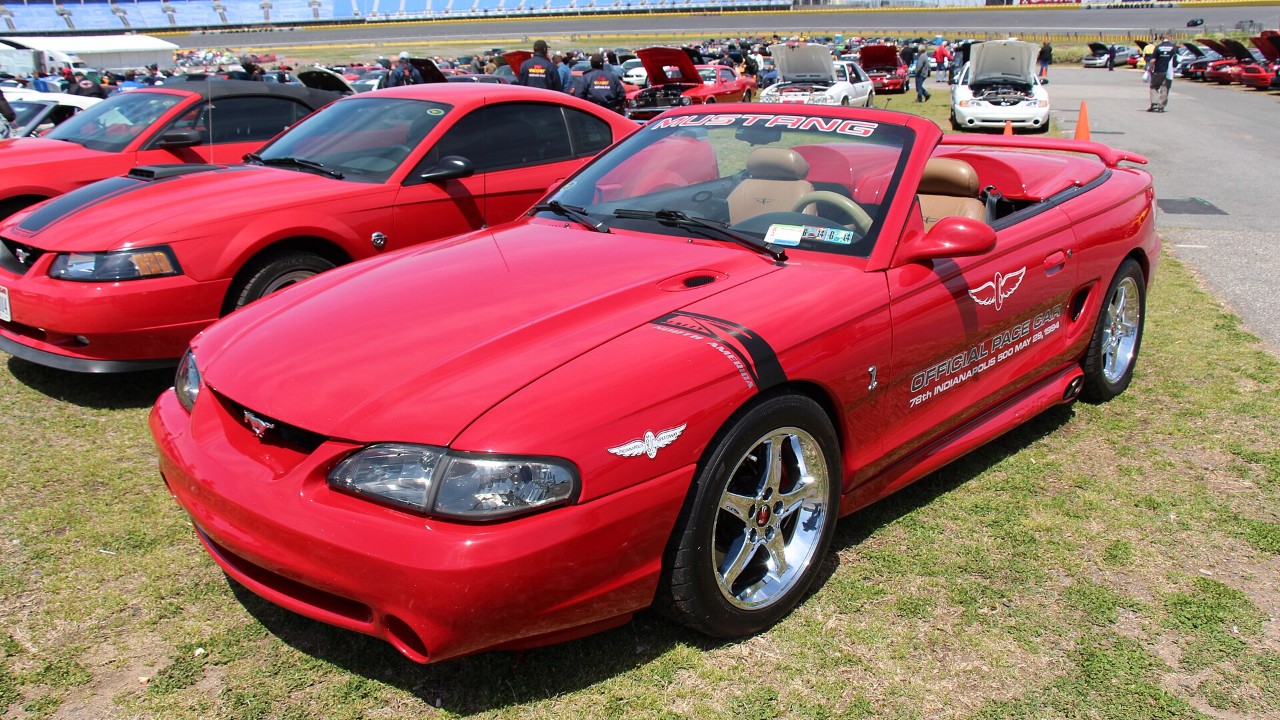
A 1994 Mustang Cobra paced the 78th Indianapolis 500. It was the third Mustang to pace the race, after the 1964 original and the 1979 Fox body. According to Mustang Specs, all 1,000 Cobra convertibles built for 1994 were pace car replicas.
Every replica wore Rio Red paint with a saddle top and interior. Meanwhile, “Official Pace Car” decals came in the trunk for owners who wanted them. The 5.0 V8 made 240 horsepower, 25 more than the Mustang GT, and drove through a five-speed manual. Mustang Specs lists a 3,578-pound curb weight, 0 to 60 mph in 5.8 seconds and a 14.6-second quarter mile at 96 mph. Those are strong numbers for a heavy convertible of the era, and they hold up well for a fun weekend car today.
Our take: the 1994 Cobra convertible is the forgotten pace car. It looks great, it is rare, and the red-and-saddle combination is pure mid-1990s Ford. We would keep one with its decals unapplied. A low-mile replica is about as close as most fans will get to driving at the Brickyard.
12. 1989 Ford Mustang LX 5.0 Sport coupe
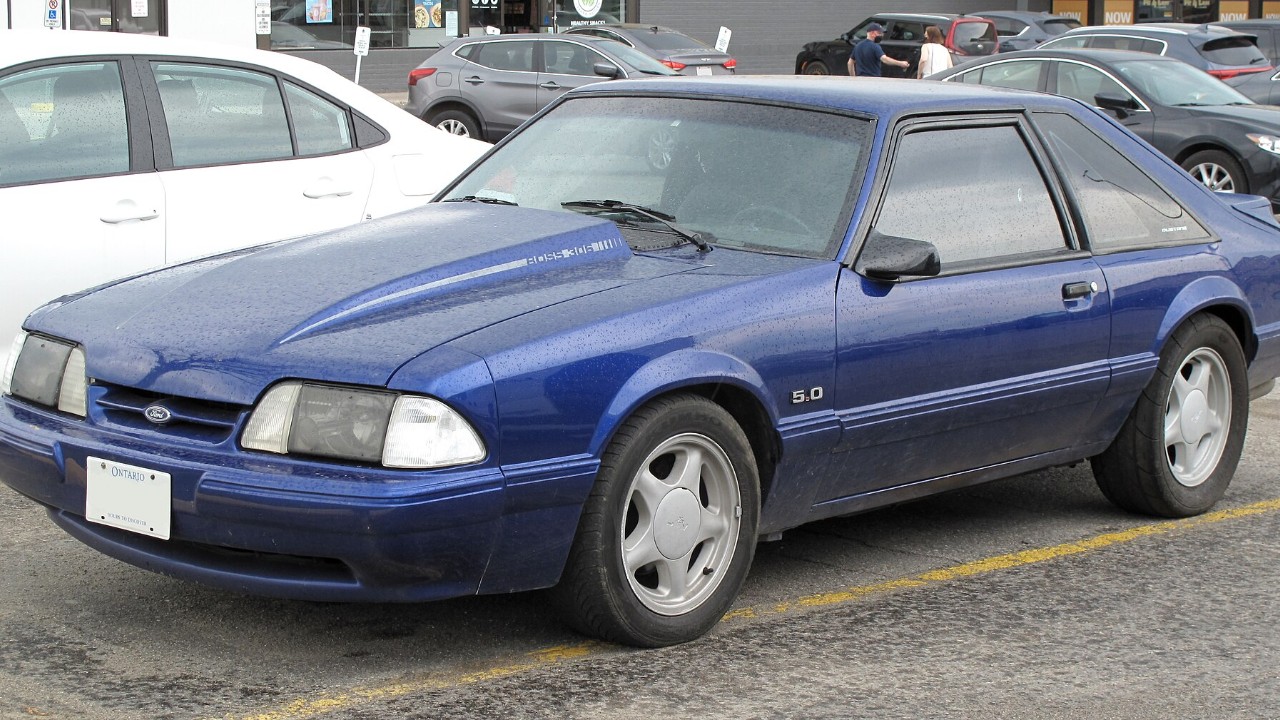
Ford’s LX 5.0L Sport took a plain LX and added the GT’s V8, suspension and sport seats. According to Steeda, the 5.0 HO made 225 horsepower and 300 lb-ft of torque in 1989. A mass air system also let the computer adjust to intake, engine and exhaust upgrades. The LX 5.0 Sport came as a hatchback, a notchback or a convertible.
Above all, the notchback coupe was the sleeper of the family. It weighed 200 pounds less than the hatchback. Meanwhile, Ford sold almost 210,000 Mustangs for 1989, so the LX 5.0 had plenty of company on the road.
Our take: the 1989 LX 5.0 Sport coupe is the plain-wrapper Mustang we like best. Because of that, we would never sell a stock one. It is light, simple and easy to work on, and it delivers the full 5.0 experience without any flash. In our view, that is exactly why we fell for the Fox-body Mustang in the first place. Ford skipped a special 25th-anniversary edition, so every 1989 Mustang built from April 17, 1989, got a commemorative dash plaque instead.
More from Fast Lane Only