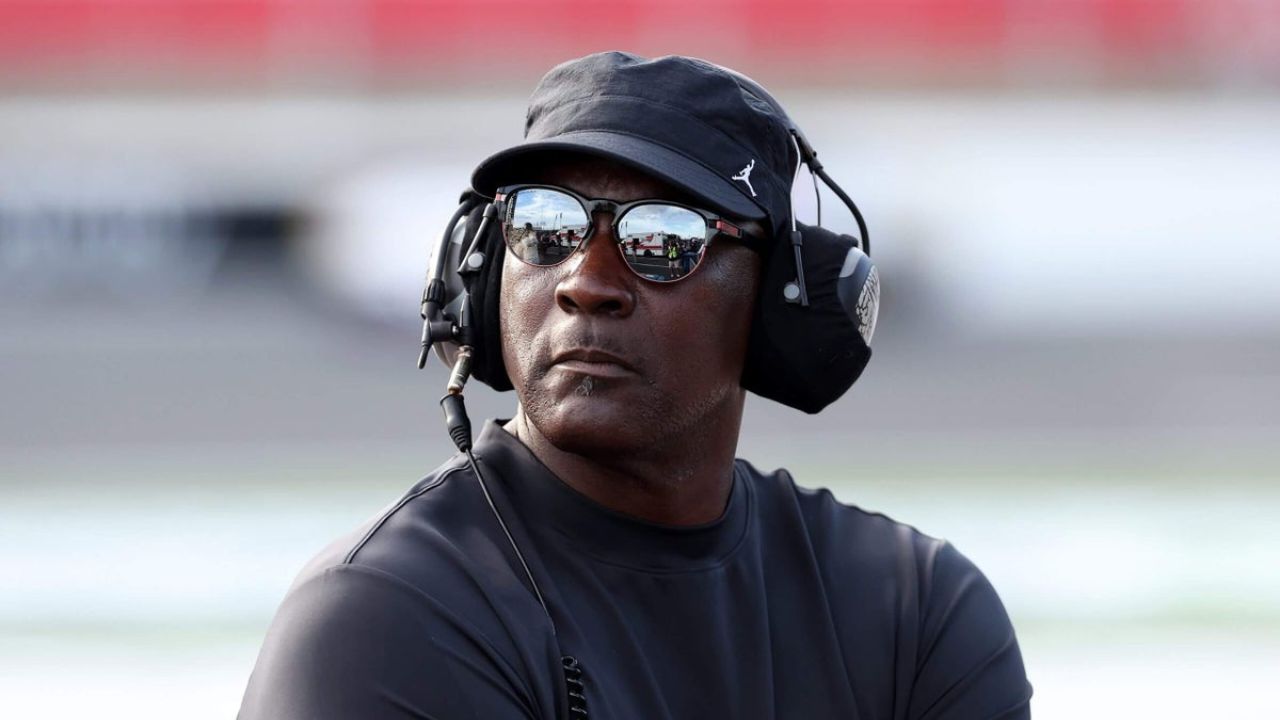
You now watch Michael Jordan shape NASCAR from inside the boardroom instead of just the owner’s suite. After a bruising antitrust fight that ended with a landmark settlement, the NASCAR chief of racing operations says Jordan is not looking to walk away but to use his new leverage to grow the sport you follow.
That ambition has already shown up on the track, with 23XI Racing celebrating a Daytona 500 breakthrough while executives describe a reset moment for stock car racing. You are being asked to see Jordan not only as a team co-owner, but as a catalyst for how NASCAR shares power, money, and attention with the people who keep the grid full.
From courtroom tension to “best interest of the sport”
You watched the relationship between NASCAR and Michael Jordan move from confrontation to cooperation in a relatively short time. Jordan and his partner Denny Hamlin led 23XI Racing into a federal antitrust trial that challenged how NASCAR structured its charter system and revenue sharing, a case that also involved Front Row Motorsports and questioned practices that teams argued had financially compromised them. Legal analysis of the settlement notes that on December 11, 2025, NASCAR resolved the trial brought by 23XI Racing and another team, with the agreement covering permanent charters and changes to the distribution of various NASCAR revenue streams, which signaled that the sanctioning body accepted structural change rather than risking a court verdict on its business model, according to On December.
You then saw the practical stakes of that deal when it emerged that 23XI and Front Row would receive their combined six charters back for 2026, a core asset that secures guaranteed starting spots and long-term franchise value in the Cup Series. Testimony during the case had already framed the dispute in stark financial terms, with an economist stating that NASCAR owed teams $1.06 billion from 2021 to 2024 under a more favorable revenue split, a figure that underscored why Jordan and Hamlin pushed the fight as far as a courtroom before agreeing to settle, as detailed in coverage of how Front Row and 23XI emerged from the trial.
Jordan’s own words on “progress” and evolution
You do not have to guess at why Jordan took on that risk, because he put it in plain language once the settlement was signed. In a statement that quickly circulated around the garage, he said, “From the beginning, this lawsuit was about progress. It was about making sure our sport evolves,” framing the case as a push to modernize NASCAR’s economics rather than a personal grudge. That line, reported in detail as part of the reaction to the settlement, showed you that Jordan saw the courtroom as a lever to force the series toward a model where teams, drivers and owners share more of the upside that comes from media rights and sponsorship, as reflected in his emphasis that the suit was about how the sport From the start should evolve.
You also heard Jordan praise “level heads” for acting in the best interest of the sport once the deal was done, a notable shift in tone from the tension that built during the trial. Reports on his comments after the agreement describe how he credited both sides for stepping back from the brink and choosing a negotiated solution that would let NASCAR move forward, a message that aligned with the series’ own description of a jointly negotiated resolution that ended a period of legal strain and allowed the industry to refocus on competition and the future of stock car racing. That posture, captured in coverage of how Jordan framed the settlement and in NASCAR’s description of a landmark agreement with 23XI and Front Row, told you he wanted to be seen as a partner in building what comes next rather than a permanent antagonist.
NASCAR’s chief says Jordan wants to build, not bail
You now hear that same theme from inside NASCAR’s own leadership. Steve O’Donnell, the NASCAR executive in charge of competition and racing operations, has described the post-settlement period as a reset for the series, one shaped by turbulence across the industry and capped by the antitrust case that forced difficult conversations about identity and economics. In recent comments about where the sport goes from here, O’Donnell said that reset has been reinforced by the involvement of Michael Jordan, explaining that Jordan’s presence as a 23XI Racing co-owner is part of a new chapter in which the series can say, “Here is where we are and here is how we got here,” a perspective he shared while discussing how Donnell sees NASCAR turning the page.
You also saw O’Donnell recall a surreal moment in mid-December when he found himself in a courtroom, watching Jordan testify during the trial, only to stand on the grid at Daytona a few weeks later celebrating with that same owner. He has since talked about how that journey from legal adversaries to shared victory convinced him that Jordan is invested in the long-term health of the sport, not just in short-term wins for 23XI, and he has pointed to Jordan’s history as a lifelong racing fan as part of why that commitment feels genuine. His description of that arc, from the courtroom scene he called surreal to the celebrations at the track, came in an interview where he reflected on how Feb brought both closure and a new beginning.
Daytona 500 glory and a thaw with NASCAR’s power brokers
You did not have to wait long to see how that new dynamic would play out on track. Earlier this month, 23XI Racing delivered the biggest statement win of its young life when Tyler Reddick outlasted Chase Elliott to win the 2026 Daytona 500, a race that instantly validated the team’s investment and put Jordan back on a championship stage, this time in firesuit colors instead of a Bulls jersey. Coverage of that finish highlighted how Reddick’s late charge in the 500 capped a week of storylines that included Jordan’s presence in the garage and his conversations about the future of the team, with the broadcast replaying the FINAL LAPS as Reddick edged Elliott at Daytona, as described in reports on how FINAL LAPS saw Tyler Reddick top Chase Elliott at Daytona.
You also saw Jordan’s public tone toward NASCAR’s leadership soften in the wake of the settlement and that victory. Months After what had been described as a $364.7 M antitrust fight, part of a $364.7 Million Lawsuit Fallout Michael Jordan had spearheaded, he surprised observers by openly praising Jim France and other senior figures for how they handled the resolution, a gesture that suggested the personal frost between the sides had started to melt. That praise, shared in coverage of how Months After the lawsuit fallout he broke character to commend Jim France and colleagues, matched the way NASCAR executives now talk about his role in growing the sport rather than simply challenging it from across a courtroom aisle.
What Jordan’s long game means for you and the sport
You, as a fan or industry insider, now have to think of Michael Jordan as more than a celebrity owner who drops in for the big races. His stated goal with Denny Hamlin is for 23XI Racing to be “the world’s most recognizable motorsports team, winning on and off the track, moving forward together, and setting the standard,” a mission that was repeated as the team celebrated Reddick’s Daytona 500 win and reflected on a two-plus-year Jordan-led fight against NASCAR over revenue sharing that did not derail its competitive climb. That ambition, detailed in reporting on how the team aims for global recognition and how Feb became a celebration of that Daytona 500 win, ties directly into Jordan’s broader public profile and the way his name still carries crossover weight from basketball to sneakers to entertainment.
More from Fast Lane Only