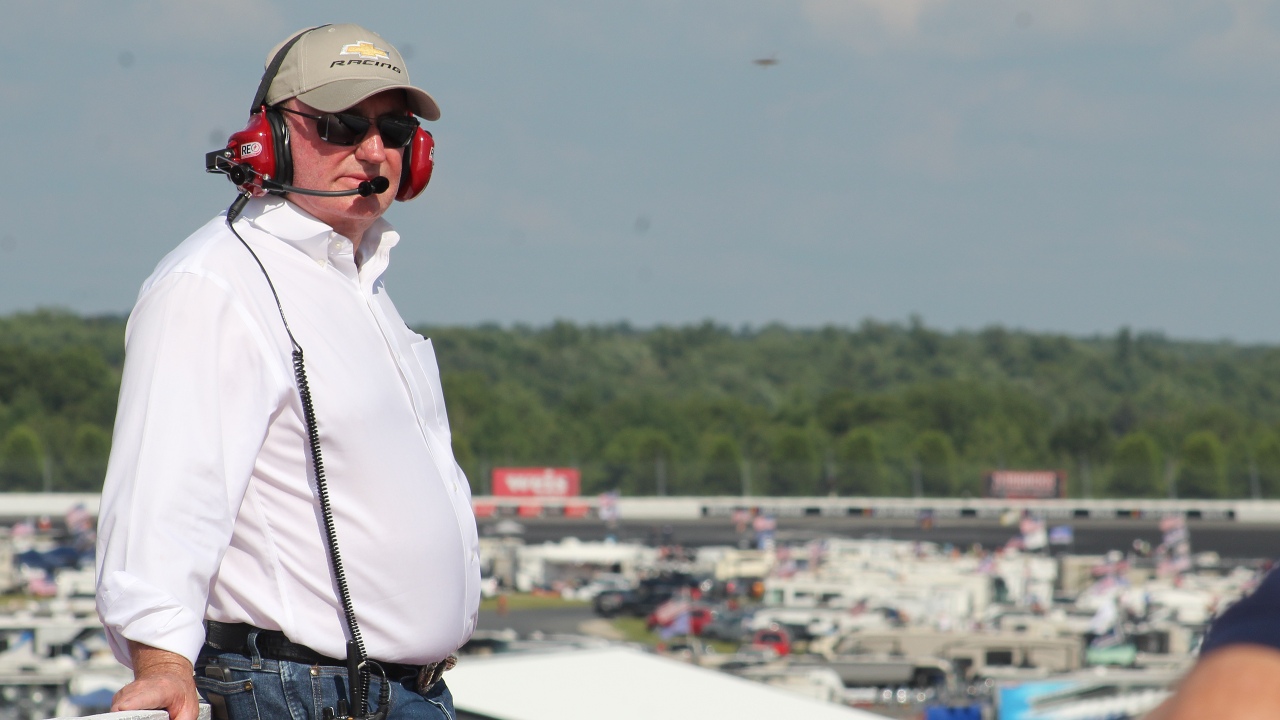
Richard Childress walked into federal court as a Hall of Fame owner and power broker, but he left the stand looking like a man whose grip on his own empire had been pried open in public. What began as a showcase for his grievances with NASCAR’s business model turned into a tense cross-examination that exposed a potential sale of part of Richard Childress Racing and raised fresh questions about how much leverage even the sport’s titans really have.
The surprise revelation that Childress had explored selling a stake in RCR, combined with pointed questioning about his control of the team and his private texts about NASCAR leadership, rattled one of the garage’s most feared figures and shifted the tone of the antitrust trial brought by 23XI Racing and Front Row Motorsports. Instead of simply attacking NASCAR’s power, Childress found himself defending his own decisions, his finances, and his loyalty to the system he says left him no choice.
The antitrust stage where Childress took center spotlight
The courtroom drama around Richard Childress is unfolding inside Michael Jordan’s high-stakes antitrust lawsuit that pits 23XI Racing and Front Row Motorsports against NASCAR over its revenue model and control of charters. In this case, 23XI Racing, co-owned by NBA icon Michael Jordan and Cup star Denny Hamlin, and Front Row Motor are challenging the structure that governs how teams earn money and how long they can count on their place in the field. Childress, a Hall of Fame owner whose organization helped define the modern Cup Series, arrived as a star witness expected to validate the teams’ argument that NASCAR’s system leaves them boxed in.
On the stand, Childress testified that NASCAR made it effectively impossible for him to refuse the current revenue model and charter agreement, describing a scenario where he felt compelled to sign even though he believed the terms were unfair. His appearance followed earlier reporting that he could be called in CHARLOTTE as a key figure in the dispute over derogatory texts and revenue sharing, and his testimony fit squarely into the narrative that teams have little real bargaining power when NASCAR sets the rules. By the time he finished, however, the focus had shifted from his critique of the system to the internal workings of his own operation and the choices he made while operating under that pressure.
A heated cross-examination and the bombshell equity talks
The turning point came during a heated stretch of cross-examination when NASCAR’s attorney pressed Childress on whether he had explored selling part of RCR. Under questioning by NASCAR, Childress acknowledged that his organization had been in talks to sell an equity stake, a revelation that landed like a bomb in a trial already charged with tension over money and control. The line of inquiry did not just probe his financial strategy, it also raised immediate questions about what such a move might mean for star driver Kyle Busch and the long-term stability of the team.
Reporting from inside the courtroom detailed how the attorney walked Childress through discussions that included a potential deal with retired NASCAR driver Bobby Hillin Jr, framing it as an example of how even a powerhouse team owner was considering outside investment to navigate the current landscape. The fact that these talks surfaced in open court, rather than through a carefully managed announcement, amplified the sense that Childress had been caught off guard. For a figure known for projecting total control, being forced to confirm equity-sale conversations under oath underscored just how much the financial strain and uncertainty around charters have reshaped the business side of the garage.
How NASCAR’s lawyer drilled into Childress’s control of RCR
Once the equity talks were on the record, NASCAR’s legal team dug deeper into the structure of Childress’s empire. Attorney Chris Yates zeroed in on Childress’s ownership stake in RCR, establishing that he holds 60% of the organization. That precise figure matters, because it shows that while Childress is the dominant voice inside the company, he is not the only one, and any move to sell equity or shift strategy would have to account for other investors and their expectations.
The questioning around that 60% stake also served a broader purpose in NASCAR’s defense. By highlighting that RCR already has an investment company involved and that Childress is operating within a more complex corporate framework than a simple family team, NASCAR’s side could argue that modern Cup organizations are sophisticated businesses making calculated decisions, not helpless victims of a one-sided system. For Childress, the effect was more personal. The more Yates pressed on ownership percentages and outside partners, the more the image of a singular, unassailable owner gave way to a picture of a businessman juggling competing pressures, including the possibility of bringing in new money to keep pace in the Cup Series.
Charter pressure, “no choice” rhetoric, and a risky narrative
Childress’s most pointed criticism of NASCAR centered on the 2025 charter deal, which he described as something teams had no real choice but to accept. He testified that the way the agreement was structured left him feeling that refusal was not a realistic option if he wanted to protect his organization’s place in the sport. That language of “no choice” has become a rallying cry for teams who argue that NASCAR’s control over charters and revenue leaves them negotiating from a position of weakness, even when they are historic organizations with deep roots and loyal sponsors.
Yet the same testimony that painted NASCAR as overbearing also opened Childress up to counterattacks. NASCAR’s attorney used an improper document during cross-examination, a misstep that briefly shifted sympathy back toward Childress, but the broader narrative still cut both ways. On one hand, his claim that the charter model left him boxed in supported the plaintiffs’ case that the system is stacked against teams. On the other, the revelation that he had explored selling equity and that RCR already operates with outside investment undercut the idea that he was simply cornered. Instead, it suggested a more complicated reality in which a Hall of Fame owner is both constrained by NASCAR’s rules and actively reshaping his own business to survive within them.
Leaked texts, public backlash, and a rattled power broker
The courtroom fireworks did not happen in a vacuum. Childress arrived at the trial already under scrutiny for private texts that criticized NASCAR leadership, messages that leaked and sparked a wave of reaction across the sport. One veteran voice went so far as to say that Steve Phelps should be in his rental car heading straight to Childress’s door, warning that “troubles knock on his door” when a figure of that stature openly clashes with the sanctioning body. Those comments captured how unusual it is for someone of Childress’s standing to be seen as a direct antagonist to NASCAR’s top executives.
Outside the courtroom, Childress declined to elaborate on those texts, refusing to comment after his testimony even as the messages and his harsh assessment of NASC’s direction continued to circulate. Inside, his words carried more weight, because they were delivered under oath in a case that could reshape how teams and NASCAR share power and money. The combination of leaked private criticism, public silence, and a bruising cross-examination left Childress looking less like the unflappable enforcer of old and more like a central figure caught between his frustration with the system and the vulnerabilities of his own operation.
What the bombshell means for Kyle Busch, RCR, and the wider garage
The immediate fallout from Childress’s testimony extends beyond legal arguments and into the future of one of NASCAR’s most recognizable teams. The acknowledgment that RCR had been in talks to sell an equity stake inevitably raises questions about how such a move would affect Kyle Busch, whose arrival at the organization was one of the sport’s biggest driver shifts in recent years. If new investors come in, they could influence everything from long-term sponsorship strategy to how aggressively the team spends on personnel and technology, all of which shape Busch’s chances to contend for more titles.
For the wider garage, the spectacle of a Hall of Fame owner being pressed on his 60% stake, his flirtation with outside buyers, and his claim that he had no choice in signing the charter deal sends a clear signal. Even the most established organizations are not immune to the financial and structural pressures at the heart of the antitrust case. As 23XI Racing, backed by Michael Jordan and Denny Hamlin, and Front Row Motor push to loosen NASCAR’s grip on revenue and charters, Childress’s rattled appearance on the stand may prove to be one of the trial’s defining moments, a rare glimpse of how fragile power can look when the business of racing is laid bare under oath.