NASCAR’s Hall of Fame weekend is supposed to be a celebration of legacy, not a referendum on loyalty. Yet Dale Earnhardt Jr’s absence from the latest induction ceremony ignited a backlash sharp enough that one of NASCAR on FOX’s most recognizable voices stepped in to defend him. The debate that followed has exposed deeper tensions over what the sport expects from its legends, and who gets to judge how they honor the past.
At the center is a collision of perception and reality: critics saw a snub, while Earnhardt Jr and his supporters insist it was a family-first decision that still respected the Hall of Fame. The intensity of the reaction, and the speed with which a FOX personality rallied to his side, shows how fiercely the NASCAR community still polices questions of respect, presence, and tradition.
The Hall of Fame night that sparked a storm
The controversy began when Dale Earnhardt Jr, already enshrined as a 2021 inductee, did not appear in Charlotte for the latest Hall of Fame ceremony. The event honored the NASCAR Hall of Fame Class of 2026, which included Kurt Busch, Harry Gant, known as High Groove Harry, and Ray Hendrick, a trio whose careers span Cup Series triumphs and short track dominance. For many fans, it was a landmark evening that brought together multiple eras of stock car racing history.
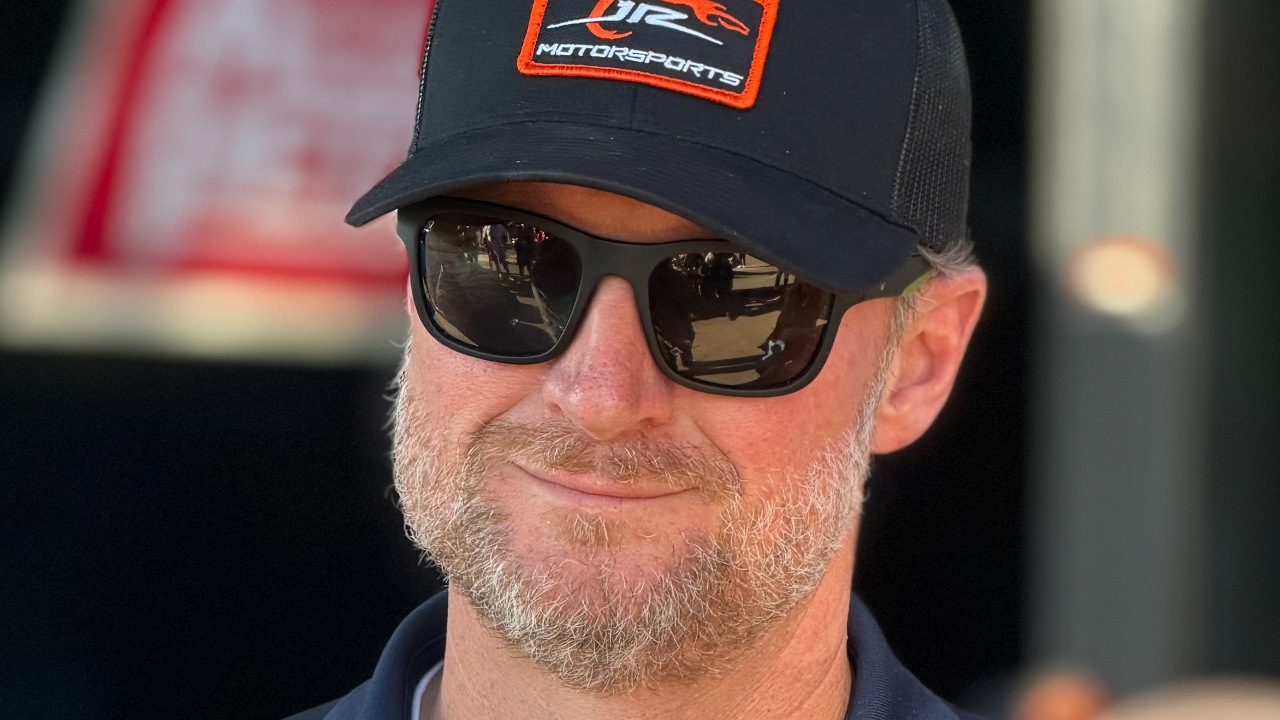
Because Earnhardt Jr is not only a Hall of Famer but also a team owner with JR Motorsports and a vocal advocate for preserving NASCAR heritage, his absence immediately stood out. Some observers argued that someone with his profile and influence should have been in the room to salute Kurt Busch, Harry Gant, and Ray Hendrick as they joined the Hall of Fame Class of 2026, especially given how the Hall itself framed the night as a permanent recognition of their stories in NASCAR history.
Dale Jr’s family-first explanation and six-word clarification
Earnhardt Jr responded to the criticism by explaining that he had chosen to prioritize a personal commitment over the ceremony. Reporting on his comments describes a “heartwarming” reason for not being in Charlotte for the Hall of Fame festivities, indicating that the decision was rooted in family rather than indifference to the sport. He acknowledged that missing the event was significant, but framed it as a tradeoff that any parent or spouse would understand when a rare family moment conflicts with a professional obligation.
As the backlash grew, Dale Jr was described as being forced to issue a six-word clarification about his Hall of Fame ceremony absence. The phrasing underscored that he had not skipped the event out of disrespect, but because of circumstances that, in his view, justified staying away. Coverage emphasized that, given his role with JR Motorsports and his long-standing respect for the “legends of the garage,” the idea that he would casually disregard a Hall of Fame induction did not align with his track record. The clarification was less about changing his story and more about cutting through the noise to restate his intent in the simplest possible terms.
Why the absence felt so personal to fans
The anger directed at Earnhardt Jr did not arise in a vacuum. For many fans, Hall of Fame night is one of the few occasions when the sport’s past and present share the same stage, and the presence of icons is part of the ritual. When someone as central as Dale Jr is missing, especially when Kurt Busch, Harry Gant, and Ray Hendrick are being honored, it can feel like a breach of an unwritten code that expects today’s standard-bearers to physically show up for yesterday’s heroes. That expectation is amplified by Earnhardt Jr’s own reputation as a historian of the sport who often champions its roots.
The sense of disappointment was sharpened by the fact that Earnhardt Jr is not just a retired driver, but a team owner and media figure who regularly speaks about the importance of honoring NASCAR’s legends. Given his role with JR Motorsports and his deep-seated respect for the garage area’s old guard, some critics framed his absence as “out of character,” which in turn fueled speculation that there must have been a more troubling reason. That speculation persisted even as he made clear that the choice was about a special family evening and not a lack of regard for the Hall of Fame or for the Class of 2026.
Kaitlyn Vincie’s pointed defense from the FOX booth
Into that charged atmosphere stepped Kaitlyn Vincie, a prominent NASCAR on FOX personality who used her platform to push back on the criticism of Earnhardt Jr. She publicly defended him after fans hit out at his decision to miss the Hall of Fame ceremony, making it clear that, in her view, the outrage was misplaced. Her comments framed the situation as one where a respected figure was being unfairly judged for choosing family over a ceremonial appearance, and she challenged the idea that his absence diminished the honor bestowed on the new inductees.
Vincie’s intervention carried weight precisely because she is part of the FOX broadcast team that helps shape how viewers experience NASCAR’s biggest moments. By siding firmly with Dale Earnhardt Jr, she signaled that, from her vantage point inside the sport’s media ecosystem, his record of supporting the Hall and its honorees should count for more than a single missed night in Charlotte. Her stance also implicitly acknowledged the human side of a figure who, despite his fame, still navigates the same work-life tensions that confront any professional when a “special evening” at home collides with a marquee event on the calendar.
What the backlash reveals about NASCAR’s culture of loyalty
The speed and intensity of the reaction to Earnhardt Jr’s absence, and the equally swift defense from a NASCAR on FOX voice, highlight how sensitive the sport remains to questions of loyalty and respect. The Hall of Fame is more than a museum in Charlotte; it is a symbolic gathering place where the community reaffirms who and what it values. When a figure as central as Dale Jr is not in the room for the Hall of Fame Class of 2026, some fans interpret that as a statement, even when he insists it was a personal scheduling conflict rooted in family priorities.
At the same time, the episode underscores how modern NASCAR personalities are expected to live in public, explaining and sometimes justifying decisions that, in another era, might have passed without comment. Dale Earnhardt Jr’s need to issue a concise clarification, and Kaitlyn Vincie’s decision to speak out in his defense, show how quickly narratives can harden around a single absence. The debate over his Hall of Fame no-show has become less about one night in Charlotte and more about how the sport balances tradition with the realities of life away from the track, and who gets to decide when a legend has done enough to prove his respect for the game.
More from Fast Lane Only