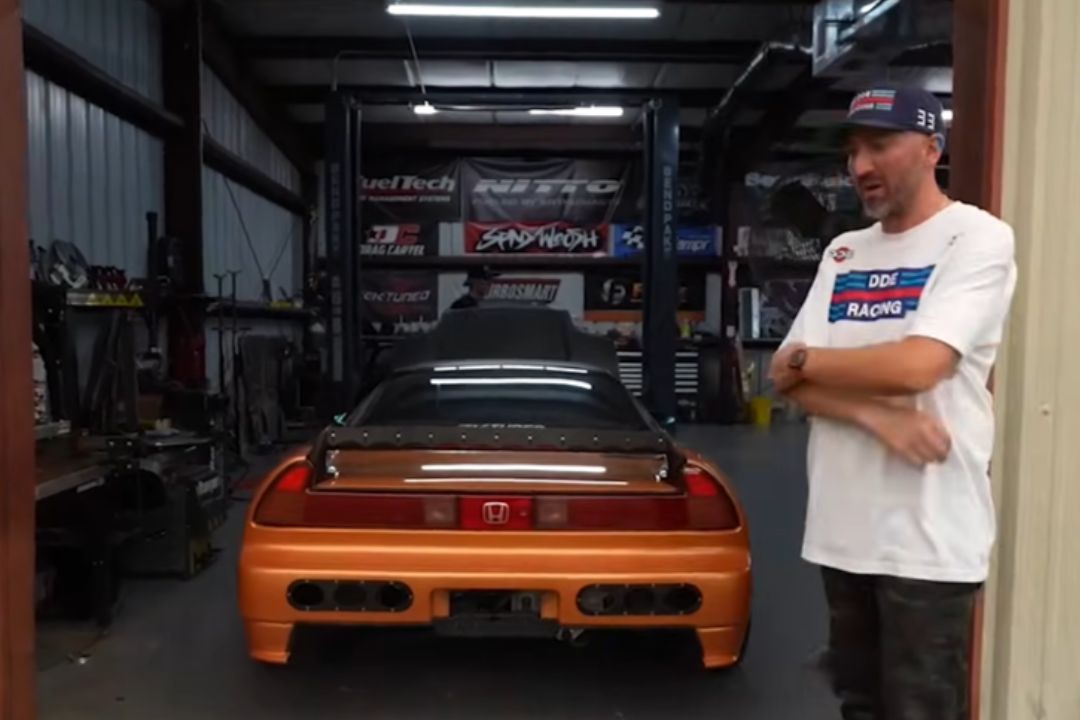
Honda’s little four-cylinder engines have a reputation for being tough, simple, and easy to love. Enthusiasts have been squeezing extra power out of them for decades, usually with a turbo and a lot of patience. Most of the time, that hobby stays fun and manageable.
Then you meet a build like this one, and the whole idea of “just a four-cylinder” gets thrown out the window. Tucked into the back of a first-generation Honda NSX sits a 2.0-liter four-cylinder engine that has been built to make absolutely absurd power, the kind of number that belongs to full-blown supercars, not a small Honda engine.
That’s exactly what makes this car so much fun to talk about. It has the power to embarrass almost anything on the road, yet its owner, a builder named Kyle, treats it with a surprising amount of restraint. Once you see what the car is missing in the safety department, that restraint makes a lot of sense.
A Four-Cylinder With Supercar Numbers
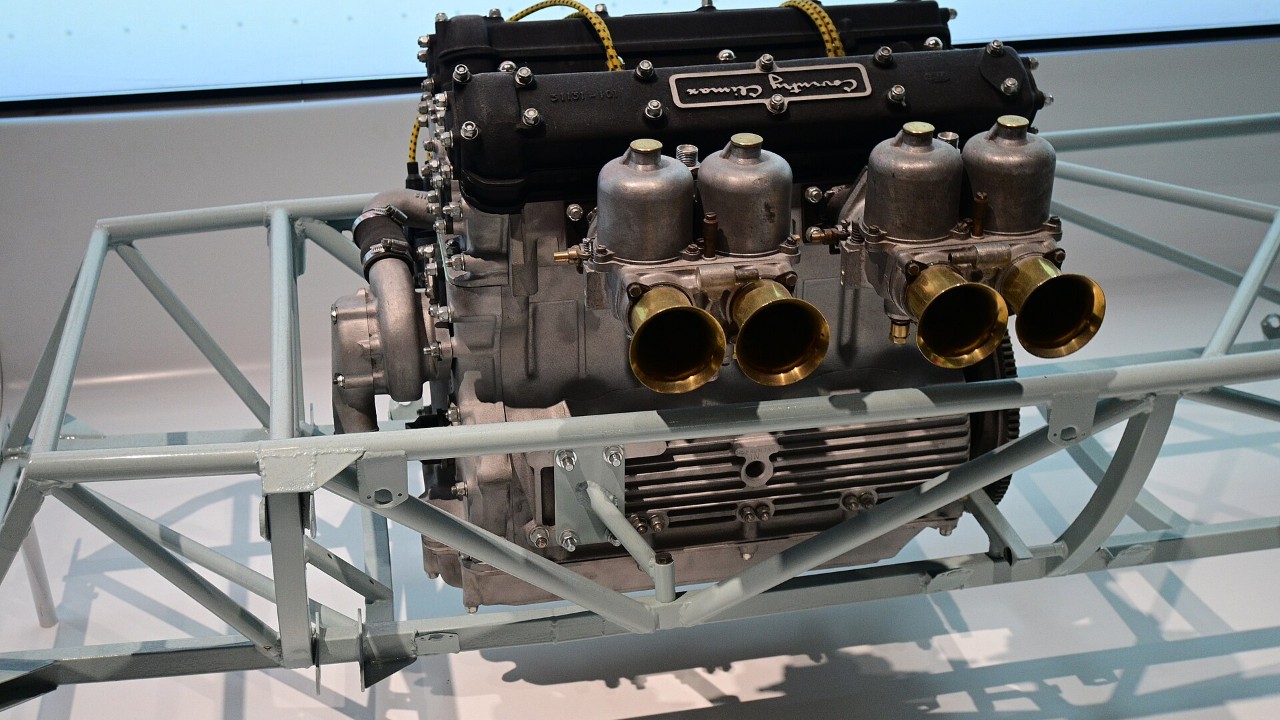
Under normal circumstances, this NSX’s original V6 would still be doing the work. Instead, a turbocharged 2.0-liter four-cylinder took its place, paired with a massive 69mm turbocharger that looks more at home on a dedicated drag car.
On the dyno, the engine put down close to 900 horsepower at the wheels. Dialed up further for track use, the setup is capable of reaching around 1,000 horsepower. During a recent street drive, the boost was set a bit lower, putting the car closer to 700 or 750 horsepower, which is still a wild number for an engine this small.
Getting all that power to the pavement takes some serious hardware too. The car runs a sequential transmission with a strain gauge system, letting it shift gears without touching the clutch. That gearbox alone costs close to $12,000, and it is easy to see why once you understand what it has to survive on every single pull.
The Safety Gear You Would Expect Isn’t There
Here is where the story takes a fun little twist. Cars that make this kind of power at the drag strip usually come loaded with safety equipment built specifically for high-speed runs. A roll cage protects the driver in a crash. A parachute helps slow things down after a run. Fire suppression gives a driver a fighting chance if something goes wrong under the hood.
This NSX has none of the three. It’s still built more like a fast street car than a purpose-made drag machine, even though its power output says otherwise. That gap between what the car can do and what it’s equipped to handle safely is a big part of why its owner keeps things careful.
It also explains something simple but important. The car has only been taken to the drag strip one time. With this much power on tap and none of the usual safety backups in place, that single trip makes a lot of sense.
Big Power, Small Margin for Error
About 70 percent of the car’s weight sits over the rear axle, which is common for a mid-engine car like the NSX. That balance helps with grip, but it also means the front end can lift with very little encouragement.
During one hard run at a roll race event, a quick shift from first to second gear was enough to briefly lift the front wheels off the ground. It’s a small moment, but it says a lot about how much force this little engine is putting down. Add in the fact that the car was running on older tires during a recent street drive, and you start to see why full-power runs are treated as a special occasion rather than a weekly habit.
None of this means the car is dangerous to drive around town. It simply means there’s a big difference between building an engine that can make 1,000 horsepower and building a car that’s fully ready to use that power over and over again at the strip.
A Street Car Having Way Too Much Fun
At the end of the day, this NSX is a great example of a build that grew a little bigger than its original safety setup. The engine and transmission are ready for serious numbers. The rest of the car just hasn’t quite caught up yet, and its owner clearly knows it.
It’s not trying to be a full race car pretending to be a street car. It’s a street car that happens to be hiding supercar-level power, brought out carefully and only when the moment feels right. For a small Honda engine, that’s a pretty incredible place to be.
More from Fast Lane Only: