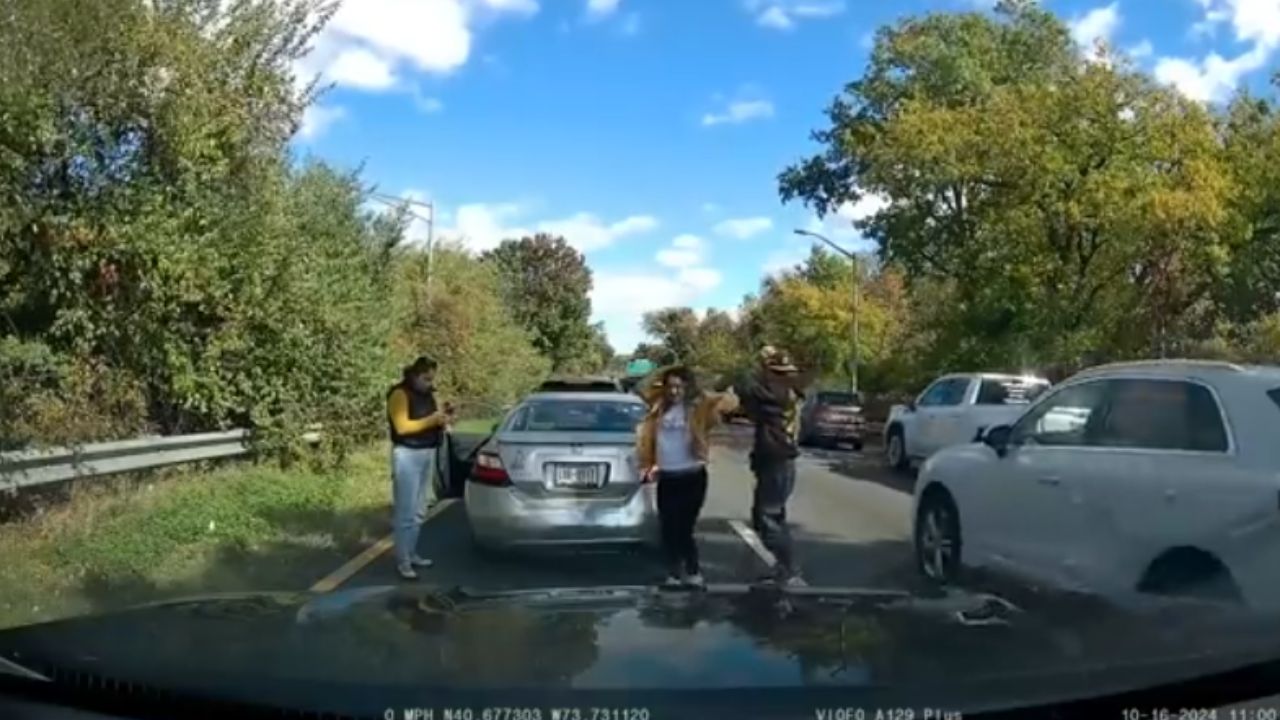
The dash cam clip is only a few seconds long, but it captures a scene that still jolts me every time I replay it in my mind: a car on the Belt Parkway in Queens suddenly brakes in live traffic, then reverses straight into the vehicle behind it. What looked at first like a terrifying near‑tragedy quickly came to be understood as something more calculated, a staged collision in New York City allegedly engineered for insurance money and then rocketed to viral status across TikTok and other platforms. As prosecutors have moved from outrage to indictments, the video has become a case study in how everyday drivers, smartphones, and social media now sit on the front line of insurance fraud enforcement.
The viral Belt Parkway crash that changed the stakes
In the clip that first grabbed public attention, a car traveling on the Belt Parkway in Queens appears to cut in front of another vehicle, slam on the brakes, then throw itself into reverse, colliding with the car behind it in what looks like a textbook “cash‑for‑crash” maneuver. The footage, recorded from a dashboard camera and later shared widely online, shows the front vehicle’s driver stepping out as traffic piles up around them, a moment that crystallized just how brazen such schemes can be when carried out in live lanes of a major New York artery. That short sequence, captured on the Belt Parkway and replayed millions of times, is at the heart of what investigators now describe as a deliberate attempt to manufacture an insurance claim rather than an honest accident, a point underscored once the dash cam recording began circulating beyond local drivers.
Authorities say the driver who was hit, Queens motorist Asphia Natasha, was traveling in her own lane when the other car abruptly forced its way in front of her, then stopped and reversed into her vehicle. According to prosecutors, Natasha was driving near Rosedale when the collision occurred, and the video she captured quickly migrated from her personal device to TikTok, where it drew millions of views and a wave of anger from viewers who recognized the pattern of a staged crash. In charging documents, officials describe how the driver of the front vehicle allegedly sought to blame Natasha for rear‑ending him, a classic tactic in fraudulent claims, even though the dash cam footage shows the car backing into her. That sequence, now preserved in the viral clip, is what investigators say transformed an attempted scam into a criminal case.
From viral outrage to criminal charges
Once the clip spread, the NYPD and the Queens District Attorney’s office moved quickly to identify the driver of the front vehicle and reconstruct what happened on the Belt Parkway. A Brooklyn man was soon arrested and, according to court filings, now faces a litany of charges tied to an alleged insurance fraud scheme that used the staged crash as its centerpiece. Officials have said that if he is convicted, he could face a sentence ranging from 2 1/3 years to seven years in prison, a range that reflects both the alleged financial motive and the risk to public safety created by slamming to a stop in active traffic. The NYPD’s decision to investigate the viral Belt Parkway crash as a possible fraud case, rather than treating it as a routine fender‑bender, marked a turning point in how seriously law enforcement is now taking these social‑media‑documented collisions, a shift that was underscored when prosecutors detailed the potential prison term in court records.
In parallel, state and local officials framed the case as part of a broader crackdown on staged collisions that target insurers but endanger everyone else on the road. A summary of the charges notes that a Brooklyn man is accused of orchestrating the Belt Parkway crash as part of a larger pattern of fraudulent activity, with prosecutors emphasizing that the dash cam footage provided a rare, unfiltered look at how such schemes unfold in real time. The “What to Know” briefing circulated by the local district attorney’s office highlighted that the defendant is facing multiple counts tied to insurance fraud and reckless endangerment, and that the case grew directly out of the viral clip that first surfaced online. In my view, that linkage between a short, shareable video and a formal prosecution, laid out in the charging overview, is precisely what has made this case resonate far beyond Queens.
Inside the alleged “cash‑for‑crash” playbook
What the Belt Parkway video shows in a few seconds is, according to investigators, part of a much more elaborate playbook that has been evolving in New York. Queens District Attorney Melinda Katz has described how, in a separate but related investigation, alleged ringleader Jaime Huiracocha met with a group of individuals and laid out a plan to deliberately cause car crashes for insurance payouts, promising participants thousands of dollars for their role. In that case, prosecutors say Huiracocha and others staged collisions by coordinating vehicle movements and then filing claims that portrayed the crashes as unavoidable accidents, a pattern that mirrors what viewers saw in the viral Belt Parkway clip. The description of Huiracocha’s meetings and promises, detailed by DA Katz in a state filing, suggests that the Belt Parkway incident was not an isolated stunt but part of a broader ecosystem of organized fraud.
Over the summer, that picture sharpened further when two more Brooklyn residents, including Jaime Huiracocha, were charged in connection with a 2024 Belt Parkway insurance scheme that allegedly involved deliberately causing crashes for payouts. Prosecutors say these men, both from Brooklyn, worked together to engineer collisions and then sought to profit from the resulting claims, with one case still pending as authorities continue to unravel the full scope of the operation. The staged car crash on the Belt Parkway that first drew attention, they note, was one of several incidents that came to light after drivers shared videos with authorities and online, a pattern that underscores how citizen‑captured footage is now feeding directly into criminal investigations. The additional charges against Brooklyn residents, including Jaime Huiracocha, show how quickly a single viral moment can expand into a multi‑defendant case.
Dash cams, TikTok, and the new fraud deterrent
For all the focus on the alleged perpetrators, the Belt Parkway case also highlights the growing power of ordinary drivers armed with dash cams and social media accounts. According to one detailed account, Asphia Natasha’s video of the crash did not just sit on her hard drive; it was uploaded to TikTok, where it drew millions of views and a flood of comments from viewers who recognized the telltale signs of a staged collision. Prosecutors later cited that viral spread as a key factor in bringing the case forward, with one official noting that “Countless lives were jeopardized due to this incredibly reckless conduct,” a phrase that captures both the human risk and the public anger the clip provoked. The description of Natasha’s experience, including the fact that the New York City man charged in the case is accused of staging the crash that generated those millions of views on TikTok, is laid out in prosecutors’ summaries that I have reviewed.
Other drivers have had similarly harrowing encounters. A Woman from Queens described how, on October 16, 2024, she was driving on the Belt Parkway in Queens when a vehicle abruptly cut in front of her, braked hard, and then quickly left the scene after a collision, a pattern that closely resembles the tactics seen in the viral clip. Her Story, which has been shared as a cautionary tale, underscores how these incidents can unfold in seconds and leave victims shaken, confused, and at risk of being blamed for crashes they did not cause. The detailed account of that Woman’s Story from Queens, including the description of what happened on October 16 on the Belt Parkway and the driver who quickly left the scene, is captured in a legal analysis that has circulated among motorists and attorneys alike.
A wider pattern of staged crashes and organized crime
More from Fast Lane Only