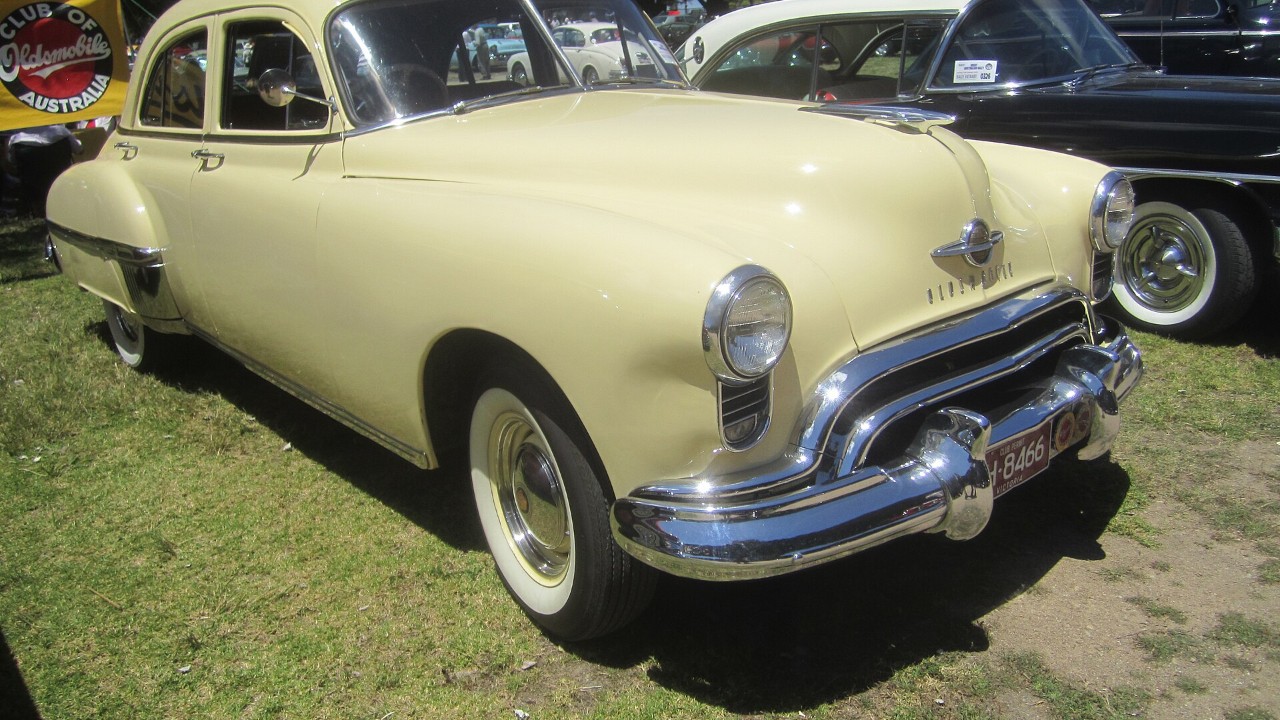
Oldsmobile sold its first V8 as the Rocket from 1949, and by 1968 the Oldsmobile Rocket V8 had grown from 303 cubic inches to 455. Each step came from a wider bore, a longer stroke or a clean-sheet redesign. Here are eight of those displacements, in the order they arrived.
The output figures below belong to the model year and model named with them. Oldsmobile often rated the same engine differently in an 88 and a Super 88, so one displacement can carry several numbers.
1. 1949 Oldsmobile Rocket 303 V8
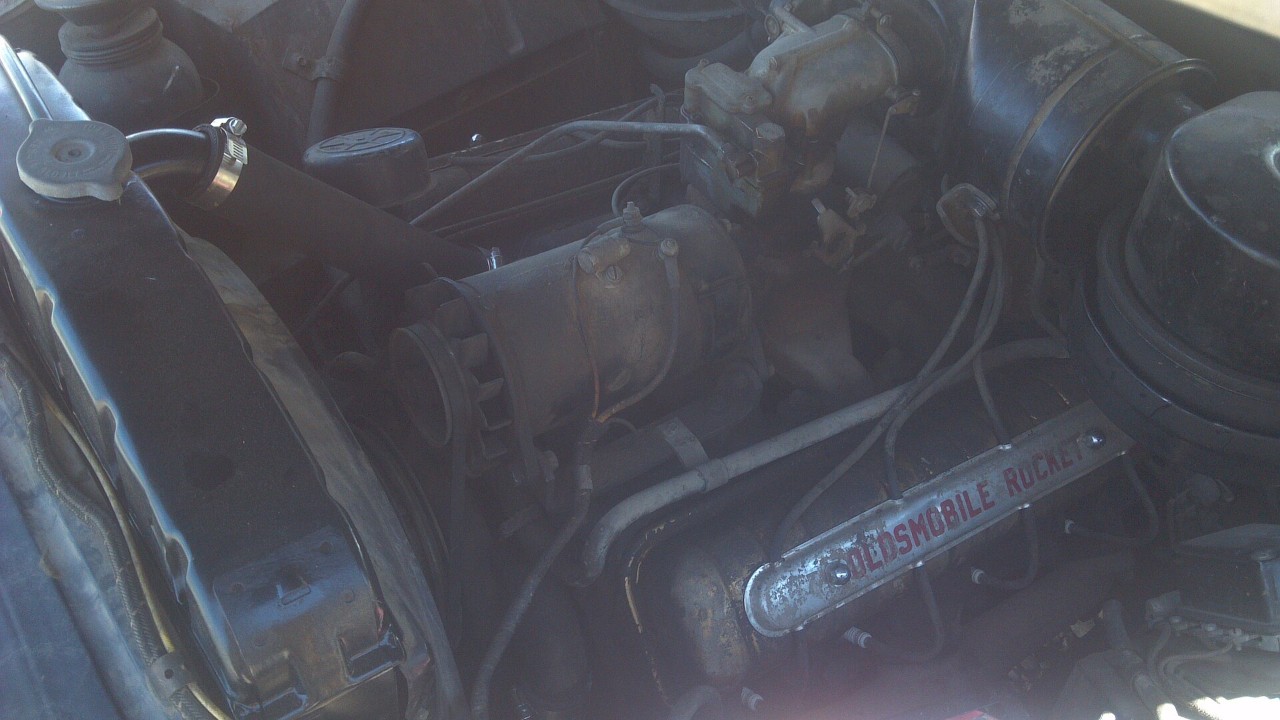
The first Rocket nearly carried another name. According to the Auto History Preservation Society, Oldsmobile first planned to advertise it as “Kettering Power.” However, company policy didn’t allow the use of Kettering’s name, so it went to market as the Oldsmobile Rocket.
Its 3.75-inch bore was wider than its 3.4375-inch stroke, an oversquare layout. In the 1949 to 1951 88 with a two-barrel, the 303 made 135 hp and 253 lb-ft, according to the society’s first-generation Rocket history. Later, for 1953, compression rose from 7.5:1 to 8.0:1 and output reached 165 hp, the 303’s final year.
2. 1954 Oldsmobile Rocket 324 V8
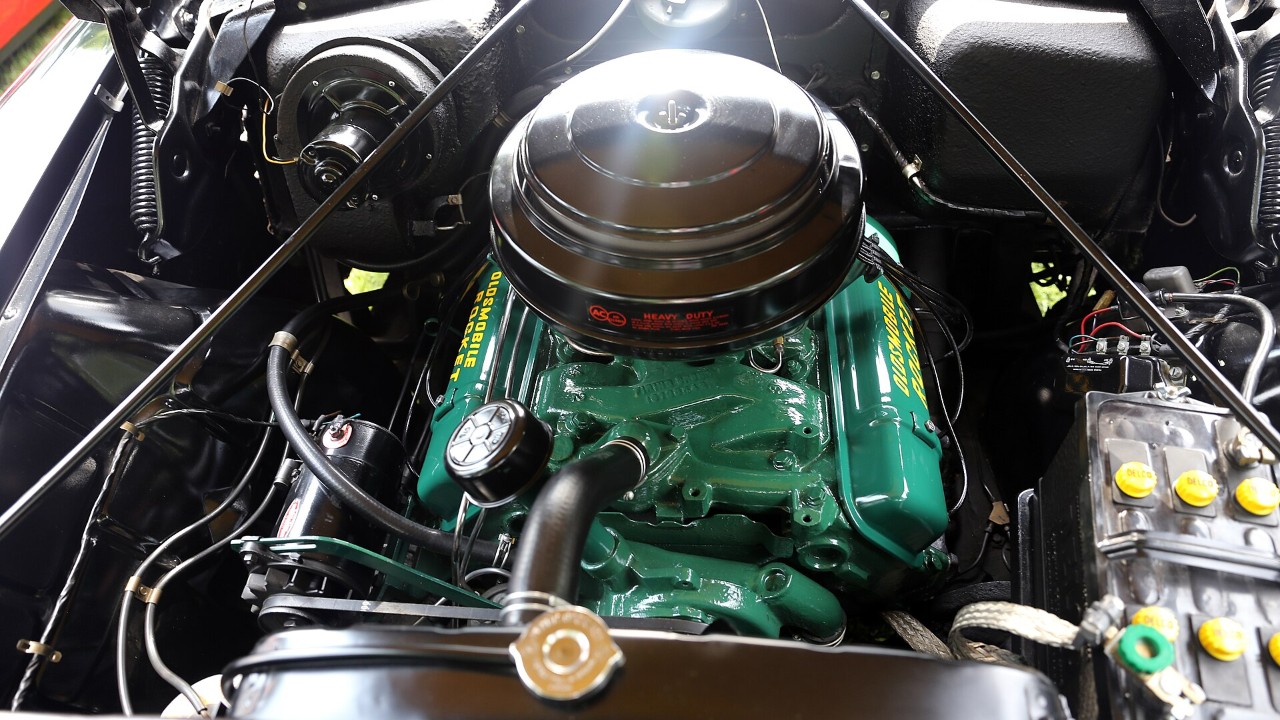
For 1954, Oldsmobile opened the bore to 3.875 inches and kept the stroke. That made 324 cubic inches, and the engine ran through 1956. It also served GMC trucks as their V8 option, the same source notes.
After that, output climbed fast across those three years. A 1954 88 with a two-barrel and 8.25:1 compression made 170 hp. By 1956, the Super 88 and 98 ran 8.75:1 and made 240 hp and 350 lb-ft, per the society’s engine history.
3. 1957 Oldsmobile Rocket 371 V8
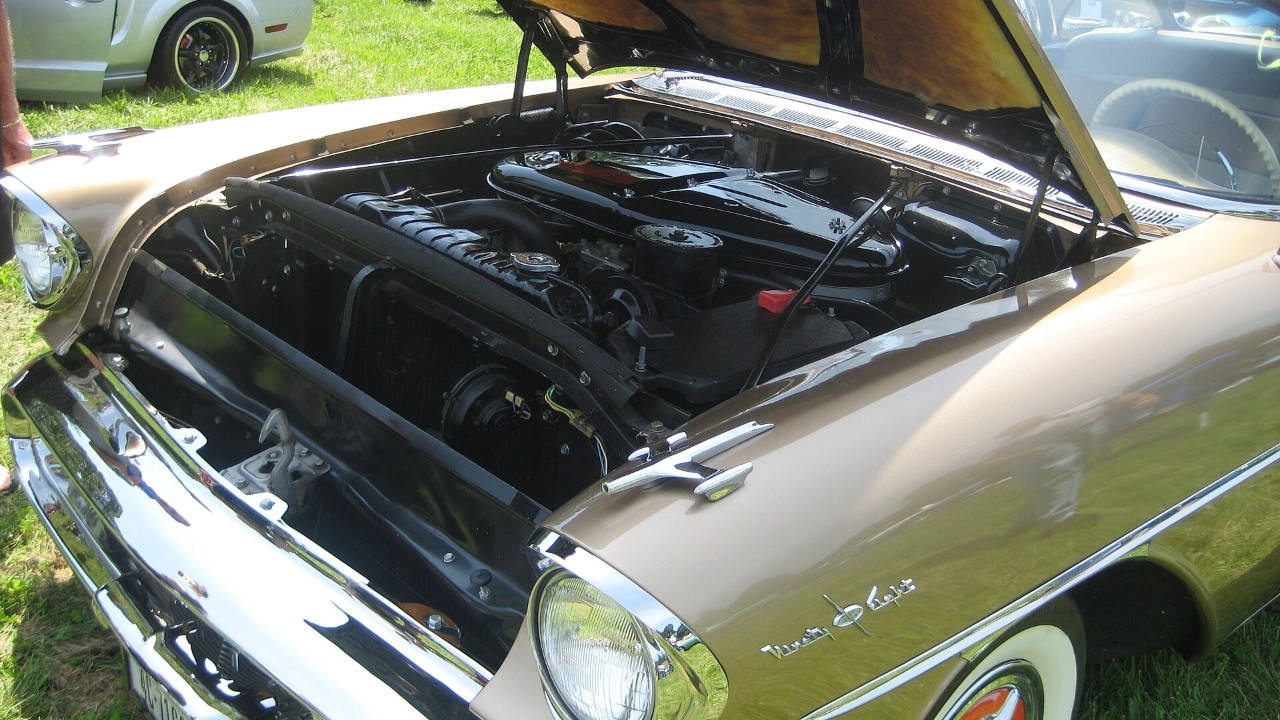
The 371 of 1957 used a 4.0-inch bore and a longer 3.6875-inch stroke. With a four-barrel and 9.25:1 compression, it made 277 hp and 400 lb-ft in its first year. After that debut, it stayed in the 88 through 1960.
Meanwhile, the J-2 “Golden Rocket” option added three two-barrel carburetors. The outer two were vacuum-operated, so they opened all the way or not at all. Oldsmobile charged $83 for the J-2, but the option was gone after 1958, according to the Auto History Preservation Society.
4. 1959 Oldsmobile Rocket 394 V8
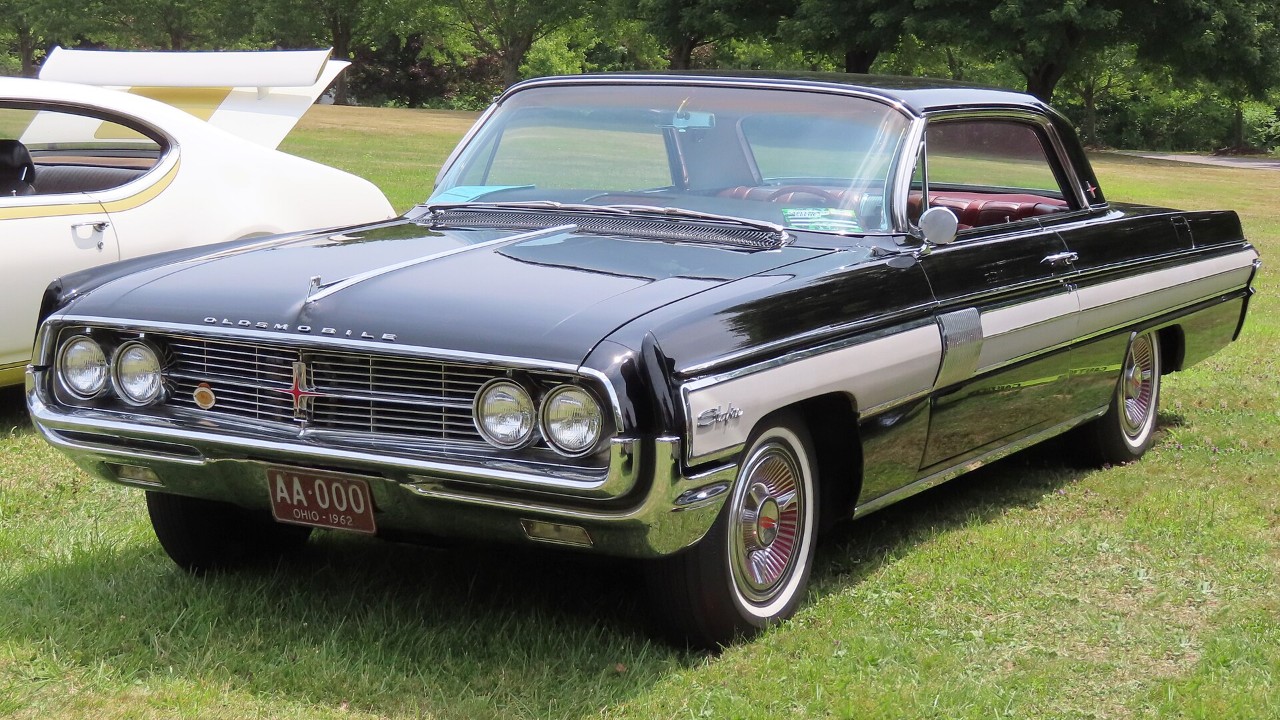
The largest first-generation Rocket arrived for 1959 with a 4.125-inch bore. In the 1959 and 1960 Super 88 and 98, the 394 made 315 hp and 435 lb-ft. Then, in 1963, the Starfire and police version reached 345 hp on 10.5:1 compression.
There’s a simple way to tell two versions apart under the hood, too. The society’s history says Oldsmobile painted four-barrel 394s red, while two-barrel engines wore green. In the end, the 394 lasted through 1964, the last year of the first-generation design.
5. 1964 Oldsmobile Jetstar 88 330 V8
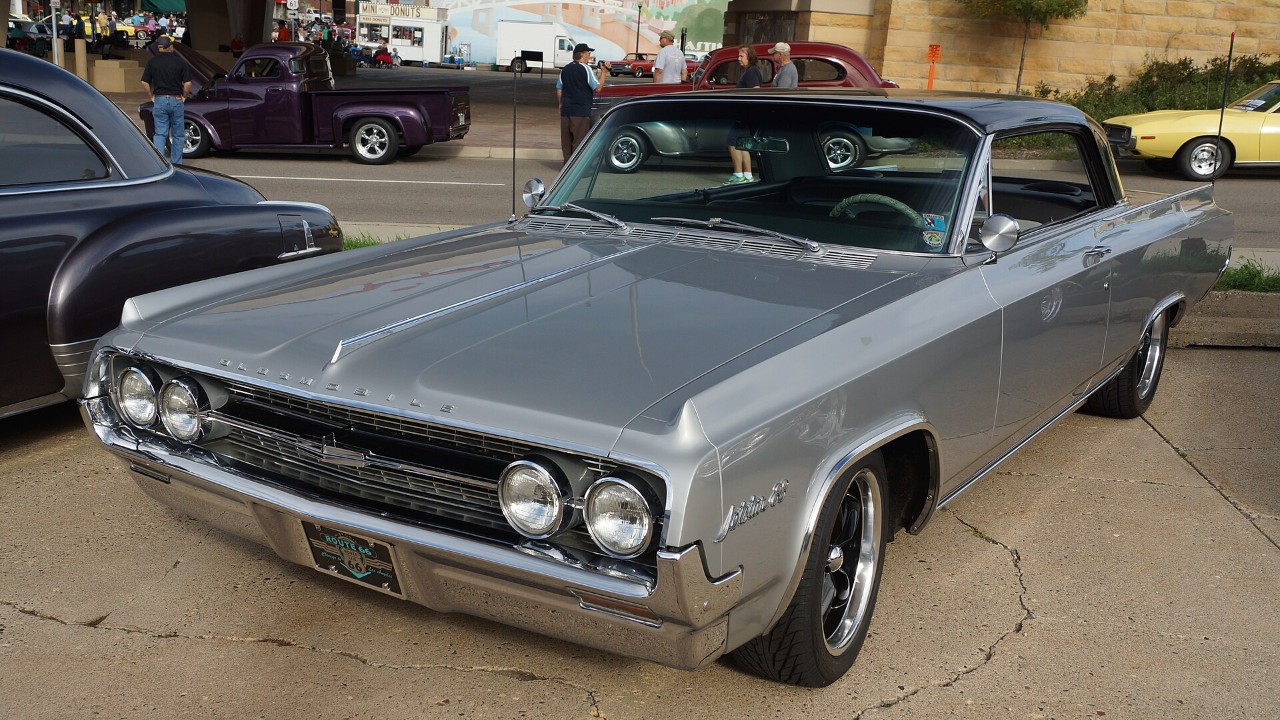
The 330 began a new generation. Engine Builder says Oldsmobile introduced it for the compact F85 and the Jetstar models of 1964, as a blend of old and new. In fact, Curbside Classic says it replaced the aluminum 215, an engine it calls troublesome and expensive to build.
In the Jetstar 88, the two-barrel 330 made 245 hp and 325 lb-ft. A four-barrel was a $34.43 option worth 290 gross hp, according to Curbside Classic’s look at a Motor Trend test. That four-barrel car ran 0-60 mph in 9.2 seconds, and the cheapest Jetstar 88 cost $2,924. Curbside also notes that the 330 shared its basic design with the coming 425.
6. 1965 Oldsmobile 4-4-2 400 V8
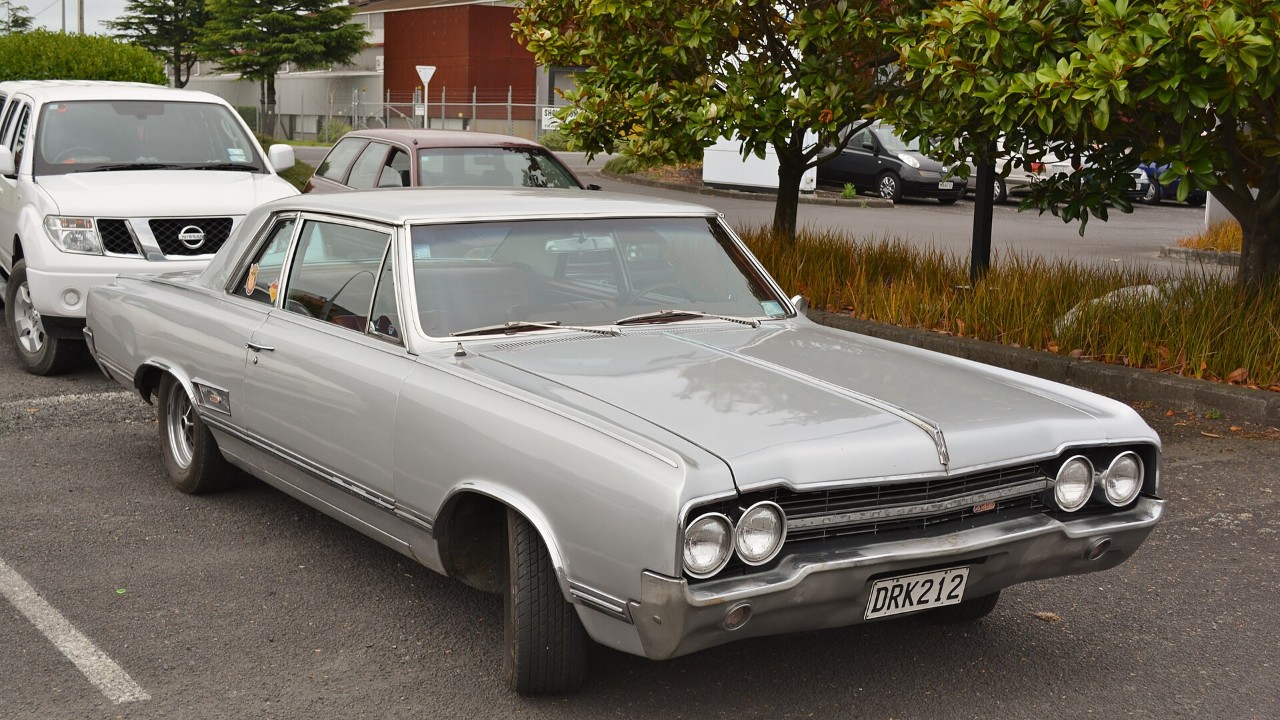
A 400-cubic-inch V8 joined the lineup for 1965. At first, Engine Builder notes, it was a new 345-hp engine for the one-year-old 4-4-2. So the bigger engine went into a model that had been on sale for only one season.
The early 400s of 1965 to 1967 used a slightly oversquare bore and stroke, the same Engine Builder history notes. The displacement didn’t last, though. It disappeared in 1970, leaving Oldsmobile with the 350 and the 455.
7. 1966 Oldsmobile Toronado 425 V8
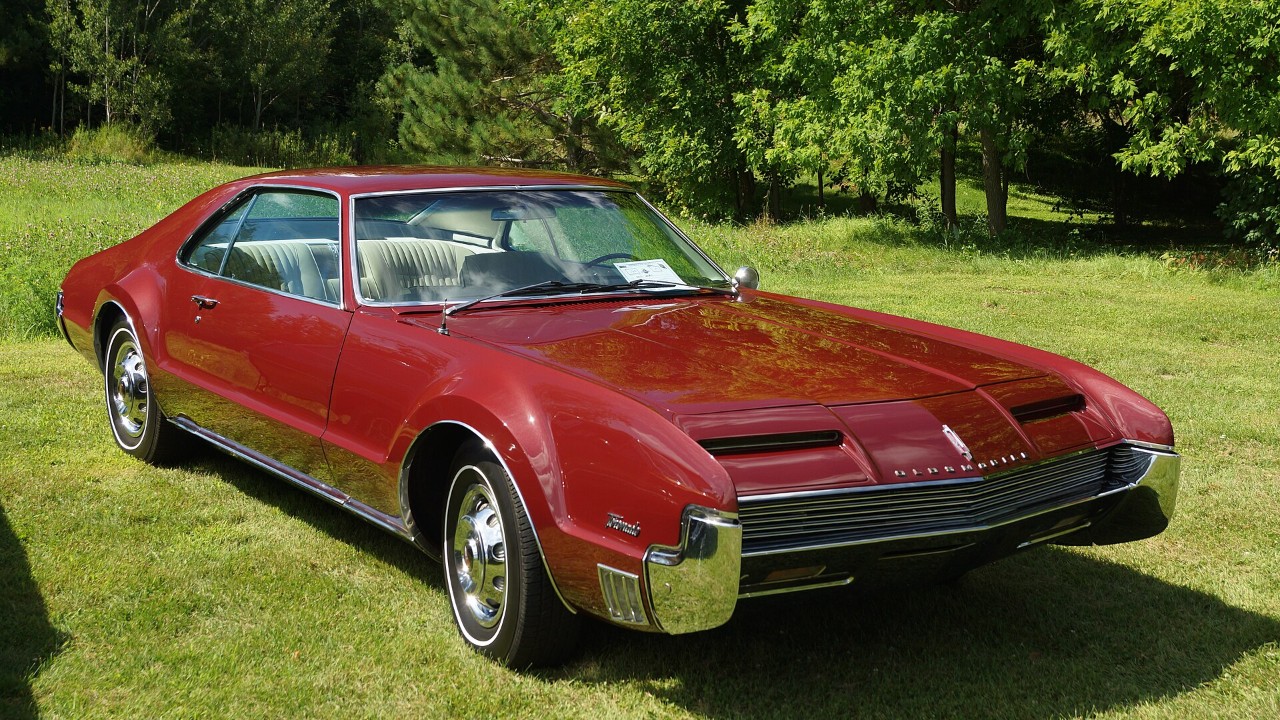
Meanwhile, the 425 was the bigger sibling of the 400, built from 1965 to 1967. For the front-drive 1966 Toronado, Oldsmobile offered an Ultra High Compression Toronado Rocket version of it.
That Toronado engine reached 385 hp, according to Engine Builder, which credits faster camshaft ramps for the gain without hurting idle or reliability. As a result, the 1966 Toronado is the only car on this list sending Rocket power to its front wheels.
8. 1968 Oldsmobile Hurst/Olds 455 V8
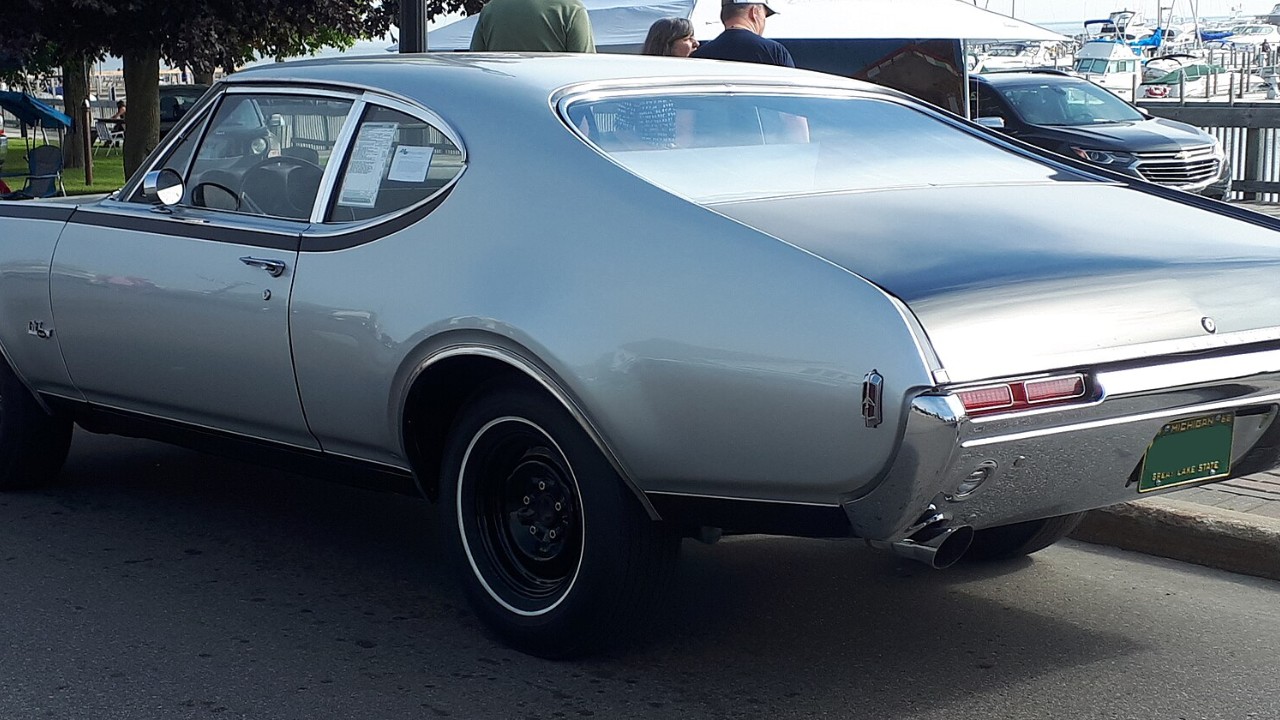
The biggest Rocket was a stroked 400 that arrived in 1968 at 455 cubic inches. It shared the 425’s 4.126-inch bore, per DrivingLine. In 1968 alone, Engine Builder counts five horsepower ratings between 310 and 400.
For the 1968 Hurst/Olds, a more aggressive camshaft and carburetor setup earned a 390-hp rating. DrivingLine also says Oldsmobile built just over 500 of those cars. Long after the muscle era, the 455 kept working in the GMC Motorhome until 1976.
More from Fast Lane Only