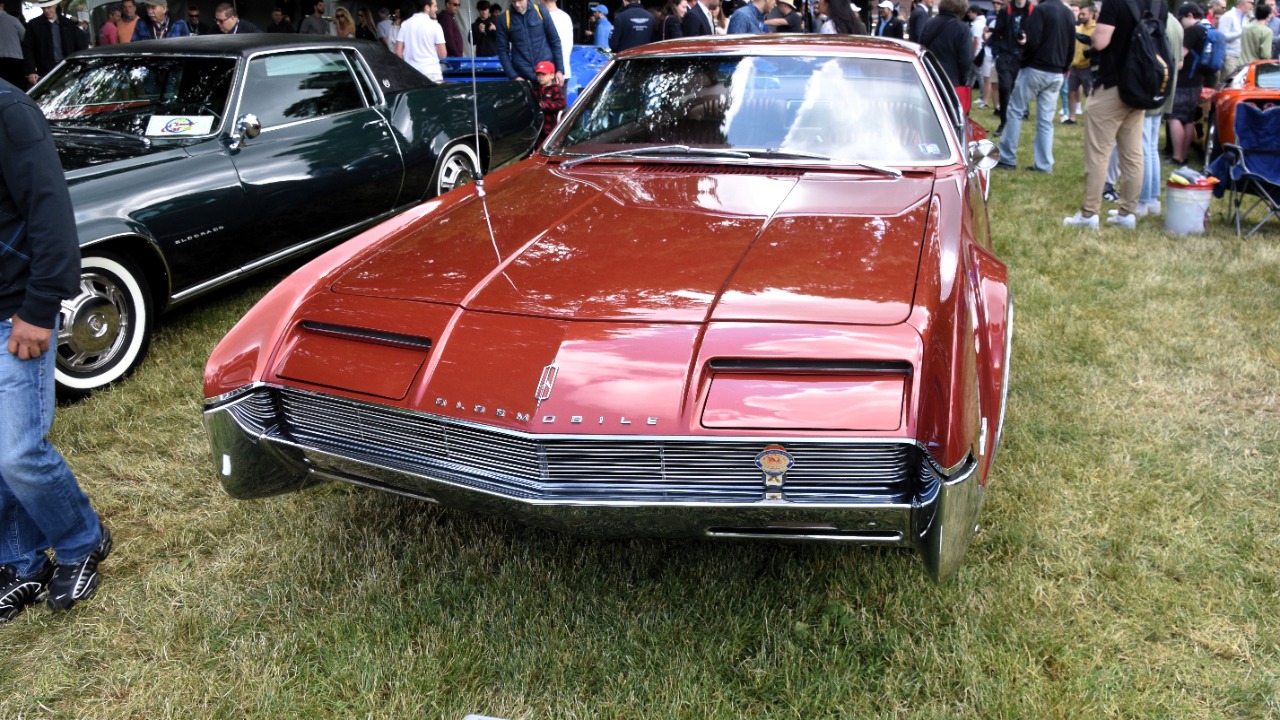
Oldsmobile’s 1966 Toronado arrived as a radical experiment that put big-block power to the front wheels at full-size scale. At a time when most American performance cars relied on traditional rear-drive layouts, the Toronado treated front-wheel drive as a high-speed engineering challenge rather than an economy-car compromise. Its bold drivetrain, dramatic styling, and surprising road manners helped reset expectations for what a Detroit personal luxury coupe could be.
Six decades later, the Toronado reads like a concept car that somehow slipped into regular production. Its influence can be traced through later front-drive muscle experiments, modern packaging priorities, and the way enthusiasts now talk about innovation inside conservative brands. The car did not just introduce a new layout for Oldsmobile; it reframed front-wheel drive as something that could handle serious torque and serious style.
What happened
When Oldsmobile launched the Toronado for 1966, the brand committed to an all-new platform built around a front-drive powertrain that engineers called the Unitized Power Package. Rather than adapting an existing chassis, Oldsmobile created a unique structure that placed a massive V8 longitudinally, then sent power forward through a chain-driven transmission to the front wheels. Period accounts describe the Toronado’s 425 cubic inch V8 with ratings of around 385 horsepower and more than 470 pound-feet of torque, figures that put it squarely in the muscle era despite its luxury mission.
The layout required a series of unusual engineering decisions. The engine sat close to the firewall, with the transmission mounted alongside it and a large silent chain transferring power. This configuration allowed Oldsmobile to keep the hood long and low, preserving the proportions buyers expected from a prestige coupe. Contemporary writeups of the 1966 Toronado describe how the compact drivetrain made room for a flat cabin floor and generous interior space, even while the car stretched more than 211 inches bumper to bumper.
Styling reinforced the impression that the Toronado was not just another Oldsmobile. The body wore sharp fender lines, a wide grille, and hidden headlamps that disappeared behind clamshell doors when not in use. The rear quarters tapered into a fastback roofline that gave the car a muscular stance without the upright formality of a traditional full-size sedan. Inside, a sweeping dashboard, ribbon-style speedometer, and available bucket seats positioned the Toronado as a personal luxury statement rather than a family hauler.
On the road, early tests reported a mix of big-car comfort and unexpected agility. The heavy V8 over the driven wheels gave the Toronado strong traction in poor weather, while the torsion-bar front suspension and a unique rear setup aimed to keep torque steer manageable. Reviewers of the period noted some steering tug under full throttle, yet praised the car’s stability at highway speeds and its ability to cover long distances quickly. The front-drive layout also freed the rear floor from a bulky driveshaft tunnel, which improved passenger comfort and made the rear bench more usable.
Oldsmobile initially positioned the Toronado as a halo model that would sit above the brand’s conventional coupes. Pricing reflected that ambition, placing the car in competition with other upscale two-doors rather than entry-level sedans. Buyers could choose luxury features such as air conditioning, power accessories, and upgraded interior trims, which blended with the car’s performance hardware to create a new kind of American grand tourer.
The Toronado’s technical package did not remain isolated. Its Unitized Power Package served as the foundation for the front-wheel-drive Cadillac Eldorado that followed, showing that General Motors saw the layout as a strategic move for its higher-end divisions. The decision to share the architecture with Cadillac validated Oldsmobile’s engineering gamble and spread the costs of such an ambitious program across multiple nameplates.
Enthusiast culture eventually pushed front-drive experimentation even further. A notable example came later in the decade when a one-of-one Hurst-converted 1968 Oldsmobile 4-4-2 used a similar front-drive setup to create a unique performance showcase. That car, which combined muscle car cues with the unusual drivetrain, has drawn attention in recent years when Jay Leno drove the rare front-wheel-drive 4-4-2 and highlighted how far Oldsmobile’s engineers were willing to stretch the formula.
Why it matters
The 1966 Toronado matters first because it treated front-wheel drive as a high-performance solution at full American scale. Before it arrived, front-drive layouts in the United States tended to appear in compact or niche cars, often marketed for efficiency or packaging rather than speed. Oldsmobile inverted that logic. It bolted a large-displacement V8 to the front axle and wrapped it in a 2-ton coupe with dramatic styling, then challenged buyers to reconsider what front-drive could handle.
This approach changed how Detroit thought about drivetrain layout in premium segments. By proving that a front-drive personal luxury coupe could deliver both strong acceleration and comfortable cruising, the Toronado opened the door for later models that prioritized interior space and traction without giving up on image. The car’s success helped justify the Eldorado’s similar configuration and encouraged engineers to refine front-drive hardware for heavier, more powerful vehicles.
The Toronado also occupies an important place in muscle-era history. While it did not wear traditional muscle car branding, its output and quarter-mile performance placed it near contemporary high-performance coupes. That combination of luxury, size, and speed has led some modern commentators to describe the Toronado as a stealth muscle car, a label that reflects how it straddled categories. Coverage of the 1966 Oldsmobile often emphasizes how the car surprised owners of more conventional Chevrolets with its power and presence, especially given its unconventional drivetrain.
From a design perspective, the Toronado helped define the personal luxury formula that would dominate American coupes through the 1970s. Long hoods, short decks, hidden headlights, and richly trimmed cabins became expectations for buyers in that space. Oldsmobile showed that a brand known for sensible sedans could build something that looked and felt like a concept car while still functioning as a daily driver. The car’s strong identity helped differentiate Oldsmobile inside the General Motors portfolio, which was crowded with similarly sized offerings.
Engineering lessons from the Toronado reached far beyond styling studios. The Unitized Power Package forced Oldsmobile to think about weight distribution, torque management, and cooling in new ways. Packaging a big V8 and transmission across the engine bay required careful attention to serviceability and durability. Solutions that emerged from that work, such as robust chain drives and compact transaxles, informed later front-drive platforms across General Motors. Even as technology evolved and electronic controls took over, the basic idea that a powerful engine could live comfortably in a front-drive configuration owed something to the Toronado experiment.
The car also shifted perceptions among enthusiasts. Front-wheel drive had long been criticized for understeer and torque steer, especially in performance contexts. The Toronado did not eliminate those traits, but it demonstrated that they could be managed in a large, comfortable car that still felt confident at speed. Owners discovered that the car’s traction in poor weather made it more usable year-round than many rear-drive muscle coupes, which enhanced its appeal in regions with harsh winters.
In historical hindsight, the Toronado foreshadowed several trends that would dominate the late twentieth century. As fuel economy regulations tightened and packaging efficiency grew more important, front-drive platforms became the default for family cars and crossovers. The Toronado showed that such layouts could be aspirational rather than purely practical. Its legacy can be seen in later premium front-drive models that combine strong engines with upscale interiors, even if they no longer rely on chain-driven transaxles or big-block V8s.
The car’s influence also surfaces in how collectors and historians now assess Oldsmobile’s legacy. For a brand that later became associated with conservative sedans, the Toronado stands as evidence that Oldsmobile once pursued daring engineering. Its presence in collections, at auctions, and in enthusiast media keeps that narrative alive. When high-profile figures showcase rare front-drive Oldsmobiles, such as the Hurst-built 4-4-2, they implicitly trace a line back to the 1966 Toronado that started the experiment.
Market perception of the Toronado has evolved as well. Early on, some buyers viewed the car as an oddity, unsure how to categorize a front-drive V8 coupe. Over time, that uniqueness has become a selling point. Collectors now seek out well-preserved examples for their combination of engineering significance and period style. The car’s distinctive proportions and hidden headlamps make it stand out at shows, while its technical story gives enthusiasts something to discuss beyond paint codes and trim packages.
More broadly, the Toronado illustrates how risk-taking inside large automakers can shape the direction of entire segments. Oldsmobile convinced corporate leadership to fund a clean-sheet platform for a layout that had little precedent in American full-size cars. The decision carried financial and reputational risk, yet it delivered a product that still commands attention decades later. For modern industry observers, the Toronado serves as a case study in how bold engineering, when paired with compelling design, can create long-lasting brand equity.
What to watch next
Interest in the Toronado and its front-drive relatives is likely to keep rising as collectors look for distinctive alternatives to more common muscle and pony cars. Enthusiast coverage of classic Toronado models already highlights their relative affordability compared with high-profile Chevrolets and Pontiacs, especially when factoring in their engineering story. As more buyers prioritize originality and technical intrigue over pure badge prestige, the Toronado’s appeal should continue to grow.
Another trend to watch involves how front-wheel-drive performance is interpreted in the electric and hybrid era. While modern performance cars often rely on all-wheel drive or rear-drive configurations, many mainstream EVs and plug-in hybrids use front-drive layouts for cost and packaging reasons. The Toronado’s legacy suggests that front-drive can be part of an aspirational product when engineers and designers treat it as a feature rather than a compromise. Automakers that want to differentiate their electric offerings may look back at how Oldsmobile wrapped bold styling and a strong narrative around an unconventional drivetrain.
Media attention around rare front-drive Oldsmobiles will also shape public memory of the Toronado. When high-visibility enthusiasts feature cars like the unique Hurst-built 1968 4-4-2, they remind audiences that Oldsmobile once pushed front-drive performance to extremes. Coverage of that one-of-one 4-4-2 connects directly back to the Toronado’s pioneering layout and keeps the broader story in circulation for new generations of fans.
Preservation and restoration practices will determine how many Toronados remain on the road. The car’s specialized drivetrain components, such as the chain-driven transaxle, require expertise that not every shop can provide. As parts supplies tighten, owners may need to coordinate through clubs and specialist networks to keep cars running with original hardware. How that community responds will influence whether future enthusiasts encounter Toronados as static display pieces or as functioning examples of mid-century engineering.
There is also growing interest in how the Toronado fits into design history. As museums and exhibitions revisit the personal luxury era, the car’s dramatic profile and hidden lamps make it a natural candidate for curated displays. Curators who emphasize the relationship between form and function are likely to highlight how the front-drive layout allowed for a low floor and distinctive proportions. That visibility can elevate the Toronado from enthusiast favorite to widely recognized design landmark.
More From Fast Lane Only: