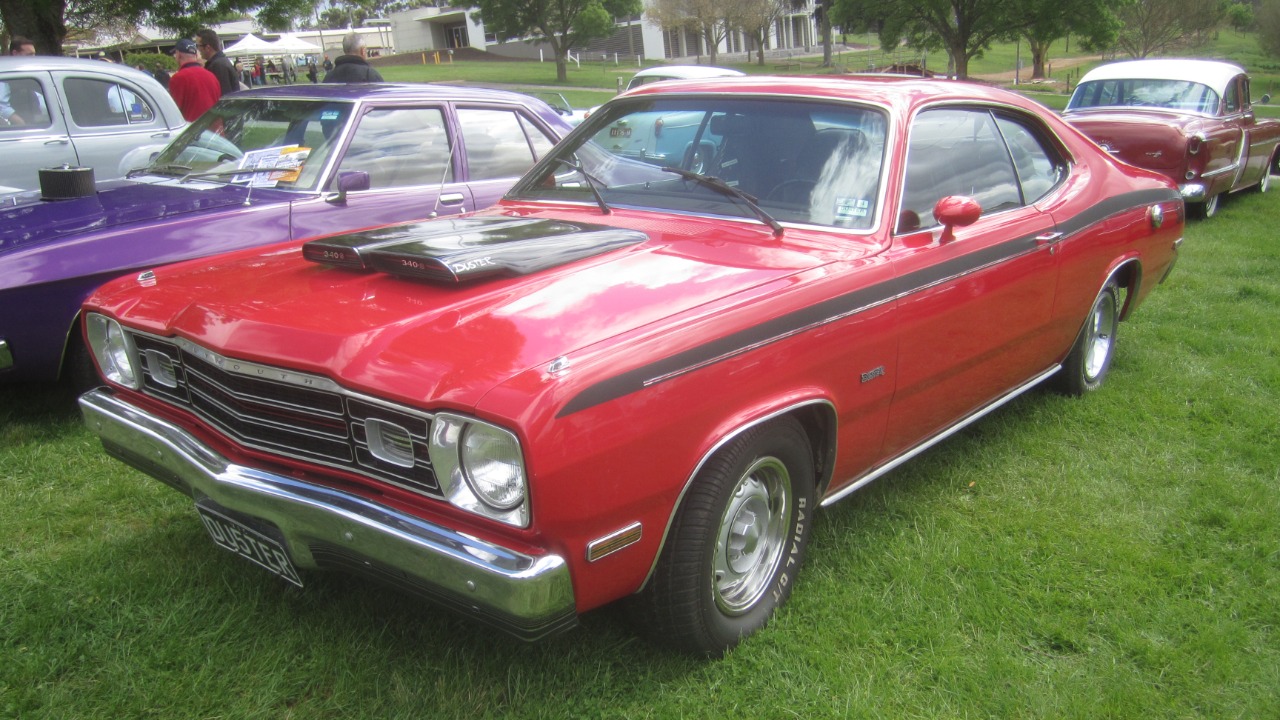
The 1970 Plymouth Duster 340 arrived as a compact coupe with the attitude of a full-size muscle car, pairing a lightweight body with one of Chrysler’s hottest small-block V8s. In an era obsessed with cubic inches and quarter-mile times, it proved that smart packaging and sharp pricing could deliver big power without the usual bulk or sticker shock.
More than fifty years later, the Duster 340 still stands out as one of the purest expressions of the Mopar formula: take an ordinary economy car shell, stuff it with serious hardware, and let performance speak louder than prestige badges.
What happened
The Plymouth Duster began life as a clever spin on an existing compact. Chrysler engineers started with the A-body Plymouth Valiant platform, then reshaped it into a sleeker two-door fastback that shared the Valiant’s cowl, windshield, and front doors but gained a unique roofline, rear quarters, and tail panel. The result was a car that kept the Valiant’s low production costs and tidy footprint while looking far more aggressive.
Plymouth pitched the base Duster as a budget-friendly runabout, powered by slant-six engines and trimmed with simple interiors. The turning point came with the Duster 340, which dropped Chrysler’s 340 cubic inch small-block V8 into the compact shell. Factory ratings listed the 340 at 275 horsepower and around 340 lb-ft of torque, figures many enthusiasts considered conservative given the engine’s high-flow cylinder heads, 10.5:1 compression, and performance camshaft. In a car that weighed significantly less than most midsize muscle machines, the power-to-weight ratio was the real story.
The 340 package transformed the Duster from commuter to street fighter. Buyers could choose a 4-speed manual with Hurst shifter or a TorqueFlite automatic, along with heavy-duty suspension, upgraded brakes, and performance rear axle ratios. Optional equipment such as dual exhausts with chrome tips, Rallye wheels, and bold side stripes made the compact coupe look as serious as it felt from behind the wheel.
Contemporary road tests showed that a well-driven Duster 340 could run the quarter mile in the low 14-second range on factory tires, with trap speeds around 95 to 100 mph. That performance put it in direct contention with larger and more expensive muscle cars from all three Detroit brands. The combination of straight-line speed, compact dimensions, and relatively low price earned it a reputation as a “giant killer” among enthusiasts, a description echoed in later retrospectives that describe the Duster 340 as a mini muscle car.
The Duster 340 did not exist in a vacuum inside Chrysler’s lineup. It was part of a broader move to turn the A-body platform into a performance showcase. Dodge had already explored the formula with the Dart GTS and later the Demon, which shared similar underpinnings and powertrains with the Duster. Reports on the Dart and Demon highlight how Chrysler used its compact chassis to create a family of small, potent street machines that blurred the line between economy car and muscle car, a strategy that directly shaped the Duster’s identity as a compact performance coupe linked to the Dart and Demon.
Inside, the Duster 340 remained relatively simple. Bench seats were common, with bucket seats and a center console available but not mandatory. Instrumentation was straightforward, sometimes enhanced by a tachometer and auxiliary gauges. The simplicity reflected its mission. Rather than chase luxury, Plymouth focused on performance hardware and kept the cabin honest, even spartan, which helped keep curb weight and price in check.
Visually, the 1970 model year set the tone. The Duster 340 wore specific badging, often with “340” callouts on the hood or rear quarters, and many cars carried blackout hoods, bold side stripes, and bright colors typical of Mopar’s High Impact palette. The stance was purposeful, with a slightly nose-down attitude and wider rear tires that hinted at the power under the hood. While later years would bring detail changes and new graphics, the 1970 car established the template that enthusiasts still associate with the name.
Why it matters
The 1970 Plymouth Duster 340 matters because it captured the essence of muscle car performance in a more approachable, compact package. At a time when insurance premiums and fuel concerns were starting to nibble at the edges of the big-block market, the Duster 340 offered a different path to speed. It proved that a well-tuned small-block in a light body could embarrass heavier, more prestigious rivals on both street and strip.
Price played a central role in that appeal. The Duster 340 undercut many midsize competitors while delivering similar or better real-world acceleration. For younger buyers and performance fans without deep pockets, it opened the door to serious power without the financial commitment of a Road Runner, Charger, or Barracuda. That democratization of speed helped broaden the muscle car audience and cemented the idea that compact performance cars could be more than just entry-level curiosities.
The car also signaled a shift in how Detroit thought about performance. Instead of simply dropping ever-larger engines into full-size platforms, Chrysler used the A-body chassis as a canvas for more agile, less ostentatious performance models. The Duster 340, along with its Dart and Demon cousins, foreshadowed later generations of sporty compacts that would carry the performance torch after the original muscle era faded. In that sense, it sits in the lineage that eventually leads to cars like the 1980s 5.0-liter Fox-body Mustangs and modern turbocharged hot hatches.
From a technical standpoint, the 340 engine itself has become a legend. Enthusiasts often praise it as one of Chrysler’s best small-blocks, combining strong bottom-end torque with a willingness to rev and respond to tuning. Its relatively modest displacement compared with big-block 383 or 440 engines made it easier to package in the A-body engine bay, and its lighter weight improved handling balance. The Duster 340 showcased what this engine could do when paired with a chassis that did not weigh it down.
Collectors and restorers now view the 1970 Duster 340 as a milestone car within the Mopar world. Early examples with original drivetrains, correct 340 badging, and period-correct colors command strong interest at auctions and in private sales. The car’s mix of rarity, performance, and sleeper image feeds that demand. While it was never built in the same numbers as some mainstream muscle nameplates, it has a dedicated following that values its underdog story.
The Duster’s understated origins also contribute to its modern appeal. Because it started as a Valiant spin-off, it carries a certain humility that contrasts with the more flamboyant image of big-block Chargers and ‘Cudas. That humility makes the performance feel even more surprising. For many enthusiasts, the idea that an unassuming compact could run with the heavy hitters is part of the car’s charm.
Its influence can be seen in how manufacturers and tuners still approach performance on a budget. The formula of combining a strong engine with a light, inexpensive platform remains a go-to strategy. Whether in factory-built sport compacts or home-built sleepers, the basic Duster 340 blueprint continues to resonate. The car serves as a reminder that raw displacement is only part of the story, and that smart engineering and packaging can produce outsized results.
The Duster 340 also offers a window into the final years of the original muscle car boom. It arrived just before emissions regulations, rising insurance costs, and fuel crises reshaped the industry. As such, it captures a moment when Detroit still chased horsepower aggressively, yet was beginning to experiment with more efficient ways to deliver it. That transitional role gives the 1970 model a historical weight beyond its quarter-mile numbers.
For Mopar loyalists, the car reinforces the brand’s reputation for building unconventional performance machines. Chrysler was willing to take a humble compact and turn it into a serious street car, then back it up with bold colors and unapologetic graphics. The Duster 340 embodies that willingness to push boundaries on a platform that other companies might have left in the economy-car corner of the showroom.
What to watch next
The legacy of the 1970 Plymouth Duster 340 continues to evolve in several directions, from collector markets to modern reinterpretations of the compact muscle formula. Enthusiasts watching auction results have seen interest in well-documented Duster 340s rise, especially for cars that retain original sheet metal, matching-numbers 340 engines, and factory-correct performance options. Early production 1970 examples, particularly those in desirable colors with 4-speed transmissions, tend to attract the most attention.
Restoration trends are another area to watch. Some owners pursue meticulous, factory-correct restorations that highlight the car’s original appearance and equipment. Others lean into the sleeper heritage, upgrading suspension, brakes, and drivetrains while keeping the exterior close to stock. The availability of reproduction parts for A-body Mopars has made both paths more accessible, and the Duster 340 often serves as a canvas for builds that blend period style with modern reliability.
On the performance front, the Duster 340’s basic formula continues to influence how builders approach classic and modern compacts. Many restomod projects keep the 340 block but add modern cylinder heads, electronic ignition, and fuel injection to extract more power and drivability. Others swap in later small-blocks or even Gen III Hemi engines, turning the already quick Duster into a far more potent machine while retaining its compact footprint.
Modern manufacturers have also circled back to the idea that a smaller, lighter car with a strong engine can punch above its weight. While current safety and emissions standards mean no new car can replicate the raw simplicity of a 1970 Duster 340, the spirit lives on in performance-focused versions of compact and midsize platforms. The ongoing popularity of turbocharged four-cylinder and V6 models, as well as V8-powered two-door coupes, shows that the appetite for accessible performance has not faded.
For historians and enthusiasts, another area of interest is how Chrysler’s A-body performance cars are interpreted in the broader story of American muscle. The Duster 340, Dart GTS, and Demon are increasingly recognized as key players, not just side notes to the big-block E-body icons. As more detailed documentation and survivor cars surface, the understanding of production numbers, option combinations, and factory quirks continues to sharpen.
There is also a cultural dimension to watch. The Duster 340 has long been a favorite among grassroots racers and budget builders, groups that often value function over flash. As social media and online forums give these communities more visibility, their appreciation for cars like the Duster helps shape which models gain status among younger enthusiasts. The compact Mopar’s blend of affordability, performance potential, and distinctive style positions it well to remain relevant to new generations.
Looking ahead, the preservation of original 340 engines and drivetrain components will become increasingly important. As more cars are modified or parted out, survivors with intact factory hardware will grow rarer. That scarcity is likely to reinforce the Duster 340’s status as a collectible, particularly among Mopar purists who prize authenticity.
More From Fast Lane Only: