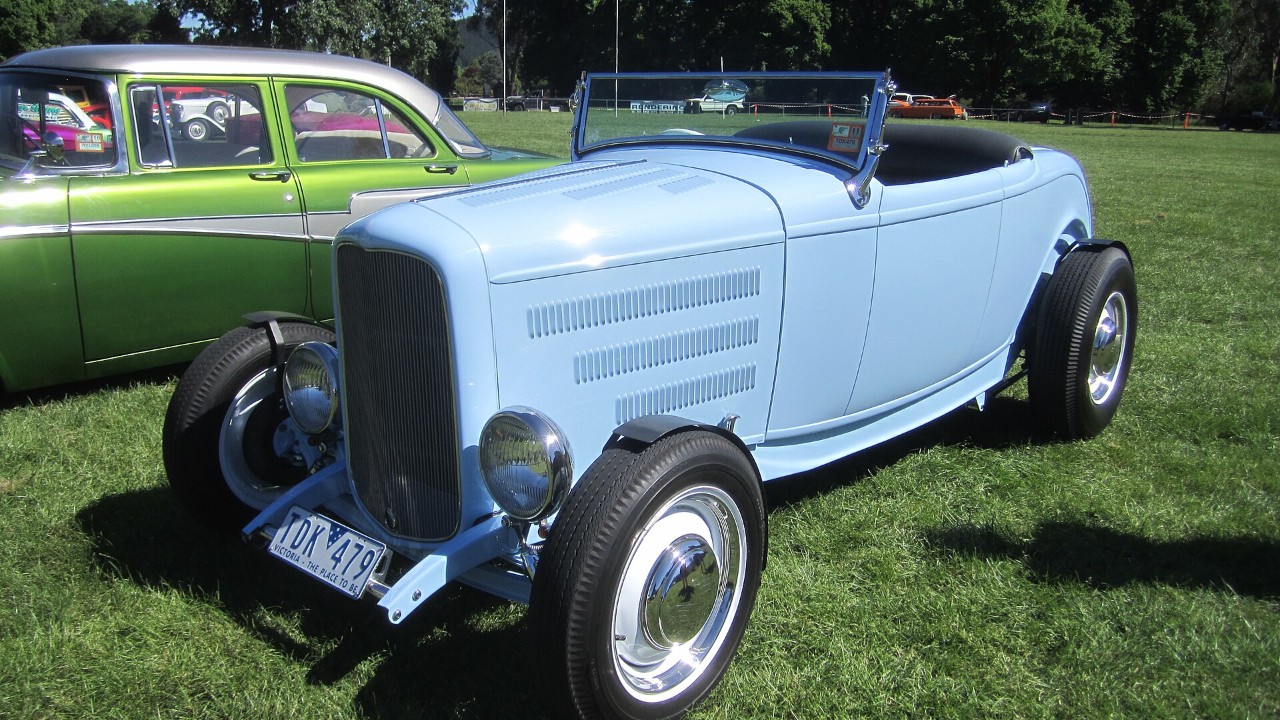
The 1932 Ford roadster sits at the center of hot rod culture, and it got there for a simple reason. After all, it was cheap, light and easy to make faster. Hot rodding itself started in Southern California in the late 1930s, when young drivers raced modified cars across dry lake beds such as Muroc and El Mirage.
Before anyone said “hot rod,” a modified car was called a gow job. Then the hobby exploded after World War II. Many returning soldiers had picked up mechanical training, and old airfields gave them places to run. By 1948, Hot Rod magazine was spreading the tricks nationwide.
Those early builders mostly started with old Fords, and the same cars still anchor the hobby. So these are our 10 picks, the hot rods and rod-ready Fords we would grab if a good one came up. Of course, the choices are our opinion. The years, engines and production numbers come from Ford histories, museum records and car magazines.
1. 1932 Ford roadster hot rod
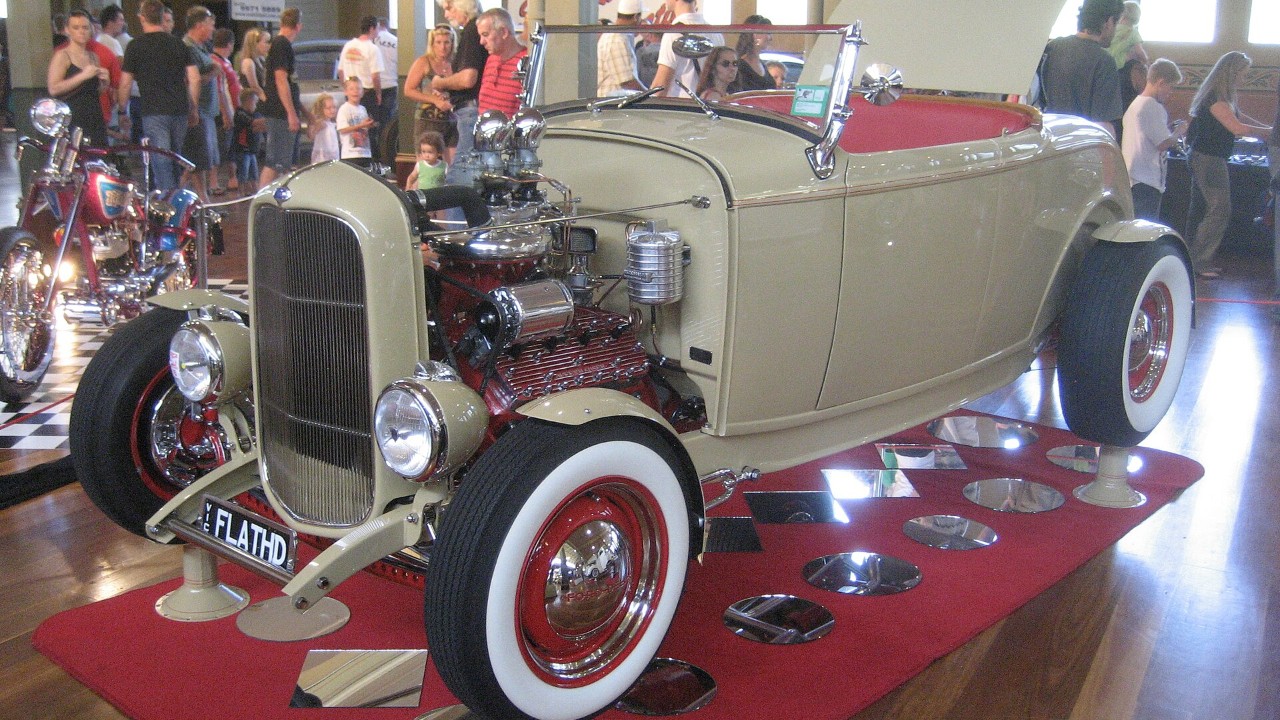
The Deuce gets its nickname from the “2” in 1932, and its fame from what sat under the hood. Ford’s Model 18 was the first low-priced, mass-marketed car with a V8. At first, that 221-cubic-inch flathead made 65 horsepower. Buyers could instead pick the four-cylinder Model B, with 50 horsepower.
In the end, most buyers chose the V8. Ford sold 298,647 V8-powered Model 18s in 1932, against 133,539 Model Bs. However, the open two-door roadster was one of the rarer body styles. Ford built 12,597 roadsters, while the two-door sedan reached 124,101. The roadster started at $495 when new.
Today, the 1932 to 1934 Fords are hugely popular with hot rodders, and the roadster and coupe are the most wanted. That is why a real steel 1932 Ford roadster is a big deal. Our take: if you find one with honest history, buy it, because so much of the hobby grew up around this car. For a look at some famous examples, see our list of seven hot rods worth more than most owners realize.
2. 1934 Ford three-window coupe hot rod
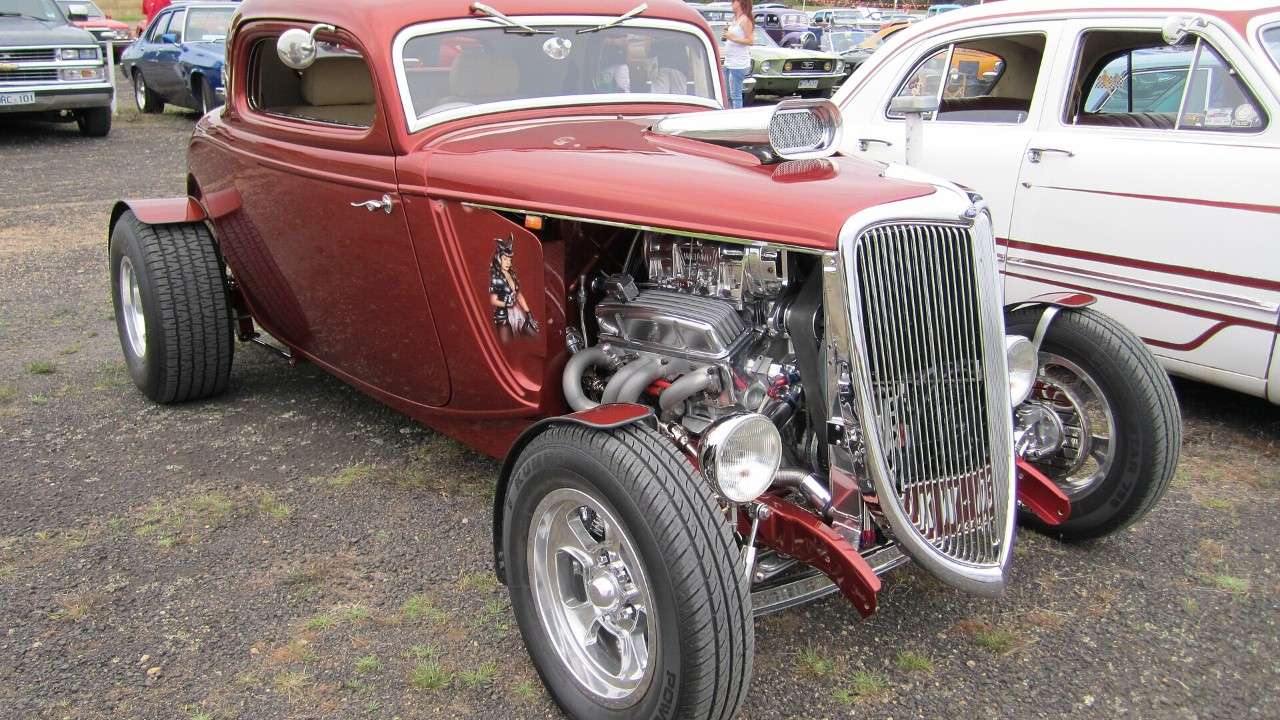
The 1934 Ford looks a lot like the 1933 model, and that is no accident. In fact, Ford only lightly updated the body. It got a slightly different grille, reworked hood-side louvers and smaller headlamps and cowl lamps. Instead, the bigger news sat under the hood.
According to Old Cars Weekly’s feature on a 1934 three-window coupe, the flathead V8 rose to 85 horsepower for 1934, up from 75 the year before. The magazine also notes that collectors and hot rodders latched onto the 1933 and 1934 models long ago.
The three-window name counts the glass: two door windows and a rear window, with no quarter windows behind the doors. As a result, the roof has a clean, tight look. In our view, a chopped three-window on a set of steel wheels is about as good as prewar Ford styling gets. If you are shopping, pay for a body that is honest original steel, and ask for its history.
3. 1929 Ford Model A roadster hot rod
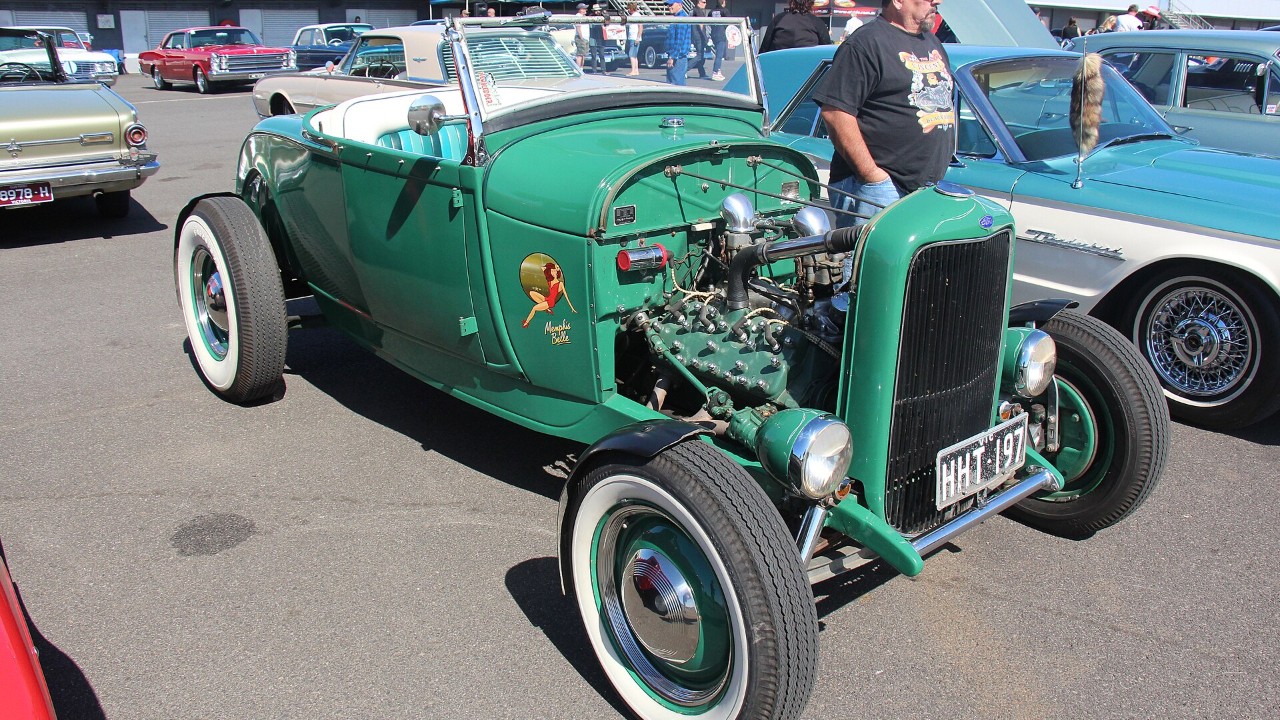
Ford built the first Model A on October 20, 1927, and showed it to the public on December 2. Hot rodders gave the car a nickname of their own: the “A-bone.” Its 201-cubic-inch L-head four made 40 horsepower and could push the car to about 65 mph.
The roadster was the bargain of the range. It cost $385 when new, far less than the fancier closed cars. In addition, the open cockpit and lighter weight drew hot rodders to the roadster, along with its dependable chassis. Model As were also among the older Fords that the first hot rodders built.
A Model A roadster also gives you more choices than a Deuce. You can build it as a traditional highboy with the four-cylinder, or drop in a V8. Our take: a 1929 Ford roadster is one of the most affordable ways into a real early Ford hot rod, and it delivers the full open-air experience.
4. 1930 Ford Model A coupe hot rod
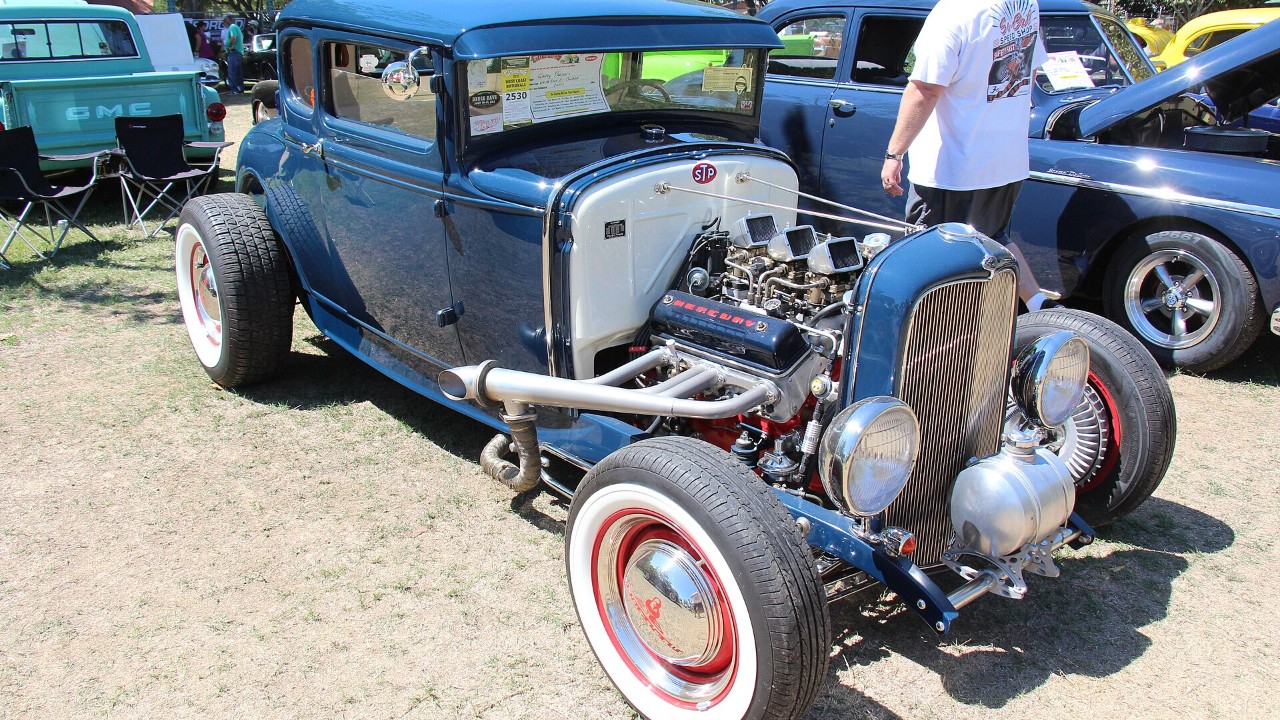
Ford sold the Model A in huge numbers, and that is great news for buyers today. By March 1930, sales had reached three million. At that point, Ford also offered nine body styles. By the time production ended in March 1932, Ford had built 4,858,644 Model A cars.
That volume matters, because the first hot rods were often older Fords such as Model As. First, builders stripped weight off them, and then they made them faster. As a result, buyers have plenty of Model As to choose from, even for a car this old.
The coupe has another advantage. It gives you a roof and a closed cabin, so you can drive it on cool nights. In our view, a 1930 Model A coupe is the smart buy for someone who wants to drive a hot rod often. Look for solid floors and straight doors before you worry about the engine.
5. 1939 Ford Deluxe coupe hot rod
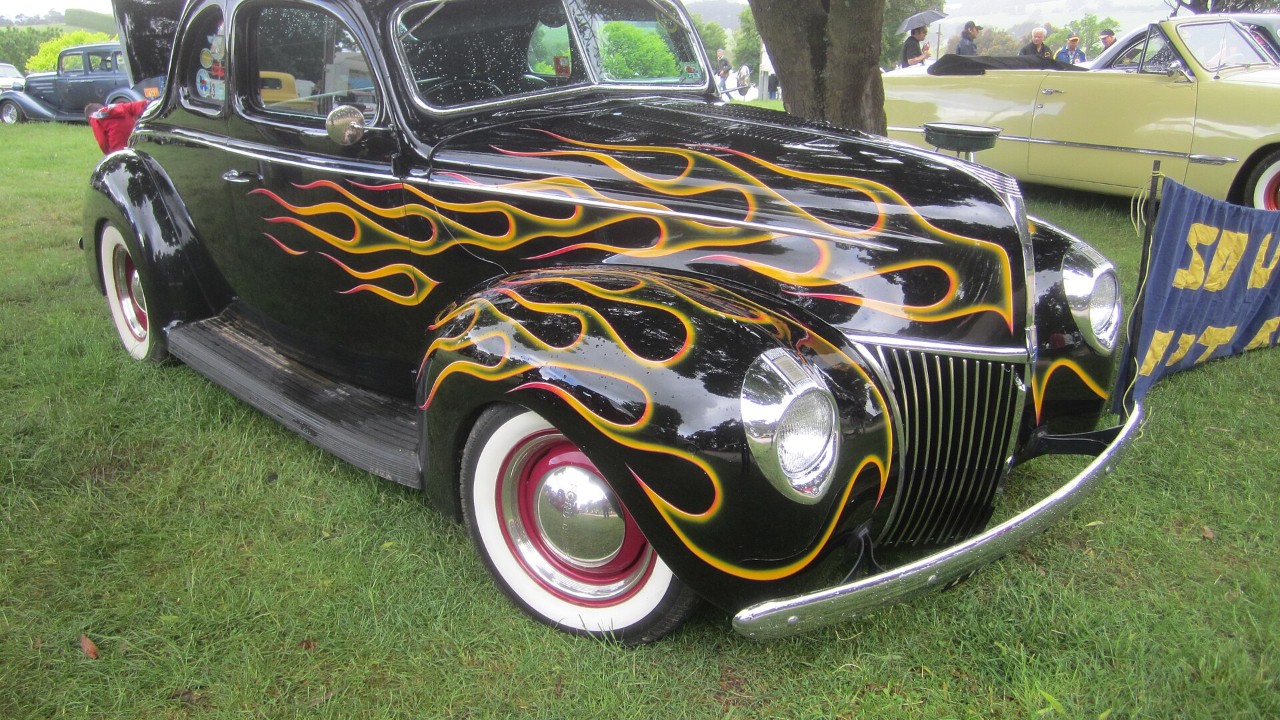
The 1939 Ford Deluxe brought one big safety upgrade. It was Ford’s first year with hydraulic brakes, made by Lockheed and fitted at all four wheels. That alone makes a 1939 car a friendlier starting point for a driver.
Bob Gregorie, who had also penned the original Lincoln Zephyr, drew the Deluxe’s pointed nose. It wore a chrome grille with vertical bars in a V shape, set low in the hood. For the first time, the headlights blended smoothly into the front fenders. Under the hood, a 221-cubic-inch flathead V8 made 85 horsepower and 155 lb-ft of torque.
The coupe was a smaller seller than the Tudor sedan. Ford built 33,326 Deluxe coupes for 1939, against 144,333 Deluxe Tudors, according to Conceptcarz’s Model 91A history. Meanwhile, the coupe listed at $700. Our take: a 1939 Deluxe coupe gives you streamlined styling and hydraulic brakes in a body that looks great lowered.
6. 1948 Ford F-1 pickup
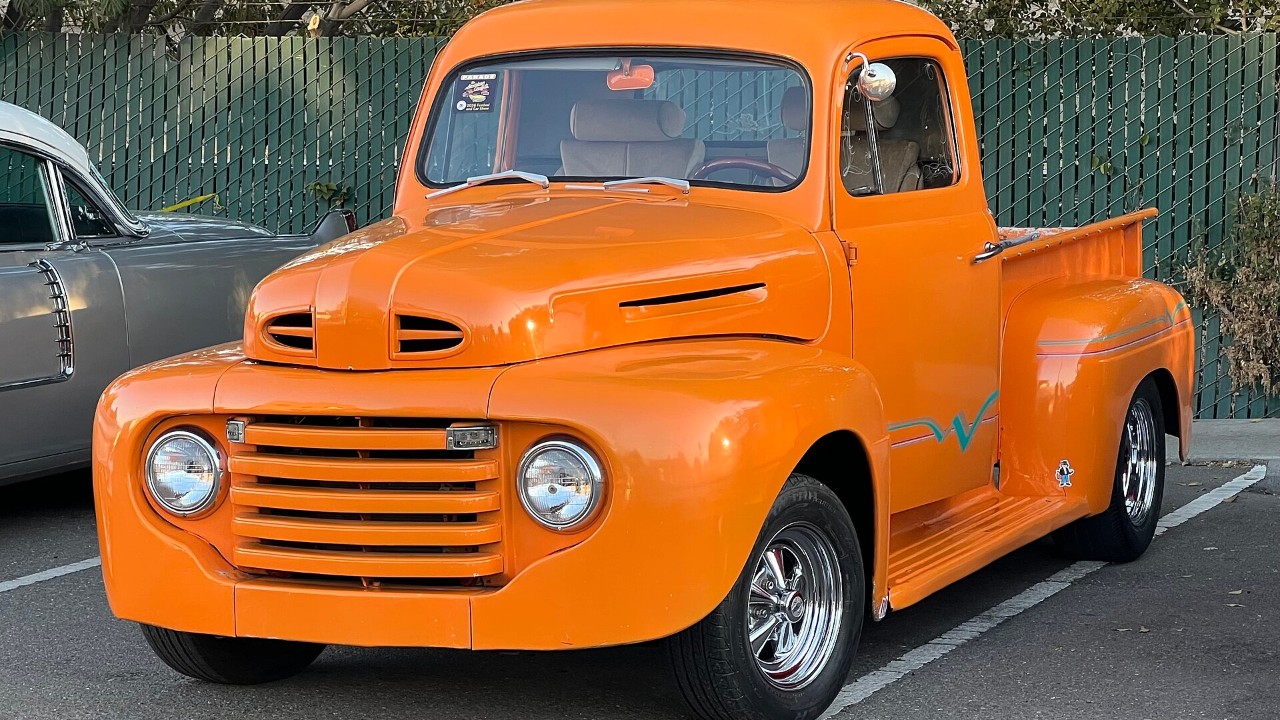
Ford’s first F-Series truck went on sale on January 16, 1948, after production started on November 27, 1947. Ford also called this family the Bonus-Built trucks. The F-1 was the lightest model in the line, a half-ton pickup on a 114-inch wheelbase.
The cab was the big story. Ford spent $1 million on research and tooling for it, so people dubbed it the “Million-Dollar Cab.” Buyers could choose a 226-cubic-inch flathead six with 95 horsepower or a 239-cubic-inch flathead V8 with 100 horsepower.
The F-1 was the most common model of the first generation. That makes it easier to find than many early trucks. If you like old pickups, our list of 19 classic pickups that refused to die has more. In our view, a 1948 F-1 is the perfect rod-and-haul truck. Before you buy, check the cab corners and bed floor, because both take a beating on work trucks.
7. 1949 Ford Custom Club Coupe
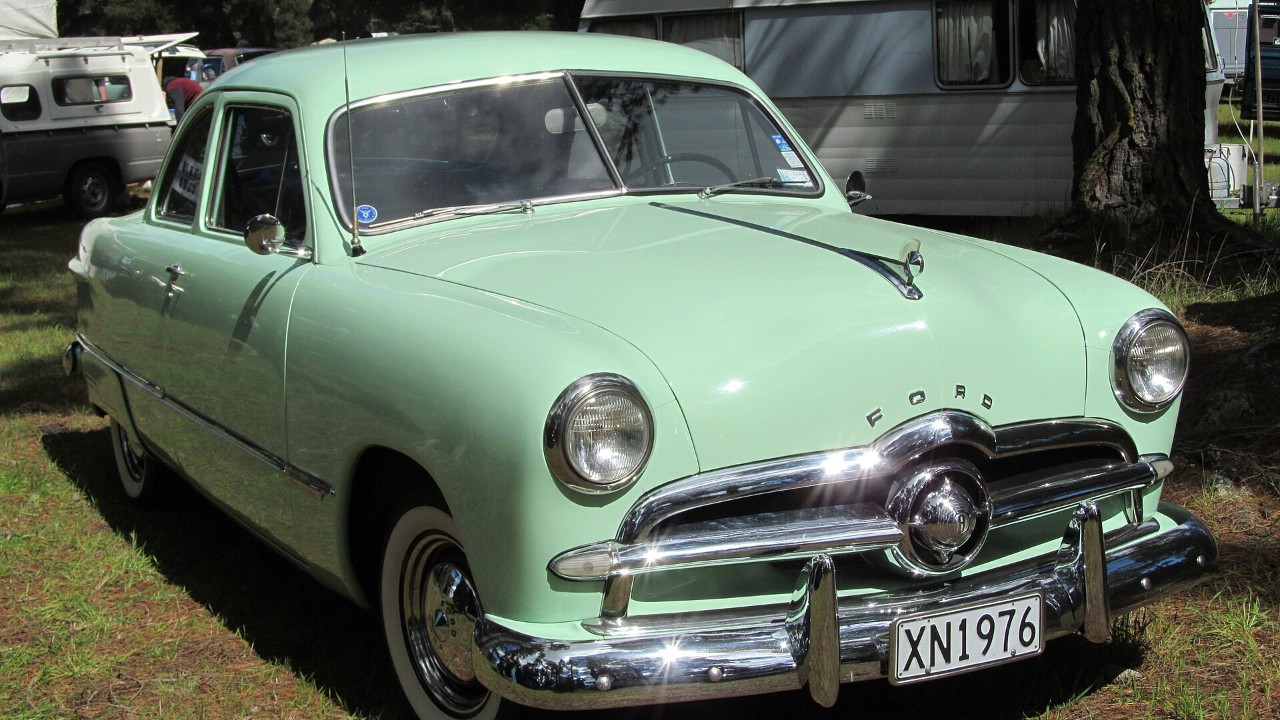
The 1949 Ford was the first full-size Ford designed after World War II. Its slab sides earned it the nickname “Shoebox Ford.” Ford showed it off at a gala at the Waldorf-Astoria Hotel in New York in June 1948.
Under the skin, it also changed a lot. Ford replaced its old transverse-leaf front suspension with an independent setup on coil springs. A 226-cubic-inch six came standard, and the 239-cubic-inch flathead V8 was optional. Buyers rushed in, and Ford sold 1,118,740 cars for 1949. As a result, Ford returned to first place among American makers.
The Club Coupe is the body to want, with its two doors and sleek roof. Our take: a Shoebox Custom Club Coupe makes a great mild custom, because its flat sides take a lowered stance and a little chrome so well. Thanks to that coil-spring front end, we’d expect it to ride better than the prewar Fords on this list.
8. 1927 Ford Model T hot rod
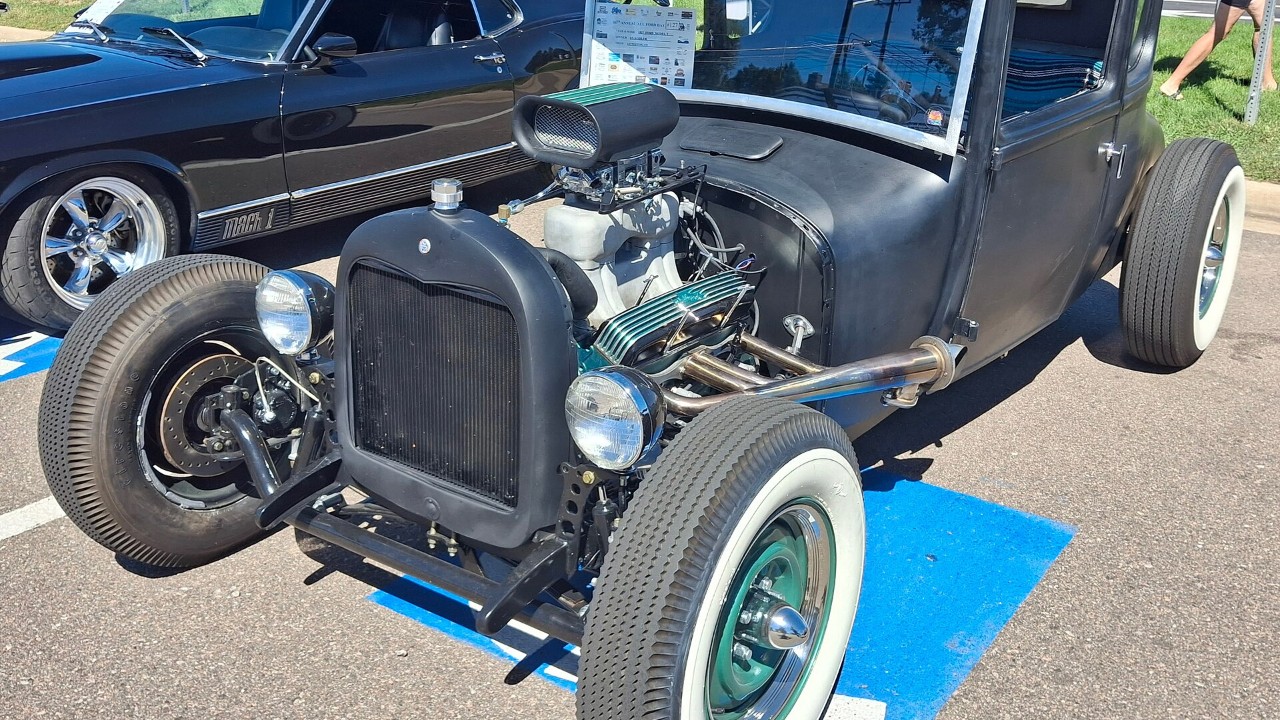
The Model T reached the end of the road in 1927. After 19 years and some 15 million cars, Ford ended production. Henry Ford and Edsel Ford drove the ceremonial Fifteen Millionth Model T off the line at the Highland Park plant in late May 1927.
That car survives at The Henry Ford, which lists its engine at 22.5 horsepower and its wheelbase at 100 inches. Those numbers show why hot rodders saw so much room to improve. Indeed, many of the first hot rods were Model Ts from the 1910s and 1920s.
Today, a Model T hot rod usually means a light, open body with a big engine and very little else. After all, that simplicity is the appeal. Our take: a well-built 1927 Model T rod is pure fun on a sunny afternoon. However, buy one only after a close look at the frame, steering and brakes, because every one is built a little differently.
9. 1935 Ford pickup
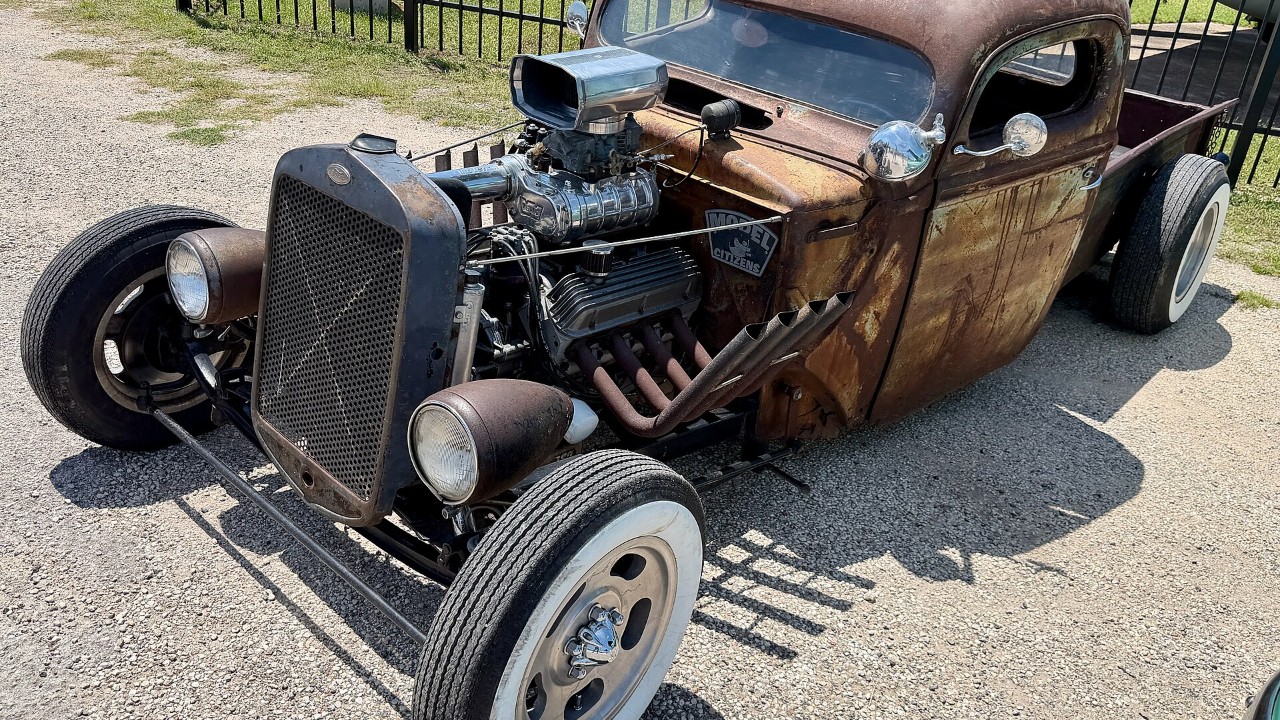
Ford’s 1935 Model 50 half-ton pickup brought a much more modern look. The roof turned rounder, the windshield sloped back and the grille took on a heart shape. In addition, Ford built the cab completely out of steel and in one piece, instead of using wood.
The truck was also practical. Ford lengthened the bed to 69 inches and moved the spare tire to the passenger side, ahead of the fender. Power came from Ford’s 3.6-liter flathead V8, rated at 85 horsepower, as SlashGear’s guide to the 1935 pickup notes. Deluxe trucks added a swan-neck shifter and a V-shaped bumper.
Above all, that steel cab is a big plus for anyone who wants to build one today. In our view, a 1935 Ford pickup is the most stylish of the prewar Ford trucks. It looks great as a mild hot rod, and it can carry a load. Check the cab and fenders for rust and old repairs before you commit.
10. 1936 Ford roadster
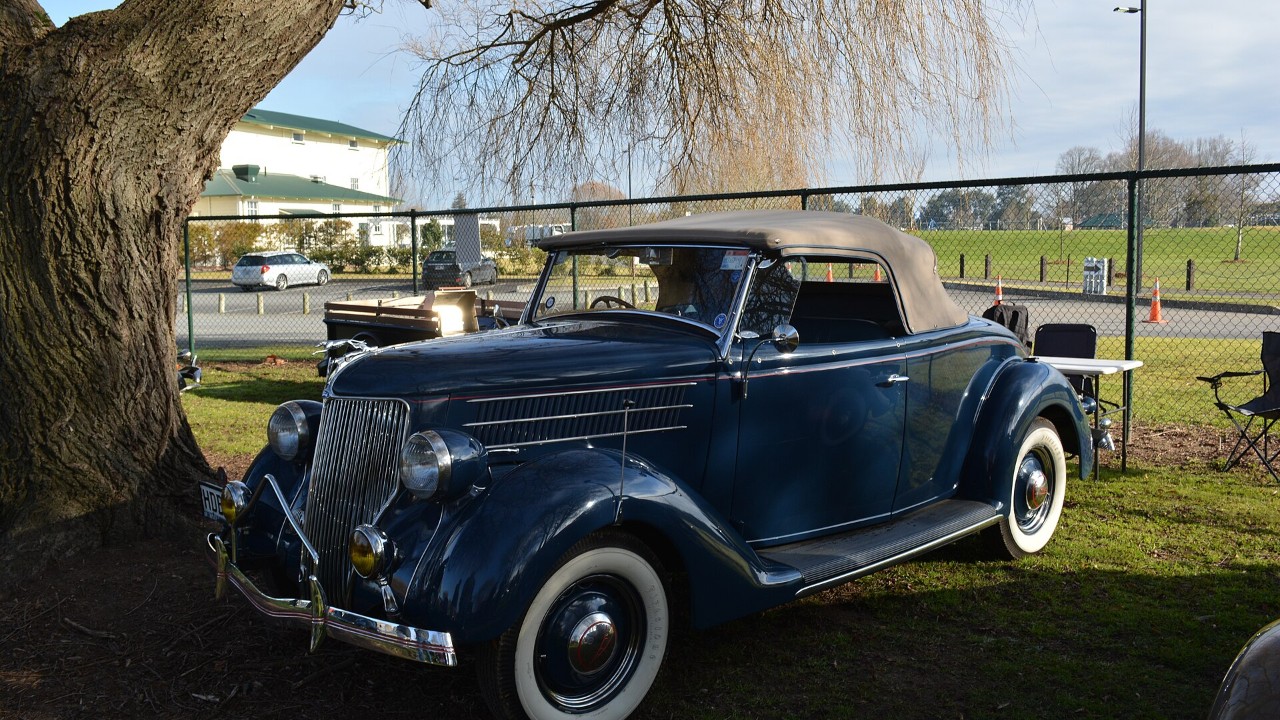
Ford’s 1936 Model 68 is one of the best-looking prewar Fords. The Deluxe version used an 85-horsepower, 221-cubic-inch V8 with a three-speed manual. That was the same 85-horsepower rating the flathead first reached in 1934.
In fact, Ford was the open-car king that year. It built 20,000 open cars in 1936, well above the combined total from Chevrolet and Plymouth. Yet the Deluxe Roadster was the scarcest of the lot. Ford built just 3,862 of them, the lowest production of any Ford model that year, according to Conceptcarz’s 1936 Model 68 profile.
That low number makes the 1936 roadster a special find. Our take: we would leave an original one stock, or close to it, because Ford built so few. If you want to build a rod, start with a car that has already been modified, and keep the rare survivors as Ford built them.
More from Fast Lane Only