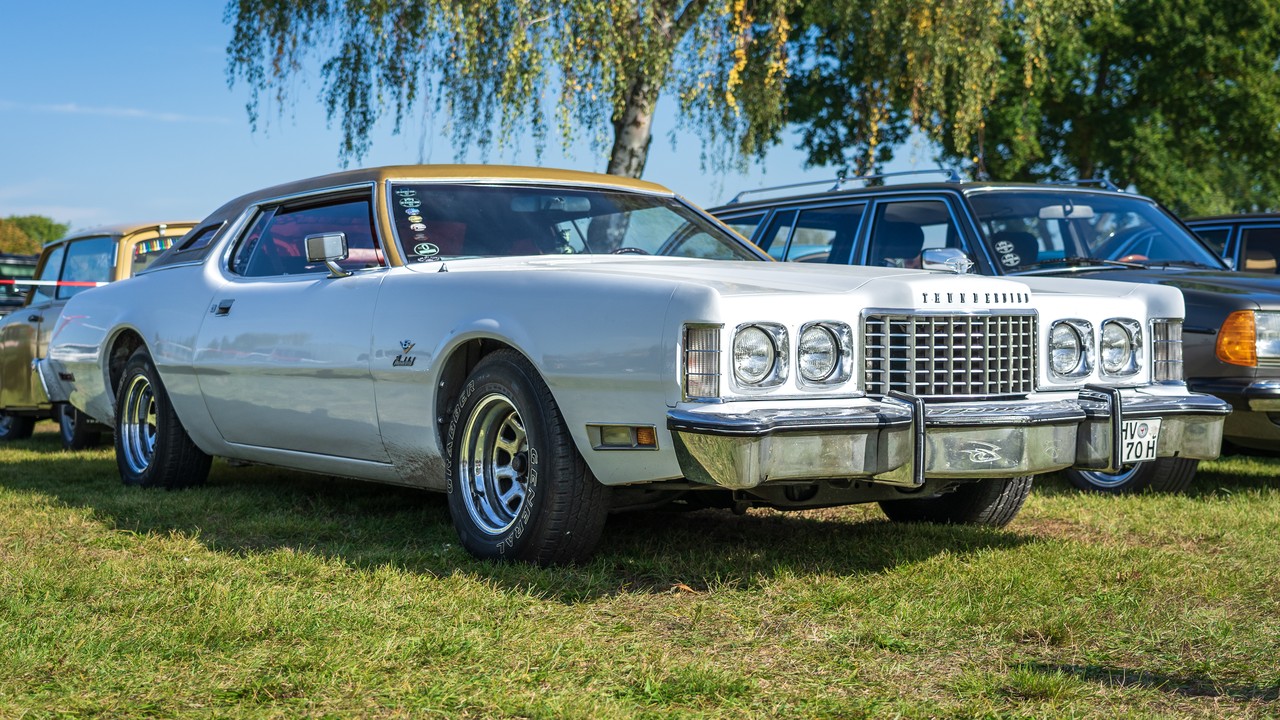
The personal-luxury car is usually dated to 1958, when Ford turned its two-seat Ford Thunderbird into a four-seat coupe. The formula was simple. Give buyers a sporty two-door with big-car comfort, then sell it on style. Soon after, nearly every American luxury brand chased that idea for the next two decades.
Some of those coupes were bloated, and a few were forgettable. Yet the best of them still pull eyes at any car show, thanks to long hoods, formal rooflines and interiors that felt like a private club. Several even came with designer names attached, which made them rolling fashion statements as well.
These are our picks for 12 personal-luxury coupes so elegant they still stop traffic. Of course, that verdict is our opinion. The engines, prices and production figures that support each pick come from period specifications, collector guides and model histories.
1. 1957 Chrysler 300C

The 300C was Chrysler’s letter-series car for 1957, and it mixed luxury with real speed. First, its Hemi V8 grew to 392 cubic inches and was rated at 375 hp. In addition, a limited run of 18 cars got a 390-hp version. Prices started at $4,929 for the hardtop and $5,359 for the convertible.
The styling did as much work as the engine. Chrysler’s “Forward Look” gave the 300C a trapezoid grille, a Vista-Dome windshield and rising tailfins. As a result, it looked fast standing still. Even so, Chrysler built just 1,918 hardtop coupes and 484 convertibles.
Our take: the 300C isn’t a typical personal-luxury car, but it set the template for the elegant, powerful two-door. Big power, a clean shape and a price that kept it exclusive. In our view, the 1957 car is the best-looking letter car of the decade. That’s why it still draws a crowd whenever one rolls onto a show field. If you’re shopping, confirm the car is a real 300C with its original Hemi. Then budget generously, because restoring a Hemi and its unique trim is never cheap. After all, a documented car is always worth the extra money.
2. 1964 Chrysler 300K

By 1964, the letter series had softened its edges a little. Leather upholstery became a $94 option rather than standard equipment, and buyers got far more paint and interior colors. The TorqueFlite pushbuttons gave way to a console-mounted shifter, while a center console came standard. Prices started at $4,228 for the coupe.
Under the hood sat a 413-cubic-inch wedge V8 with a single four-barrel carburetor, rated at 360 hp. As a result, that combination found plenty of buyers. Chrysler built 3,022 coupes and 625 convertibles, the largest total of any letter-series car. Later, a mid-year Silver Edition hardtop added a vinyl half-roof and bucket seats.
Our take: the 300K is the most approachable letter car, and its clean, slab-sided body has aged beautifully. It’s less flamboyant than the finned cars. Even so, it carries itself with the confidence of a car that knows it has nothing to prove. In our view, the 300K is the smart buy among Chrysler’s elegant coupes. If you want one, look for trapezoid taillights and the standard console. Together, those details separate a real 300K from a regular 300 Sport coupe.
3. 1965 Imperial Crown hardtop coupe
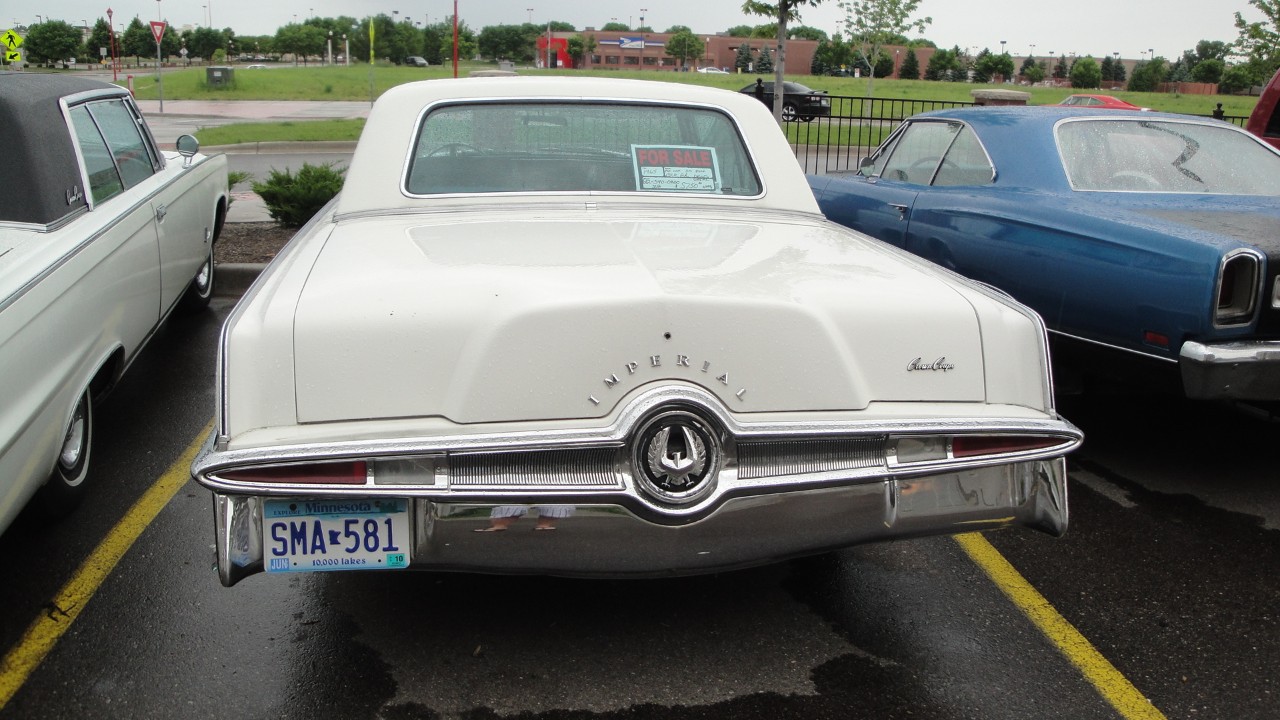
Chrysler launched Imperial as a separate make for 1955, run by its own Imperial Division. Elwood Engel designed the 1964 Imperial from top to bottom. For 1965, the changes focused on the front end and trim. Most notably, the headlights moved inside the grille behind glass covers.
The Crown coupe was the two-door hardtop of the line, with a long hood and a short, formal roof. Overall, Imperial built 18,409 cars in total for 1965. Engel’s crisp lines made the car look clean and expensive rather than flashy. Even the roof looks tailored, with a sharp edge where it meets the rear glass.
Our take: the glass-covered headlights are the detail that stops people. In our eyes, they give the 1965 Imperial a jeweled face, much like the Chrysler 300 and New Yorker of the same year. Overall, we rate the Crown coupe as one of the most elegant Chrysler products ever built. If you’re shopping, inspect the headlamp glass and grille carefully, because replacements take time to find. Next, check the body for rust around the rear window and trunk, because large hardtops hide damage well.
4. 1969 Cadillac Fleetwood Eldorado coupe

Cadillac turned the Eldorado into a front-wheel-drive personal-luxury hardtop for 1967. Then, for 1968, it added a 472-cubic-inch V8 rated at 375 hp and 525 lb-ft of torque. As a result, Cadillac sold 24,528 Eldorados that year. For 1969, the concealed headlamps went away because of new federal rules on how quickly headlamp covers had to open.
Cadillac made other changes, too. Side-impact beams went inside the doors, and the dashboard got a new design. A horizontal rosewood veneer panel also ran across the passenger side. Together, those updates made the cabin feel richer while the outside kept its bold proportions.
Our take: the exposed headlights changed the face, but the shape stayed sharp. The long hood, knife-edge fenders and short rear deck still look modern next to many 1960s cars. In our view, the 1969 Eldorado combines the dramatic early design with fewer complicated parts up front. That’s why we’d call it the easiest of the early front-drive Eldorados to live with. If you want one, have a specialist check the front-drive transmission and the CV joints. Those parts are what separate a pleasant cruiser from a costly project.
5. 1970 Ford Thunderbird coupe

For 1970, the Ford Thunderbird got a dramatic new nose, and it divided opinion right away. A large, beak-like point now jutted out from the grille, a change usually credited to Ford president Semon “Bunkie” Knudsen. At the time, the car came as a two-door or a four-door. Power came from the 429-cubic-inch V8, conservatively rated at 360 hp when it debuted in 1968.
However, not everyone loved the look. In an essay for Hagerty, one writer argued that the 1970 beak went too far. Still, Ford built 50,364 Thunderbirds that year, and the shape remains one of the most recognizable of the era. In our view, few faces of 1970 are easier to pick out in a parking lot.
Our take: the 1970 coupe is the Thunderbird that dared to be different. The pointed nose is bold and the roofline is formal. Besides, the 429 gives it real shove. In our view, it has aged into one of the most distinctive personal-luxury designs of its time. If you’re shopping, check the front bumper and grille, because that one-piece beak is costly to repair. Then confirm the 429 runs cool on a long test drive.
6. 1971 Mercury Cougar XR-7 hardtop
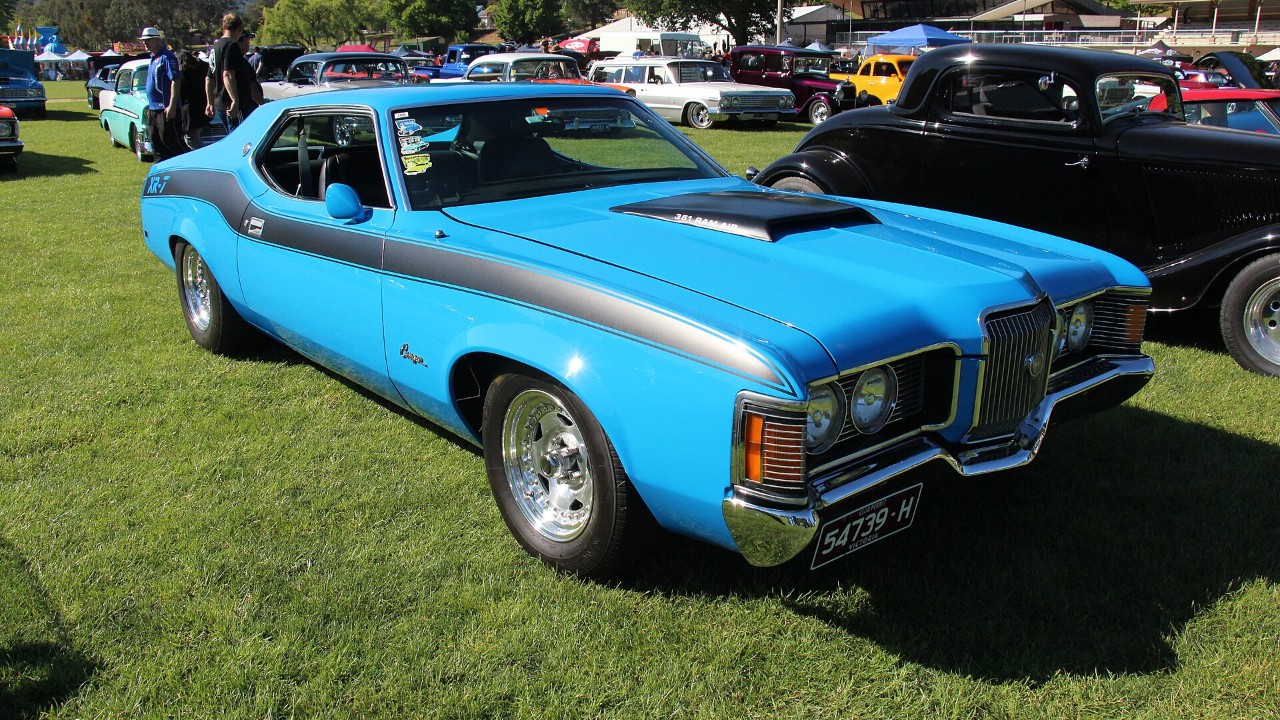
For 1971, Mercury redesigned the Cougar and stretched the wheelbase to 112.1 inches. The car grew into a larger, plusher machine than the original pony-car Cougar. The XR-7 got its own exterior and interior design, with a vinyl top on hardtops, unique door panels and its own dashboard. Many options came standard.
The standard engine was a 351 Cleveland V8, rated at 240 hp with a two-barrel carburetor. Alternatively, a four-barrel 351 made 285 hp. At the top sat the 429 Cobra Jet, rated at 370 hp, and Mercury dropped it after 1971. In total, Mercury built 62,864 Cougars that model year.
Our take: the 1971 XR-7 shows how the Cougar moved from sporty to luxurious. It kept a muscular stance but added the trim and comfort of a personal-luxury coupe. In our view, a 1971 XR-7 hardtop with the vinyl top is the most elegant Cougar of the decade. Look for one with the 351 Cleveland, which offers a good balance of power and drivability. Finally, check the vinyl top for bubbles, because trapped moisture rusts the roof underneath.
7. 1976 Ford Thunderbird two-door hardtop

The 1976 Thunderbird was the last year of the biggest Thunderbird generation ever built. Notably, this Ford Thunderbird shared its platform and many parts with the Lincoln Continental Mark IV. As a result, it stretched to 225 inches long and weighed over 5,000 pounds. The main engine was a 460-cubic-inch V8.
Ford sold the 1976 car with a base price of $7,790 and built 52,935 of them. To make each one feel special, Ford offered luxury groups with coordinated colors and trim. The Creme and Gold group cost $793, the Lipstick group $546 and the Bordeaux group $700.
Our take: the 1976 Thunderbird is pure 1970s excess, and that’s exactly the appeal. The long hood, the formal roof and the color-matched luxury groups make it a rolling time capsule. In our view, it’s the last Thunderbird that felt like a true land yacht. If you want one, a car with an original luxury group is the one to find. Check the vinyl top and the rear window seals, because leaks there cause rust. And budget for fuel, since the 460 drinks deeply.
8. 1976 Lincoln Continental Mark IV Givenchy
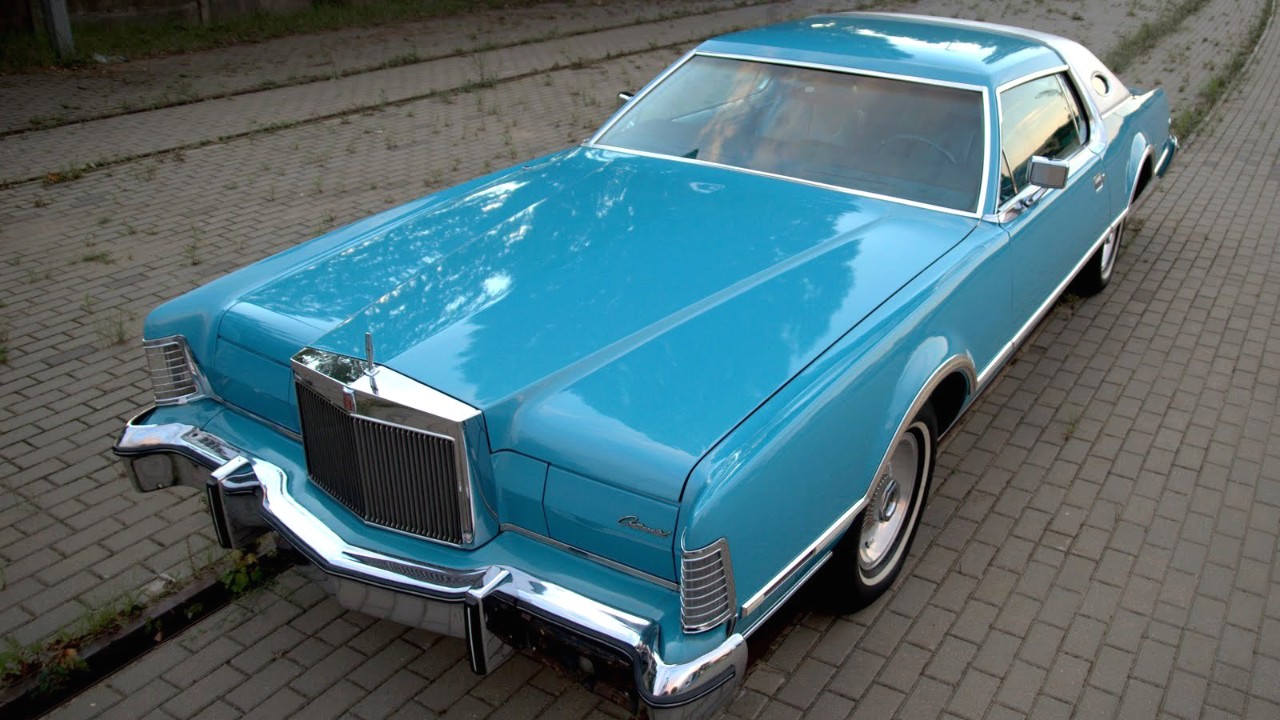
For 1976, Lincoln offered four Designer Series editions of the Mark IV, each named for a fashion house. They were Cartier, Givenchy, Bill Blass and Pucci, and every one had its own colors and details. According to Hagerty, the Givenchy wore metallic turquoise paint with a white top and black-and-white pinstripes. Inside, matching turquoise upholstery met light simulated birch trim.
Also, Givenchy’s signature appeared on the opera window and on the instrument panel nameplate. The car rode a 120.4-inch wheelbase, stretched 228.1 inches long and weighed 5,264 pounds at the curb. A 460-cubic-inch V8 with an automatic transmission provided the power. Even before designer extras, the Mark IV stickered at $11,060.
Our take: the Givenchy is the boldest of the designer Marks, and its color is the whole show. Frankly, nothing else on the road looks like a turquoise Mark IV with a white top. In our view, it’s one of the most joyful luxury cars of the 1970s. If you’re shopping, look for original paint and interior. Otherwise, restoring the Givenchy’s specific colors and trim to factory standard is difficult and expensive.
9. 1978 Lincoln Continental Mark V Cartier Edition

The Mark V followed the Mark IV with crisper lines and a long, formal hood. For 1978, the Cartier Edition wore Light Champagne paint with a chamois-colored front-half vinyl roof. Like every Designer Series car, it had a matching decklid decal and the designer’s signature in the opera window glass. It also carried a dash-mounted 22-karat gold-plated nameplate.
Lincoln built 8,520 Cartier cars that year, more than half of its 16,537 Designer Series cars. In total, it sold 72,602 Mark Vs. Interestingly, the Cartier-branded day/date clock was standard on every 1978 Mark V, not just the Cartier.
Our take: the Cartier Edition is the most understated of the designer cars, and that makes it the classiest. After all, champagne paint and a half-vinyl roof look refined, not loud. Meanwhile, the Mark V’s 230.3-inch length gives it serious road presence. In our view, it’s the Mark V for people who want elegance without a costume. If you want one, check that the opera-window signatures and gold nameplate are intact. Above all, those details prove it’s a genuine Cartier.
10. 1978 Lincoln Continental Mark V Bill Blass Edition
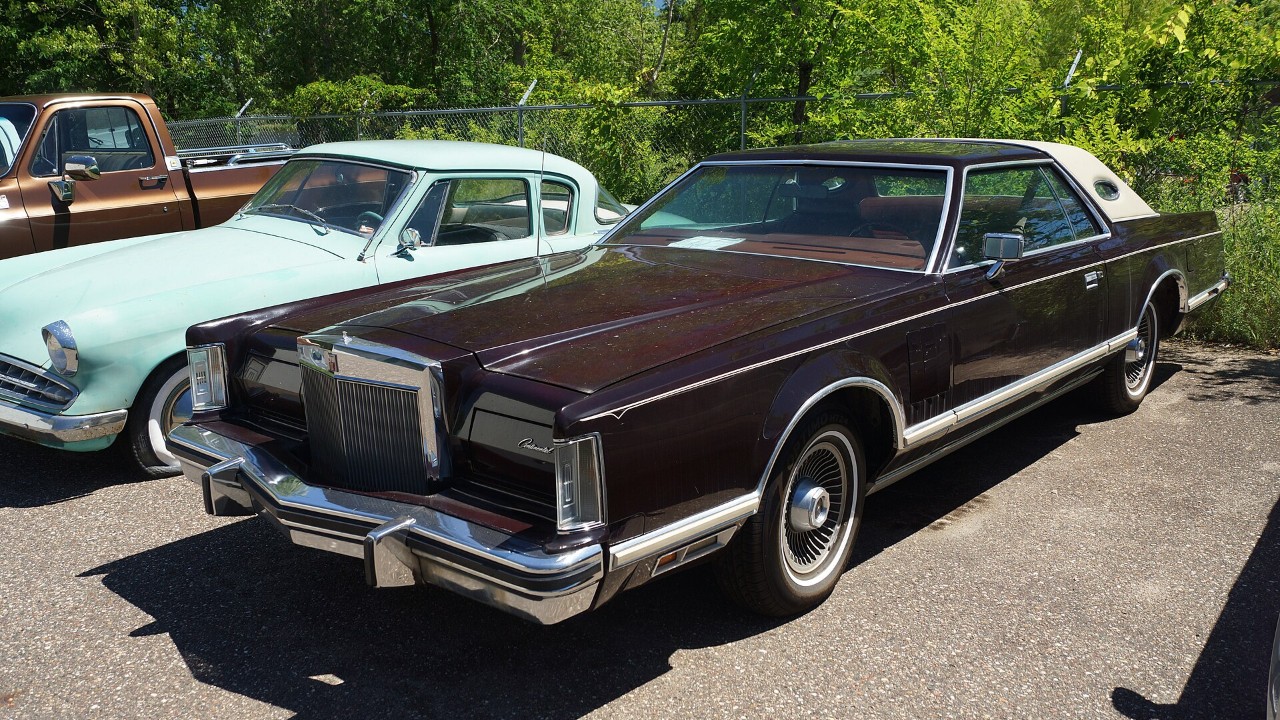
The Bill Blass Edition took a darker, more dramatic approach. For 1978, it wore non-metallic Midnight Cordovan paint with a Light Champagne vinyl top. Inside, Cordovan upholstery mixed leather and Ultravelour cloth, with Light Champagne straps and buttons.
By comparison, Lincoln built 3,975 Bill Blass cars that year. The standard engine was a 400-cubic-inch V8 rated at 179 hp. That same year, Lincoln also sold a Diamond Jubilee Edition for Ford’s 75th anniversary. It pushed the price past $21,000, making it the most expensive Ford vehicle on sale at the time, and 5,159 were built.
Our take: the Bill Blass Edition is the most sophisticated color combination of the Mark V years. The deep red-brown paint and champagne top look tailored, like a good suit. In our view, it’s one of the best-looking American luxury coupes of the late 1970s. If you’re shopping, compare the paint and trim codes against the original specifications. After all, a repainted car loses much of its appeal. Then check the vinyl top seams for leaks and rust underneath.
11. 1979 Ford Thunderbird Heritage Edition
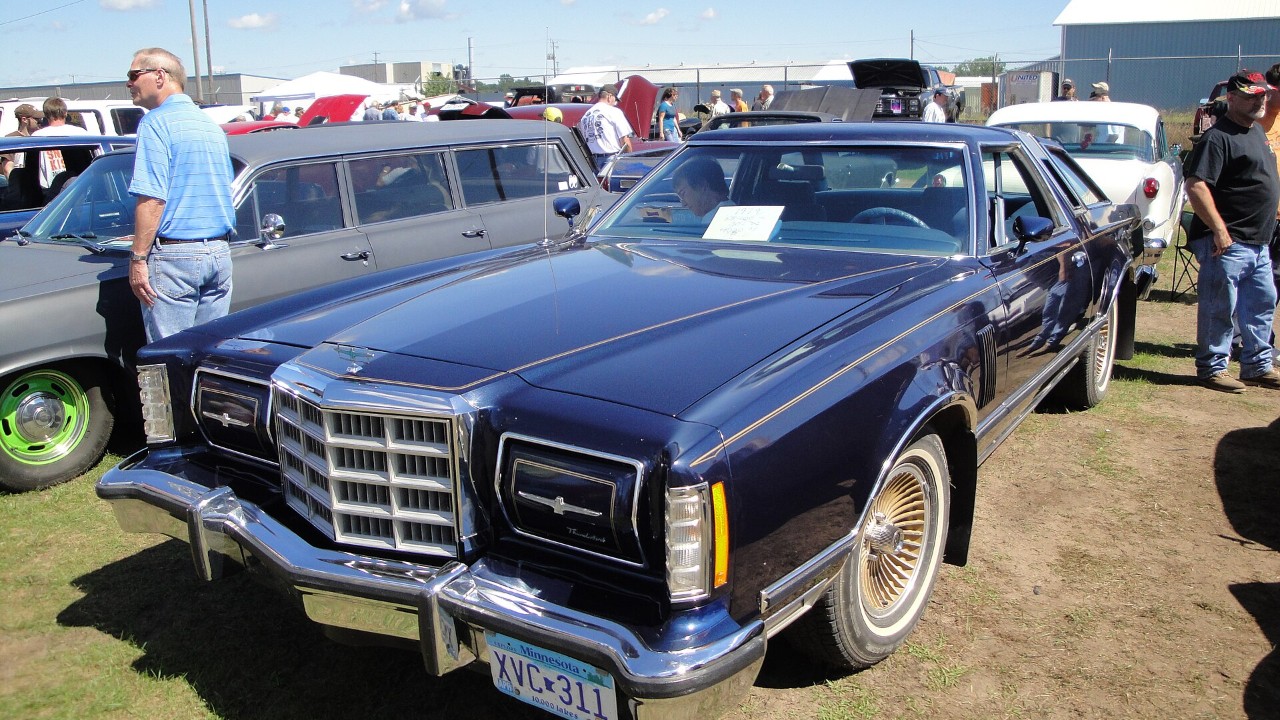
The Heritage Edition was Ford’s dress-up Thunderbird package for 1979. It followed the 1978 Diamond Jubilee with basically the same optional equipment. Ford offered this Ford Thunderbird package in just two colors, maroon or light medium blue. That year, every Thunderbird also got a new grille pattern and revised taillamps.
Underneath, the car rode on Ford’s intermediate platform, shared with the Mercury Cougar and LTD II. Ford cut the price by $2,700 compared with 1976, and buyers responded. Sales topped 318,000 in 1977, then reached 352,000 in 1978, the best single year in Thunderbird history. Ford still sold about 295,000 in 1979. According to Hagerty, this downsized generation became the best-selling Thunderbird ever.
Our take: the Heritage Edition is the Ford Thunderbird at the height of its popularity, dressed in its best clothes. Its formal roofline and coordinated colors make it a perfect snapshot of 1979. In our view, it’s the most elegant version of the best-selling Thunderbird generation. If you want one, find a car with its original Heritage trim and paint. With so many Thunderbirds built, condition and originality are what make one special.
12. 1980 Cadillac Eldorado coupe

Cadillac downsized the Eldorado for 1979 and put it on a platform shared with the Buick Riviera and Oldsmobile Toronado. As a result, the new car measured 204 inches long. For 1980, a 368-cubic-inch Cadillac V8 with digital fuel injection became the standard engine. Cadillac also added an MPG Sentinel display.
Meanwhile, the crisp new shape sold well. Cadillac built 52,685 Eldorado coupes for 1980. Buyers who wanted extra flair could choose the Biarritz trim, with a stainless-steel roof cap, wider chrome trim and extra fender moldings. Cadillac kept the Biarritz name on the Eldorado through 1991.
Our take: the 1980 Eldorado proved a smaller luxury coupe could still look grand. Its sharp creases, upright grille and formal roofline still turn heads. In our view, a Biarritz with the stainless roof cap is the most elegant Eldorado of its generation. Also, the downsized body is easier to park than the bigger Eldorados that came before it. If you’re shopping, ask for service records on the engine and fuel injection. Then inspect the roof cap for dents, because that stainless trim is costly to replace.
More from Fast Lane Only