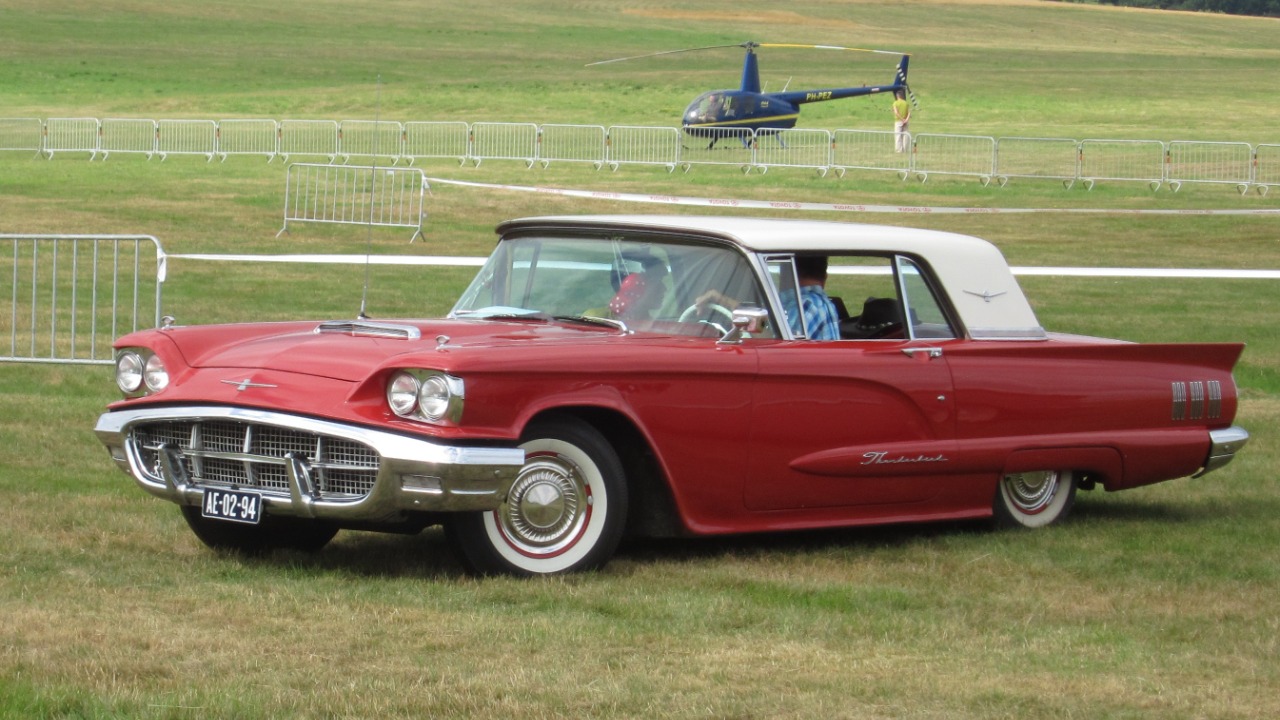
Ford sold 92,843 Thunderbirds in 1960, and a buyer who chose the 1960 Thunderbird hardtop could order a manually operated sunroof. Even so, that small option says a lot about the car. In our view, Ford kept trying new ideas on the Thunderbird before its rivals did.
Yet most people remember only the first two-seaters or the retro roadster from the 2000s. In between, however, the Thunderbird tried a whole string of new features and body styles. Some worked brilliantly, some puzzled buyers, and several have faded from memory.
These seven are our picks: the forgotten Thunderbirds we think were years ahead of the competition. The engines, prices and production figures come from auction catalogs, period data and model histories. However, the verdicts on which ideas were ahead of their time are ours.
1. 1960 Ford Thunderbird hardtop
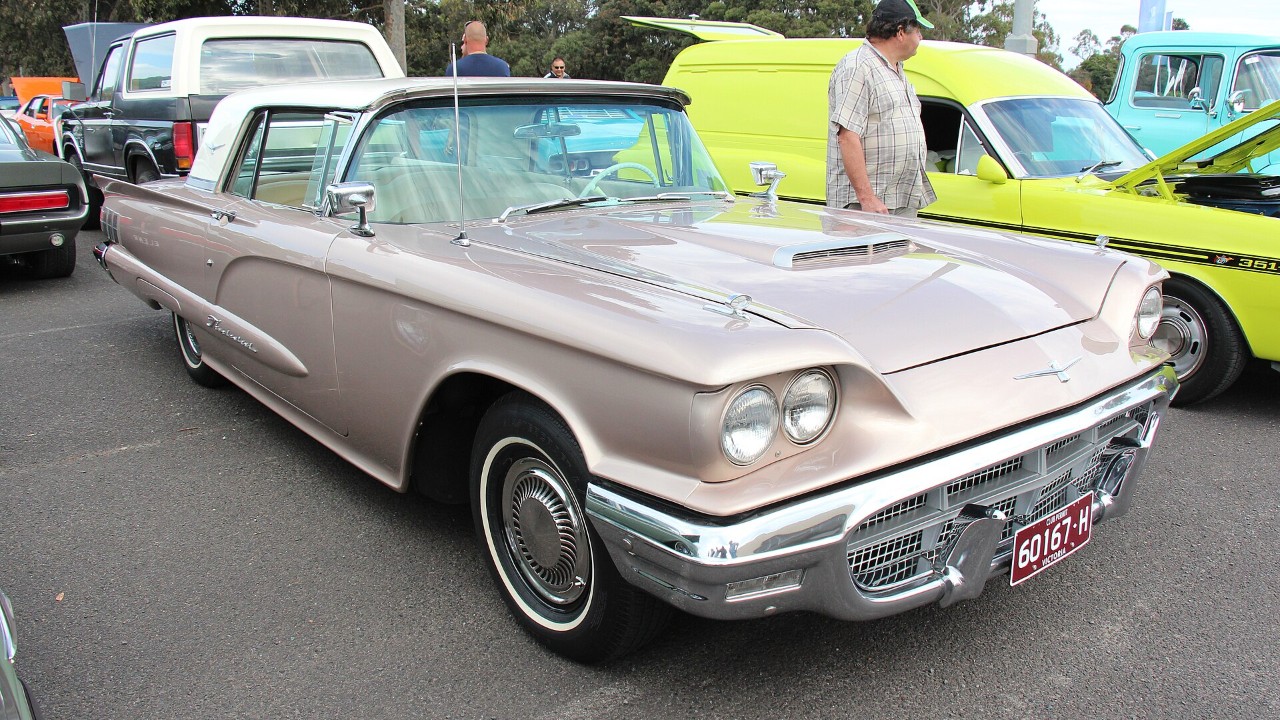
The four-seat Thunderbird arrived for 1958, and it changed the car’s direction completely. In fact, Ford sold about 200,000 of the new design in three years. We’ve covered how the 1958 Thunderbird stretched expectations and the wheelbase, and the 1960 car was the high point of that run.
According to RM Sotheby’s catalog for a 1960 Thunderbird hardtop, sales climbed from about 67,500 in 1959 to nearly 93,000 in 1960. As a result, RM calls the 1960 model the most popular of its generation. The car in that sale used a 352-cubic-inch V8 rated at 300 horsepower with a Cruise-O-Matic automatic, and it sold for $27,500 at Hershey in 2014.
The standout option was the roof. For 1960, Ford offered a manually operated metal sunroof on hardtop models.
In our view, the 1960 Thunderbird hardtop shows Ford inventing the personal-luxury car in real time. It offered four seats, a big V8 and a sunroof in a sporty package, and buyers loved it. Look for a car with the factory sunroof, because that’s the detail that tells the story best. In addition, the 352 V8 gives it an easy, relaxed pace on the highway.
2. 1962 Ford Thunderbird Sports Roadster
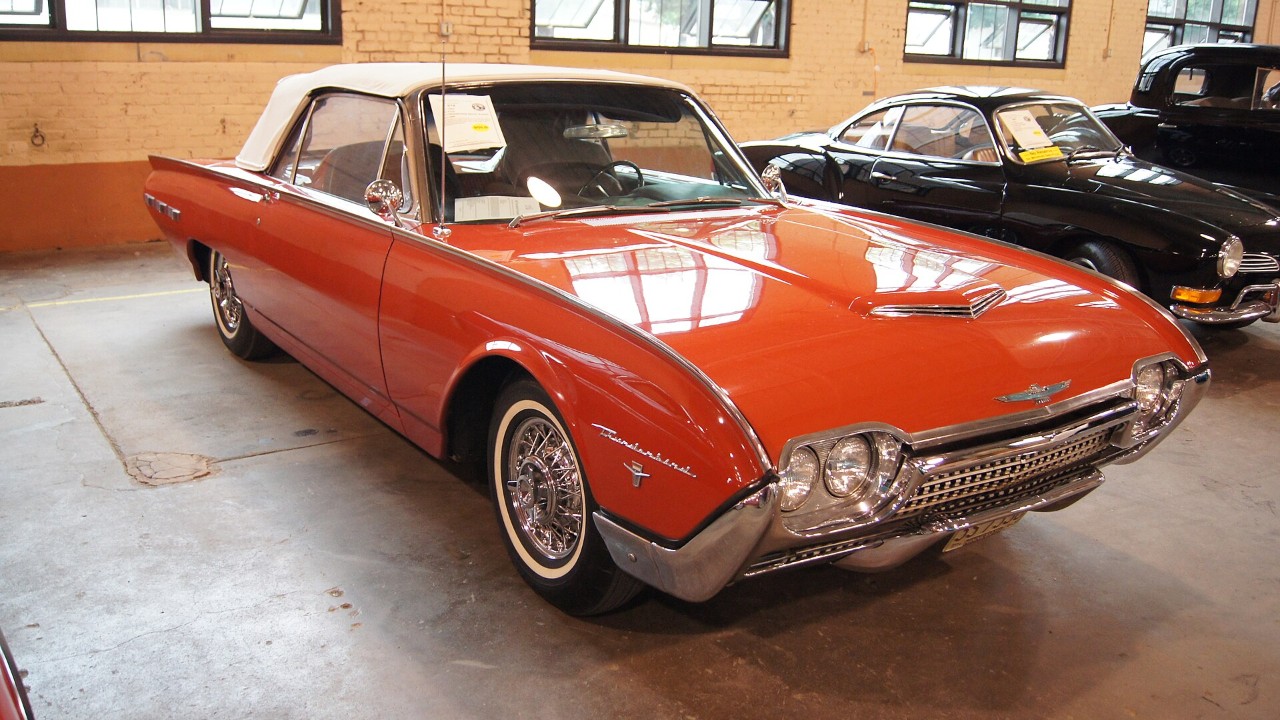
By 1962, Ford wanted to give buyers a taste of the old two-seat Thunderbird without losing the back seat. Its answer was the Sports Roadster. A removable fiberglass tonneau covered the rear seats and turned the four-seat convertible into a sleek two-seater.
The package also included Kelsey-Hayes wire wheels, with 48 spokes each. According to RM Sotheby’s catalog for a 1962 Sports Roadster, Ford built 1,427 of them that year. The car in that sale carried a 390-cubic-inch V8 with a four-barrel carburetor, rated at 300 horsepower.
The idea was clever, but the price held it back. Sales stayed slow, because the package cost a lot. Even so, it gave Ford a two-seat look and four-seat practicality in one body. In our view, no rival offered quite the same trick.
Our take: the Sports Roadster is the most stylish answer to a problem every car company still faces. After all, buyers want both sporty looks and usable space. If you find one, check that the tonneau and wire wheels are original, because they make the car. At RM’s 2020 Auburn Fall sale, the estimate on that car was $40,000 to $50,000.
3. 1966 Ford Thunderbird Town Landau
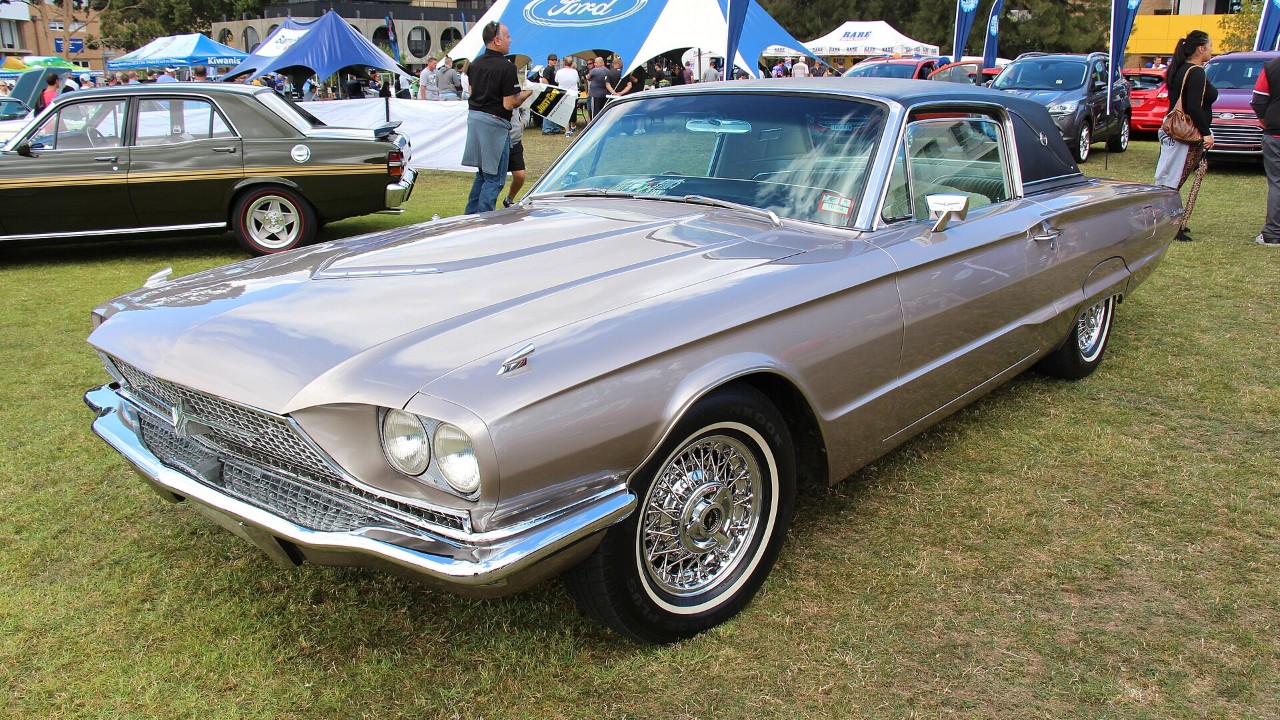
For 1966, Ford offered the Thunderbird with a new roof that dropped the rear quarter windows altogether. The result was a formal, closed-in look, and the Town Landau added fake landau bars on the roof sides. In fact, those bars nodded to the folding tops of horse-drawn carriages.
Better yet, buyers embraced the new roof. Curbside Classic’s look at a 1966 Town Landau notes that Ford sold 50,783 of the blind-quarter Town Coupes and Town Landaus. By comparison, it sold just 13,389 of the older hardtop with quarter windows. The featured car there carried the Q-code 428 V8.
In our view, that roof set a pattern that much of the personal-luxury market would follow in the years ahead. The Town Landau wore the look with real confidence, too.
Our take: the Town Landau is a forgotten trendsetter. It looks elegant, and with the big-block it moves well too. We’ve also written about how a 1966 Thunderbird with a 390 V8 reached 60 mph in under 8 seconds. However, keep in mind that the blind quarters make the car tricky to see out of, so add a mirror if you plan to drive it often.
4. 1967 Ford Thunderbird Four-Door Landau
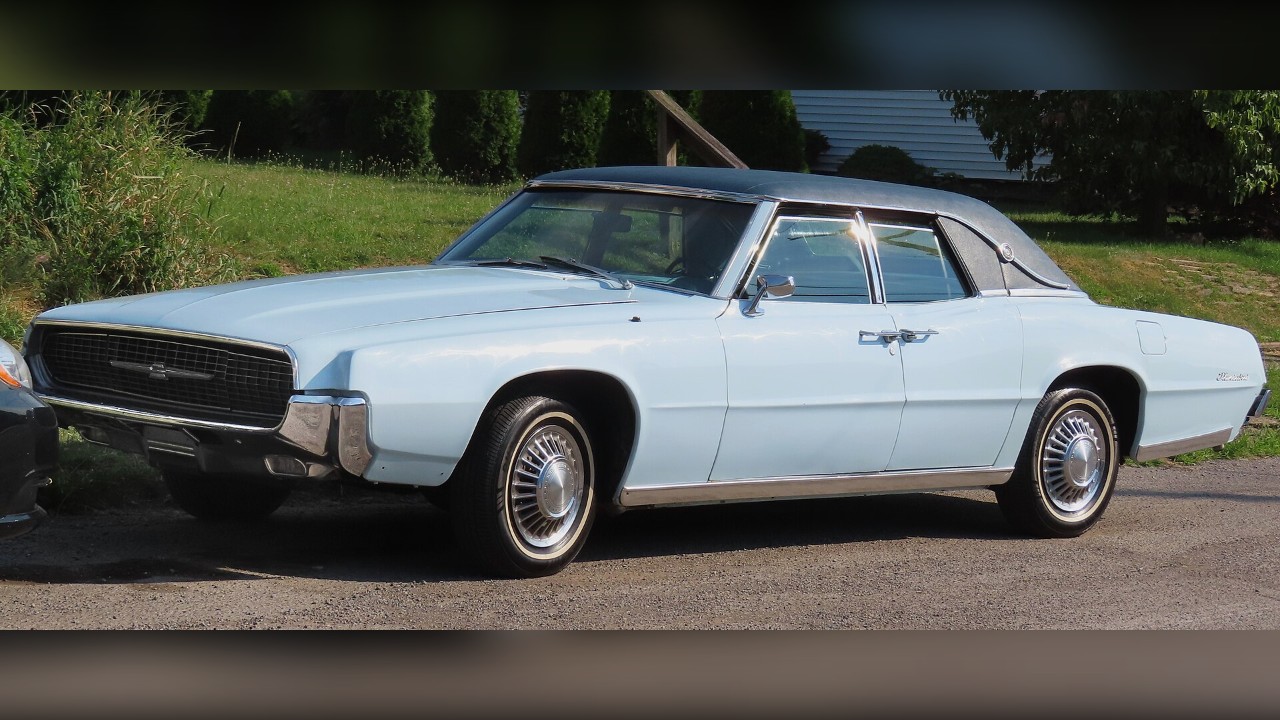
For 1967, Ford redesigned the Thunderbird and added something nobody expected: a four-door version. Its rear doors hinged at the back and opened from the front, the layout once known as “suicide doors.” Ford called it a four-door hardtop, and the layout made the rear seat easy to reach.
Underneath, the change was just as big. According to Mac’s Motor City Garage’s history of the four-door Thunderbirds, the Landau sedan rode on a 117.2-inch wheelbase, three inches longer than the coupe’s. It also moved to a hybrid body-on-frame platform instead of the earlier unitized design.
Also, the four-door wasn’t a sideshow. Mac’s reports that it accounted for around a third of Thunderbird sales in 1967 and 1968, with prices in the $4,800 to $5,500 range. For context on the generation before it, see our story on why the 1964 Ford Thunderbird changed direction.
In our view, the four-door Landau was years ahead of its time. Today, rear-hinged doors on a luxury car feel modern again. Yet Ford tried the idea on a mainstream personal-luxury car nearly six decades ago.
5. 1983 Ford Thunderbird Turbo Coupe
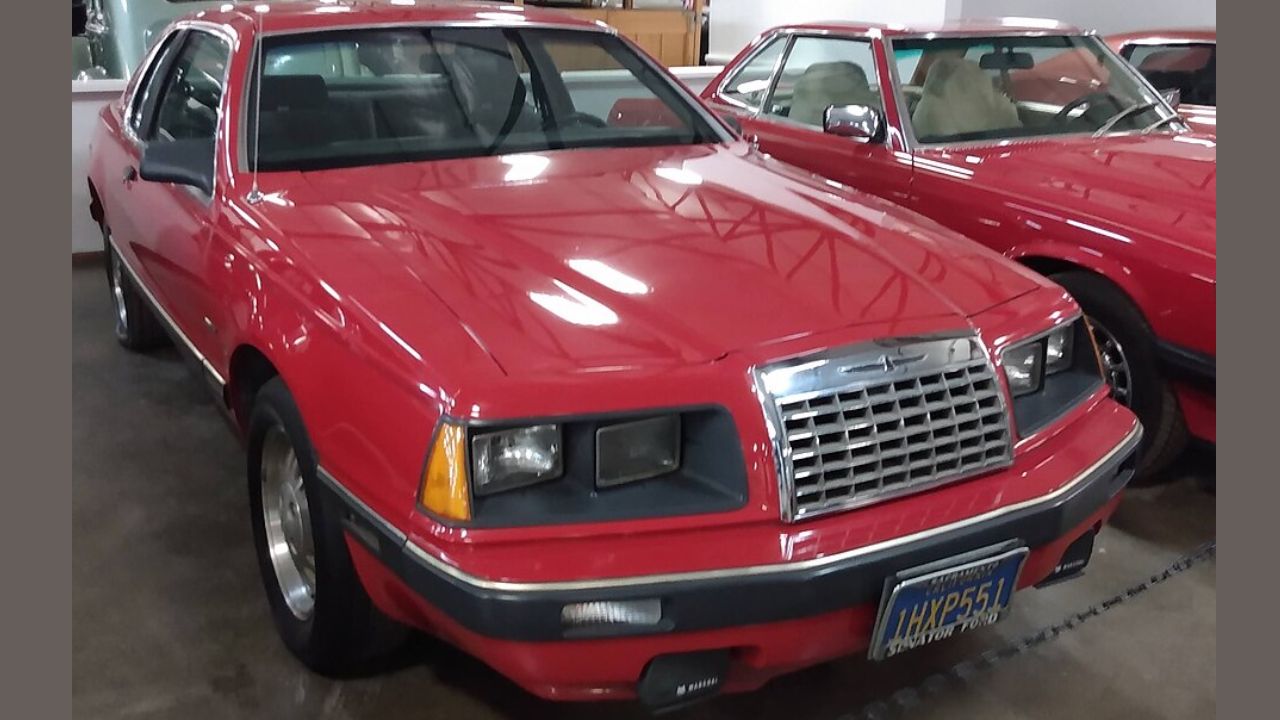
For 1983, Ford redesigned the Thunderbird into a much sleeker shape. The new body cut the drag coefficient from 0.50 to 0.35, a huge change from the boxy car it replaced. Meanwhile, the Turbo Coupe became the performance flagship of the line.
Its engine was the first turbocharged unit ever offered in a Thunderbird: a 2.3-liter four-cylinder. Ford also paired it with its EEC-IV electronic engine control system. The initial rating was 142 horsepower, and by 1985 that figure rose to 155 horsepower.
The Turbo Coupe also brought back a feature Thunderbird buyers hadn’t seen in decades. A five-speed manual transmission came standard, and Ford hadn’t offered a manual in the car since 1960. Then, for 1984, a three-speed automatic joined the options list. So if you shop for one today, the early five-speed cars are the ones to find, in our view.
Our take: the Turbo Coupe was a European-style sport coupe wearing an American badge. Aerodynamics, electronic engine management and a small turbo engine all point toward where the industry was heading. That direction paid off later, because the Thunderbird Turbo Coupe was Motor Trend’s Car of the Year for 1987.
6. 1994 Ford Thunderbird Super Coupe
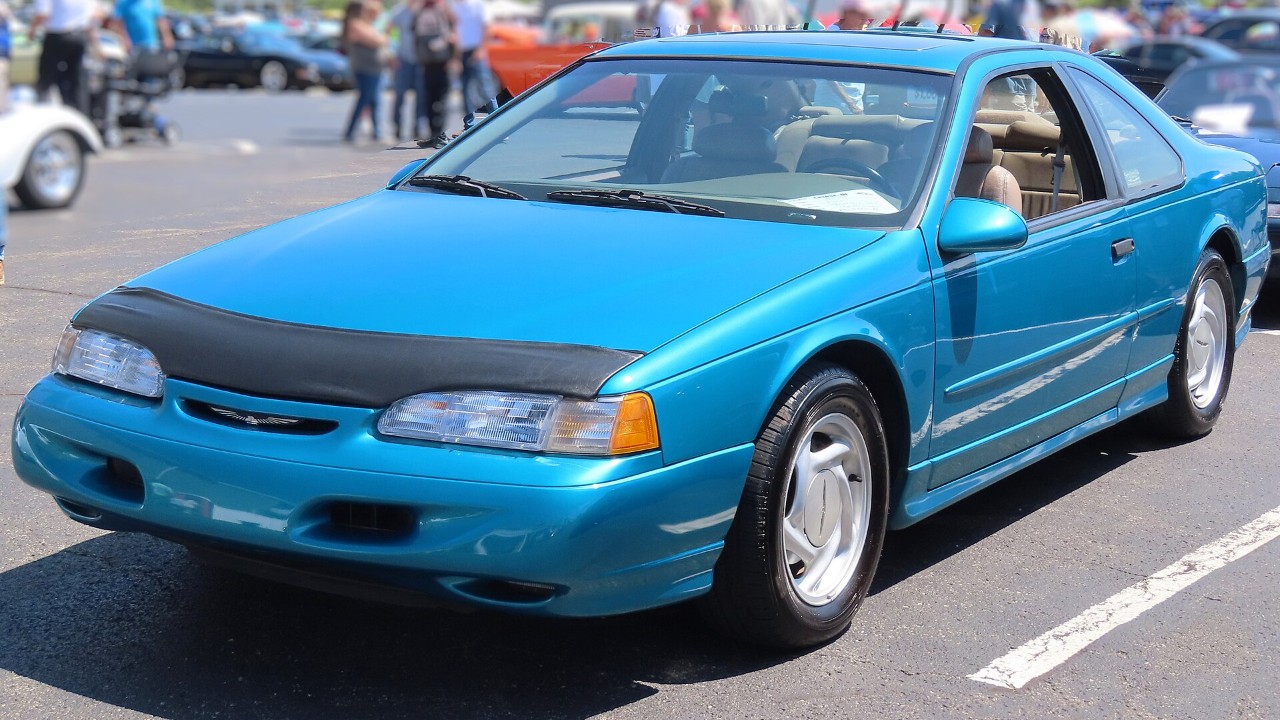
When the Thunderbird Super Coupe arrived for 1989, its 3.8-liter V6 used a supercharger and an intercooler. At 12 psi of boost, it made 210 horsepower and 315 lb-ft of torque. Then, for 1994, engine changes raised output to 230 horsepower.
However, the chassis was the real surprise. The Truth About Cars’ Rare Rides feature on a 1994 Super Coupe points out that the MN12 coupes had independent rear suspension. According to that piece, the only other domestic rear-drive car with it was the Corvette.
The Super Coupe added electrically adjustable shocks, a limited-slip differential and four-wheel disc brakes with ABS. In addition, a five-speed manual from Mazda was available only on the Super Coupe from 1989 to 1995. For 1994, the car also grew to 200.3 inches long and picked up a visual refresh.
In our view, the Super Coupe was a grand tourer built before American buyers knew they wanted one. A supercharged V6, four-wheel independent suspension and a manual option made it a genuine driver’s car. If you find a clean five-speed example, keep it that way, because no other Thunderbird of the era offered that gearbox.
7. 2005 Ford Thunderbird 50th Anniversary Edition
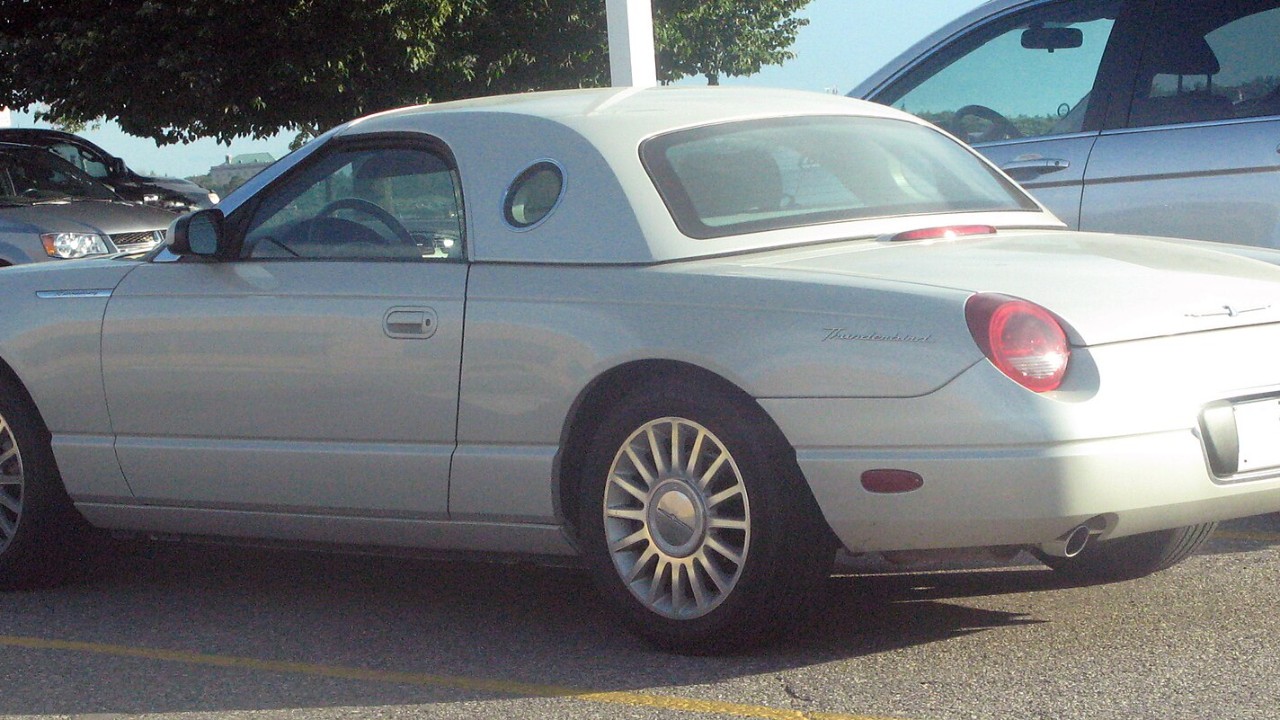
Ford brought the Thunderbird back as a two-seat convertible for 2002, and it ended the run in 2005 with a special edition. According to Auto123’s report on the 50th Anniversary Edition, Ford planned to build only 1,500 of them.
First, each one wore exclusive Cashmere tri-coat metallic paint, matched to the convertible boot. The car also came with the hardtop, all-speed traction control and a Medium Light Stone cloth top. It rode on 17-inch, 16-spoke alloy wheels, and a numbered commemorative plaque sat inside the glove box.
Even so, the retro Thunderbird was a bold bet in its own right. It returned the name to its two-seat roots after decades of bigger cars. In our view, it also predicted the wave of heritage-styled cars that followed.
Our take: the 50th Anniversary Edition is the one to own if you want the last chapter of the story. Besides, it pairs the retro shape with a numbered plaque and a color all its own. It also marks the end of the line, because the final Thunderbird left the factory on July 1, 2005.
More from Fast Lane Only