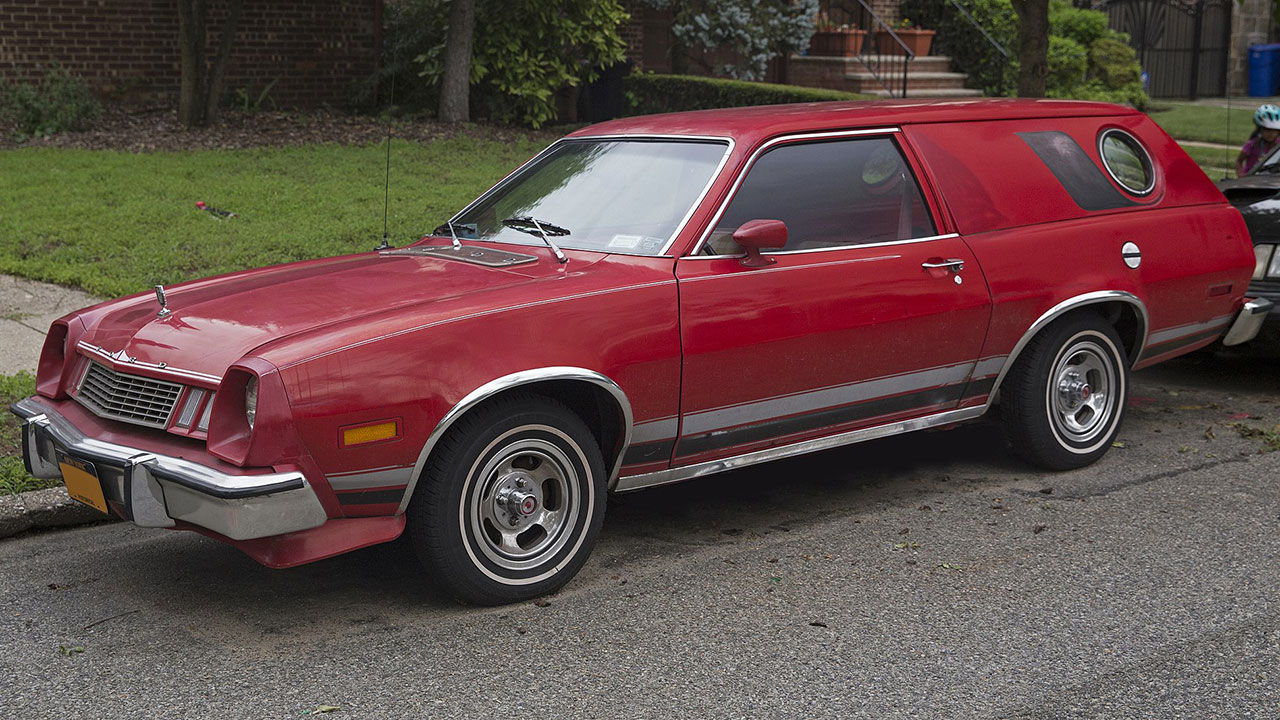
Ford built 225,097 Pintos for 1977, and 10,029 of them left the factory as the Pinto Cruising Wagon. It was a small wagon dressed up like a custom van, with a round porthole window in each rear side panel. It also came with a front spoiler and, if you wanted them, loud vinyl graphics.
The idea came straight from the van craze of the 1970s. Ford already sold a Cruising Van version of its Econoline, and the Cruising Wagon brought the same look to a cheaper, smaller car. Younger buyers were the target.
Today, the Pinto Cruising Wagon is one of the most memorable shapes of its decade. Here is what the package included, how many Ford built and what one owner’s car tells us about living with one.
Ford’s custom-van look on a Pinto wagon
The Pinto wagon itself debuted on February 24, 1972, after the sedan and Runabout hatchback. By the mid-1970s it was a familiar sight. Pinto sales peaked at 544,209 in 1974, according to Old Cars Weekly, so Ford had plenty of buyers to win back with something fresh.
For 1977, Ford gave every Pinto a facelift. The front end gained slanted urethane headlamp buckets, plus new parking lamps and a new grille. Ford also added a long list of appearance packages. Most were cosmetic and did nothing for performance, but the Cruising Wagon went further than any of them.
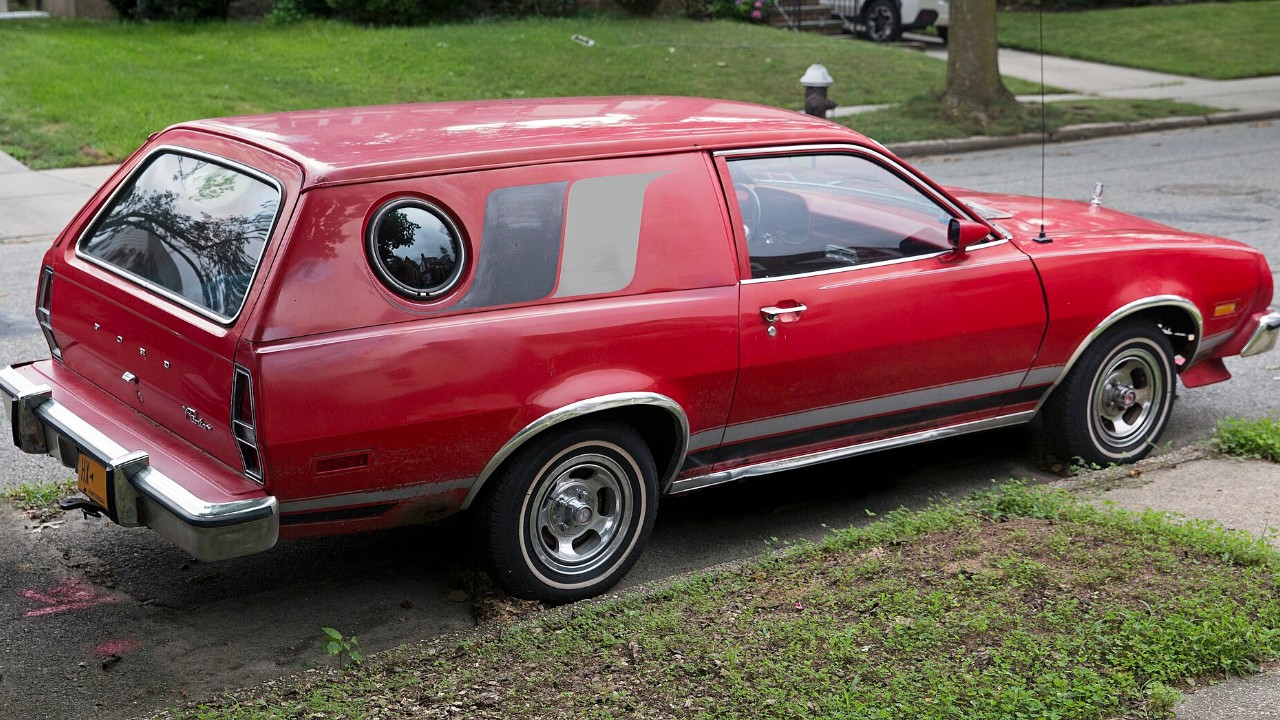
Ford started with the Pinto’s sedan delivery body, which had solid metal panels instead of rear side windows. Then it cut a round “bubble” window into each panel. The result looked like a shrunken van, and Old Cars Weekly says Ford styled it after the Econoline Cruising Van. Curbside Classic calls it the “little kid brother” of that van.
What the Pinto Cruising Wagon package added
The package was more than a pair of round windows. Old Cars Weekly lists a front spoiler, blanked rear quarters with glass portholes, styled wheels and Sports Rallye equipment. The rear section also came carpeted. With the back seat folded, it made a long, flat carpeted floor that suited the custom-van theme.
Then there were the stripes. Ford offered a choice of vinyl graphics, and they were bold even by 1970s standards. A Deluxe Stripe Package was the rare one. Owner Dale Jacobson told Old Cars Weekly that silver was the only paint color offered with the Deluxe stripes.
Buyers could choose between two engines. The base engine was the 2.3-liter four, rated at 89 hp for 1977. Meanwhile, the option was a 2.8-liter V6 with 93 hp. Jacobson recalls that the V6 cost $306 and required the automatic transmission. In other words, the Cruising Wagon was about style first, and the drivetrain choices stayed the same as any other Pinto.
Pinto Cruising Wagon production: 10,029, then fewer
Ford built 10,029 Cruising Wagons for 1977, Old Cars Weekly reports. That was about 4.5% of all Pintos made that year. However, the number fell quickly. For 1978, Ford built only 5,329.
Ford kept the package going through 1979, the same source says, and then it gave up on the idea. The Pinto itself ended in 1980 after a decade on sale, and the front-drive Escort took its place. We looked back at how the first Pinto stacked up against its main rival in our 1971 Pinto vs. Vega comparison.
Some versions are far scarcer than the totals suggest. Jacobson estimates that Ford built only about 50 V6 Cruising Wagons with the Deluxe stripes in 1977. He bases that on percentages from a Marti Report, a production record for Fords. Still, he told Old Cars Weekly, “We don’t have a definite number.”
One owner’s 1977 car
Jacobson’s car shows why these wagons win fans. He lives in Owatonna, Minnesota, and he ordered his Cruising Wagon new in late 1976. Delivery came about a week and a half late, in March, because an East Coast snowstorm shut the plant. He bought it to replace a dying 1967 Mustang, after looking at Chevrolets and AMCs.
The car became part of the family. In fact, it served as the couple’s honeymoon car. Later, his wife, Barbara, grew tired of it in the 1980s, so he stored it for about 30 years. Then he restored it on a rotisserie about three years before Old Cars Weekly visited. By his count, the engine had 40-some-thousand miles.
He also undid the changes he’d made as a young owner. During the restoration, he put the catalytic converter back and reversed a modification to the fuel door. His daughter has since declared the car a family heirloom.
What a Cruising Wagon sells for now
Good examples can draw real money now. In October 2023, a 1978 Cruising Wagon sold through Hagerty’s marketplace. It wore Tangerine paint with yellow side graphics, and it had the 2.3-liter four and a four-speed manual. The listing says it went new to Griswold & Wright Ford in Modesto, California.
It wasn’t a perfect car, either. The odometer showed 58,919 miles, but the seller said the true mileage was unknown. The air conditioning also needed a new compressor, and the side graphics showed crazing. Even so, bidding opened at $1,000 on October 6 and ran through 26 bids. On October 20, 2023, the Cruising Wagon sold for $19,260.
More from Fast Lane Only